
Navigating Crypto News

CoinFeather
Navigating Crypto News

Quick market read from this story
Decentraland's MANA is showing signs of potential recovery, with on-chain metrics like rising Open Interest and a positive 30-day MVRV ratio indicating renewed trader interest and short-term holder profitability.
Despite a significant decline since 2021, MANA is retesting a critical support level established in early 2021, suggesting a potential reversal if it can maintain a weekly close above $0.35, which could pave the way for a $1.00 target.
Accumulation by mid-tier 'whale' and 'shark' wallet tiers, coupled with positive funding rates, suggests that significant market participants are positioning for potential upside, providing a foundational support for future price action.
Long-term price predictions for MANA range significantly, with forecasts for 2030 suggesting a potential high of $5.15, contingent on growing metaverse adoption and user activity within Decentraland.
Deep Dive
Decentraland (MANA), a prominent metaverse project built on Ethereum, continues to foster an active ecosystem focused on virtual events, social experiences, and creator-led development, despite a cooling metaverse narrative since its 2021 peak. The live price of MANA is currently $0.08123575, reflecting a significant decline from its all-time high.
MANA has experienced a substantial 98% decline since the FTX crash in 2022. However, it is currently testing a critical support level established in early 2021. A weekly close above $0.35 could signal a potential recovery, with a target price of $1.00 achievable within the year. The project's avoidance of delisting from major exchanges indicates ongoing efforts towards market recovery and sustained liquidity, with a market cap exceeding $250 million.
As of mid-March 2026, on-chain metrics show a notable shift in market sentiment. Open Interest (OI) has trended upward, nearing $7.14 million, with stabilizing funding rates suggesting new capital inflow and increased willingness to hold long positions. The 30-day MVRV Ratio has moved above zero to approximately 2.39%, indicating profitability for short-term holders and a return of bullish momentum. Furthermore, addresses holding between 10,000 and 10 million MANA have increased their holdings, signaling accumulation by significant stakeholders.
Price predictions for MANA indicate significant potential growth in the coming years. For 2026, forecasts range from a potential low of $0.95 to a high of $1.95, with an average price of $1.45. By 2030, the MANA price could surge towards $4.90, with projections suggesting a low of $4.15, an average of $4.65, and a high of $5.15. These predictions are driven by factors such as growing trader activity and expanding metaverse adoption.
Other market analyses offer varied outlooks: CoinCodex predicts $0.26 for 2026 and $0.67 for 2030, while Tokenmetrics suggests $0.78 for 2026 and $2.11 for 2030. DigitalCoinPrice forecasts $0.33 for 2026 and $3.32 for 2030.
The price of MANA is primarily influenced by demand for virtual land, user growth within Decentraland, the effectiveness of its creator tools, and overall on-chain activity. The platform's ability to expand events, gaming, and creator functionalities will be crucial for attracting users and maintaining its position as a leading metaverse platform.
Source, catalyst, and sector overlap from the latest feed.
Crypto casinos are evolving beyond simple Bitcoin acceptance, integrating multi-coin support and faster settlement, indicating a maturing niche within the broader crypto ecosystem. The increasing adoption of stablecoins in crypto casinos offers players a hedge against volatility, suggesting a growing demand for predictable bankrolls in online gambling. While crypto casinos offer payment convenience, users must navigate regulatory ambiguity, network fees, and the inherent risks of irreversible transactions, underscoring the need for due diligence.
Solana is approaching a critical $80 support level, with its Q1 close poised to dictate the direction for Q2, highlighting a period of potential volatility and a need for bullish confirmation above $90. Despite forming higher lows since $67, Solana's price action is constrained by resistance around $92-$95, indicating a tightening range that suggests an imminent breakout or breakdown is likely. Current technical indicators like RSI below 50, a flat CMF, and average volume suggest a lack of strong momentum, reinforcing the need for bullish confirmation before anticipating a significant upward move.
Charles Hoskinson's 'next-gen' designation for Midnight, coupled with its privacy features and sustainable tokenomics, signals a strategic push towards real-world asset tokenization, potentially attracting institutional interest. The partnership with Monument bank to tokenize £250 million in deposits represents a significant real-world adoption milestone for Midnight, validating its capacity for handling regulated financial products on-chain. While Midnight gains traction, investor sentiment towards ADA remains mixed, with some questioning its future relative to NIGHT, though on-chain data shows accumulation by larger wallets, suggesting potential underlying support. Midnight's development is positioned as complementary to Cardano's infrastructure, with security reliance and expected commercial deal integration suggesting a symbiotic relationship rather than direct competition, which could benefit the broader Cardano ecosystem.
Bitcoin's price has fallen below $67,000, triggering significant liquidations of long positions and raising concerns among analysts about a potential further drop to $46,000 if key support levels are breached. The current market sentiment is heavily influenced by technical patterns resembling previous sharp declines, with analysts warning of a potential "massive breakdown" if Bitcoin closes below $66,000. Spot Bitcoin ETFs experienced substantial outflows on March 26th, indicating a lack of institutional buying pressure to counteract the downward price movement. Despite the bearish technical signals and ETF outflows, some market participants remain interested in buying dips in the lower $60K regions, though this is framed as a potential FOMO-driven behavior rather than conviction.
Anchorage Digital's addition of TRON custody provides U.S. institutions with a regulated on-ramp, potentially increasing institutional demand for TRX and TRC-20 tokens. The integration of TRON, a network with significant stablecoin activity, by a federally chartered crypto bank highlights a growing trend of traditional finance infrastructure supporting diverse blockchain ecosystems. Future support for TRC-20 tokens and native staking by Anchorage Digital could further enhance TRX's appeal to institutional investors seeking yield and broader network participation.
G Coin's rapid holder growth post-launch is now facing a critical test of its utility and ecosystem integration, moving beyond initial listing hype to sustained demand. The focus shifts from holder milestones to observable metrics like exchange liquidity, staking participation, and in-ecosystem usage to validate G Coin's claims as an operational economic layer. Sustained demand for G Coin will depend on its ability to demonstrate real-world utility within its gaming and sports event ecosystem, rather than relying solely on speculative interest.
ApeCoin's future price trajectory is heavily contingent on the successful adoption and utility of ApeChain, moving beyond its initial NFT-driven hype. With 90% of the APE supply unlocked, the inflationary pressure is easing, which could support price recovery if ecosystem demand, particularly from Otherside and gaming, materializes. While short-term price targets are modest, long-term projections to 2030 suggest significant upside potential, ranging up to $16.21, contingent on Yuga Labs' ability to build a robust metaverse economy and drive DAO participation.
Summ's expansion into advanced DeFi and NFT transaction categorization, alongside its "Least Tax First Out" accounting method, offers significant value for crypto investors seeking tax optimization. With over 3,500 integrations and support for 180+ countries, Summ positions itself as a comprehensive global solution for crypto tax compliance, reducing manual effort for users. The platform's tiered pricing structure, including a free plan and options up to $499/year for 100,000 transactions, caters to a broad spectrum of crypto users from beginners to active traders.
Cravin's integration of provably fair verification in mystery boxes, coupled with a Fair Value Guarantee, demonstrates a potential shift in consumer product design, prioritizing auditability over direct crypto payments. The development suggests that crypto's verification models, rather than its payment rails, may find broader adoption in non-financial consumer applications, impacting user trust and engagement. While the article highlights Cravin's use of crypto-style verification, the actual payment mechanism converts to internal Credits, indicating a limited direct impact on cryptocurrency transaction volume or utility. The trend of adopting verifiable outcomes in consumer products could foster greater user trust and transparency, potentially influencing how other platforms approach digital item reveals and fairness claims.
McLaren Racing's entry into the Hedera Council signifies a growing trend of mainstream enterprises leveraging enterprise blockchains for fan engagement and digital asset initiatives. The partnership, which includes the launch of free-to-mint digital collectibles tied to F1 races, aims to onboard new users to Web3, potentially increasing adoption for Hedera and its ecosystem. As a governing member with voting rights, McLaren's involvement suggests a deeper commitment to Hedera's development, which could lead to further integration and innovation within the network.
Live Feed
Loading the broader stream in the same flow as the homepage feed.
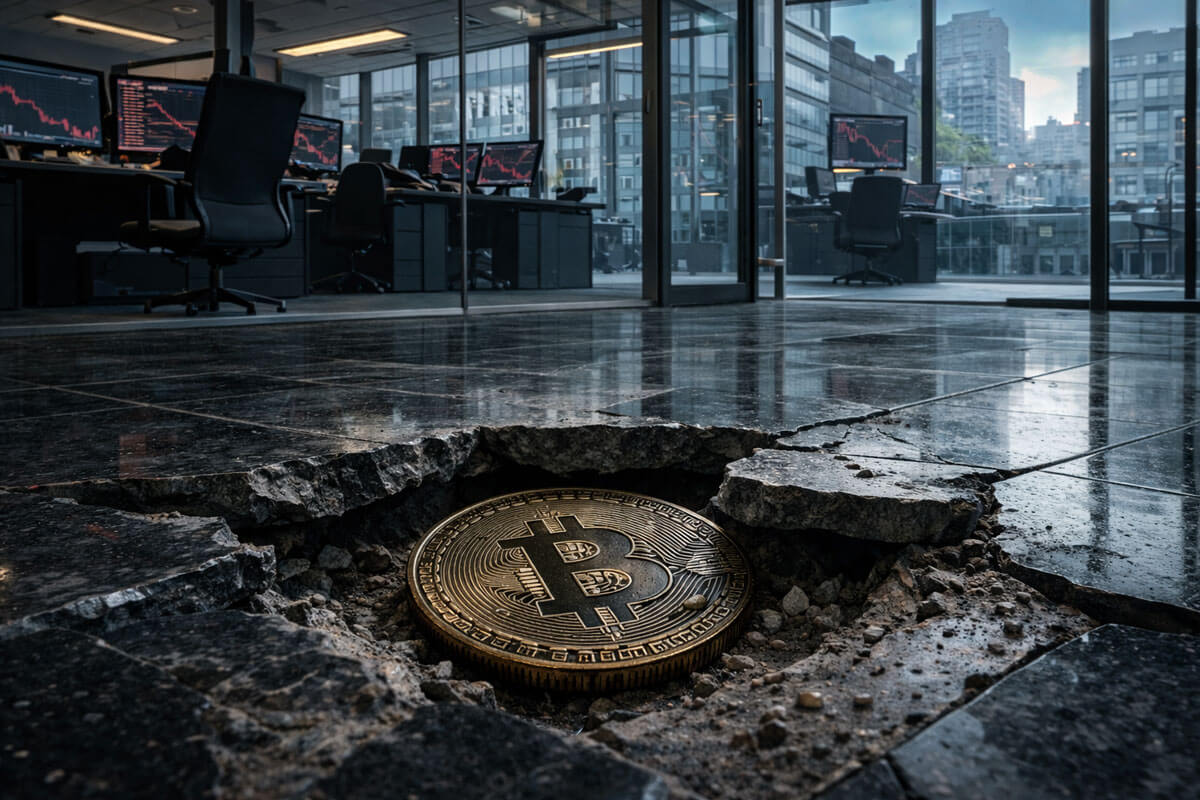
Bitcoin's recent price drop to near $65,000 is primarily driven by macroeconomic factors, specifically rising oil prices and Treasury yields due to geopolitical tensions, indicating it's still trading as a risk-on asset rather than a safe haven. The pause in geopolitical escalation did not alleviate inflation concerns, leading to expectations of tighter financial conditions and a stronger dollar, which collectively pressure risk assets like Bitcoin. Uneven inflows into US spot Bitcoin ETFs, coupled with a large options expiry, exacerbated the price decline, highlighting that institutional demand is not yet a consistent buffer against macro headwinds. Near-term price action for Bitcoin is likely to remain range-bound between $65,000 and $72,000, with significant directional breakouts requiring a broader alignment of macro variables rather than isolated events.
PEPE price action indicates persistent bearish pressure with lower highs and repeated rejections at resistance levels, suggesting a potential continuation of the downtrend. The failure to reclaim key resistance zones around $0.00000340-$0.00000345, coupled with weak momentum indicators like the RSI below 50, points to a lack of buying conviction and increased downside risk. A breakdown below the $0.00000320 support level could accelerate selling pressure, potentially targeting the $0.00000300 or $0.00000290 regions as the next significant support zones.
The listing of Cardano Midnight (NIGHT) on CoinSpot, Australia's leading crypto exchange, expands accessibility for a privacy-focused asset and signals growing demand for such solutions. Following its Binance listing, the CoinSpot addition could drive further adoption for NIGHT, potentially mirroring the 13% price surge observed previously. NIGHT's market capitalization nearing $1 billion and its current trading above the $0.045 support level suggest continued interest, though traders should monitor for potential breaches to $0.043.
Geopolitical tensions in the Strait of Hormuz, exacerbated by a recent tanker incident, are driving Brent crude prices above $110, signaling heightened supply chain risks that could impact energy markets. The market is reacting to the potential for further escalation between Iran and the US, with military posturing and diplomatic signals creating volatility and uncertainty for oil traders. Shipping risks, including the grounding of a Thai tanker, underscore the fragility of critical energy transit routes, potentially leading to increased insurance costs and delivery delays. Investor sentiment in oil markets is highly sensitive to geopolitical headlines, with any indication of de-escalation or further conflict capable of causing rapid price shifts.

AI deepfakes make trust crypto’s scarcest asset. Proof-of-humanity can become the currency powering finance, governance and markets in the imitation economy.
A large 90 million ADA deposit to Binance introduces temporary selling pressure, potentially impacting ADA's immediate price action around the $0.2513 support level. XRP exhibits a potential short-squeeze setup with rising open interest against a declining price, suggesting a possible rapid ascent towards $1.50 if key support at $1.36 holds. Shiba Inu (SHIB) shows signs of a bullish golden cross formation on its daily chart, indicating a potential 37% rally in Q2 2026, contingent on maintaining support around $0.00000504. The crypto market faces potential volatility due to a $14 billion options expiration on Deribit, with Bitcoin needing to reclaim $67,000 to signal a bullish short-term bias.
Tether's engagement of KPMG for its first full audit of USDT reserves signals a significant shift towards regulatory compliance, driven by the new U.S. GENIUS Act framework. The audit and the launch of USAT demonstrate Tether's strategic repositioning to meet U.S. regulatory demands, potentially opening doors for greater institutional adoption and challenging Circle's USDC dominance. While a clean audit could alleviate past transparency concerns, institutional caution may persist due to Tether's history of regulatory fines, making the outcome of the audit critical for its market perception and future fundraising. The ongoing legislative debate around stablecoin yield provisions in the CLARITY Act highlights the evolving regulatory landscape, which could impact how stablecoins are utilized and perceived by both retail and institutional investors.

Intercontinental Exchange's increased investment in Polymarket signals growing institutional confidence in prediction markets as a legitimate asset class, potentially driving further adoption and integration with traditional finance. The substantial capital infusion into Polymarket, alongside a competitor's significant valuation, highlights a burgeoning sector for event-based trading, suggesting a potential for increased liquidity and sophisticated market participants. Despite regulatory scrutiny, major financial players like ICE are doubling down on prediction markets, indicating a belief that these platforms can navigate compliance challenges and become a significant component of future financial ecosystems.
Binance Australia's A$10 million fine for misclassifying clients highlights significant compliance failures, potentially impacting investor confidence in the platform's operations in the region. The A$12 million in client losses and fees stemming from misclassification underscores the direct financial consequences of inadequate onboarding systems and weak oversight, serving as a warning to other crypto firms operating in Australia. This regulatory action against Binance Australia, following previous global penalties, reinforces the ongoing scrutiny faced by major exchanges and suggests a heightened risk environment for derivatives trading on the platform.

Bitcoin's recent dip below $67,000 is primarily driven by macroeconomic risk-off sentiment stemming from Middle East geopolitical tensions and rising U.S. Treasury yields, indicating its sensitivity to global instability. The significant liquidation of over $1.33 billion this week, particularly with heavy leveraged positions concentrated above $70,000, suggests potential for increased volatility and cascading liquidations if price trends continue. Near-term price action is expected to remain choppy with potential for a relief rally contingent on easing macro and geopolitical pressures, implying a cautious trading approach is warranted.

Proposed legislation like the PREDICT Act and STOP Corrupt Bets Act signals increased regulatory scrutiny on prediction markets, potentially impacting platforms and their user base by restricting participation and betting on sensitive events. The focus on banning government officials and their families from political betting highlights concerns about insider trading and the potential for misuse of privileged information, which could lead to stricter compliance measures for prediction market operators. While the direct impact on major cryptocurrencies like BTC or ETH is minimal, these regulatory actions could set a precedent for how decentralized prediction markets are treated, potentially affecting the broader 'DeFi' or 'Exchange' sectors if similar concerns extend to other platforms.
Geopolitical tensions and rising oil prices are creating a risk-off environment, pressuring Bitcoin below $67,000 and increasing the likelihood of further downside as inflation concerns resurface. Significant outflows from US-listed Bitcoin ETFs, totaling $171 million, indicate a cooling of institutional demand and a potential shift in investor positioning amid macro uncertainty. The surge in liquidations, particularly for long positions exceeding $287 million, highlights increased volatility and the unwinding of bullish bets as Bitcoin's price action deteriorates. Technical analysis suggests Bitcoin may be forming a bearish flag pattern, with a daily close below $66,000 potentially signaling a move towards $46,000, amplifying downside risk.
Ripple's mention in a U.S. House hearing on payment modernization signals growing recognition of blockchain solutions in mainstream financial policy discussions. Lawmaker scrutiny of the Federal Reserve's payment infrastructure preparedness, highlighting Ripple as a benchmark for faster, cheaper transactions, suggests potential regulatory tailwinds or pressure for innovation. The convergence of regulatory attention, Ripple's stablecoin initiatives (RLUSD), and its significant cross-border transaction potential ($120 billion estimate) positions the company as a key player in reshaping both U.S. domestic and global payment systems.

Retail investors are aggressively distributing Bitcoin as prices fall below $67,000, indicating capitulation pressure from smaller holders. Whale wallets (1,000+ BTC) are largely neutral, suggesting a wait-and-see approach rather than active buying or selling, which could prolong price uncertainty. The current on-chain data points to retail capitulation rather than broad institutional distribution, implying potential for a short-term bounce if larger holders begin to accumulate.

The confluence of a significant macro selloff driven by oil shocks and rising Treasury yields, coupled with a substantial $14.1 billion Bitcoin options expiry on Deribit, created a potent bearish catalyst that pressured prices lower. The specific settlement mechanics of Deribit's options, particularly the 30-minute time-weighted average pricing window, amplified short-term price movements as dealers hedged put positions into a falling market. Despite the large options expiry, the 'max pain' price point of $75,000 was significantly distant from the current spot price, suggesting that the market's immediate reaction was driven more by macro pressures and hedging flows than by a direct push towards a specific expiry-related price target. The article highlights that the macro environment's negative sentiment, characterized by reduced rate-cut expectations and a risk-off rotation into money market funds, preceded and exacerbated the impact of the options expiry, indicating that the expiry acted as an accelerant rather than the sole cause of the price decline.
Shiba Inu has broken below the critical MA 50 technical level, indicating a bearish short-term outlook as sellers gain advantage. The decline in SHIB's price is occurring amidst broader market weakness driven by rising U.S. Treasury yields and a stronger dollar, impacting risk assets. A sustained break below $0.00000562 could lead to further downside for SHIB, while recovery above the MA 50 and $0.000006 presents potential upside targets.
Signal context only. Validate with price action, liquidity, and risk limits before taking a position.
