
Navigating Crypto News

CoinFeather
Navigating Crypto News

Quick market read from this story
Bitcoin's price has fallen below $67,000, triggering significant liquidations of long positions and raising concerns among analysts about a potential further drop to $46,000 if key support levels are breached.
The current market sentiment is heavily influenced by technical patterns resembling previous sharp declines, with analysts warning of a potential "massive breakdown" if Bitcoin closes below $66,000.
Spot Bitcoin ETFs experienced substantial outflows on March 26th, indicating a lack of institutional buying pressure to counteract the downward price movement.
Despite the bearish technical signals and ETF outflows, some market participants remain interested in buying dips in the lower $60K regions, though this is framed as a potential FOMO-driven behavior rather than conviction.
Deep Dive
Bitcoin is currently trading at $66,636, marking a 3.82% decrease on the day, with technical indicators signaling a strong sell. The rapid decline led to the liquidation of over $115 million in BTC long positions within an hour as the price fell below $67,000. The crypto market's sentiment has shifted to fear, with the Fear and Greed Index dropping to 23 from 32 last week.
Analysts are closely watching a recurring bearish flag pattern. Crypto analyst Crypto Patel noted that Bitcoin previously crashed from $89,000 to $60,000 in eight days after a similar pattern broke down. He warns that a daily close below $66,000 could trigger another significant drop, potentially targeting $46,000. Ran Neuner echoed these concerns, suggesting a potential fall to $50,000 if a bounce doesn't occur soon. Michaël van de Poppe also highlighted the risk of a deeper correction heading into month-end, though he remains interested in buying in the lower $60,000 regions.
The current market downturn is exacerbated by negative on-chain data. On March 26, spot Bitcoin ETFs experienced net outflows of $171 million. Spot Ethereum ETFs also saw outflows totaling $92.54 million, marking seven consecutive days of outflows. Additionally, Bhutan has reportedly moved over $100 million in Bitcoin in 2026. These institutional movements suggest a lack of new capital entering the market to absorb the selling pressure.
Despite the downward trend, some market participants remain active in buying dips. Steve Sosnick of Interactive Brokers observed persistent buying on dips but cautioned that this behavior might stem from reflexive FOMO rather than fundamental conviction. He suggests that markets might be underestimating potential risks, particularly concerning oil prices and geopolitical stability.
Source, catalyst, and sector overlap from the latest feed.
Stargate (STG) experienced a significant 52% surge driven by LayerZero's acquisition announcement, enabling a 1:1 ZRO swap, indicating strong market reaction to integration news. Ondo Finance's partnership with Franklin Templeton for tokenizing ETFs on its platform signals a move towards RWA integration and potential institutional adoption, despite current price consolidation. Canton (CC) saw a price increase following Visa's announcement as a super validator, highlighting the impact of major traditional finance players joining blockchain infrastructure. Despite a broader market downturn with BTC and ETH declining, specific altcoins like STG, ONDO, and CC demonstrated resilience and upward momentum due to distinct project-specific catalysts.
XRP's open interest surge to 14.8% indicates increased trader participation and potential for accelerated price movements, driven by leveraged positioning. Liquidation heatmaps reveal key support at $1.25-$1.30 and resistance at $1.45, suggesting price is coiling for a decisive move towards these liquidity zones. The positive Sharpe Ratio suggests improving risk-adjusted returns and market stabilization, potentially preceding more sustained price action. XRP is currently consolidating between defined support and resistance levels, with a breakout likely to be sharp and driven by liquidity sweeps.
Crypto casinos are evolving beyond simple Bitcoin acceptance, integrating multi-coin support and faster settlement, indicating a maturing niche within the broader crypto ecosystem. The increasing adoption of stablecoins in crypto casinos offers players a hedge against volatility, suggesting a growing demand for predictable bankrolls in online gambling. While crypto casinos offer payment convenience, users must navigate regulatory ambiguity, network fees, and the inherent risks of irreversible transactions, underscoring the need for due diligence.
Solana is approaching a critical $80 support level, with its Q1 close poised to dictate the direction for Q2, highlighting a period of potential volatility and a need for bullish confirmation above $90. Despite forming higher lows since $67, Solana's price action is constrained by resistance around $92-$95, indicating a tightening range that suggests an imminent breakout or breakdown is likely. Current technical indicators like RSI below 50, a flat CMF, and average volume suggest a lack of strong momentum, reinforcing the need for bullish confirmation before anticipating a significant upward move.
Charles Hoskinson's 'next-gen' designation for Midnight, coupled with its privacy features and sustainable tokenomics, signals a strategic push towards real-world asset tokenization, potentially attracting institutional interest. The partnership with Monument bank to tokenize £250 million in deposits represents a significant real-world adoption milestone for Midnight, validating its capacity for handling regulated financial products on-chain. While Midnight gains traction, investor sentiment towards ADA remains mixed, with some questioning its future relative to NIGHT, though on-chain data shows accumulation by larger wallets, suggesting potential underlying support. Midnight's development is positioned as complementary to Cardano's infrastructure, with security reliance and expected commercial deal integration suggesting a symbiotic relationship rather than direct competition, which could benefit the broader Cardano ecosystem.
Geopolitical tensions and rising oil prices are creating a risk-off environment, pressuring Bitcoin below $67,000 and increasing the likelihood of further downside as inflation concerns resurface. Significant outflows from US-listed Bitcoin ETFs, totaling $171 million, indicate a cooling of institutional demand and a potential shift in investor positioning amid macro uncertainty. The surge in liquidations, particularly for long positions exceeding $287 million, highlights increased volatility and the unwinding of bullish bets as Bitcoin's price action deteriorates. Technical analysis suggests Bitcoin may be forming a bearish flag pattern, with a daily close below $66,000 potentially signaling a move towards $46,000, amplifying downside risk.
Institutional capital is reportedly accumulating positions in Bittensor (TAO) and Hyperliquid (HYPE), driven by AI momentum and DEX growth respectively, suggesting a divergence from the broader altcoin market selloff. The potential passage of the CLARITY Act is highlighted as a key catalyst, which could unlock significant institutional capital flows into digital assets by allowing US banks to hold them on balance sheets. Both TAO and HYPE have seen significant price appreciation and are backed by multiple ETF filings, indicating growing institutional interest and potential for further adoption ahead of regulatory clarity.
Significant net outflows from Bitcoin and Ethereum ETFs on March 26 indicate institutional investors are reducing exposure amid market uncertainty and upcoming options expiries. The concentration of leverage and open interest on major exchanges suggests a fragile market structure driven by a limited set of participants, amplifying short-term volatility risks. Upcoming Bitcoin and Ethereum options expiries totaling $16.4 billion could introduce short-term market friction as traders manage positions ahead of settlement. Subdued activity in Solana and XRP ETFs points to a cautious, wait-and-see approach for smaller-cap crypto products, reflecting selective institutional engagement.
Significant outflows from spot Bitcoin ETFs suggest a cooling of institutional demand, potentially signaling a pause in accumulation and raising questions about Bitcoin's ability to sustain levels near $70,000 amid macroeconomic uncertainty. The largest single-day ETF outflow in three weeks indicates a shift in institutional sentiment, moving from robust inflows to net withdrawals, which could precede a period of price consolidation or correction. While the ETFs allow for easier market access, the recent moderation in flows highlights that institutional investors are adopting a more cautious stance, potentially awaiting clearer macroeconomic signals or price discovery.
Despite short-term price declines driven by geopolitical uncertainty, sustained ETF inflows and exchange outflows indicate underlying institutional accumulation and a potential shift towards self-custody. The market is at a critical juncture, needing to decide between breaking through the established uptrend or confirming the 50-day moving average as support, suggesting a near-term directional move is imminent. BlackRock's observation of investor concentration in Bitcoin and Ether, while shunning altcoins, highlights a potential bifurcation in market sentiment and capital allocation within the crypto space.
The CoinDesk 20 Index experienced a broad decline, with only Bitcoin Cash (BCH) showing a marginal gain, indicating a general bearish sentiment across major digital assets in the index. With the CoinDesk 20 Index down 2.4%, the market is exhibiting weakness, suggesting a potential short-term downward trend for the broader crypto market represented by this index. The performance of AAVE and APT as notable laggards highlights specific project vulnerabilities or market pressures that could influence investor sentiment towards these assets.
XRP is exhibiting signs of early accumulation with a significant $315 million surge in buying demand on Binance, notably without a corresponding increase in leverage, suggesting conviction-driven buying rather than speculative hype. The absence of high leverage alongside rising buying pressure reduces the risk of liquidation-driven pullbacks, potentially paving the way for more durable price appreciation if current consolidation around $1.35 is resolved upwards. Traders should monitor the $1.35 level as a critical inflection point; a sustained break above it could validate the accumulation phase and trigger broader momentum, while failure to hold may lead to extended sideways movement or short-term selling.
A TD Sequential buy signal on Solana's 4-hour chart suggests potential short-term relief, but the broader bearish trend and $100 resistance remain significant headwinds. Failure to hold the $85 support level could invalidate the short-term bullish signal and accelerate downside movement, while a breakout above $97 could signal a larger upward move. The conflicting technical signals and range-bound price action between $75 and $97 indicate increasing energy buildup, suggesting a significant directional move is imminent for SOL.
Live Feed
Loading the broader stream in the same flow as the homepage feed.

Fannie Mae's acceptance of crypto collateral for mortgages, facilitated by Coinbase, marks a significant step towards mainstream adoption by integrating digital assets into the traditional US residential mortgage market. The new mortgage product allows borrowers to pledge BTC or USDC as down payment collateral without selling, avoiding immediate taxable events and potential forced liquidation, while offering a novel financing option for asset-rich individuals. While the mortgage product offers flexibility, the higher interest rates (0.5%-1.5%) and requirement for collateral to be held on a US-regulated exchange like Coinbase indicate a controlled, albeit positive, integration into traditional finance. The broader market context of escalating geopolitical tensions and upcoming economic data points suggests continued volatility, overshadowing the positive adoption news for Bitcoin in the short term.
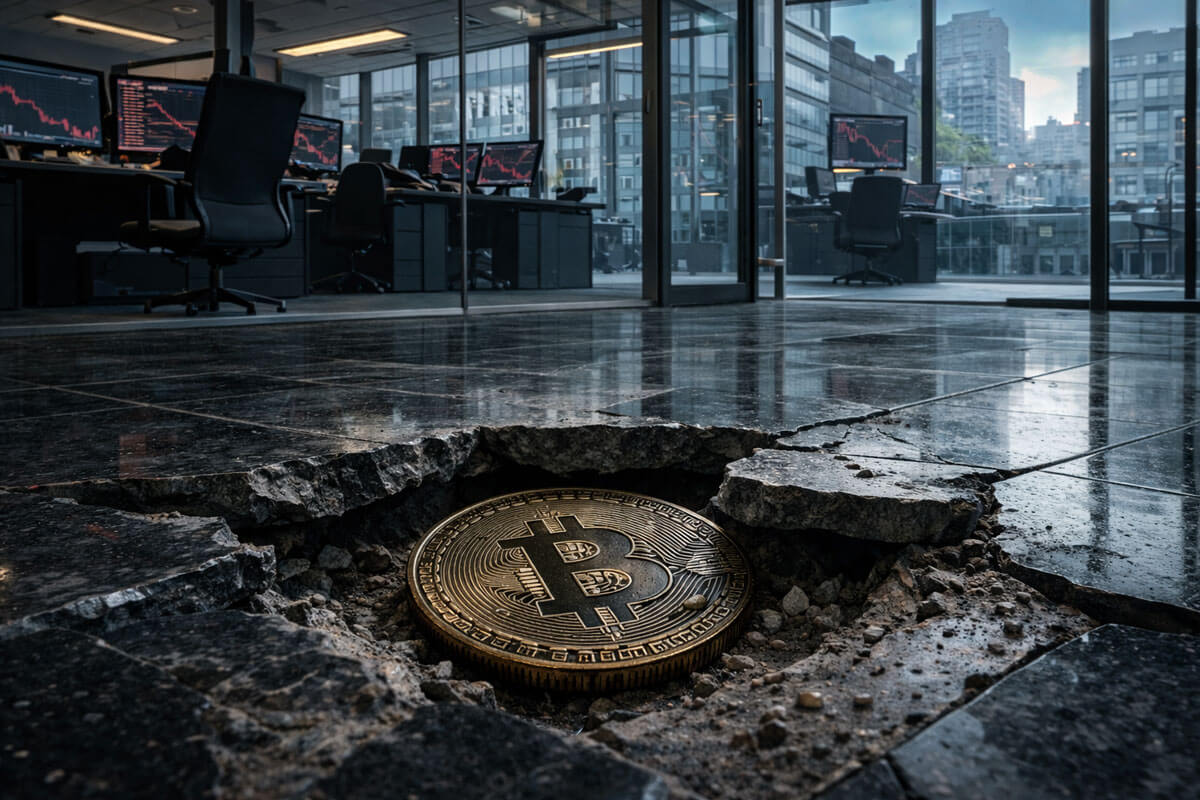
Bitcoin's recent price drop to near $65,000 is primarily driven by macroeconomic factors, specifically rising oil prices and Treasury yields due to geopolitical tensions, indicating it's still trading as a risk-on asset rather than a safe haven. The pause in geopolitical escalation did not alleviate inflation concerns, leading to expectations of tighter financial conditions and a stronger dollar, which collectively pressure risk assets like Bitcoin. Uneven inflows into US spot Bitcoin ETFs, coupled with a large options expiry, exacerbated the price decline, highlighting that institutional demand is not yet a consistent buffer against macro headwinds. Near-term price action for Bitcoin is likely to remain range-bound between $65,000 and $72,000, with significant directional breakouts requiring a broader alignment of macro variables rather than isolated events.
PEPE price action indicates persistent bearish pressure with lower highs and repeated rejections at resistance levels, suggesting a potential continuation of the downtrend. The failure to reclaim key resistance zones around $0.00000340-$0.00000345, coupled with weak momentum indicators like the RSI below 50, points to a lack of buying conviction and increased downside risk. A breakdown below the $0.00000320 support level could accelerate selling pressure, potentially targeting the $0.00000300 or $0.00000290 regions as the next significant support zones.
The listing of Cardano Midnight (NIGHT) on CoinSpot, Australia's leading crypto exchange, expands accessibility for a privacy-focused asset and signals growing demand for such solutions. Following its Binance listing, the CoinSpot addition could drive further adoption for NIGHT, potentially mirroring the 13% price surge observed previously. NIGHT's market capitalization nearing $1 billion and its current trading above the $0.045 support level suggest continued interest, though traders should monitor for potential breaches to $0.043.
Geopolitical tensions in the Strait of Hormuz, exacerbated by a recent tanker incident, are driving Brent crude prices above $110, signaling heightened supply chain risks that could impact energy markets. The market is reacting to the potential for further escalation between Iran and the US, with military posturing and diplomatic signals creating volatility and uncertainty for oil traders. Shipping risks, including the grounding of a Thai tanker, underscore the fragility of critical energy transit routes, potentially leading to increased insurance costs and delivery delays. Investor sentiment in oil markets is highly sensitive to geopolitical headlines, with any indication of de-escalation or further conflict capable of causing rapid price shifts.

AI deepfakes make trust crypto’s scarcest asset. Proof-of-humanity can become the currency powering finance, governance and markets in the imitation economy.
A large 90 million ADA deposit to Binance introduces temporary selling pressure, potentially impacting ADA's immediate price action around the $0.2513 support level. XRP exhibits a potential short-squeeze setup with rising open interest against a declining price, suggesting a possible rapid ascent towards $1.50 if key support at $1.36 holds. Shiba Inu (SHIB) shows signs of a bullish golden cross formation on its daily chart, indicating a potential 37% rally in Q2 2026, contingent on maintaining support around $0.00000504. The crypto market faces potential volatility due to a $14 billion options expiration on Deribit, with Bitcoin needing to reclaim $67,000 to signal a bullish short-term bias.

Tether's engagement of KPMG for its first full audit of USDT reserves signals a significant shift towards regulatory compliance, driven by the new U.S. GENIUS Act framework. The audit and the launch of USAT demonstrate Tether's strategic repositioning to meet U.S. regulatory demands, potentially opening doors for greater institutional adoption and challenging Circle's USDC dominance. While a clean audit could alleviate past transparency concerns, institutional caution may persist due to Tether's history of regulatory fines, making the outcome of the audit critical for its market perception and future fundraising. The ongoing legislative debate around stablecoin yield provisions in the CLARITY Act highlights the evolving regulatory landscape, which could impact how stablecoins are utilized and perceived by both retail and institutional investors.

Intercontinental Exchange's increased investment in Polymarket signals growing institutional confidence in prediction markets as a legitimate asset class, potentially driving further adoption and integration with traditional finance. The substantial capital infusion into Polymarket, alongside a competitor's significant valuation, highlights a burgeoning sector for event-based trading, suggesting a potential for increased liquidity and sophisticated market participants. Despite regulatory scrutiny, major financial players like ICE are doubling down on prediction markets, indicating a belief that these platforms can navigate compliance challenges and become a significant component of future financial ecosystems.

Binance Australia's A$10 million fine for misclassifying clients highlights significant compliance failures, potentially impacting investor confidence in the platform's operations in the region. The A$12 million in client losses and fees stemming from misclassification underscores the direct financial consequences of inadequate onboarding systems and weak oversight, serving as a warning to other crypto firms operating in Australia. This regulatory action against Binance Australia, following previous global penalties, reinforces the ongoing scrutiny faced by major exchanges and suggests a heightened risk environment for derivatives trading on the platform.

Bitcoin's recent dip below $67,000 is primarily driven by macroeconomic risk-off sentiment stemming from Middle East geopolitical tensions and rising U.S. Treasury yields, indicating its sensitivity to global instability. The significant liquidation of over $1.33 billion this week, particularly with heavy leveraged positions concentrated above $70,000, suggests potential for increased volatility and cascading liquidations if price trends continue. Near-term price action is expected to remain choppy with potential for a relief rally contingent on easing macro and geopolitical pressures, implying a cautious trading approach is warranted.

Proposed legislation like the PREDICT Act and STOP Corrupt Bets Act signals increased regulatory scrutiny on prediction markets, potentially impacting platforms and their user base by restricting participation and betting on sensitive events. The focus on banning government officials and their families from political betting highlights concerns about insider trading and the potential for misuse of privileged information, which could lead to stricter compliance measures for prediction market operators. While the direct impact on major cryptocurrencies like BTC or ETH is minimal, these regulatory actions could set a precedent for how decentralized prediction markets are treated, potentially affecting the broader 'DeFi' or 'Exchange' sectors if similar concerns extend to other platforms.
Signal context only. Validate with price action, liquidity, and risk limits before taking a position.
