
Navigating Crypto News

CoinFeather
Navigating Crypto News

Quick market read from this story
The CoinDesk 20 Index experienced a broad decline, with only Bitcoin Cash (BCH) showing a marginal gain, indicating a general bearish sentiment across major digital assets in the index.
With the CoinDesk 20 Index down 2.4%, the market is exhibiting weakness, suggesting a potential short-term downward trend for the broader crypto market represented by this index.
The performance of AAVE and APT as notable laggards highlights specific project vulnerabilities or market pressures that could influence investor sentiment towards these assets.
Deep Dive
The CoinDesk 20 Index experienced a decline of 2.4%, trading at 1912.59 as of 4 p.m. ET on Thursday, March 27, 2026. Amidst the broader market downturn, Bitcoin Cash (BCH) emerged as the sole gainer, showing a modest increase of 0.8%.
Out of the 20 assets tracked by the CoinDesk 20 Index, only BCH recorded positive movement. Other notable performers included CRO, which saw a slight decrease of 0.7%, while APT and AAVE were among the laggards, down 4.6% and 3.2% respectively.
The CoinDesk 20 Index is a comprehensive measure of the cryptocurrency market, representing 20 of the leading digital assets. It is traded globally across various platforms and regions, providing a benchmark for the performance of major cryptocurrencies.
Source, catalyst, and sector overlap from the latest feed.
A leak detailing Anthropic's advanced 'Claude Mythos' AI model, capable of identifying software vulnerabilities, has triggered a sharp sell-off in tech-software stocks and impacted Bitcoin's price, suggesting a heightened cybersecurity risk perception. The potential for advanced AI to accelerate cyber threats could lead to increased demand for cybersecurity solutions, potentially benefiting related infrastructure and AI development sectors. The market reaction, with the IGV ETF down and BTC falling below $66,000, indicates that even indirect AI developments can have a tangible, near-term impact on broader crypto and tech markets.
Live Feed
Loading the broader stream in the same flow as the homepage feed.

The partnership between Better Home & Finance and Coinbase introduces a novel way for homebuyers to leverage Bitcoin and USDC as collateral for down payment loans, potentially increasing demand for these assets by linking them to traditional real estate finance. This development signifies a growing integration of digital assets into mainstream financial services, offering a solution for individuals holding crypto wealth but lacking immediate liquidity for home purchases, thereby expanding the addressable market for both crypto and real estate. While the product aims to avoid liquidation triggers based solely on market volatility, the reliance on Fannie Mae guidelines and the inherent risks of collateralized loans in a fluctuating market present potential challenges and regulatory scrutiny. The initiative could serve as a blueprint for future TradFi integrations, with plans to expand eligible collateral to tokenized equities and fixed income, signaling a broader trend towards bridging on-chain and off-chain asset classes.
Retail investors are actively accumulating Dogecoin at current price levels around $0.09, as evidenced by significant on-chain purchases on platforms like Kraken. Institutional participation remains absent, with zero net ETF flows for eight consecutive days, indicating a lack of conviction from larger market players. Dogecoin's technical structure shows bearish signals, including a death cross and downward-sloping moving averages, suggesting potential downside risk if key support at $0.087 fails. The next 72 hours are critical for Dogecoin, as the price action will determine whether the current accumulation zone holds or breaks, potentially setting the directional bias for Q2.
Despite significant technical advancements and ambitious upgrade cycles for Ethereum, the asset has broken below the $2,000 mark, indicating that market sentiment is currently driven by broader macroeconomic factors rather than on-chain development progress. Low trading volume on major exchanges like Binance suggests a lack of institutional and large investor participation, leading to thinner liquidity and making ETH price action more susceptible to downward pressure from minor sell orders. The failure of recent upgrades, such as Fusaka and Pectra, to translate into positive price action highlights a disconnect between Ethereum's development roadmap and current market demand, suggesting that future price appreciation may depend on a shift in overall risk appetite. While Ethereum's technical roadmap through 2027, including advancements in ZK-EVMs and consensus layer redesigns, promises a more capable network, the current price action indicates that these fundamental improvements are not yet priced in and may require a more favorable macro environment to be recognized.

ICE completed a new $600 million investment in Polymarket, advancing its $2 billion funding deal as prediction markets face growing scrutiny.
Geopolitical tensions surrounding Iran are driving significant market volatility, with rising oil prices directly pressuring stock futures and creating an uncertain trading environment. Despite diplomatic signals, conflicting information from the Middle East and the continued rise in oil prices suggest that market participants should remain cautious due to persistent escalation risks. Major stock indices approaching correction territory indicate a broad shift in investor sentiment, highlighting the potential for further downside if geopolitical risks are not resolved swiftly.
Rising U.S. Treasury yields and a strengthening dollar are pressuring risk assets like Bitcoin, as investors seek safer returns amid geopolitical uncertainty. A significant $15.58 billion in Bitcoin and Ethereum options expiring this week is contributing to increased market volatility and potential price adjustments. Accelerated liquidations totaling $451 million and continued outflows from Bitcoin ETFs indicate weakening institutional demand and a shift towards reduced exposure. The crypto market's sharp decline, marked by Bitcoin falling to a two-week low and a shift to 'extreme fear' sentiment, suggests a near-term bearish outlook driven by macro and technical factors.
The convergence of a massive $14.16 billion Bitcoin options expiry and escalating geopolitical tensions in the Middle East has triggered a significant price drop, with potential for further downside if key support levels are breached. The reversal of the recent rotation from gold into Bitcoin, as evidenced by gold's rise and Bitcoin's fall amid renewed Iran threats, suggests a flight to traditional safe-haven assets, potentially pressuring crypto prices in the short term. Technical analysis indicates a bearish pattern forming on Bitcoin, with a daily close below $66,000 potentially leading to a sharp decline towards $46,000, while a hold of the lower $60K range could see buying interest emerge. Recent ETF outflows for both Bitcoin and Ethereum, coupled with the current market pressures, signal a potential shift in institutional sentiment or a temporary pause in inflows, warranting close observation of market dynamics.

An ECB working paper found DeFi governance remains highly concentrated, complicating efforts to identify who should fall under MiCA oversight.
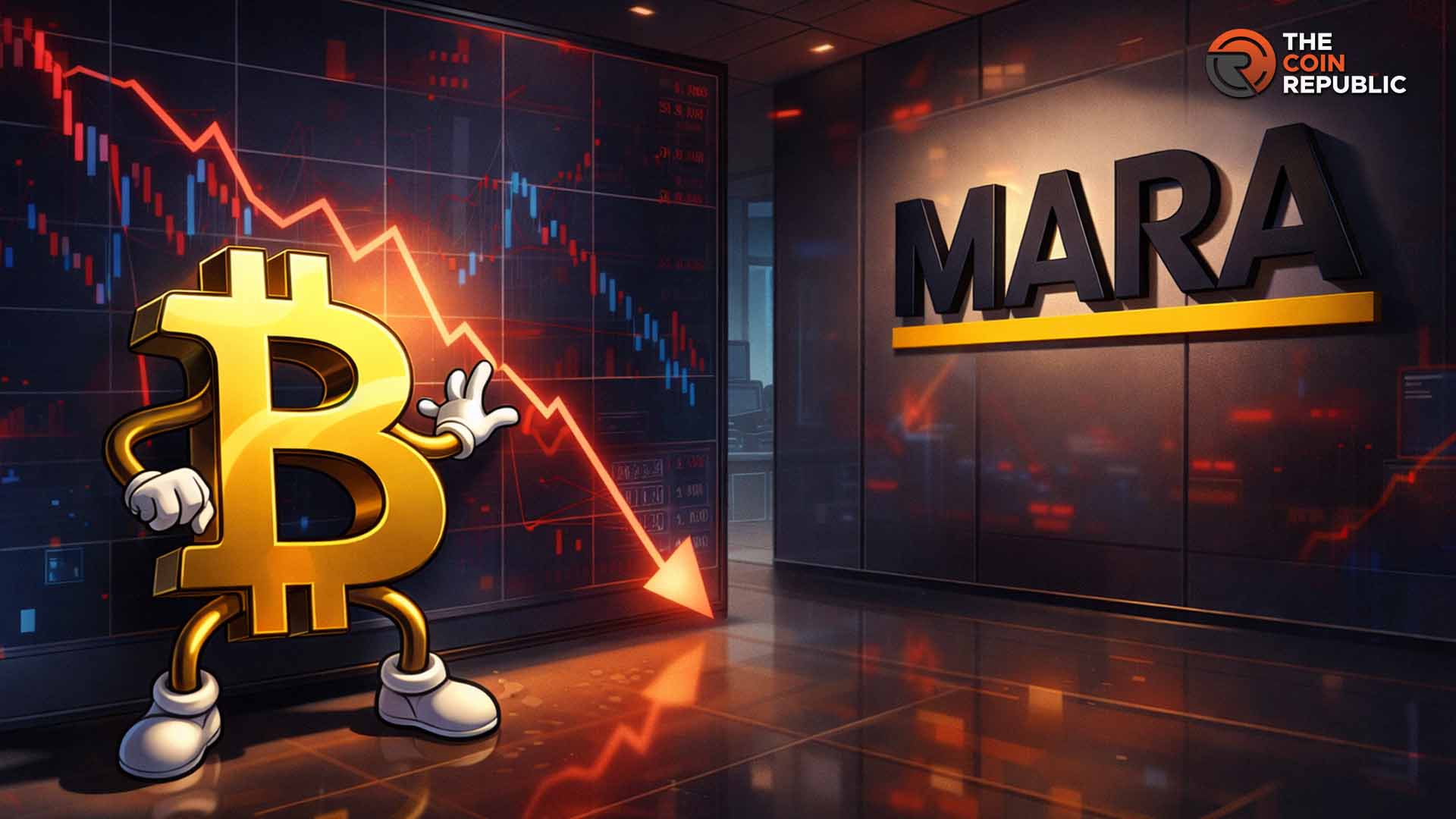
The shift in Bitcoin treasury rankings, with Twenty One Capital surpassing Marathon Digital, highlights the increasing financial pressure on crypto mining firms and the potential unsustainability of debt-driven accumulation strategies. Marathon Digital's significant Bitcoin selloff to service debt underscores the vulnerability of leveraged treasury models to tightening liquidity conditions and declining equity performance. The repositioning of major Bitcoin holders signals a potential shake-up in the corporate treasury landscape, favoring firms with more conservative, long-term collateral-based strategies over speculative allocation.
The article outlines a strategic $1 million investment portfolio for 2026, emphasizing global diversification and positioning for structural trends like AI and interest rate shifts. A balanced portfolio allocation is proposed, with 40% in global equities, 20% in fixed income, 15% in alternatives, 10% in real estate, 10% in commodities, and 5% in cash, reflecting modern asset allocation principles. Key growth drivers identified include AI and infrastructure, while commodities like gold are highlighted as defensive assets and hedges against geopolitical and monetary risks. The strategy advocates for a core-satellite or three-bucket approach, stressing the importance of balancing growth, stability, and opportunistic assets to navigate market complexities.

The decreasing probability of a presidential pardon for Sam Bankman-Fried, as reflected in prediction markets, suggests a diminishing hope for a swift resolution to his legal situation. The public challenge to the fraud conviction by SBF's parents, while aiming to influence perception, has paradoxically lowered pardon odds, indicating a potential misstep in their strategy. The narrative shift by SBF's parents, attempting to portray him as a victim and align with political figures like Trump, highlights a strategic effort to leverage political connections for clemency.
ONDO's price action is re-entering a historical accumulation zone, coinciding with increased whale transactions, suggesting potential smart money accumulation amidst widespread holder losses. The partnership between Franklin Templeton and Ondo to tokenize ETFs on-chain represents a significant validation of the RWA narrative and could drive substantial demand for ONDO as a gateway asset. While technicals show accumulation and a strong RWA narrative is emerging, ONDO's price faces immediate resistance at the 200-day EMA, with a clear catalyst needed to confirm a sustained upward trend beyond $0.46. The tokenization of traditional assets like ETFs by a $1.7T manager via Ondo signifies a maturing RWA sector, potentially attracting institutional capital and increasing the utility of ONDO within DeFi.
XRP is exhibiting signs of early accumulation with a significant $315 million surge in buying demand on Binance, notably without a corresponding increase in leverage, suggesting conviction-driven buying rather than speculative hype. The absence of high leverage alongside rising buying pressure reduces the risk of liquidation-driven pullbacks, potentially paving the way for more durable price appreciation if current consolidation around $1.35 is resolved upwards. Traders should monitor the $1.35 level as a critical inflection point; a sustained break above it could validate the accumulation phase and trigger broader momentum, while failure to hold may lead to extended sideways movement or short-term selling.
Signal context only. Validate with price action, liquidity, and risk limits before taking a position.
BCH
BCH
No explicit catalyst tagged.
Intercontinental Exchange's increased investment in Polymarket signals growing institutional confidence in prediction markets as a legitimate asset class, potentially driving further adoption and integration with traditional finance. The substantial capital infusion into Polymarket, alongside a competitor's significant valuation, highlights a burgeoning sector for event-based trading, suggesting a potential for increased liquidity and sophisticated market participants. Despite regulatory scrutiny, major financial players like ICE are doubling down on prediction markets, indicating a belief that these platforms can navigate compliance challenges and become a significant component of future financial ecosystems.
