
Navigating Crypto News

CoinFeather
Navigating Crypto News
Quick market read from this story
Bitcoin's recent breach of the $70,000 support level, influenced by geopolitical tensions and options expirations, suggests near-term volatility and potential for further downside.
Despite price pullbacks, on-chain data indicates continued whale and retail accumulation, hinting at underlying bullish conviction that could fuel a future rally.
Analysts are monitoring key price levels like $48,387 and $36,657 as potential dip-buying opportunities, historically preceding significant bull runs.
Broader economic pressures including rising unemployment, inflation, and geopolitical conflicts are creating a cautious market environment, potentially leading to a recessionary outlook that could impact crypto prices.
Deep Dive
Bitcoin (BTC) has fallen below the significant psychological threshold of $70,000, trading at $68,739.30 with a 3.49% decrease in the last 24 hours. This price action follows geopolitical developments, including the Pentagon's stated intention to strike Iran, and the upcoming expiration of $16.4 billion in Bitcoin and Ethereum options on Friday.
Despite the recent price decline, on-chain data indicates that whales continue to accumulate Bitcoin. Wallets holding between 10 and 10,000 BTC have increased their holdings by 0.45%, adding 61,568 BTC over the past month. Retail investors, holding wallets with less than 0.01 BTC, have also increased their positions by 0.42% in the same period. Historically, a divergence in accumulation patterns between long-term holders and short-term traders has signaled shifts in market momentum.
The digital asset has struggled to break above $75,000 in the past month, with price movements influenced by macroeconomic uncertainty, geopolitical events, and retail fear of missing out (FOMO). Analysts suggest that historical trends and economic pressures may point to an impending capitulation. Some analysts highlight that dips below the long-term holder realized price of $48,387 and the -0.2 standard deviation band of $36,657 have historically preceded bull runs, often resulting in gains exceeding 300% within 18 months.
The narrative supporting a potential recovery is also bolstered by the gold-Bitcoin correlation, where Bitcoin has shown a V-shaped recovery following fluctuations in gold prices. However, bleak forecasts related to rising unemployment, economic shifts, and geopolitical friction, particularly between the West and the Middle East, hint at a possible recessionary environment.
Key price zones to watch for potential dip-buying opportunities ahead of the next bull cycle include the long-term holder realized price of $48,387 and the -0.2 standard deviation band at $36,657.
Source, catalyst, and sector overlap from the latest feed.
Coinbase's advocacy group, Stand With Crypto, is actively mobilizing voters to support pro-crypto candidates in upcoming midterm elections, signaling a significant push for regulatory influence. The substantial financial backing from crypto PACs, exceeding $271 million for the 2026 midterms, indicates a coordinated effort to shape U.S. policy and potentially impact market-moving legislation. This grassroots lobbying approach by crypto entities aims to make political opposition to digital assets a liability, potentially leading to a more favorable regulatory environment for the industry.
Coinbase's partnership with Better.com to offer crypto-backed mortgages signifies a significant step in integrating digital assets into traditional financial products, potentially increasing demand for collateralized crypto assets like BTC and USDC. The move leverages a recent FHFA directive, indicating a growing regulatory acceptance of crypto as collateral, which could pave the way for broader adoption and new financial instruments within the $18.5 trillion mortgage market. While offering homeownership without selling crypto, the product introduces liquidation risk tied to market volatility, requiring careful collateral management by borrowers and potentially creating new trading opportunities around collateral thresholds. The successful integration of crypto into conforming mortgages, as evidenced by Better.com's stock performance, suggests a positive market reception and could encourage further innovation in crypto-backed lending across the financial sector.
XRP is consolidating within a key demand zone of $1.30-$1.40, with potential upside targets of $5-$6 by 2026 and $18 by 2030, contingent on broader market momentum and Ripple's continued institutional adoption in cross-border payments. On-chain data indicates a reset in speculative positioning, with declining spot volume and reduced leverage suggesting a cleaner market structure conducive to more sustainable directional moves once momentum returns. The article presents long-term price predictions for XRP, ranging from $5-$6 in 2026 to potentially $18-$30 by 2030, driven by factors such as institutional partnerships and global payment integration.
Ripple's proactive AI-driven security initiative, uncovering 10 bugs in the XRP Ledger, signals a maturing approach to network integrity as XRPL expands into RWA and institutional DeFi. The decision to dedicate the next XRPL software release solely to bug fixes and improvements, rather than new features, demonstrates a commitment to foundational stability over rapid expansion. The integration of AI for vulnerability discovery, alongside mandatory audits and expanded bug bounties, enhances the XRP Ledger's security posture, potentially increasing investor confidence in its long-term viability.
The expiration of $16.4 billion in Bitcoin and Ethereum options presents a significant event that could lead to increased volatility as markets approach the 8am UTC deadline. The concept of 'max pain' suggests a potential gravitational pull on BTC and ETH prices towards specific strike levels, influencing short-term price action. Post-expiry, the removal of this large options open interest could unlock suppressed price movements, leading to sharp rallies or declines depending on pre-expiry positioning. With Bitcoin holding the majority of the notional value and Ethereum trading below its max pain level, market makers and traders are actively positioning for potential price swings.
A significant 1,086% surge in Shiba Inu's token burn rate, coupled with exchange reserves hitting a two-year low, suggests a tightening supply dynamic that could support price appreciation if demand remains consistent. The shift of SHIB tokens from exchanges to self-custodial wallets indicates increased long-term holder conviction, reducing immediate sell pressure and potentially creating a more favorable environment for price discovery. Despite the positive supply-side developments, SHIB is currently testing a key resistance level around $0.00000625, with trading volume not yet reflecting strong speculative interest, implying a need for further catalysts to break through.
GameStop has transitioned its Bitcoin holdings into an options income strategy, pledging BTC to Coinbase for covered calls, indicating a shift from a simple buy-and-hold approach. The company no longer directly holds its Bitcoin, now accounting for it as a receivable due to Coinbase's ability to rehypothecate the assets, altering its balance sheet treatment. While GameStop maintains economic exposure, the pledged Bitcoin is now encumbered by counterparty risk and derivative contracts, changing its liquidity and risk profile.
MicroStrategy's preferred equity (STRC) has recovered to par value faster than its historical average, enabling the company to raise capital for further Bitcoin accumulation. The faster recovery of STRC to $100 par value suggests improved market confidence or demand for the instrument, directly facilitating MicroStrategy's strategy of buying Bitcoin with newly issued equity. This development allows MicroStrategy to continue its Bitcoin buying strategy, potentially increasing its BTC holdings and reinforcing its position as a major corporate holder, which could indirectly support Bitcoin's market narrative.
Ripple's significant RLUSD token burns, totaling over 35 million tokens across Ethereum and XRP Ledger, indicate active supply management by the stablecoin treasury. While token burns are routine for stablecoin peg maintenance, the scale and short timeframe of these recent burns have prompted community discussion about liquidity management and potential underlying market dynamics. The market cap fluctuation from $1.6 billion to $1.4 billion due to these burns highlights the direct impact of supply adjustments on stablecoin valuation and circulating supply.
The upcoming $3.7 billion options expiry on Deribit introduces a significant event risk, potentially driving short-term price volatility for Bitcoin and Ethereum. Geopolitical tensions and macro events are increasing overall market volatility, pressuring Bitcoin and Ethereum prices ahead of key support levels. Analysts suggest that while short-term retracements are expected, the health of Bitcoin and Ethereum's price action will depend on their ability to hold critical support levels around $106,000 and $2,700 respectively. The put-call ratios and max pain points for both BTC and ETH options indicate a mixed to bearish sentiment among traders, suggesting caution is warranted.
Ether faces significant headwinds to rally above $2,400, with sustained outflows from spot ETFs and declining DEX volumes indicating a lack of institutional and retail demand. The weak ETH futures premium suggests diminished bullish leverage and investor conviction, implying that current price levels are unlikely to hold without a reversal in these key on-chain and derivatives metrics. Regulatory uncertainty and broader geopolitical risks are contributing to a risk-off environment, pressuring ETH and highlighting the need for improved on-chain activity and investor sentiment to drive a sustainable price increase.
Bitcoin's failure to hold the $70,000 level confirms a bearish structure, suggesting further downside risk unless immediate resistance is reclaimed. Chainlink shows signs of stabilization but remains in a bearish trend, with a potential move to $10 contingent on breaking key moving averages. XRP's declining trend is exacerbated by decreasing network activity, indicating a lack of fundamental demand and increasing the risk of a breakdown below $1.20.
Historical data suggests that when Bitcoin's supply in profit drops to around 50%, it has preceded significant bull runs, with past instances showing gains of over 655%. The current market dynamic differs from previous cycles due to a substantial portion of Bitcoin being held by long-term holders like ETFs and corporations, who exhibit lower sensitivity to short-term price fluctuations, potentially altering the typical accumulation phase behavior. Reduced short-term holder inflows to exchanges like Binance indicate a decrease in reactive selling pressure, aligning with valuation models that suggest limited downside risk relative to long-term upside potential. While historical profitability metrics point to potential accumulation zones, the elevated profitability of long-term holders, driven by institutional adoption, suggests a potentially different market cycle evolution compared to prior bear market bottoms.
Geopolitical de-escalation signals from the US President have provided a temporary reprieve for risk assets, allowing Bitcoin and other cryptocurrencies to pare earlier losses. The market's reaction highlights the sensitivity of crypto assets to broader macroeconomic and geopolitical events, with a pause in conflict potentially easing pressure on yields and risk appetite. While the immediate price action shows a modest recovery, the underlying concerns regarding rising bond yields and potential Fed rate hikes persist, suggesting that the crypto market's broader trend may remain under pressure.
Solana is testing a critical demand zone between $91.45 and $82.60, with failure to hold this level potentially leading to significant downside targets at $53.10, $35.40, and $23.60. Bearish technical patterns, including a rising wedge and a break below $120 support, suggest a continuation of the downtrend, with immediate downside risks towards $80 and $70-$65 if the current support fails. Despite bearish signals, Solana is also trading along a rising trendline support, presenting a potential recovery scenario above $100 if buyers defend the current levels and break through the $90-$95 resistance. Solana is at a decisive technical crossroads, trading near $87.65 with significant price compression, indicating a potential breakout setup that could lead to a rapid move above $100 or a deeper correction.
Live Feed
Loading the broader stream in the same flow as the homepage feed.

US Representative Maxine Waters is questioning the Federal Reserve's approval of Kraken's master account, raising concerns about transparency and regulatory oversight. The inquiry highlights ongoing regulatory scrutiny of crypto firms seeking access to traditional financial infrastructure, potentially impacting future approvals. While Kraken's master account is a significant milestone, regulatory pushback could create headwinds for other crypto entities pursuing similar access.
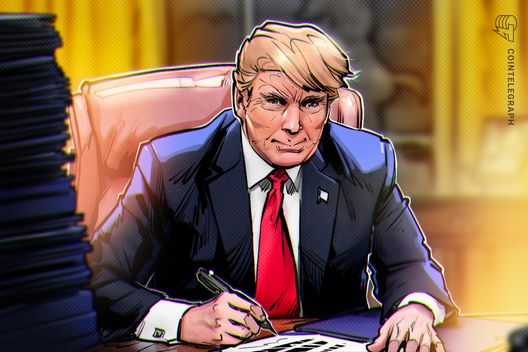
The US Treasury's decision to place President Trump's signature on currency marks a significant departure from historical precedent, potentially influencing perceptions of fiat currency's stability and government backing. While the direct impact on cryptocurrency markets is likely minimal, the move could indirectly affect investor sentiment by highlighting political influence on traditional financial instruments. The introduction of Trump's signature on US dollars, alongside potential $1 coins featuring his likeness, could be interpreted as a broader trend of political figures associating themselves with monetary assets, potentially impacting the narrative around sovereign currencies.

GameStop's disclosure that its Bitcoin holdings were pledged as collateral for covered calls, rather than sold, resolves market speculation and clarifies its treasury strategy. The company's use of Bitcoin for covered call options indicates a strategy to generate yield on its crypto assets, a move that could be adopted by other corporate treasuries seeking income. While GameStop's economic exposure to Bitcoin remains, the pledge to Coinbase means the assets are no longer directly held, impacting how its treasury is accounted for and potentially its perceived direct holdings.

David Sacks' transition from White House AI and Crypto Czar to the President's Council of Advisors on Science and Technology signifies a shift in focus towards broader tech policy, potentially reducing direct crypto regulatory influence from this specific role. The move addresses concerns about Sacks exceeding his term limit as a special government employee, providing a more stable advisory position while potentially limiting his day-to-day crypto policy impact. With Sacks moving to a role focused on AI, quantum computing, and nuclear power, the direct oversight and advocacy for crypto policy within the White House may see a diffusion of influence.
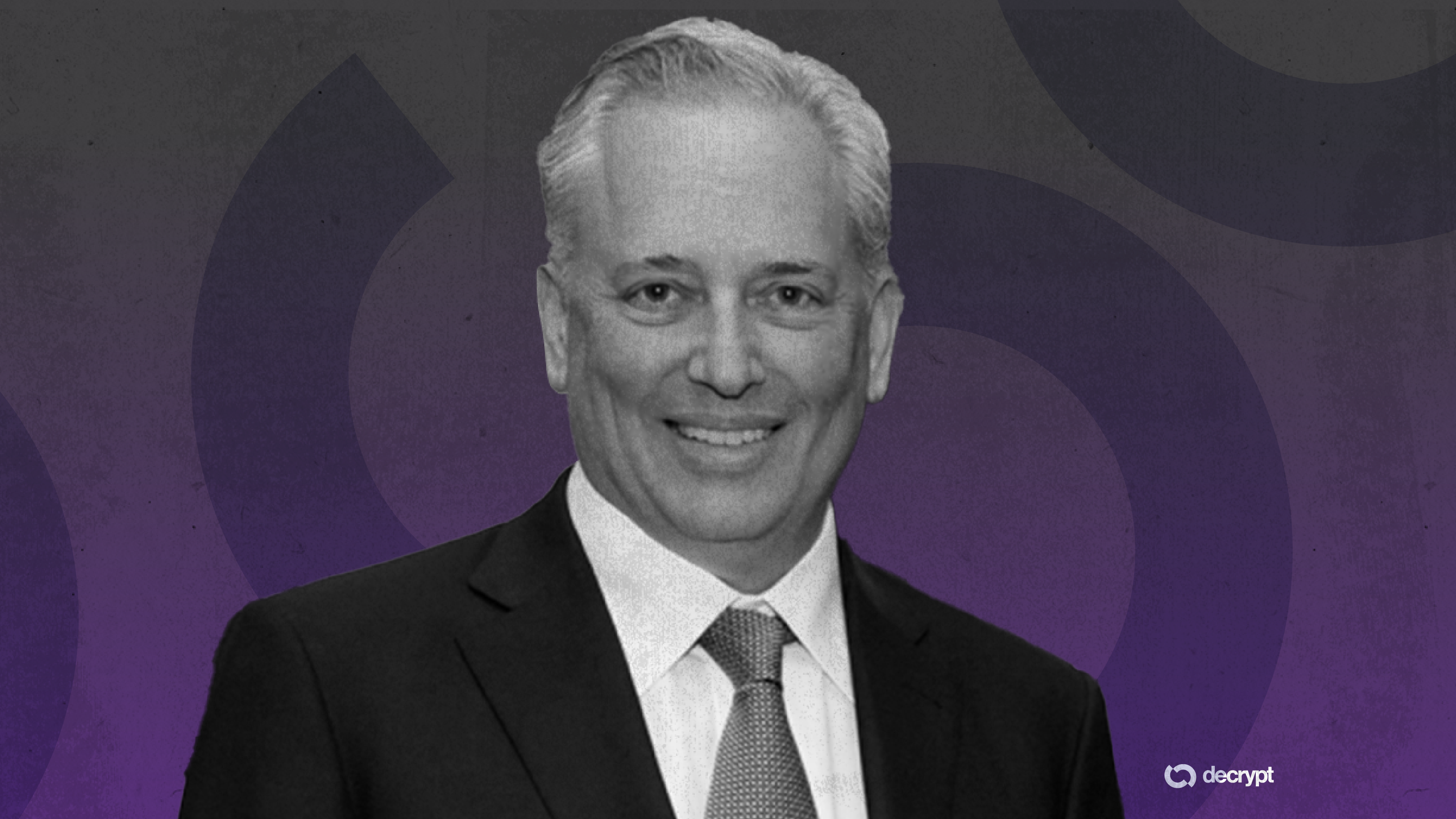
David Sacks' departure from his White House crypto role signifies the end of a specific policy push, leaving key market structure and stablecoin legislation unresolved. The unfinished legislative agenda suggests continued uncertainty in U.S. crypto regulation, potentially impacting investor confidence and market development. Sacks' continued advisory role on broader technology policy indicates a shift in focus but may not directly influence the immediate trajectory of crypto legislation.

A senior Democrat is questioning the regulatory basis for Kraken's limited Federal Reserve master account, potentially signaling increased scrutiny on crypto firms seeking direct access to traditional financial infrastructure. The inquiry by Representative Maxine Waters, a key figure in potential future financial policy, introduces uncertainty around the approval process for crypto-related financial services, which could impact other exchanges seeking similar access. This development highlights the ongoing tension between the crypto industry's push for integration with traditional finance and regulatory oversight, suggesting a cautious approach from policymakers despite recent approvals.

US lawmaker Stephen Lynch criticizes the SEC's reduced enforcement on crypto firms under the Trump administration, signaling potential ongoing regulatory uncertainty that could impact market confidence and asset valuations. The dismantling of the SEC's FinHub and a perceived lack of 'cop on the beat' suggests a less aggressive regulatory stance, which could embolden illicit actors but also potentially create space for innovation if clarity follows. Recent coordination memos between the SEC and CFTC, alongside an interpretative notice on crypto assets, indicate efforts to establish regulatory frameworks, though legislative progress on market structure remains a key factor for future clarity.

XRP ETFs experienced their first monthly net outflows in March after a strong launch, indicating a cooling of initial demand and suggesting that sustained institutional interest will require more than just early-wave enthusiasm. Despite ETF outflows, the broader institutional case for XRP remains robust, evidenced by significant Goldman Sachs exposure and a substantial percentage of institutional investors planning future allocations, highlighting a shift towards deeper integration beyond simple product subscriptions. Ripple's expansion into payments, custody, stablecoins, and prime brokerage, alongside XRPL's growing tokenization capabilities and RWA adoption, provides a more layered institutional narrative for XRP that transcends short-term ETF fund flows.

The Trump DOJ's inconsistent stance on prosecuting crypto privacy developers creates legal uncertainty, making it harder for developers to obtain binding legal clarity on their activities. Despite stated intentions not to prosecute, federal prosecutors have continued to pursue cases against developers of privacy tools, leading to convictions and ongoing trials. A recent Texas judge's ruling dismissed a developer's lawsuit due to the DOJ's stated policy, highlighting a legal loophole that allows for continued prosecution without clear standing for developers to challenge it. The lack of clear legal precedent and the DOJ's shifting approach to privacy software development pose a significant risk to innovation in the privacy-focused crypto sector.

OpenAI's decision to cancel its erotic chatbot mode, following the shelving of Sora, signals a strategic pivot towards a unified AI platform, potentially impacting investor sentiment towards specialized AI tools. The cancellation of the erotic chatbot mode, despite earlier plans, highlights the evolving ethical considerations and regulatory scrutiny surrounding AI development, which could influence future product roadmaps and market perception. While this development is primarily within the AI sector, the broader implications of AI companies navigating societal impact and user dependency could indirectly affect market confidence in AI-driven crypto projects.

Nasdaq's tokenization initiatives, including supporting offshore platforms like Kraken, risk creating a bifurcated market for tokenized equities, potentially leading to price discrepancies and fragmented liquidity. The development signals a significant shift towards mainstream adoption of tokenized assets, with traditional exchanges exploring blockchain technology for equity trading, which could increase competition and introduce new trading paradigms. Investors may face challenges navigating dual markets for the same assets, potentially impacting traditional exchange activity and requiring new risk management strategies for price volatility across platforms.
Signal context only. Validate with price action, liquidity, and risk limits before taking a position.
