
Navigating Crypto News

CoinFeather
Navigating Crypto News
Quick market read from this story
XRP is consolidating within a key demand zone of $1.30-$1.40, with potential upside targets of $5-$6 by 2026 and $18 by 2030, contingent on broader market momentum and Ripple's continued institutional adoption in cross-border payments.
On-chain data indicates a reset in speculative positioning, with declining spot volume and reduced leverage suggesting a cleaner market structure conducive to more sustainable directional moves once momentum returns.
The article presents long-term price predictions for XRP, ranging from $5-$6 in 2026 to potentially $18-$30 by 2030, driven by factors such as institutional partnerships and global payment integration.
Deep Dive
Ripple's XRP is currently trading around $1.36, holding a critical demand zone between $1.30 and $1.40. Analysts suggest that if this support level remains intact, XRP could transition from its current consolidation phase to a recovery, especially as the broader cryptocurrency market shows signs of renewed momentum. Long-term forecasts indicate significant potential, with projections suggesting XRP could reach $5–$6 by 2026 and potentially surge to $18 by 2030, driven by increasing institutional adoption, strategic Ripple partnerships, and widespread global payment integration.
XRP's price action in March has been characterized by tight consolidation, struggling to sustain moves above the $1.40–$1.45 resistance zone while buyers consistently defend the $1.25–$1.30 support range. This indicates limited momentum but also absorbed downside pressure. For April, a key trigger for a potential upward move would be a breakout above $1.45, which could pave the way towards the $1.60–$1.75 range. Conversely, a loss of the $1.25 support could see the price decline towards the $1.10–$1.15 zone, where the next demand area is anticipated.
Looking ahead, XRP's growth trajectory is heavily influenced by the broader cryptocurrency market cycle and Ripple's continued expansion within the financial sector. Projections for 2026 estimate XRP could trade between $3.40 and $9.50, with potential highs reaching $5–$6 by the end of the year, supported by increasing liquidity and institutional interest. By 2030, forecasts suggest XRP could reach between $18.80 and $30.00, contingent on a strong bull cycle and increased institutional usage of Ripple's solutions.
Further out, long-term projections for 2040 and 2050 suggest XRP could reach $97.50–$179.00 by 2040 and $219.25–$526.00 by 2050, assuming widespread adoption of blockchain payment networks and strengthened financial networks by Ripple.
Current on-chain data for XRP indicates a cooling market environment with slowed activity but improving structural conditions. Spot trading volume has decreased, reflecting reduced participation and weaker short-term momentum, suggesting a low-liquidity consolidation phase. However, liquidity remains concentrated on major exchanges, indicating sustained core market interest.
On the derivatives side, XRP's leverage and open interest have seen a sharp decline, signaling a significant reset in speculative positioning. This reduction in leveraged traders exiting or reducing exposure removes excess risk, suggesting XRP is transitioning from a speculative phase to a cleaner, more stable structure. This reset phase is seen as a precursor to more sustainable directional moves once market momentum returns.
Various market analysis platforms offer differing price predictions for XRP. For instance, Changelly projects XRP to reach $17.76 by 2030, DigitalCoinPrice estimates $18.00 by 2030, and WalletInvestor suggests $20.00 by 2030. FAQs highlight that XRP's long-term growth is tied to global payment adoption, institutional partnerships, and Ripple's infrastructure. While considered a promising investment due to its role in cross-border payments and growing adoption, risks related to price volatility and regulation persist.
Source, catalyst, and sector overlap from the latest feed.
Bhutan's continued offloading of approximately $120 million in Bitcoin this year, executed in smaller tranches, suggests a strategic approach to managing its holdings rather than a distressed sale. The ongoing sales, including recent transfers of 123.7 BTC, indicate that the market may continue to see incremental supply pressure from this source in the short term. While the sales are significant in dollar value, the method of breaking them into smaller batches and utilizing market makers implies an effort to minimize market impact.
Former President Trump's shift towards a pro-Bitcoin stance, including past executive orders and support for crypto-friendly legislation, signals a potential for more favorable regulatory environments in the US, which could boost institutional adoption and market confidence. The article highlights a significant historical price surge in Bitcoin following Trump's return to office and previous pro-crypto actions, suggesting that his renewed positive commentary could act as a sentiment driver for the market, though current price action is also influenced by broader geopolitical factors. Trump's declaration of the US aiming to be a 'Bitcoin superpower' and 'crypto capital' indicates a strategic pivot that could attract significant investment and talent, potentially reshaping the global landscape for digital asset innovation and regulation.
Morgan Stanley's launch of a Bitcoin ETF with a competitive 0.14% fee signals a strategic move to capture significant client assets, potentially directing billions into BTC. The bank's integration of Bitcoin exposure within its existing wealth management ecosystem, including its 16,000 advisors and E*TRADE platform, suggests a long-term strategy for mainstream adoption. This development intensifies competition among ETF providers and highlights a broader trend of major financial institutions building out their crypto infrastructure and offerings.
Significant smart money inflows of $6.3 billion into Ethereum derivatives markets, coupled with aggressive whale accumulation, suggest strong underlying demand and potential for a major breakout. The divergence between retail sentiment and large holder behavior, with whales accumulating ETH while retail may be panicking, indicates a potential shift in market dynamics favoring accumulation. Ethereum's price action is consolidating near a critical resistance level, a pattern historically preceding significant upward price movements as buying pressure builds and liquidity tightens. While ETH faces resistance around $2,050, support at $1,900 remains crucial; a confirmed breakout above resistance could trigger accelerated momentum, while a breakdown could extend consolidation.
The upcoming PCE inflation data on March 28th is a critical macro catalyst that could influence the Federal Reserve's monetary policy, directly impacting risk assets like Cardano (ADA) by determining whether interest rates remain high or are cut. While Cardano's price prediction is currently tied to macro factors and faces resistance at $0.27, the Pepeto presale is presented as an independent opportunity with built-in catalysts like an $8 million raise and a confirmed Binance listing, aiming for significant returns irrespective of broader market movements. The article contrasts the uncertain near-term outlook for ADA, dependent on inflation data and breaking key resistance levels, with the perceived immediate upside potential of the Pepeto presale, which is already live with audited tools and analyst projections of 100x-300x returns. Traders are advised to consider the Pepeto presale as a potentially more immediate opportunity for high returns compared to Cardano, which requires broader market recovery and specific price level breaks to see substantial gains.
Ripple CEO Brad Garlinghouse likens stablecoins to crypto's 'ChatGPT moment,' signaling a potential inflection point for business adoption and integration into traditional finance. The projected growth of stablecoin flows to $56.6 trillion by 2030, as predicted by Bloomberg Intelligence, underscores their increasing importance as a payment tool in global finance. While Tether (USDT) and Circle (USDC) dominate current stablecoin trading volume, Ripple's recent acquisitions and launch of its own stablecoin (RLUSD) indicate a strategic push to capture market share. The potential passage of the CLARITY Act is viewed by Ripple as a catalyst for accelerating stablecoin payments and broader blockchain adoption, highlighting the critical role of regulatory clarity in the US.
The SEC's decision deadline on XRP ETF applications, coupled with recent classification of XRP as a commodity, creates a significant catalyst for potential institutional inflows and market repricing. Rising XRP open interest and a surge in perpetual funding rates suggest increasing bullish sentiment among derivative traders, potentially signaling an upcoming price rally. Ripple's integration of AI to find bugs and upcoming CLARITY Act markup to solidify XRP's commodity status indicate ongoing development and regulatory progress, supporting long-term value. Despite recent dips due to broader market factors and options expiry, the confluence of ETF anticipation, regulatory clarity, and derivative market activity positions XRP for potential upside.
Cardano's Midnight network is positioning itself as a key infrastructure layer for RWA tokenization, evidenced by a significant £250 million deal with Monument Bank, suggesting a strategic shift towards institutional adoption. The integration of Midnight with Cardano's core architecture implies that growth in the new network could bolster the entire ecosystem rather than fragment it, potentially driving demand for ADA if institutional use cases scale. Despite positive developments for Midnight, investor sentiment remains divided, with ongoing debate about capital allocation between ADA and the NIGHT token, reflecting uncertainty about immediate repricing catalysts. Technical indicators for both NIGHT and ADA suggest a consolidation phase, indicating that current price action is not yet reflecting the potential long-term implications of Midnight's institutional partnerships and tokenomics.
Evernorth's upcoming XRPL lending protocol, leveraging XLS66 for automated interest and collateral enforcement, signals a significant DeFi development on Layer 1, potentially unlocking idle XRP for institutional yield generation. The testing of Ripple Payment Direct (RPD) using stablecoins on XRPL indicates a strategic move towards broader institutional adoption, prioritizing stable settlement over XRP as a bridge asset for payments. Despite positive protocol developments, the zero net inflows into XRP ETFs suggest a current market sentiment shift away from direct XRP investment vehicles, potentially due to broader market bearishness or a lack of fresh catalysts.
Circle's stock experienced a significant drop due to fears surrounding the CLARITY Act's potential impact on stablecoin rewards, though analysts suggest the sell-off may be overdone as the legislation primarily targets user-facing yield distribution rather than issuer reserve income. Institutional adoption of stablecoins is progressing in Canada, with Deloitte and Stablecorp integrating QCAD into financial systems, indicating a move towards broader integration of digital assets into traditional finance ahead of regulatory clarity. Prediction markets like Polymarket are implementing stricter rules and enhanced surveillance to combat insider trading and manipulation concerns, reflecting increased regulatory scrutiny on these platforms. AI agents, potentially facilitated by protocols like Stripe's MPP, could finally unlock the long-sought micropayments economy by automating transactions, which may increase demand for stablecoins as a low-cost payment solution.
Ripple's AI-driven security overhaul of the XRPL, while technically significant for future institutional adoption, is currently overshadowed by broader market macro factors and ETF flows, indicating a disconnect between fundamental development and short-term price action. CEO Brad Garlinghouse's continued predictions of regulatory clarity and institutional inflows, despite delays in the CLARITY Act timeline, suggest a strategic focus on long-term market positioning rather than immediate price catalysts for XRP. The market's indifference to Ripple's proactive security enhancements and regulatory lobbying highlights a trading environment prioritizing geopolitical events and ETF dynamics over project-specific fundamental upgrades in the near term.
Ripple's mention in a U.S. House Financial Services Committee hearing highlights growing regulatory interest in blockchain-based payment modernization, potentially signaling a shift towards more efficient traditional finance infrastructure. The discussion around upgrading the $93 trillion ACH network, with Ripple's pre-funded stablecoin proposal as a reference, suggests a potential pathway for increased adoption of blockchain solutions in mainstream financial services. While not a direct catalyst for immediate price action, Ripple's inclusion in policy discussions elevates its profile and could influence future regulatory frameworks, impacting the broader digital asset payments sector.
Senator Elizabeth Warren is probing Bitmain's dealings, specifically a large purchase by a Trump-linked firm, citing national security risks associated with foreign-made mining equipment. The investigation into Bitmain's hardware, including past concerns near military bases and Senate reports, could lead to increased regulatory scrutiny and potential restrictions on foreign mining equipment in the U.S. Bitmain and American Bitcoin Corp have denied allegations, stating compliance with laws and no security issues found, but the debate highlights ongoing concerns about the security of critical infrastructure related to crypto mining. This development signals potential headwinds for hardware manufacturers and could influence the broader landscape of U.S. crypto mining operations, particularly concerning supply chain security.
XRP's historical April performance suggests a potential 24.8% average gain, creating a bullish outlook if current consolidation breaks resistance. The potential approval of XRP-focused ETFs and positive regulatory news could drive institutional capital inflow, supporting a price target of $1.50-$1.70. Despite historical averages, the median April growth for XRP is only 2%, indicating that significant gains are driven by outlier years, warranting caution.
Live Feed
Loading the broader stream in the same flow as the homepage feed.
Nearly 40 billion SHIB tokens entering exchanges indicates a significant increase in potential sell-side pressure, which could exacerbate downward price movements if selling volume materializes. The rejection of SHIB's price at the upper boundary of a descending triangle pattern confirms a bearish technical outlook, suggesting that short-term price action may continue to favor sellers. Despite a 2% price drop and bearish technical signals, the growth to over 1.5 million holders suggests sustained retail interest, which could provide a floor for price if selling pressure subsides.

Spot Bitcoin ETFs experienced a significant reversal with $296 million in net outflows, breaking a four-week inflow streak and signaling investor caution amidst ongoing macro uncertainty. The shift from inflows to outflows suggests that despite previous positive momentum, traders are now prioritizing capital preservation over directional bets due to unresolved geopolitical risks. Ethereum ETFs also saw substantial outflows, indicating a broader risk-off sentiment across major digital asset investment vehicles, potentially pressuring short-term price action. While cumulative inflows remain strong, the recent outflows and reduced trading volume suggest a temporary cooling of institutional interest, awaiting clearer macroeconomic trends before re-engaging.
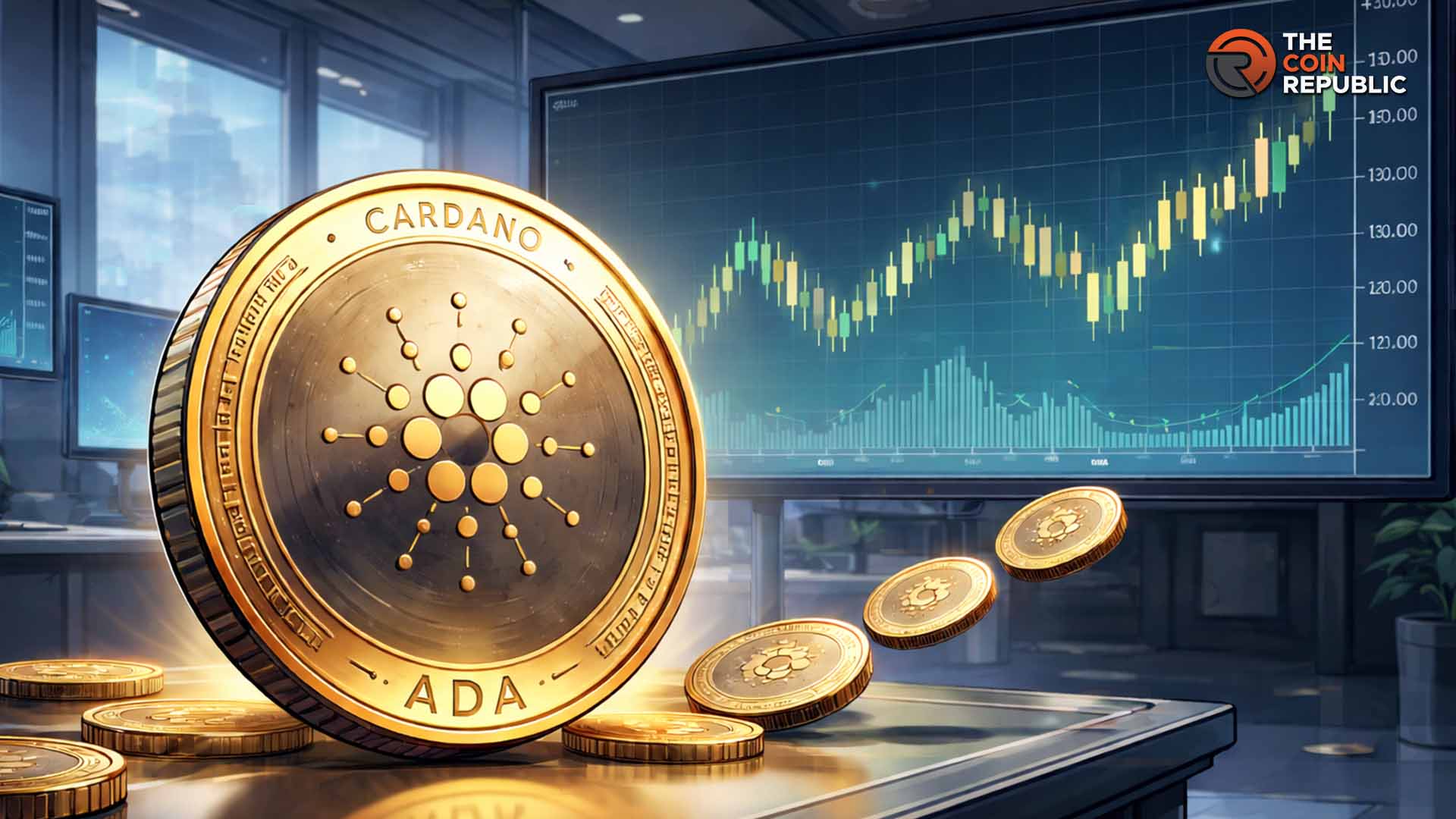
Cardano's ADA price is testing a significant 2-year support level around $0.24, historically a strong rebound zone, suggesting potential for a short-term bullish relief rally. Despite recent bearish price action, whale activity shows $31 million in net longs on perps, indicating accumulation at lows that could support a price reversal if sustained. Subdued network activity, with daily active users struggling to surpass 900, highlights Cardano's difficulty in capitalizing on current market narratives compared to peers, posing a risk to sustained recovery. While ADA has lost its top 10 market cap position, its history of sharp bounces from support combined with recent holder growth suggests potential for accumulation at discounted levels, contingent on broader market improvement.
The reported -1,813% spot flow metric for SHIB is a statistical anomaly due to low baseline inflows, not a sign of significant capital flight, suggesting the market reaction to this specific metric may be overblown. Elevated exchange reserves of over 81 trillion SHIB indicate increased sell-side supply availability, which, combined with price trading below key EMAs, suggests continued selling pressure without immediate bullish conviction. Despite the alarming spot flow percentage, the underlying raw volume data and current price action below resistance suggest a neutral market sentiment for SHIB, awaiting a clearer directional catalyst.

Bitcoin's historical performance suggests it is a superior inflation hedge compared to gold, outperforming inflation 97% of the time versus gold's 52%, which could attract further institutional capital seeking macro hedges. Increased institutional adoption via ETFs, with $56 billion in inflows, is shifting Bitcoin's narrative from a speculative asset to a recognized inflation hedge, potentially supporting sustained demand. Ethereum is positioned to benefit from Wall Street's increasing interest in tokenization and AI-driven infrastructure development, suggesting potential for new use cases and demand drivers beyond its current DeFi focus.
The easing of geopolitical tensions with Iran, signaled by oil prices falling below $100, is creating a more favorable macro environment, potentially driving capital rotation into riskier assets like cryptocurrencies. Pepeto is positioning itself as a high-potential 'next crypto to explode' with a Binance listing imminent, a $8 million presale raise, and projected 100x returns, leveraging its co-founder's history with Pepe and its utility features like zero-fee trading and a risk scorer. While large-cap assets like BTC and AVAX show signs of recovery and utility-driven growth (RWA, AI), the article emphasizes that the most significant multiples this cycle are likely to come from early-stage presale entries like Pepeto, which offers a combination of product utility and exchange listing catalysts.

SIREN price has demonstrated significant speculative demand with a 60% surge in 24 hours, indicating potential for further upside if key resistance levels are breached. The RSI breaking its descending trendline suggests strengthening buying pressure, which could signal a shift in short-term sentiment and a potential continuation of the bullish momentum. While the price action shows a recurring bullish structure, traders should monitor the $2.42 resistance level; a failure to break through could lead to a pullback, delaying the potential new all-time high.

A sophisticated $35 million XRP accumulation via an algorithmic bot strategy was executed across multiple exchanges, indicating a significant, albeit stealthy, attempt to build a large position without impacting price significantly. Despite aggressive bot-driven buying, XRP's price remained range-bound near $1.32, highlighting a market divided by simultaneous whale accumulation and distribution, suggesting a lack of clear directional conviction. The market's muted reaction to substantial bot activity, with price stability attributed to market makers absorbing demand, points to a consolidation phase where underlying liquidity and broader whale sentiment are key determinants of future price action.
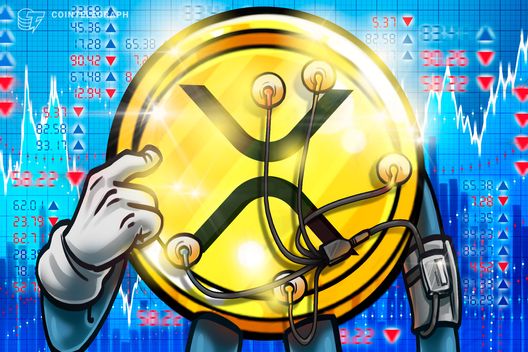
XRP's Sharpe Ratio has turned positive, indicating that current returns are beginning to outpace risk, which could limit further downside according to analyst commentary. Despite improving risk-adjusted returns, rising open interest and repeated liquidations in the futures market suggest a fragile trading environment with potential for continued short-term volatility. Steady whale accumulation over the past month, mirroring a previous accumulation phase that preceded a significant rally, presents a potential bullish signal if sustained, though technicals suggest near-term downside risk.
An analyst proposes a new 'Liquidity Index' suggesting XRP needs to reach $100 for institutional adoption, shifting focus from market cap to true utility metrics like market depth and slippage cost. The article highlights that XRP's fixed supply, combined with increasing demand from ETFs and DeFi, could lead to significant price appreciation due to a supply-demand squeeze, not just speculation. XRP's inherent speed and potential for regulatory clarity (CLARITY Act) are presented as key factors that could deepen its liquidity pool and make it viable for large-scale institutional transactions, contrasting it with slower blockchains.

Origin Protocol (OGN) is in a prolonged consolidation phase, trading near $0.021 with support at $0.018-$0.020 and resistance at $0.025-$0.030, indicating a base-building period before a potential breakout. The long-term outlook for OGN remains positive, with price predictions suggesting a recovery towards $0.05-$0.06 in 2026 and potential to reach $2.00 by 2030, contingent on improved market conditions and ecosystem growth. While OGN shows steady accumulation near support, weak momentum and failure to reclaim resistance levels suggest that a confirmed bullish trend is still developing, warranting a watchlist approach.
Signal context only. Validate with price action, liquidity, and risk limits before taking a position.
