
Navigating Crypto News

CoinFeather
Navigating Crypto News
Quick market read from this story
Former President Trump's shift towards a pro-Bitcoin stance, including past executive orders and support for crypto-friendly legislation, signals a potential for more favorable regulatory environments in the US, which could boost institutional adoption and market confidence.
The article highlights a significant historical price surge in Bitcoin following Trump's return to office and previous pro-crypto actions, suggesting that his renewed positive commentary could act as a sentiment driver for the market, though current price action is also influenced by broader geopolitical factors.
Trump's declaration of the US aiming to be a 'Bitcoin superpower' and 'crypto capital' indicates a strategic pivot that could attract significant investment and talent, potentially reshaping the global landscape for digital asset innovation and regulation.
Deep Dive
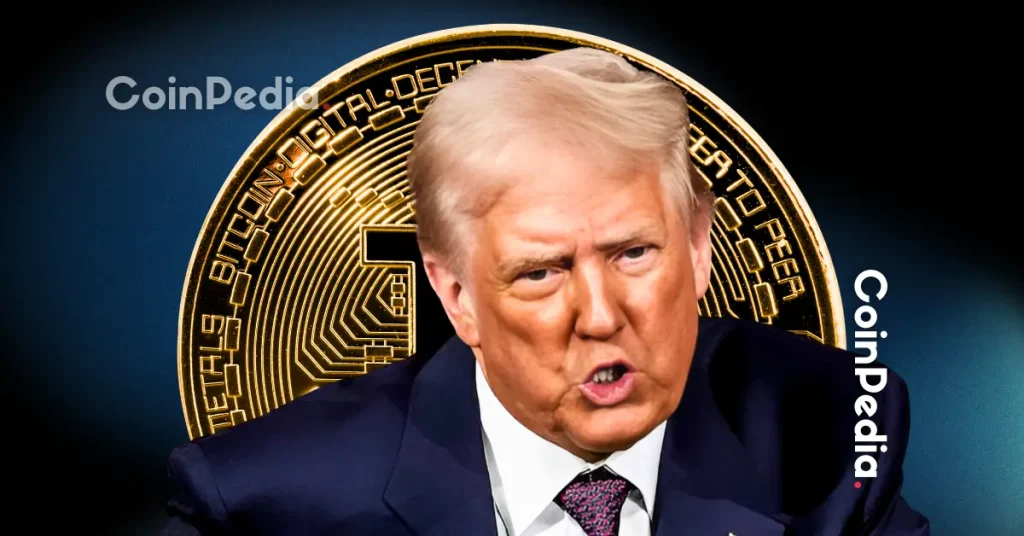
U.S. President Donald Trump has signaled a significant shift in political support for cryptocurrency, declaring that the United States aims to become the world's Bitcoin superpower and the undisputed crypto capital. These statements were made during the FII PRIORITY Miami 2026 summit, where he also acknowledged Bitcoin's growing influence among institutional investors.
Trump's current pro-crypto stance marks a notable departure from his previous views, such as his 2021 statement calling Bitcoin "not money, it's a scam." He now describes Bitcoin as "very powerful" and observes an increasing preference for crypto payments. His administration has also taken concrete steps, including signing an executive order to make Bitcoin a Strategic Reserve and backing the U.S. Digital Asset Stockpile, indicating a desire to integrate cryptocurrency into the financial system.
Beyond verbal support, Trump is championing crypto-focused legislation like the Genius Act and the Clarity Act. The primary objective of these initiatives is to provide regulatory clarity and end what he terms a "war on crypto," thereby fostering innovation. Trump believes that such supportive policies are crucial for the U.S. to lead in global crypto adoption, especially as nations compete to attract blockchain companies and investments. By establishing itself as a crypto-friendly hub, the U.S. could attract exchanges, mining firms, and institutional investors.
Since Trump's return to office, Bitcoin has experienced substantial gains. In 2024, it traded near its previous all-time high of $69,000. The rally intensified, with Bitcoin reaching a new record high of $126,000 in October 2025, boosting its market capitalization to $4 trillion. This surge was largely attributed to the launch of Bitcoin ETFs and other countries adopting Bitcoin reserves, following the U.S. example. However, recent geopolitical tensions have led to sharp declines in the crypto market, with Bitcoin currently trading around $66,415, highlighting the market's sensitivity to global events.
Source, catalyst, and sector overlap from the latest feed.
Pepeto is positioned as a high-potential opportunity due to its presale pricing and upcoming Binance listing, contrasting with the longer recovery timelines for established assets like BNB and SUI. The article highlights the growing institutional acceptance of blockchain, evidenced by the RWA tokenization hearing, suggesting a favorable environment for projects like Pepeto that align with regulatory clarity. Analysts are favoring Pepeto for its utility-focused platform and the potential for significant returns, driven by its presale success and confirmed exchange listing, which is expected to tighten supply.
The Clarity Act's proposed stablecoin yield ban creates a strategic divide within the crypto industry, with some viewing it as a political compromise to pass broader legislation, while others see it as detrimental to specific business models like Coinbase's. The differing stances on the Clarity Act highlight how regulatory proposals can disproportionately affect various crypto business models, potentially strengthening incumbents like Tether by limiting competitor yield offerings. The impending legislative deadline and potential delay of the Clarity Act until 2027 introduces uncertainty, suggesting that market participants should monitor the political landscape closely for potential shifts in regulatory sentiment. While Coinbase opposes the Clarity Act due to its impact on stablecoin revenue, proponents like Frax Finance's founder argue for accepting the current draft to secure foundational crypto market structure legislation, deferring yield debates to a later date.
Bhutan's accelerated Bitcoin sales, totaling $120 million in 2026, indicate a strategic move to raise liquidity rather than a market timing play, with controlled liquidation patterns aimed at minimizing price impact. The consistent, albeit increasing, selling pressure from Bhutan's government, moving approximately 1,700 BTC, represents a steady supply entering the market, though the controlled distribution method suggests it is unlikely to cause significant short-term price disruption. While the sales are a factual event, market participants largely view Bhutan's actions as routine liquidity management for national needs, implying a neutral sentiment for the broader BTC market despite the volume of assets moved.
Bhutan's continued offloading of approximately $120 million in Bitcoin this year, executed in smaller tranches, suggests a strategic approach to managing its holdings rather than a distressed sale. The ongoing sales, including recent transfers of 123.7 BTC, indicate that the market may continue to see incremental supply pressure from this source in the short term. While the sales are significant in dollar value, the method of breaking them into smaller batches and utilizing market makers implies an effort to minimize market impact.
Morgan Stanley's launch of a Bitcoin ETF with a competitive 0.14% fee signals a strategic move to capture significant client assets, potentially directing billions into BTC. The bank's integration of Bitcoin exposure within its existing wealth management ecosystem, including its 16,000 advisors and E*TRADE platform, suggests a long-term strategy for mainstream adoption. This development intensifies competition among ETF providers and highlights a broader trend of major financial institutions building out their crypto infrastructure and offerings.
The regulatory crackdown on crypto prediction markets, driven by their increasing similarity to sports betting, poses a significant risk to the sector's growth and operational model. The core dispute centers on whether prediction markets are regulated as financial derivatives (CFTC) or illegal gambling (states), with potential legislation aiming to ban sports bets entirely from these platforms. Product design and settlement clarity are crucial for prediction markets to maintain legitimacy and argue for federal oversight, as poorly defined contracts can easily be classified as gambling. The conflict is evolving from a jurisdictional dispute to a fundamental debate over the existence of sports prediction markets in their current form, potentially leading to a hybrid regulatory regime with stricter rules.
Ripple's AI-driven security overhaul of the XRPL, while technically significant for future institutional adoption, is currently overshadowed by broader market macro factors and ETF flows, indicating a disconnect between fundamental development and short-term price action. CEO Brad Garlinghouse's continued predictions of regulatory clarity and institutional inflows, despite delays in the CLARITY Act timeline, suggest a strategic focus on long-term market positioning rather than immediate price catalysts for XRP. The market's indifference to Ripple's proactive security enhancements and regulatory lobbying highlights a trading environment prioritizing geopolitical events and ETF dynamics over project-specific fundamental upgrades in the near term.
Ripple's mention in a U.S. House Financial Services Committee hearing highlights growing regulatory interest in blockchain-based payment modernization, potentially signaling a shift towards more efficient traditional finance infrastructure. The discussion around upgrading the $93 trillion ACH network, with Ripple's pre-funded stablecoin proposal as a reference, suggests a potential pathway for increased adoption of blockchain solutions in mainstream financial services. While not a direct catalyst for immediate price action, Ripple's inclusion in policy discussions elevates its profile and could influence future regulatory frameworks, impacting the broader digital asset payments sector.
Senator Elizabeth Warren is probing Bitmain's dealings, specifically a large purchase by a Trump-linked firm, citing national security risks associated with foreign-made mining equipment. The investigation into Bitmain's hardware, including past concerns near military bases and Senate reports, could lead to increased regulatory scrutiny and potential restrictions on foreign mining equipment in the U.S. Bitmain and American Bitcoin Corp have denied allegations, stating compliance with laws and no security issues found, but the debate highlights ongoing concerns about the security of critical infrastructure related to crypto mining. This development signals potential headwinds for hardware manufacturers and could influence the broader landscape of U.S. crypto mining operations, particularly concerning supply chain security.
The significant XRP donation to Seoul National University Hospital highlights the growing use of digital assets for philanthropic purposes, signaling a potential shift in how value is perceived and utilized beyond pure speculation. While this event showcases XRP's utility in facilitating large-scale charitable contributions, it does not directly impact its core market dynamics or trading price in the short term. The increasing adoption of cryptocurrencies for social good, as demonstrated by this historic donation, could foster broader positive sentiment and acceptance of digital assets within traditional philanthropic circles.
Bitcoin's recovery to $66,436 is tempered by institutional selling and short-term holder capitulation, indicating underlying weakness despite the price rebound. Options markets are pricing in a 53% chance of Bitcoin remaining below $66,000 through April 24, suggesting a bearish near-term outlook driven by macro uncertainty. Despite current selling pressure, record stablecoin liquidity on exchanges presents a potential catalyst for future price appreciation if geopolitical tensions de-escalate by April 6. The upcoming April 6 geopolitical checkpoint is critical, as its outcome will likely determine whether elevated inflation risks subside, allowing for the deployment of significant stablecoin reserves.
Live Feed
Loading the broader stream in the same flow as the homepage feed.
Shibarium experienced a 1,583% surge in transactions, but this was driven by infrastructure upgrades and automated activity, not genuine user adoption, suggesting the spike is a temporary technical event. The normalization of Shibarium's transaction metrics after the upgrade-driven spike indicates a lack of sustained organic growth, which may temper short-term bullish sentiment for SHIB. While the Shibarium upgrade itself is a positive development for the network's infrastructure, the current data does not provide a clear catalyst for immediate price appreciation of Shiba Inu.

Ripple CEO Brad Garlinghouse's comparison of stablecoins to a 'ChatGPT moment' for corporate finance signals a significant potential shift in business treasury and payment strategies. The projected growth of stablecoin flows to $56.6T by 2030, with RLUSD emerging as a challenger, indicates a substantial market opportunity and increasing competition in the stablecoin sector. Ripple's strategic expansion into stablecoins with RLUSD, now the 10th largest, positions the company to capitalize on the growing demand for efficient digital payment solutions in corporate finance. The ongoing discussion around US stablecoin regulation, highlighted by Garlinghouse's concerns, suggests that regulatory clarity could be a major catalyst for broader adoption and market development.
Major banks are actively exploring the issuance and utilization of stablecoins, signaling a significant shift from passive observation to active integration into treasury management and cross-border payments. Ripple CEO's 'ChatGPT moment' analogy suggests stablecoins are poised for rapid mainstream adoption, potentially transforming global payment systems and corporate treasury functions. The growing institutional interest in stablecoins, coupled with regulatory discussions and existing technological integrations like SWIFT's trials with Ripple and Stellar, indicates a strong potential for disruption in the traditional finance sector. Ripple's strategic positioning, highlighted by its acquisition of Hidden Road and involvement in Washington discussions, places it to capitalize on the $13 trillion payment flow market as stablecoin adoption accelerates.

Historical data suggests that deeper Bitcoin drawdowns significantly extend recovery timelines, potentially pushing a return to all-time highs into Q2 2027 if current price weakness persists. Analysis of on-chain metrics like BCMI and whale vs. retail delta indicates that current market conditions are not yet reflecting a confirmed cycle bottom, implying further downside pressure is possible. The shift in macroeconomic expectations, with rate cuts potentially delayed to late 2027 and a possibility of a rate hike, could further impact Bitcoin's recovery pace, deviating from historical patterns.
Nearly 40 billion SHIB tokens entering exchanges indicates a significant increase in potential sell-side pressure, which could exacerbate downward price movements if selling volume materializes. The rejection of SHIB's price at the upper boundary of a descending triangle pattern confirms a bearish technical outlook, suggesting that short-term price action may continue to favor sellers. Despite a 2% price drop and bearish technical signals, the growth to over 1.5 million holders suggests sustained retail interest, which could provide a floor for price if selling pressure subsides.

Spot Bitcoin ETFs experienced a significant reversal with $296 million in net outflows, breaking a four-week inflow streak and signaling investor caution amidst ongoing macro uncertainty. The shift from inflows to outflows suggests that despite previous positive momentum, traders are now prioritizing capital preservation over directional bets due to unresolved geopolitical risks. Ethereum ETFs also saw substantial outflows, indicating a broader risk-off sentiment across major digital asset investment vehicles, potentially pressuring short-term price action. While cumulative inflows remain strong, the recent outflows and reduced trading volume suggest a temporary cooling of institutional interest, awaiting clearer macroeconomic trends before re-engaging.

Cardano's ADA price is testing a significant 2-year support level around $0.24, historically a strong rebound zone, suggesting potential for a short-term bullish relief rally. Despite recent bearish price action, whale activity shows $31 million in net longs on perps, indicating accumulation at lows that could support a price reversal if sustained. Subdued network activity, with daily active users struggling to surpass 900, highlights Cardano's difficulty in capitalizing on current market narratives compared to peers, posing a risk to sustained recovery. While ADA has lost its top 10 market cap position, its history of sharp bounces from support combined with recent holder growth suggests potential for accumulation at discounted levels, contingent on broader market improvement.

Significant smart money inflows of $6.3 billion into Ethereum derivatives markets, coupled with aggressive whale accumulation, suggest strong underlying demand and potential for a major breakout. The divergence between retail sentiment and large holder behavior, with whales accumulating ETH while retail may be panicking, indicates a potential shift in market dynamics favoring accumulation. Ethereum's price action is consolidating near a critical resistance level, a pattern historically preceding significant upward price movements as buying pressure builds and liquidity tightens. While ETH faces resistance around $2,050, support at $1,900 remains crucial; a confirmed breakout above resistance could trigger accelerated momentum, while a breakdown could extend consolidation.

The upcoming PCE inflation data on March 28th is a critical macro catalyst that could influence the Federal Reserve's monetary policy, directly impacting risk assets like Cardano (ADA) by determining whether interest rates remain high or are cut. While Cardano's price prediction is currently tied to macro factors and faces resistance at $0.27, the Pepeto presale is presented as an independent opportunity with built-in catalysts like an $8 million raise and a confirmed Binance listing, aiming for significant returns irrespective of broader market movements. The article contrasts the uncertain near-term outlook for ADA, dependent on inflation data and breaking key resistance levels, with the perceived immediate upside potential of the Pepeto presale, which is already live with audited tools and analyst projections of 100x-300x returns. Traders are advised to consider the Pepeto presale as a potentially more immediate opportunity for high returns compared to Cardano, which requires broader market recovery and specific price level breaks to see substantial gains.
Signal context only. Validate with price action, liquidity, and risk limits before taking a position.
