
Navigating Crypto News

CoinFeather
Navigating Crypto News
Quick market read from this story
Shibarium experienced a 1,583% surge in transactions, but this was driven by infrastructure upgrades and automated activity, not genuine user adoption, suggesting the spike is a temporary technical event.
The normalization of Shibarium's transaction metrics after the upgrade-driven spike indicates a lack of sustained organic growth, which may temper short-term bullish sentiment for SHIB.
While the Shibarium upgrade itself is a positive development for the network's infrastructure, the current data does not provide a clear catalyst for immediate price appreciation of Shiba Inu.
Deep Dive
The Shiba Inu price outlook remains uncertain as the Shibarium network experienced a dramatic surge in transactions, climbing 1,583% in just four days. This significant increase, from 650 transactions on March 22 to 10,940 by March 26, initially signaled renewed momentum. However, analysis indicates the spike was primarily driven by infrastructure upgrades and automated activity rather than genuine user demand.
Prior to the recent surge, Shibarium activity had been notably slow, with daily transactions often falling below 1,000. The sharp increase followed a period of significant network upgrades, including a full-chain reindex, server migration, and a rebuild of the network explorer, which is currently about 45% synchronized. These technical processes triggered automated transactions, including zero-value transfers of BONE and bot-driven smart contract interactions, contributing to the inflated transaction count.
The upgrade process also temporarily distorted key network metrics. Total transactions and block counts saw sharp declines during the reindexing phase, dropping to approximately 168 million transactions and 2.4 million blocks, respectively. As of the latest readings, these metrics have recovered, with total transactions rebounding to 1.27 billion and block count reaching 13.75 million, though still slightly below pre-upgrade levels. Developers expect these figures to normalize fully once the synchronization process is complete, providing an accurate reflection of historical activity.
At the time of reporting, the Shiba Inu token is trading at approximately $0.00000577, marking a 2.18% decrease over the preceding 24 hours. The market continues to monitor the impact of Shibarium's ongoing development and the eventual normalization of its network activity on the SHIB token's price.
Source, catalyst, and sector overlap from the latest feed.
Dogecoin's price action is exhibiting historical cycle patterns with progressively higher lows, suggesting structural support and potential for a rally if Bitcoin resumes an uptrend. The current consolidation range for DOGE between $0.05 and $0.10 mirrors previous cycle bases, indicating a recognizable setup for potential upside movement. Dogecoin's performance is closely tied to Bitcoin's momentum; a sustained BTC uptrend could trigger significant altcoin volatility, with DOGE historically being an early beneficiary.
Detroit's decision to support Michigan in the Coinbase prediction market lawsuit introduces a local government economic perspective to the ongoing jurisdictional debate. The court's allowance for Detroit to file an amicus brief is a procedural step, not a ruling on the merits, indicating the legal fight over whether prediction markets are gambling or commodities is still developing. This development highlights the potential for prediction markets to impact existing regulated gaming revenue streams, explaining Detroit's vested interest in the case.
Solana's dominance in tokenized RWA volume, approaching 98%, highlights its strategic positioning in a growing market segment, potentially driving future demand. A TD Sequential buy signal on the 4-hour chart suggests a potential short-term price reversal for SOL, warranting trader attention to immediate price action. Sustained high transaction volumes, with Solana handling a significant portion of global crypto transactions, indicate robust network activity that could support price consolidation and future upside. The recurring monthly bullish engulfing pattern, if confirmed, could signal a significant upward trend continuation for SOL, aligning with long-term price targets.
Solana's technical chart indicates a bearish rising wedge pattern, suggesting a potential continuation of the downtrend if support breaks. A significant drop in Solana's DEX trader count to a three-year low signals waning on-chain activity and speculative interest. The combination of technical weakness and declining user engagement suggests increased downside risk for SOL in the short to medium term.
The significant XRP donation to Seoul National University Hospital highlights the growing use of digital assets for philanthropic purposes, signaling a potential shift in how value is perceived and utilized beyond pure speculation. While this event showcases XRP's utility in facilitating large-scale charitable contributions, it does not directly impact its core market dynamics or trading price in the short term. The increasing adoption of cryptocurrencies for social good, as demonstrated by this historic donation, could foster broader positive sentiment and acceptance of digital assets within traditional philanthropic circles.
Hyperliquid's CEO argues that the token's current valuation is significantly undervalued when compared to established protocols like Ethereum and Solana, suggesting a substantial upside potential based on its performance metrics. The protocol's impressive $14 million in weekly fees and $208 billion in monthly trading volume highlight its dominance in the perpetual DEX market, processing a significant portion of non-crypto related derivatives like commodities and equities. Expansion into real-world assets (RWA) and the upcoming HIP-4 feature introducing prediction markets and options present a multi-trillion dollar total addressable market (TAM) that is currently underpriced by the market. While regulatory uncertainty and competition pose risks, Hyperliquid's strong fee generation and expanding market reach into traditional finance assets suggest a robust fundamental case for its valuation.
Pi Network's mandatory Protocol 21 upgrade marks the start of its second migration phase, aiming to enhance network stability and efficiency for its 18 million users. The upgrade lays the groundwork for future smart contract and DeFi features, including a native Pi DEX and on-chain liquidity, signaling a move towards a more functional blockchain ecosystem. With a strict April 6 deadline for node operators to upgrade, failure to comply will result in disconnection, highlighting the critical nature of this network maintenance and progression. The phased rollout of upgrades, with Protocol 22.1 and 23.0 scheduled for April and May respectively, indicates a structured approach to integrating advanced functionalities like smart contracts and DeFi.
Ripple's AI-driven security overhaul of the XRPL, while technically significant for future institutional adoption, is currently overshadowed by broader market macro factors and ETF flows, indicating a disconnect between fundamental development and short-term price action. CEO Brad Garlinghouse's continued predictions of regulatory clarity and institutional inflows, despite delays in the CLARITY Act timeline, suggest a strategic focus on long-term market positioning rather than immediate price catalysts for XRP. The market's indifference to Ripple's proactive security enhancements and regulatory lobbying highlights a trading environment prioritizing geopolitical events and ETF dynamics over project-specific fundamental upgrades in the near term.
Ripple's integration of AI for XRP Ledger security signifies a proactive approach to hardening the protocol against emerging threats, crucial for its expanding institutional use cases. The focus on bug fixes and improvements in the next XRPL release, driven by AI-identified vulnerabilities, suggests a commitment to stability and reliability for enterprise adoption. This AI-driven security enhancement aligns with broader industry trends in blockchain and traditional tech, emphasizing proactive, AI-augmented security engineering over reactive patching. The timing of these security upgrades coincides with Ripple's push into stablecoins and trade finance, indicating a strategic effort to ensure the underlying infrastructure can support scaled institutional activity.
The potential XRP Ledger upgrade, highlighted by Evernorth, introduces a native lending protocol with features like single-asset vaults and confidential transfers, aiming to unlock significant dormant XRP utility. This development, referred to as the 'final piece of the XRPL stack,' could fundamentally increase XRP's utility and on-chain activity by putting over $100 billion in XRP to work. While the upgrade focuses on enhancing XRPL's institutional infrastructure and utility, the current market downturn and XRP's price action suggest a neutral immediate trading outlook despite the positive fundamental development.
Senator Warren's inquiry into Bitmain's US operations, focusing on national security risks, signals increased regulatory scrutiny on critical crypto infrastructure providers. The ongoing federal probe into Bitmain's ASIC machines for potential espionage and grid disruption could impact the supply chain and availability of mining hardware, affecting Bitcoin miners. The investigation's potential to influence Bitmain's planned US manufacturing facility and its dealings with US-based entities like American Bitcoin Corp. highlights geopolitical risks for the mining sector.
Senator Lummis is defending the CLARITY Act, asserting it will provide strong protections for DeFi developers against legal risks, particularly concerning KYC requirements for non-custodial developers. Concerns persist from analysts like Jake Chervinsky that Title 3 of the CLARITY Act could still misclassify non-custodial developers as money transmitters, potentially imposing compliance burdens despite Lummis's assurances. The ongoing negotiation and postponed markup of the CLARITY Act, coupled with disagreements over stablecoin provisions, indicate regulatory uncertainty that could impact DeFi development and adoption in the near term.
Major banks are actively exploring the issuance and utilization of stablecoins, signaling a significant shift from passive observation to active integration into treasury management and cross-border payments. Ripple CEO's 'ChatGPT moment' analogy suggests stablecoins are poised for rapid mainstream adoption, potentially transforming global payment systems and corporate treasury functions. The growing institutional interest in stablecoins, coupled with regulatory discussions and existing technological integrations like SWIFT's trials with Ripple and Stellar, indicates a strong potential for disruption in the traditional finance sector. Ripple's strategic positioning, highlighted by its acquisition of Hidden Road and involvement in Washington discussions, places it to capitalize on the $13 trillion payment flow market as stablecoin adoption accelerates.
Ripple's mention in a U.S. House Financial Services Committee hearing highlights growing regulatory interest in blockchain-based payment modernization, potentially signaling a shift towards more efficient traditional finance infrastructure. The discussion around upgrading the $93 trillion ACH network, with Ripple's pre-funded stablecoin proposal as a reference, suggests a potential pathway for increased adoption of blockchain solutions in mainstream financial services. While not a direct catalyst for immediate price action, Ripple's inclusion in policy discussions elevates its profile and could influence future regulatory frameworks, impacting the broader digital asset payments sector.
Live Feed
Loading the broader stream in the same flow as the homepage feed.
Bitcoin Cash is consolidating near a critical $500 resistance zone, with technical indicators suggesting building pressure for a potential breakout. The proximity to a significant short liquidation cluster between $490-$510 indicates that a breach of resistance could trigger a rapid price expansion due to a short squeeze. While support at $470 appears robust, failure to overcome the $500 hurdle could lead to a prolonged consolidation phase, highlighting the importance of this price level for near-term direction.
Morgan Stanley's filing for a spot Bitcoin ETF with a 0.14% management fee represents a significant competitive move, potentially driving down fees across the industry and increasing accessibility for traditional investors. The introduction of a low-cost Bitcoin ETF by a major financial institution like Morgan Stanley signals growing institutional adoption and could attract substantial capital inflows, impacting Bitcoin's price dynamics. With custody from Coinbase and BNY Mellon, this ETF filing reinforces the established infrastructure supporting Bitcoin investment products and highlights the ongoing integration of crypto into traditional finance.
Coinbase now holds the largest amount of Bitcoin among institutional entities, surpassing MicroStrategy's on-chain holdings, indicating a significant shift in institutional custody and accumulation dynamics. Despite Coinbase's large holdings, the distinction between exchange custody and direct corporate treasury assets for MicroStrategy is highlighted, suggesting a nuanced view of institutional 'ownership' is required. Satoshi Nakamoto remains the largest Bitcoin holder, underscoring the persistent influence of early adopters and the long-term nature of Bitcoin's distribution, even amidst substantial institutional inflows.

The proposed PARITY Act could significantly alter crypto taxation by exempting stablecoins from capital gains tax and closing wash-sale loopholes, potentially encouraging greater U.S. based digital asset activity if enacted. Industry pushback against the CLARITY Act's stablecoin yield restrictions highlights a critical juncture for institutional capital deployment, with potential delays into 2027 if a compromise isn't reached soon. The executive order in California and proposed federal legislation targeting prediction markets signal a growing regulatory focus on preventing insider trading and misuse of non-public information, impacting platforms like Polymarket and Kalshi.
Bitcoin's recent price dip to $65,498, coinciding with a large options expiry, suggests increased trader defensiveness and potential for further downside despite some whale accumulation. While Bitcoin's monthly RSI indicates oversold conditions historically leading to recoveries, analyst Willy Woo warns that "oversold" phases can persist for extended periods, implying a prolonged consolidation rather than an immediate rebound. The significant open interest in $60,000 puts and a 1.3 put/call ratio indicate a bearish sentiment and demand for downside protection heading into the weekend, reinforcing the cautious market outlook. Despite recent outflows, Bitcoin ETFs saw net inflows in March, but Thursday's $171 million withdrawal highlights ongoing investor uncertainty and the potential for continued ETF-related price pressure.
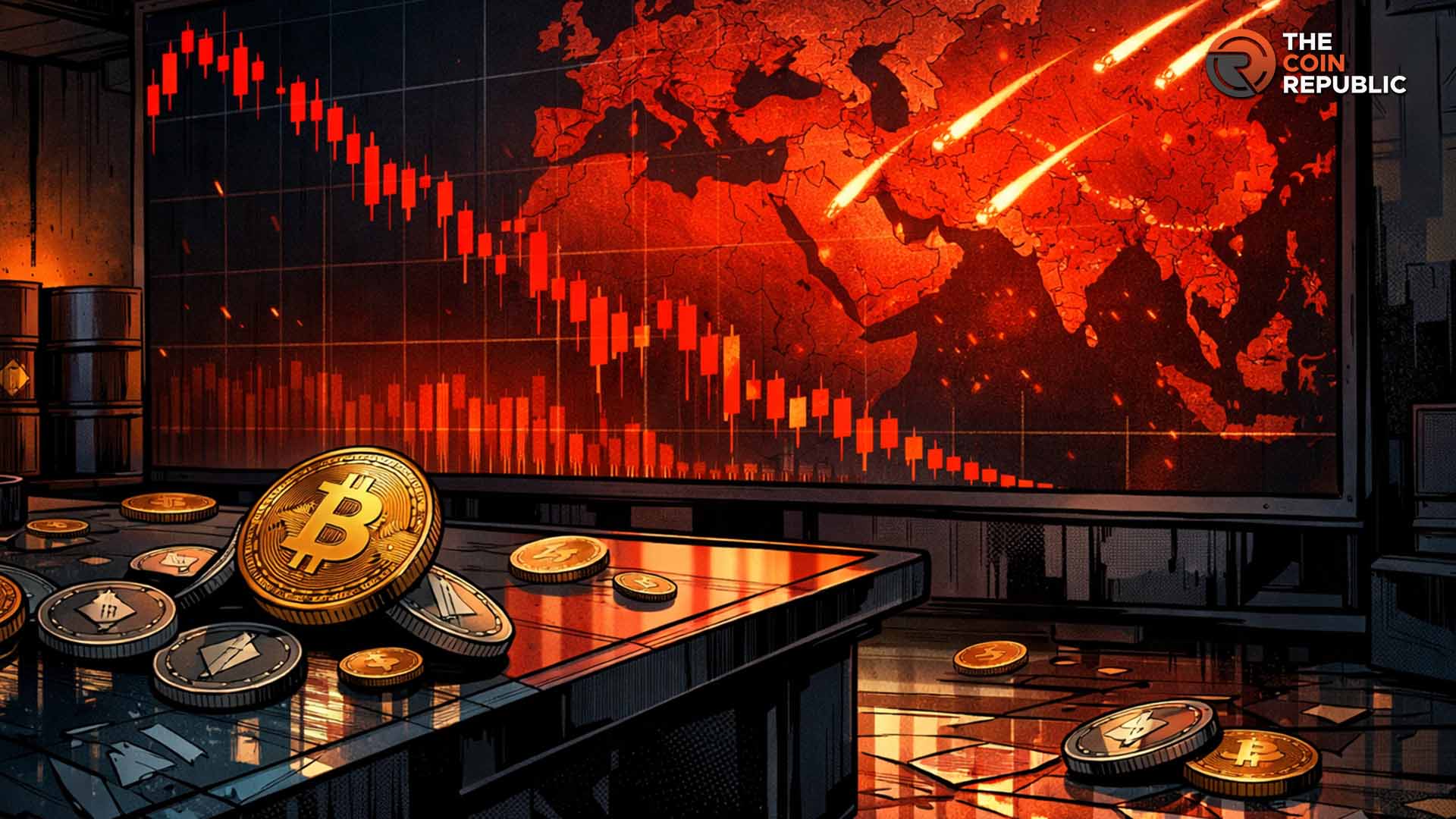
Geopolitical tensions stemming from the US-Iran conflict are directly impacting the crypto market, causing sustained volatility and a significant drop in overall market capitalization. Major cryptocurrencies like Bitcoin, Ethereum, and XRP are experiencing sharp declines, reflecting a broader market downturn driven by increased selling pressure and investor risk aversion. The market's sensitivity to global events, particularly the ongoing conflict and potential escalation involving Saudi Arabia and Israel, suggests that geopolitical risks will remain a key factor influencing crypto prices in the near term.
Significant net outflows from Bitcoin and Ethereum ETFs, totaling over $270 million on March 27, signal a potential shift towards institutional de-risking and reduced capital allocation to crypto assets. A sharp decline in Bitcoin active addresses by over 30% since August 2025, coupled with a near-zero accumulation trend score, indicates weakening network participation and potential distribution by large holders, suggesting a lack of fundamental support for price appreciation. The confluence of institutional outflows and declining on-chain activity points to a market losing both capital and user engagement, suggesting that current price action may be driven more by liquidity dynamics than organic growth, leading to increased volatility.
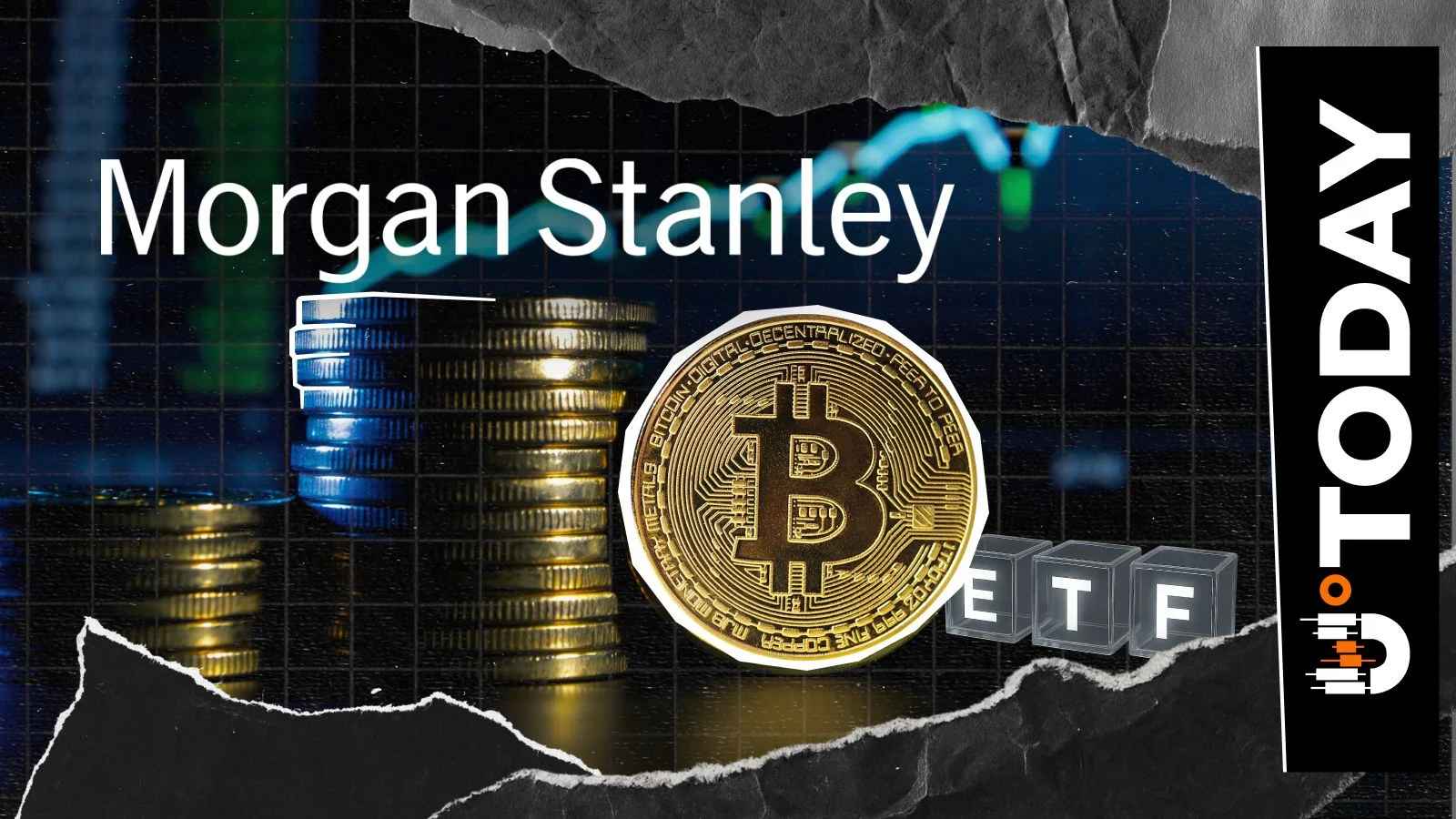
Morgan Stanley's aggressive 0.14% fee for its spot Bitcoin ETF filing signals a new phase of intense price competition among major asset managers, potentially driving down costs for investors. The move by Morgan Stanley, leveraging its vast wealth management network, indicates a strategic focus on capturing market share through price leadership and distribution strength, rather than solely product differentiation. This development highlights the maturing Bitcoin ETF market, where cost efficiency and accessibility are becoming primary drivers for institutional and retail adoption. Morgan Stanley's entry at a lower fee point than competitors like Grayscale and BlackRock suggests a deliberate strategy to attract significant inflows by making the ETF an easy recommendation for their financial advisors.

The regulatory crackdown on crypto prediction markets, driven by their increasing similarity to sports betting, poses a significant risk to the sector's growth and operational model. The core dispute centers on whether prediction markets are regulated as financial derivatives (CFTC) or illegal gambling (states), with potential legislation aiming to ban sports bets entirely from these platforms. Product design and settlement clarity are crucial for prediction markets to maintain legitimacy and argue for federal oversight, as poorly defined contracts can easily be classified as gambling. The conflict is evolving from a jurisdictional dispute to a fundamental debate over the existence of sports prediction markets in their current form, potentially leading to a hybrid regulatory regime with stricter rules.

Pepeto is positioned as a high-potential opportunity due to its presale pricing and upcoming Binance listing, contrasting with the longer recovery timelines for established assets like BNB and SUI. The article highlights the growing institutional acceptance of blockchain, evidenced by the RWA tokenization hearing, suggesting a favorable environment for projects like Pepeto that align with regulatory clarity. Analysts are favoring Pepeto for its utility-focused platform and the potential for significant returns, driven by its presale success and confirmed exchange listing, which is expected to tighten supply.
Signal context only. Validate with price action, liquidity, and risk limits before taking a position.
