
Navigating Crypto News

CoinFeather
Navigating Crypto News
Quick market read from this story
Solana's technical chart indicates a bearish rising wedge pattern, suggesting a potential continuation of the downtrend if support breaks.
A significant drop in Solana's DEX trader count to a three-year low signals waning on-chain activity and speculative interest.
The combination of technical weakness and declining user engagement suggests increased downside risk for SOL in the short to medium term.
Deep Dive
Solana (SOL) is showing signs of weakening momentum, with technical indicators suggesting a potential bearish breakdown and decentralized exchange (DEX) trader activity falling to a three-year low. These developments indicate pressure on both price action and on-chain engagement for the cryptocurrency.
Technical analysis, as shared by Crypto Patel, highlights a potential breakdown from a rising wedge pattern on the two-day chart. After a significant selloff, SOL has been attempting to rebound within a narrow upward channel. However, the structure appears weak as the price encounters resistance and begins to decline. This rising wedge pattern, often viewed as a bearish continuation pattern, formed below the 200-week moving average, suggesting the broader trend remains under pressure. A key observation is that Solana had already broken below a previous trading range before forming this current rebound structure. The area near the top of the wedge has acted as a rejection zone, and a breakdown below the lower wedge boundary could signal a continuation of the downward trend.
On-chain activity also shows a significant cooling, with Solana's DEX trader count dropping to its lowest level in approximately three years, according to a chart shared by Sweep. This Dune analytics chart tracks the number of unique wallets trading on Solana-based decentralized exchanges. After a surge in activity through 2024, the number of active traders has declined sharply, returning to levels not seen in years. This trend suggests a notable decrease in participation and speculative activity within the Solana DEX ecosystem, even if other parts of the network are not affected at the same pace.
Source, catalyst, and sector overlap from the latest feed.
Bitcoin is currently at a critical support zone, with two distinct analyst views suggesting either a short-term bounce followed by a further decline or a potential relief rally if support holds. The immediate price action for Bitcoin hinges on the $65,000-$66,000 support level, with a hold potentially leading to a 6-8% rally, while a break could signal a move towards $60,000 or lower. Traders should monitor the $66,170 area and Fibonacci resistance levels around $69,483-$74,894 for potential short-term selling pressure, as a sustained breakout is not yet indicated by current technicals. The market sentiment remains cautious, with analysts warning of potential irrational price movements and the risk of early positioning, emphasizing the need for confirmation before committing to significant trades.
Bitcoin's recent drop below $66,000 is driven by macroeconomic pressures, specifically an oil supply shock and rising inflation expectations, which are diminishing hopes for near-term Federal Reserve rate cuts. The current macro environment presents a dual challenge for Bitcoin, as it acts as a risk asset sensitive to tightening financial conditions while failing to establish itself as a consistent inflation hedge. Technical analysis suggests Bitcoin is in a short-term bearish trend, with key support at $64,000-$65,000; a break below this level could signal further downside, while reclaiming $70,000 is needed to shift momentum. The market is increasingly pricing in a prolonged pause or even potential rate hikes by the Fed, a significant shift from earlier expectations of cuts, creating a fragile macro setup that impacts risk assets like Bitcoin.
Dogecoin's price action is exhibiting historical cycle patterns with progressively higher lows, suggesting structural support and potential for a rally if Bitcoin resumes an uptrend. The current consolidation range for DOGE between $0.05 and $0.10 mirrors previous cycle bases, indicating a recognizable setup for potential upside movement. Dogecoin's performance is closely tied to Bitcoin's momentum; a sustained BTC uptrend could trigger significant altcoin volatility, with DOGE historically being an early beneficiary.
Detroit's decision to support Michigan in the Coinbase prediction market lawsuit introduces a local government economic perspective to the ongoing jurisdictional debate. The court's allowance for Detroit to file an amicus brief is a procedural step, not a ruling on the merits, indicating the legal fight over whether prediction markets are gambling or commodities is still developing. This development highlights the potential for prediction markets to impact existing regulated gaming revenue streams, explaining Detroit's vested interest in the case.
Solana's dominance in tokenized RWA volume, approaching 98%, highlights its strategic positioning in a growing market segment, potentially driving future demand. A TD Sequential buy signal on the 4-hour chart suggests a potential short-term price reversal for SOL, warranting trader attention to immediate price action. Sustained high transaction volumes, with Solana handling a significant portion of global crypto transactions, indicate robust network activity that could support price consolidation and future upside. The recurring monthly bullish engulfing pattern, if confirmed, could signal a significant upward trend continuation for SOL, aligning with long-term price targets.
Ripple's RLUSD stablecoin saw significant minting on the XRP Ledger alongside burns on Ethereum, indicating a potential supply rebalancing effort by the company. Increased RLUSD activity and Ripple's focus on its utility as a settlement asset for enterprise use cases, including trade finance pilots, suggest a strategic push for broader adoption. A recent survey highlighting strong institutional preference for stablecoins, with 74% seeing potential for cash-flow efficiency, provides a favorable backdrop for RLUSD's development.
Anthropic's leaked AI model, Capybara, signifies a potential leap in AI capabilities, raising concerns about cybersecurity risks within DeFi and smart contract auditing. The advancement of centralized AI models like Anthropic's Capybara could widen the competitive gap with decentralized AI networks such as Bittensor, potentially impacting the valuation of AI tokens. The leak of a highly capable AI model, despite its cybersecurity implications, highlights human error in data management, creating an ironic cautionary tale for tech companies.
Bitcoin's price has fallen below a critical short-term support level, driven by significant outflows from U.S. spot Bitcoin ETFs and broader macro uncertainty, signaling increased downside risk. The breakdown below the ascending trendline and key moving averages suggests a potential shift in market structure, with the $65.6K level now acting as a crucial support to defend against a deeper correction toward $63.9K or $62.5K. With the monthly close approaching and Bitcoin trading below key resistance zones, the probability of a bearish monthly close increases, especially if the $68.4K-$69.2K area remains a ceiling. While the Stochastic RSI indicates oversold conditions potentially leading to a short-term bounce, the overall technical picture suggests caution, with leveraged positions between $67K-$69K and $64K-$65K acting as potential volatility drivers.
Cardano's technical indicators suggest a potential 'death cross' formation, which, contrary to its name, can signal a bullish reversal if market forces align, potentially trapping short sellers. Despite a recent price dip attributed to a large ADA deposit on Binance, the 'death cross' pattern presents a contrarian bullish signal for traders anticipating a rebound. Charles Hoskinson's call for community engagement to 'make Cardano better' highlights a need for increased on-chain activity, which is currently lacking as many holders are 'underwater'.
Live Feed
Loading the broader stream in the same flow as the homepage feed.

Ondo Finance's strategic partnership with Franklin Templeton to tokenize ETFs signifies a major influx of traditional finance assets into the crypto space, potentially unlocking trillions in new capital flows. The collaboration positions Ondo Finance to further solidify its dominant 60% market share in tokenized stocks, indicating strong institutional adoption of its RWA infrastructure. Despite the significant fundamental development, ONDO's price action remains range-bound, suggesting a potential accumulation phase before a broader market recognition of the partnership's value. This development signals a growing trend of TradFi integration with crypto, where tokenized assets offer 24/7 access and DeFi composability, enhancing investor accessibility and market efficiency.
The TD Sequential indicator flashing a sell signal on the 3-day timeframe suggests potential trend exhaustion and a local top for TAO, indicating that the recent rally may be nearing its peak and traders should anticipate profit-taking or a correction. Despite strong narrative hype positioning TAO as the 'next Bitcoin of AI,' the article highlights potential bias from proponents with financial exposure, suggesting that the current market enthusiasm might be driven by speculative interest rather than fundamental accumulation, increasing volatility risk. TAO price is facing critical resistance around the $360-$380 range, and a failure to break above this level, coupled with the bearish technical signal, implies a shift towards distribution and a potential downside move towards support levels like $300 or $260-$280.

US regulatory scrutiny on Bitmain, driven by national security concerns over potential espionage and grid sabotage, could significantly disrupt the Bitcoin mining hardware market where Bitmain holds an 80% share. Bitmain's strategic move to establish US and Southeast Asian manufacturing facilities aims to mitigate tariffs and political pressure, positioning it to navigate potential restrictions while continuing global operations. The US faces a dilemma: its reliance on Bitmain hardware for mining and AI infrastructure clashes with national security imperatives, suggesting a period of heightened regulatory oversight and potential market shifts. China's development of its indigenous blockchain chip (ChainMaker) on RISC-V architecture signifies a strategic push for technological self-sufficiency, potentially reducing reliance on foreign hardware and impacting global supply chains.
Despite a generally bearish market with Bitcoin down over 6% and Ethereum below $2,000, specific altcoins like Chainlink, Hedera, Kaspa, Sui, and Aptos are identified as having strong 10x potential setups. Chainlink's institutional partnerships and on-chain data streams position it as a critical infrastructure play, while Hedera's stablecoin launch and McLaren partnership signal institutional adoption. Kaspa's upcoming hard fork introducing programmability, Sui's multiple ETFs, and Aptos's robust transaction volume and stablecoin growth suggest these Layer-1s are building fundamental value independent of broader market sentiment. The article suggests that periods of market fear, characterized by price drops and negative sentiment, can present accumulation opportunities for fundamentally strong altcoins that may not require new all-time highs to deliver significant returns.

The potential passage of the Digital Asset Market Clarity Act presents a binary catalyst for XRP, with analysts projecting significant institutional inflows between $4B-$8B if enacted, potentially driving a substantial price repricing. Failure of the Clarity Act to pass could lead to extended consolidation for XRP, confining its price within a narrower range and making it more susceptible to broader market sentiment rather than project-specific catalysts. Ripple CEO Brad Garlinghouse's comments suggest that U.S. banks are poised to increase their engagement with the crypto market once regulatory clarity is established, highlighting the CLARITY Act's importance for broader institutional adoption beyond XRP. The next few weeks are deemed critical for XRP's future, as legislative progress on the CLARITY Act by late spring could unlock new financial products and increased liquidity, while delays may prolong current market conditions.

Wall Street's renewed focus on tokenization, driven by BMO, Nasdaq, and regulatory developments, signals a significant shift towards integrating digital assets into traditional finance for enhanced efficiency and 24/7 operations. The push for tokenization by major financial institutions like BlackRock and JPMorgan highlights a strategic move to leverage blockchain for faster settlement and more mobile collateral, aiming to improve market liquidity and reduce friction during stressed periods. Regulatory bodies and Congress are actively engaging with tokenization, indicating a move towards adapting existing securities laws and potentially creating new frameworks to govern digital assets, which could reshape market structure. While institutions are embracing tokenization for efficiency and control, challenges like fragmentation and interoperability remain, suggesting that the full realization of promised improvements may take time and face hurdles.

Google's 2029 deadline for quantum-resistant cryptography migration signals an accelerated timeline for quantum threats, pressuring Bitcoin developers to address cryptographic vulnerabilities sooner than anticipated. Ethereum's proactive eight-year preparation for post-quantum cryptography contrasts sharply with Bitcoin's current lack of a coordinated strategy, potentially leading to a divergence in their market perception and value (ETHBTC). The perceived urgency of the quantum threat, highlighted by Google's deadline and prominent advocate Nic Carter's warnings, suggests a potential shift in developer prioritization and could impact Bitcoin's long-term security narrative. While some analysts downplay the immediate threat to Bitcoin, citing the scattered nature of vulnerable addresses, the consensus among tech giants and key figures indicates a structural risk that requires proactive mitigation.
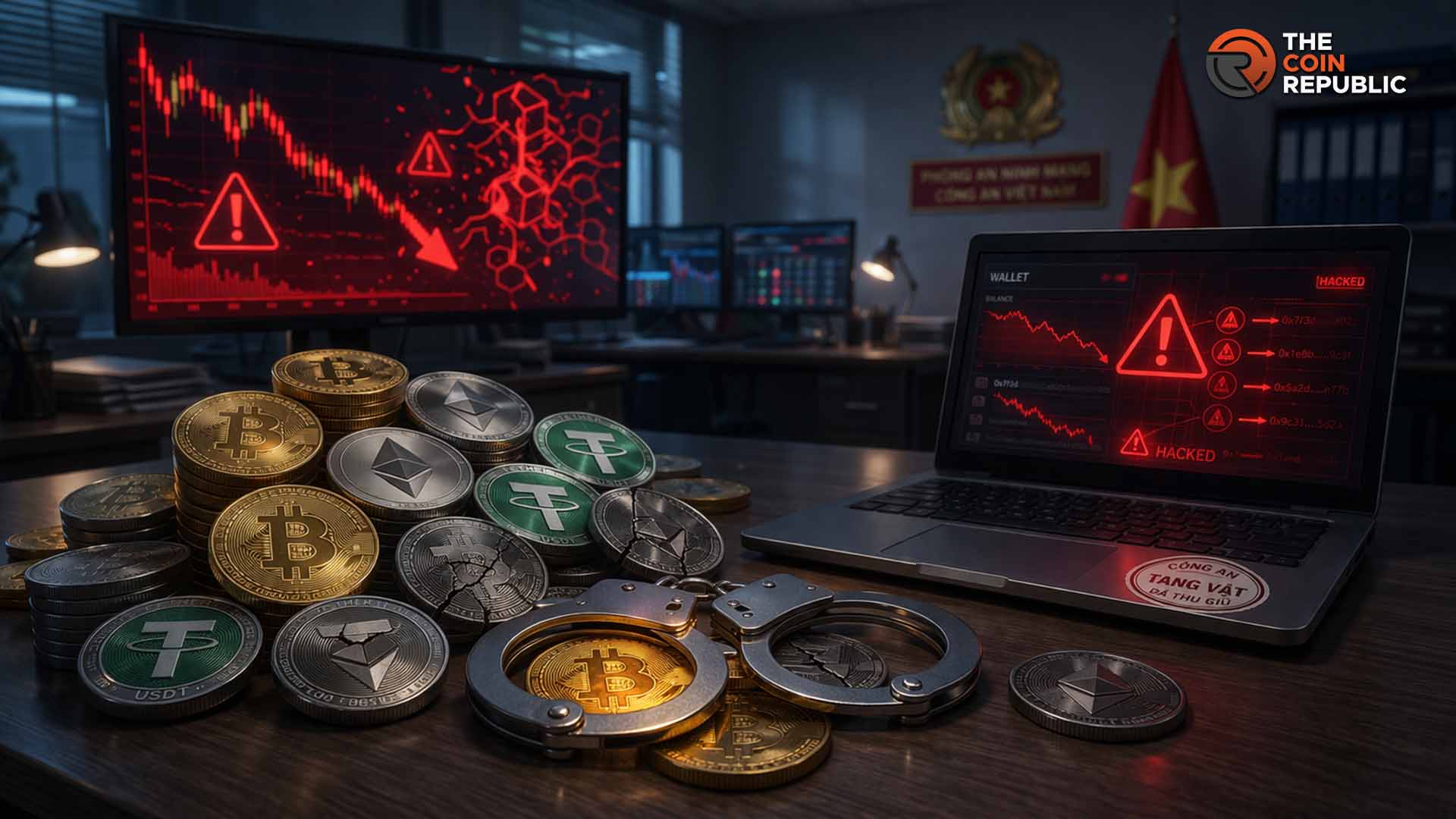
The arrest of seven individuals in Vietnam for a large-scale crypto scam linked to the ONUS ecosystem signals increased regulatory scrutiny in the region, potentially impacting investor confidence and market activity. The alleged manipulation of tokens VNDC, ONUS, and HNG highlights the risks associated with controlled trading tactics and aggressive token promotions, underscoring the need for due diligence in emerging crypto markets. Despite Vietnam's relatively open stance on crypto compared to some neighbors, this significant crackdown indicates a tightening regulatory environment, suggesting potential future enforcement actions against fraudulent activities.
Rising exchange inflows combined with declining spot demand and increasing derivatives leverage suggest potential downside pressure on Bitcoin, indicating a cautious short-term outlook. The divergence between large holders (whales) selling and smaller retail investors accumulating Bitcoin highlights a potential shift in market sentiment, with whales de-risking while retail buys dips. Negative funding rates in the derivatives market indicate that short positions or hedges are currently dominating, reinforcing a bearish bias in the short term. Geopolitical tensions are cited as an additional factor contributing to the current pressure on BTC/USD, adding a layer of macro uncertainty to the market.
Bitcoin Cash is consolidating near a critical $500 resistance zone, with technical indicators suggesting building pressure for a potential breakout. The proximity to a significant short liquidation cluster between $490-$510 indicates that a breach of resistance could trigger a rapid price expansion due to a short squeeze. While support at $470 appears robust, failure to overcome the $500 hurdle could lead to a prolonged consolidation phase, highlighting the importance of this price level for near-term direction.
Morgan Stanley's filing for a spot Bitcoin ETF with a 0.14% management fee represents a significant competitive move, potentially driving down fees across the industry and increasing accessibility for traditional investors. The introduction of a low-cost Bitcoin ETF by a major financial institution like Morgan Stanley signals growing institutional adoption and could attract substantial capital inflows, impacting Bitcoin's price dynamics. With custody from Coinbase and BNY Mellon, this ETF filing reinforces the established infrastructure supporting Bitcoin investment products and highlights the ongoing integration of crypto into traditional finance.
Signal context only. Validate with price action, liquidity, and risk limits before taking a position.
