
Navigating Crypto News

CoinFeather
Navigating Crypto News
Quick market read from this story
The TD Sequential indicator flashing a sell signal on the 3-day timeframe suggests potential trend exhaustion and a local top for TAO, indicating that the recent rally may be nearing its peak and traders should anticipate profit-taking or a correction.
Despite strong narrative hype positioning TAO as the 'next Bitcoin of AI,' the article highlights potential bias from proponents with financial exposure, suggesting that the current market enthusiasm might be driven by speculative interest rather than fundamental accumulation, increasing volatility risk.
TAO price is facing critical resistance around the $360-$380 range, and a failure to break above this level, coupled with the bearish technical signal, implies a shift towards distribution and a potential downside move towards support levels like $300 or $260-$280.
Deep Dive
The price of Bittensor (TAO) is currently at a pivotal moment, balancing intense narrative hype with signs of technical weakness. After an impressive rally from $144 to $375, TAO has garnered significant attention in the crypto space, driven by optimistic projections and the growing influence of artificial intelligence. However, this surge is now accompanied by cautionary indicators, including slowing momentum, persistent resistance, and a bearish signal from a key technical indicator.
A significant warning sign has emerged from the TD Sequential indicator, which has printed a sell signal on the 3-day timeframe. Historically, this signal has been associated with the exhaustion of uptrends and the formation of local price tops. This indicator had previously signaled the buying opportunity that preceded TAO's substantial rally, lending credibility to its current bearish implication. While not guaranteeing an immediate price reversal, this signal suggests that the period of easy gains may be over, increasing the risk profile for traders and indicating a potential shift towards profit-taking.
Simultaneously, TAO is benefiting from a strong surge in narrative-driven demand, with market commentators projecting aggressive long-term growth. Some are positioning Bittensor as a potential leader in the AI sector, likening it to the "next Bitcoin of AI." This narrative is supported by its fixed supply of 21 million tokens, its role in decentralized AI, and increasing institutional interest. However, a closer examination reveals that many of the most vocal proponents have direct financial stakes in TAO, introducing potential bias. The narrative is accelerating after a significant price increase, a phase often characterized by increasing retail interest while early investors begin to reduce their holdings, potentially leading to increased volatility.
Bittensor's price is currently facing a critical resistance zone between $360 and $380. Repeated attempts to break above this range have been met with selling pressure, suggesting a potential shift from trend expansion to distribution. If TAO cannot convincingly reclaim the $360 level, downside pressure could intensify. The immediate support level is observed around $300, a level of both psychological and structural importance. A break below $300 could lead to a further correction towards the $260–$280 range. Conversely, the bullish outlook would be reinforced if TAO breaks and sustains above $380 with significant trading volume, invalidating the current exhaustion signals.
Bittensor stands at a crucial inflection point where its compelling long-term narrative, centered on AI integration and a fixed supply, is being challenged by short-term technical signals. The market appears to be at a crossroads, with the potential for further gains if buyers absorb selling pressure and overcome resistance, or a cooling-off period or correction if profit-taking accelerates. The current market sentiment indicates that while the hype surrounding TAO continues to grow, technical indicators are beginning to signal caution.
Source, catalyst, and sector overlap from the latest feed.
Despite Solana's network demonstrating significant developer growth, surpassing Ethereum, its token price action is showing weakness, indicating a divergence between fundamental development and market sentiment. Technical analysis reveals Solana's price has faced repeated rejections from a supply zone around $250, with cooling futures volume suggesting waning demand and a potential downside target towards the $52-$58 range. The article highlights a paradox where strong on-chain fundamentals like high developer count and transaction throughput are not translating into bullish price action for SOL, suggesting broader market conditions and technical resistance are currently overriding ecosystem strength.
Bitcoin's price has fallen below a critical short-term support level, driven by significant outflows from U.S. spot Bitcoin ETFs and broader macro uncertainty, signaling increased downside risk. The breakdown below the ascending trendline and key moving averages suggests a potential shift in market structure, with the $65.6K level now acting as a crucial support to defend against a deeper correction toward $63.9K or $62.5K. With the monthly close approaching and Bitcoin trading below key resistance zones, the probability of a bearish monthly close increases, especially if the $68.4K-$69.2K area remains a ceiling. While the Stochastic RSI indicates oversold conditions potentially leading to a short-term bounce, the overall technical picture suggests caution, with leveraged positions between $67K-$69K and $64K-$65K acting as potential volatility drivers.
Despite a generally bearish market with Bitcoin down over 6% and Ethereum below $2,000, specific altcoins like Chainlink, Hedera, Kaspa, Sui, and Aptos are identified as having strong 10x potential setups. Chainlink's institutional partnerships and on-chain data streams position it as a critical infrastructure play, while Hedera's stablecoin launch and McLaren partnership signal institutional adoption. Kaspa's upcoming hard fork introducing programmability, Sui's multiple ETFs, and Aptos's robust transaction volume and stablecoin growth suggest these Layer-1s are building fundamental value independent of broader market sentiment. The article suggests that periods of market fear, characterized by price drops and negative sentiment, can present accumulation opportunities for fundamentally strong altcoins that may not require new all-time highs to deliver significant returns.
The potential passage of the Digital Asset Market Clarity Act presents a binary catalyst for XRP, with analysts projecting significant institutional inflows between $4B-$8B if enacted, potentially driving a substantial price repricing. Failure of the Clarity Act to pass could lead to extended consolidation for XRP, confining its price within a narrower range and making it more susceptible to broader market sentiment rather than project-specific catalysts. Ripple CEO Brad Garlinghouse's comments suggest that U.S. banks are poised to increase their engagement with the crypto market once regulatory clarity is established, highlighting the CLARITY Act's importance for broader institutional adoption beyond XRP. The next few weeks are deemed critical for XRP's future, as legislative progress on the CLARITY Act by late spring could unlock new financial products and increased liquidity, while delays may prolong current market conditions.
Rising exchange inflows combined with declining spot demand and increasing derivatives leverage suggest potential downside pressure on Bitcoin, indicating a cautious short-term outlook. The divergence between large holders (whales) selling and smaller retail investors accumulating Bitcoin highlights a potential shift in market sentiment, with whales de-risking while retail buys dips. Negative funding rates in the derivatives market indicate that short positions or hedges are currently dominating, reinforcing a bearish bias in the short term. Geopolitical tensions are cited as an additional factor contributing to the current pressure on BTC/USD, adding a layer of macro uncertainty to the market.
The CEO of a Kraken-backed SPAC suggests crypto is more resilient to AI disruption than traditional SaaS, implying a potential shift in investor focus towards digital assets as AI dominates software innovation. While AI is presented as the primary growth narrative, crypto, particularly stablecoins and payments, is identified as a strong secondary thematic for investment, indicating continued relevance despite market cycles. The SPAC is actively seeking crypto-native deals valued between $2B-$10B, signaling institutional interest in funding and potentially consolidating promising projects within the crypto ecosystem. The potential for tokenization to finance expensive AI infrastructure build-outs presents a novel intersection of AI and crypto, suggesting new avenues for yield generation and investment.
Google's significant investment in Anthropic's data center infrastructure signals a deepening partnership and a substantial commitment to AI development, potentially impacting demand for related compute and hardware resources. The judicial block on the Pentagon's directive against Anthropic suggests a more stable regulatory environment for AI firms, allowing for continued operations and potential government contracts. The dual developments of major infrastructure investment and regulatory reprieve for Anthropic indicate a strengthening position for the AI company, which could translate to increased demand for its services and underlying technologies.
AI agents are increasingly dominating arbitrage opportunities in prediction markets due to their speed, capturing short-lived mispricings that humans cannot exploit. The growing sophistication of AI in prediction markets raises concerns about potential market manipulation and the need for regulatory guardrails. The evolution from simple execution bots to advanced AI systems signifies a fundamental shift in trading, favoring participants who leverage automation and AI. While AI enhances access to complex trading strategies for retail participants, it also intensifies competition with institutional players already utilizing similar technologies.
Anthropic's leaked AI model, Capybara, signifies a potential leap in AI capabilities, raising concerns about cybersecurity risks within DeFi and smart contract auditing. The advancement of centralized AI models like Anthropic's Capybara could widen the competitive gap with decentralized AI networks such as Bittensor, potentially impacting the valuation of AI tokens. The leak of a highly capable AI model, despite its cybersecurity implications, highlights human error in data management, creating an ironic cautionary tale for tech companies.
US regulatory scrutiny on Bitmain, driven by national security concerns over potential espionage and grid sabotage, could significantly disrupt the Bitcoin mining hardware market where Bitmain holds an 80% share. Bitmain's strategic move to establish US and Southeast Asian manufacturing facilities aims to mitigate tariffs and political pressure, positioning it to navigate potential restrictions while continuing global operations. The US faces a dilemma: its reliance on Bitmain hardware for mining and AI infrastructure clashes with national security imperatives, suggesting a period of heightened regulatory oversight and potential market shifts. China's development of its indigenous blockchain chip (ChainMaker) on RISC-V architecture signifies a strategic push for technological self-sufficiency, potentially reducing reliance on foreign hardware and impacting global supply chains.
Live Feed
Loading the broader stream in the same flow as the homepage feed.
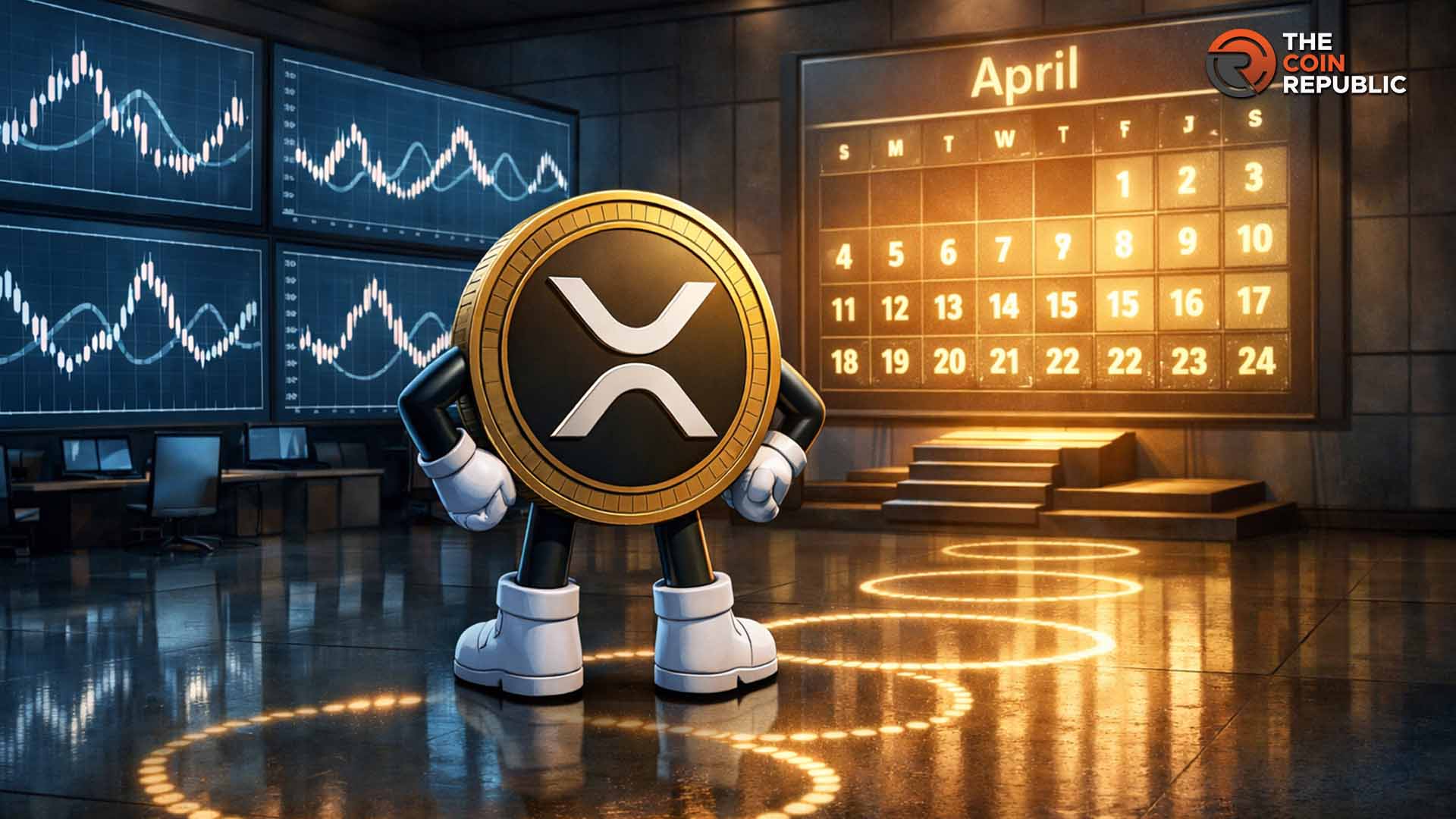
Historical data indicates April has been XRP's strongest month, with an average return of 24.8% since 2014, suggesting potential for a significant price rally. Despite historical bullishness in April, current market uncertainty due to geopolitical tensions (US-Iran conflict) and XRP's recent March decline introduces significant downside risk. Analysts are divided on XRP's near-term trajectory, with some anticipating a rebound based on seasonal trends and others predicting a continued decline mirroring last year's performance. The median April gain for XRP is only 2%, indicating that the high average return is driven by a few outlier years, suggesting that a broad-based rally is not guaranteed.
XRP Ledger demonstrated robust scalability by sustaining over 120 TPS with low fees, indicating strong performance under load that could be crucial for upcoming bull market activity. The network's ability to handle high transaction volumes without congestion or fee spikes suggests underlying efficiency improvements or increased DEX activity, providing a positive signal for its capacity. While generally positive, a user report of fee increases at 200 TPS highlights potential scaling limits that warrant monitoring as transaction demand grows. Recent developments in XRPL security enhancements and stablecoin testing by Ripple Labs, coupled with this throughput surge, suggest proactive preparations for increased network utility and adoption.
Declining XRP exchange reserves to 2.75 billion indicate strong holder accumulation, suggesting potential for a price breakout driven by sustained demand despite recent price consolidation. The shift of XRP from exchanges to private wallets is a bullish signal for price appreciation, as it typically reflects a long-term holding sentiment and reduced selling pressure. Despite positive on-chain signals for XRP, the lack of institutional inflow into XRP ETFs, with potential for first monthly outflows, suggests a divergence between retail accumulation and institutional sentiment.
Short-term bearish analysis suggests a potential retest of the $60 demand zone due to persistent selling pressure and capped upside attempts above $100. Long-term optimistic outlook views the current ~77% drop from ATH as a strategic accumulation phase near the 0.618 Fibonacci retracement, with potential targets of $500-$1,000. Solana is at a critical juncture, balancing immediate bearish technicals with long-term bullish accumulation narratives, making it a watchlist candidate for volatility expansion.

Ondo Finance's strategic partnership with Franklin Templeton to tokenize ETFs signifies a major influx of traditional finance assets into the crypto space, potentially unlocking trillions in new capital flows. The collaboration positions Ondo Finance to further solidify its dominant 60% market share in tokenized stocks, indicating strong institutional adoption of its RWA infrastructure. Despite the significant fundamental development, ONDO's price action remains range-bound, suggesting a potential accumulation phase before a broader market recognition of the partnership's value. This development signals a growing trend of TradFi integration with crypto, where tokenized assets offer 24/7 access and DeFi composability, enhancing investor accessibility and market efficiency.
Ripple's RLUSD stablecoin saw significant minting on the XRP Ledger alongside burns on Ethereum, indicating a potential supply rebalancing effort by the company. Increased RLUSD activity and Ripple's focus on its utility as a settlement asset for enterprise use cases, including trade finance pilots, suggest a strategic push for broader adoption. A recent survey highlighting strong institutional preference for stablecoins, with 74% seeing potential for cash-flow efficiency, provides a favorable backdrop for RLUSD's development.
Bitcoin is currently at a critical support zone, with two distinct analyst views suggesting either a short-term bounce followed by a further decline or a potential relief rally if support holds. The immediate price action for Bitcoin hinges on the $65,000-$66,000 support level, with a hold potentially leading to a 6-8% rally, while a break could signal a move towards $60,000 or lower. Traders should monitor the $66,170 area and Fibonacci resistance levels around $69,483-$74,894 for potential short-term selling pressure, as a sustained breakout is not yet indicated by current technicals. The market sentiment remains cautious, with analysts warning of potential irrational price movements and the risk of early positioning, emphasizing the need for confirmation before committing to significant trades.
Cardano's technical indicators suggest a potential 'death cross' formation, which, contrary to its name, can signal a bullish reversal if market forces align, potentially trapping short sellers. Despite a recent price dip attributed to a large ADA deposit on Binance, the 'death cross' pattern presents a contrarian bullish signal for traders anticipating a rebound. Charles Hoskinson's call for community engagement to 'make Cardano better' highlights a need for increased on-chain activity, which is currently lacking as many holders are 'underwater'.
Bitcoin's recent drop below $66,000 is driven by macroeconomic pressures, specifically an oil supply shock and rising inflation expectations, which are diminishing hopes for near-term Federal Reserve rate cuts. The current macro environment presents a dual challenge for Bitcoin, as it acts as a risk asset sensitive to tightening financial conditions while failing to establish itself as a consistent inflation hedge. Technical analysis suggests Bitcoin is in a short-term bearish trend, with key support at $64,000-$65,000; a break below this level could signal further downside, while reclaiming $70,000 is needed to shift momentum. The market is increasingly pricing in a prolonged pause or even potential rate hikes by the Fed, a significant shift from earlier expectations of cuts, creating a fragile macro setup that impacts risk assets like Bitcoin.

Wall Street's renewed focus on tokenization, driven by BMO, Nasdaq, and regulatory developments, signals a significant shift towards integrating digital assets into traditional finance for enhanced efficiency and 24/7 operations. The push for tokenization by major financial institutions like BlackRock and JPMorgan highlights a strategic move to leverage blockchain for faster settlement and more mobile collateral, aiming to improve market liquidity and reduce friction during stressed periods. Regulatory bodies and Congress are actively engaging with tokenization, indicating a move towards adapting existing securities laws and potentially creating new frameworks to govern digital assets, which could reshape market structure. While institutions are embracing tokenization for efficiency and control, challenges like fragmentation and interoperability remain, suggesting that the full realization of promised improvements may take time and face hurdles.
Signal context only. Validate with price action, liquidity, and risk limits before taking a position.
