
Navigating Crypto News

CoinFeather
Navigating Crypto News
Source, catalyst, and sector overlap from the latest feed.
Shiba Inu's hourly death cross indicates short-term bearish momentum, coinciding with broader market liquidations and ETF outflows, suggesting potential for further downside pressure. Despite a technical bearish signal, SHIB is attempting a relief rally, with key resistance at the 50 MA and support at $0.00000571 to monitor for potential short-term price action. The increase in Shiba Inu's open interest and derivatives volume suggests heightened trader activity and positioning adjustments, which could precede a more significant price move.
Declining XRP exchange reserves to 2.75 billion indicate strong holder accumulation, suggesting potential for a price breakout driven by sustained demand despite recent price consolidation. The shift of XRP from exchanges to private wallets is a bullish signal for price appreciation, as it typically reflects a long-term holding sentiment and reduced selling pressure. Despite positive on-chain signals for XRP, the lack of institutional inflow into XRP ETFs, with potential for first monthly outflows, suggests a divergence between retail accumulation and institutional sentiment.
Live Feed
Loading the broader stream in the same flow as the homepage feed.
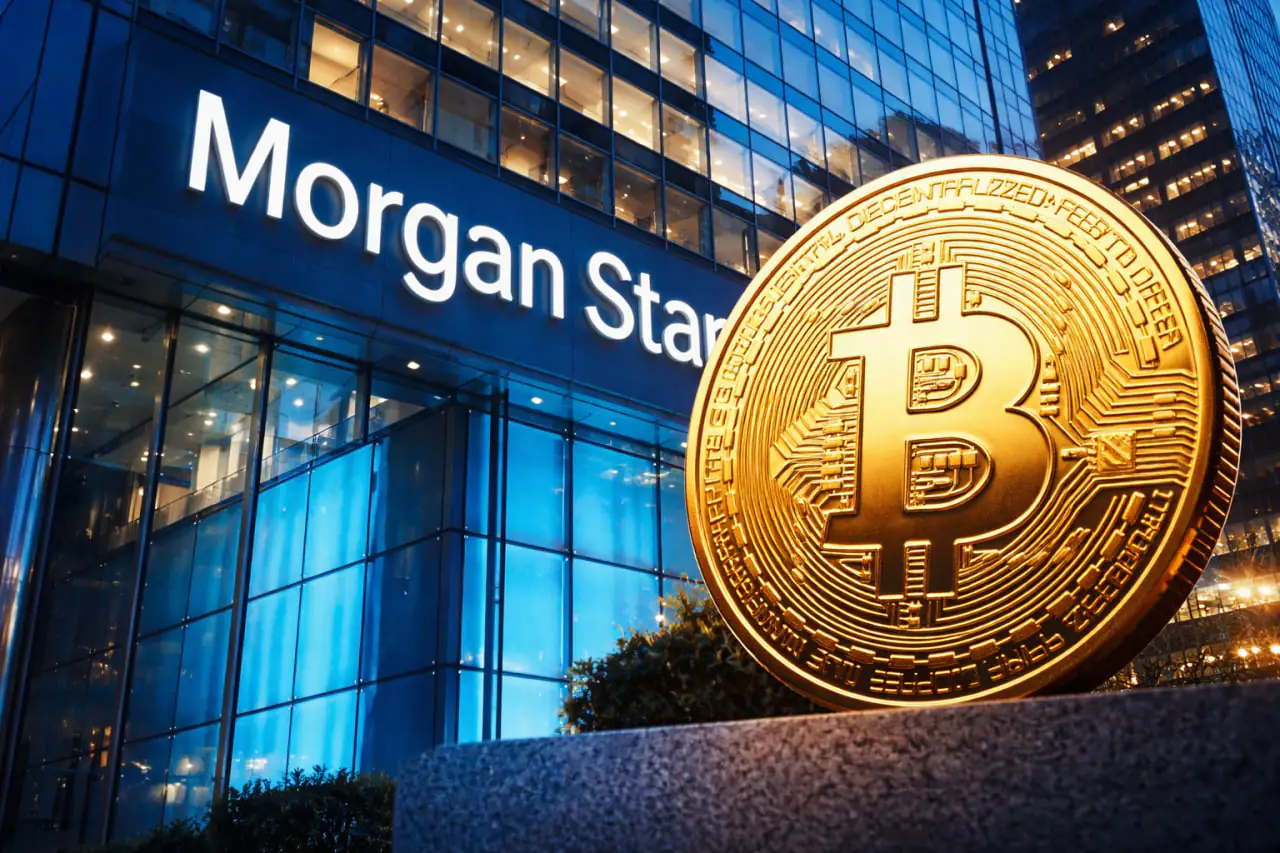
Morgan Stanley's aggressive 0.14% fee for its new Bitcoin ETF positions it as the cheapest U.S. spot offering, signaling intense competition with expected filings from firms like Goldman Sachs and potentially driving down fees across the sector. The launch of a major bank's Bitcoin ETF, coupled with low yields on traditional savings accounts, highlights Bitcoin's growing appeal as an alternative asset driven by both institutional adoption and retail dissatisfaction with banking economics. Pending legislation on stablecoins and market structure will be critical in defining the competitive landscape between traditional finance and digital assets, influencing how far crypto can challenge established banking services.

GameStop's strategic shift of nearly all its Bitcoin holdings into a covered call options strategy on Coinbase Prime signals a move to generate yield from its treasury assets, potentially impacting its balance sheet classification and earnings reporting. The decision to use Bitcoin as collateral for options trading implies GameStop is willing to cap its upside potential in exchange for immediate income, reflecting a cautious stance on near-term BTC price appreciation. CEO Ryan Cohen's comments suggesting "way more compelling" opportunities than Bitcoin indicate a potential long-term strategic re-evaluation of the company's digital asset holdings, warranting close observation of future capital allocation decisions. This move by a significant corporate holder like GameStop could influence other companies with Bitcoin treasuries to explore similar yield-generating strategies, potentially increasing the use of crypto assets in traditional finance-adjacent operations.

Wintermute's launch of 24/7 crude oil CFD trading signifies crypto's aggressive expansion into traditional macro markets, leveraging geopolitical volatility to capture demand for round-the-clock asset access. The increasing demand for 24/7 trading in assets like oil, driven by geopolitical events, positions crypto venues as crucial infrastructure for immediate market reaction, potentially shifting trading norms away from traditional business hours. The dual approach of crypto-native platforms like Hyperliquid and more institutional-leaning offerings like Wintermute's suggests a bifurcated but growing market for off-hours trading, catering to both retail speculation and institutional hedging needs. The broader trend of financial markets moving towards extended trading hours and tokenized formats, exemplified by developments in traditional finance and crypto, indicates a structural shift that crypto is actively leading and benefiting from.
Escalating geopolitical tensions in the Strait of Hormuz are driving Brent crude oil prices above $111, with JPMorgan warning of a potential spike to $120 if supply disruptions persist. The market faces a critical turning point as diplomatic efforts clash with ongoing military developments and shipping risks, creating significant uncertainty for energy prices. Major banks like Goldman Sachs and Standard Chartered are revising forecasts upward, signaling a potential for sustained higher oil prices due to the severity of the supply shock. With alternative routes and strategic reserves nearing capacity, the market is vulnerable to a deeper supply crisis if the Strait of Hormuz does not reopen within the next 1-3 weeks.

The CEO of a Kraken-backed SPAC suggests crypto is more resilient to AI disruption than traditional SaaS, implying a potential shift in investor focus towards digital assets as AI dominates software innovation. While AI is presented as the primary growth narrative, crypto, particularly stablecoins and payments, is identified as a strong secondary thematic for investment, indicating continued relevance despite market cycles. The SPAC is actively seeking crypto-native deals valued between $2B-$10B, signaling institutional interest in funding and potentially consolidating promising projects within the crypto ecosystem. The potential for tokenization to finance expensive AI infrastructure build-outs presents a novel intersection of AI and crypto, suggesting new avenues for yield generation and investment.

Google's significant investment in Anthropic's data center infrastructure signals a deepening partnership and a substantial commitment to AI development, potentially impacting demand for related compute and hardware resources. The judicial block on the Pentagon's directive against Anthropic suggests a more stable regulatory environment for AI firms, allowing for continued operations and potential government contracts. The dual developments of major infrastructure investment and regulatory reprieve for Anthropic indicate a strengthening position for the AI company, which could translate to increased demand for its services and underlying technologies.

AI agents are increasingly dominating arbitrage opportunities in prediction markets due to their speed, capturing short-lived mispricings that humans cannot exploit. The growing sophistication of AI in prediction markets raises concerns about potential market manipulation and the need for regulatory guardrails. The evolution from simple execution bots to advanced AI systems signifies a fundamental shift in trading, favoring participants who leverage automation and AI. While AI enhances access to complex trading strategies for retail participants, it also intensifies competition with institutional players already utilizing similar technologies.
Short-term bearish analysis suggests a potential retest of the $60 demand zone due to persistent selling pressure and capped upside attempts above $100. Long-term optimistic outlook views the current ~77% drop from ATH as a strategic accumulation phase near the 0.618 Fibonacci retracement, with potential targets of $500-$1,000. Solana is at a critical juncture, balancing immediate bearish technicals with long-term bullish accumulation narratives, making it a watchlist candidate for volatility expansion.

Ondo Finance's strategic partnership with Franklin Templeton to tokenize ETFs signifies a major influx of traditional finance assets into the crypto space, potentially unlocking trillions in new capital flows. The collaboration positions Ondo Finance to further solidify its dominant 60% market share in tokenized stocks, indicating strong institutional adoption of its RWA infrastructure. Despite the significant fundamental development, ONDO's price action remains range-bound, suggesting a potential accumulation phase before a broader market recognition of the partnership's value. This development signals a growing trend of TradFi integration with crypto, where tokenized assets offer 24/7 access and DeFi composability, enhancing investor accessibility and market efficiency.

Anthropic's leaked AI model, Capybara, signifies a potential leap in AI capabilities, raising concerns about cybersecurity risks within DeFi and smart contract auditing. The advancement of centralized AI models like Anthropic's Capybara could widen the competitive gap with decentralized AI networks such as Bittensor, potentially impacting the valuation of AI tokens. The leak of a highly capable AI model, despite its cybersecurity implications, highlights human error in data management, creating an ironic cautionary tale for tech companies.
Bitcoin is currently at a critical support zone, with two distinct analyst views suggesting either a short-term bounce followed by a further decline or a potential relief rally if support holds. The immediate price action for Bitcoin hinges on the $65,000-$66,000 support level, with a hold potentially leading to a 6-8% rally, while a break could signal a move towards $60,000 or lower. Traders should monitor the $66,170 area and Fibonacci resistance levels around $69,483-$74,894 for potential short-term selling pressure, as a sustained breakout is not yet indicated by current technicals. The market sentiment remains cautious, with analysts warning of potential irrational price movements and the risk of early positioning, emphasizing the need for confirmation before committing to significant trades.
Signal context only. Validate with price action, liquidity, and risk limits before taking a position.
Quick market read from this story
XRP Ledger demonstrated robust scalability by sustaining over 120 TPS with low fees, indicating strong performance under load that could be crucial for upcoming bull market activity.
The network's ability to handle high transaction volumes without congestion or fee spikes suggests underlying efficiency improvements or increased DEX activity, providing a positive signal for its capacity.
While generally positive, a user report of fee increases at 200 TPS highlights potential scaling limits that warrant monitoring as transaction demand grows.
Recent developments in XRPL security enhancements and stablecoin testing by Ripple Labs, coupled with this throughput surge, suggest proactive preparations for increased network utility and adoption.
Deep Dive
The XRP Ledger (XRPL) has recently experienced unusual block creation activity, processing over 120 transactions per second (TPS). This significant throughput was observed with large blocks containing 600-700 transactions, highlighting the network's robust scalability without compromising speed or increasing fees.
XRP Ledger validator Vet initially highlighted the network's ability to handle this high volume of transactions seamlessly. The community has responded positively, viewing this performance as a strong indicator of XRPL's readiness for potential bull market surges, where transaction activity typically increases. The sustained low and stable transaction fees, even under this stress, suggest the network is scaling effectively.
While the overall sentiment is positive, one user noted a potential "jump in fees" at 200 TPS, though details were not specified. This event serves as a valuable stress test, demonstrating the ledger's efficiency for decentralized trading and offering insights into optimization for peak market conditions.
This surge in activity comes as Ripple continues to enhance the XRP Ledger. The company recently announced efforts to strengthen XRPL security using artificial intelligence (AI) to identify and prevent vulnerabilities more effectively. Additionally, Ripple has been testing a stablecoin-backed Ripple Payments Delivery system on the XRPL in the past 48 hours, fueling speculation about its future utility and potential pilot programs for real-world applications.
