
Navigating Crypto News

CoinFeather
Navigating Crypto News

Quick market read from this story
The CEO of a Kraken-backed SPAC suggests crypto is more resilient to AI disruption than traditional SaaS, implying a potential shift in investor focus towards digital assets as AI dominates software innovation.
While AI is presented as the primary growth narrative, crypto, particularly stablecoins and payments, is identified as a strong secondary thematic for investment, indicating continued relevance despite market cycles.
The SPAC is actively seeking crypto-native deals valued between $2B-$10B, signaling institutional interest in funding and potentially consolidating promising projects within the crypto ecosystem.
The potential for tokenization to finance expensive AI infrastructure build-outs presents a novel intersection of AI and crypto, suggesting new avenues for yield generation and investment.
Deep Dive
Ravi Tanuku, CEO of KRAKacquisition Corp. (KRAKU), a special purpose acquisition company backed by crypto exchange Kraken, asserts that artificial intelligence presents a more significant existential threat to traditional software-as-a-service (SaaS) companies than the current bear market poses to the crypto industry.
KRAKU, a Nasdaq-listed SPAC sponsored by Kraken, Natural Capital, and Tribe Capital, recently closed a $345 million IPO. The firm is now actively seeking crypto-native companies valued between $2 billion and $10 billion for potential deals. This comes despite Kraken's parent company, Payward, delaying its own IPO due to challenging market conditions, evidenced by the CoinDesk 20 Index (CD20) experiencing its sixth consecutive monthly decline.
Tanuku highlighted that the rapid advancements in AI, particularly its potential to automate code writing, pose a fundamental threat to the existence of SaaS companies. He stated that companies looking to go public must now consider AI's impact, describing it as a more profound, long-term challenge than the volatility seen in cryptocurrencies like Bitcoin. Tanuku believes that if capital is not flowing into AI, it is unlikely to return to SaaS, suggesting investors are seeking alternative opportunities.
While acknowledging AI as the dominant market narrative, Tanuku positions the digital asset sector as one of the strongest secular stories following AI. He indicated that KRAKU is exploring opportunities where crypto and AI naturally intersect, including the potential for tokenization to finance AI infrastructure. Tanuku suggested that tokens could offer novel ways to provide yield and returns for investors funding the expensive build-out of AI capabilities.
Source, catalyst, and sector overlap from the latest feed.
Bitcoin's valuation has compressed significantly, with the Mayer Multiple in lower percentiles, suggesting it may have already priced in tighter monetary conditions unlike equities which are just beginning to reprice. The shift in Fed rate cut expectations, driven by rising energy prices and inflation concerns, implies a less accommodative macro environment that could pressure risk assets, but Bitwise argues BTC's prior adjustment offers reduced downside. While traditional markets face renewed downside risk from macro shifts, Bitcoin's earlier repricing suggests it might be better positioned to weather the storm, though its correlation with altcoins remains high.
Major blockchain networks like Bitcoin, Ethereum, and Solana are actively developing strategies to counter the future threat of quantum computing, indicating a proactive shift from theoretical concern to practical implementation. The differing approaches to quantum resistance across Bitcoin (debate and gradual proposals), Ethereum (phased integration and architectural changes), and Solana (experimental tooling) highlight a lack of industry-wide consensus on the urgency and optimal solutions for this long-term risk. While the quantum threat is acknowledged as a significant long-term risk, the current market reaction is muted, suggesting that immediate repricing is unlikely as preparations are still in early stages and practical attacks are perceived as distant.
Anthropic's leaked AI model, Capybara, signifies a potential leap in AI capabilities, raising concerns about cybersecurity risks within DeFi and smart contract auditing. The advancement of centralized AI models like Anthropic's Capybara could widen the competitive gap with decentralized AI networks such as Bittensor, potentially impacting the valuation of AI tokens. The leak of a highly capable AI model, despite its cybersecurity implications, highlights human error in data management, creating an ironic cautionary tale for tech companies.
Google's 2029 deadline for quantum-resistant cryptography migration signals an accelerated timeline for quantum threats, pressuring Bitcoin developers to address cryptographic vulnerabilities sooner than anticipated. Ethereum's proactive eight-year preparation for post-quantum cryptography contrasts sharply with Bitcoin's current lack of a coordinated strategy, potentially leading to a divergence in their market perception and value (ETHBTC). The perceived urgency of the quantum threat, highlighted by Google's deadline and prominent advocate Nic Carter's warnings, suggests a potential shift in developer prioritization and could impact Bitcoin's long-term security narrative. While some analysts downplay the immediate threat to Bitcoin, citing the scattered nature of vulnerable addresses, the consensus among tech giants and key figures indicates a structural risk that requires proactive mitigation.
Ripple's integration of AI for XRP Ledger security signifies a proactive approach to hardening the protocol against emerging threats, crucial for its expanding institutional use cases. The focus on bug fixes and improvements in the next XRPL release, driven by AI-identified vulnerabilities, suggests a commitment to stability and reliability for enterprise adoption. This AI-driven security enhancement aligns with broader industry trends in blockchain and traditional tech, emphasizing proactive, AI-augmented security engineering over reactive patching. The timing of these security upgrades coincides with Ripple's push into stablecoins and trade finance, indicating a strategic effort to ensure the underlying infrastructure can support scaled institutional activity.
Google's significant investment in Anthropic's data center infrastructure signals a deepening partnership and a substantial commitment to AI development, potentially impacting demand for related compute and hardware resources. The judicial block on the Pentagon's directive against Anthropic suggests a more stable regulatory environment for AI firms, allowing for continued operations and potential government contracts. The dual developments of major infrastructure investment and regulatory reprieve for Anthropic indicate a strengthening position for the AI company, which could translate to increased demand for its services and underlying technologies.
Pepeto is positioned as a high-potential opportunity due to its presale pricing and upcoming Binance listing, contrasting with the longer recovery timelines for established assets like BNB and SUI. The article highlights the growing institutional acceptance of blockchain, evidenced by the RWA tokenization hearing, suggesting a favorable environment for projects like Pepeto that align with regulatory clarity. Analysts are favoring Pepeto for its utility-focused platform and the potential for significant returns, driven by its presale success and confirmed exchange listing, which is expected to tighten supply.
The upcoming PCE inflation data on March 28th is a critical macro catalyst that could influence the Federal Reserve's monetary policy, directly impacting risk assets like Cardano (ADA) by determining whether interest rates remain high or are cut. While Cardano's price prediction is currently tied to macro factors and faces resistance at $0.27, the Pepeto presale is presented as an independent opportunity with built-in catalysts like an $8 million raise and a confirmed Binance listing, aiming for significant returns irrespective of broader market movements. The article contrasts the uncertain near-term outlook for ADA, dependent on inflation data and breaking key resistance levels, with the perceived immediate upside potential of the Pepeto presale, which is already live with audited tools and analyst projections of 100x-300x returns. Traders are advised to consider the Pepeto presale as a potentially more immediate opportunity for high returns compared to Cardano, which requires broader market recovery and specific price level breaks to see substantial gains.
The easing of geopolitical tensions with Iran, signaled by oil prices falling below $100, is creating a more favorable macro environment, potentially driving capital rotation into riskier assets like cryptocurrencies. Pepeto is positioning itself as a high-potential 'next crypto to explode' with a Binance listing imminent, a $8 million presale raise, and projected 100x returns, leveraging its co-founder's history with Pepe and its utility features like zero-fee trading and a risk scorer. While large-cap assets like BTC and AVAX show signs of recovery and utility-driven growth (RWA, AI), the article emphasizes that the most significant multiples this cycle are likely to come from early-stage presale entries like Pepeto, which offers a combination of product utility and exchange listing catalysts.
Bitcoin miners are pivoting to AI infrastructure due to unprofitable mining economics, signaling a significant shift in the sector's business model. The industry's reliance on selling BTC treasuries to fund AI operations introduces a potential conflict between network security and new revenue streams. Market valuation already favors miners with AI contracts, indicating a strong incentive for further diversification away from pure-play mining. The long-term viability of Bitcoin mining at current prices is questionable, with a sustained BTC price below $70,000 potentially accelerating miner capitulation and network hashrate decline.
Morgan Stanley's aggressive 0.14% fee for its new Bitcoin ETF positions it as the cheapest U.S. spot offering, signaling intense competition with expected filings from firms like Goldman Sachs and potentially driving down fees across the sector. The launch of a major bank's Bitcoin ETF, coupled with low yields on traditional savings accounts, highlights Bitcoin's growing appeal as an alternative asset driven by both institutional adoption and retail dissatisfaction with banking economics. Pending legislation on stablecoins and market structure will be critical in defining the competitive landscape between traditional finance and digital assets, influencing how far crypto can challenge established banking services.
GameStop's strategic shift of nearly all its Bitcoin holdings into a covered call options strategy on Coinbase Prime signals a move to generate yield from its treasury assets, potentially impacting its balance sheet classification and earnings reporting. The decision to use Bitcoin as collateral for options trading implies GameStop is willing to cap its upside potential in exchange for immediate income, reflecting a cautious stance on near-term BTC price appreciation. CEO Ryan Cohen's comments suggesting "way more compelling" opportunities than Bitcoin indicate a potential long-term strategic re-evaluation of the company's digital asset holdings, warranting close observation of future capital allocation decisions. This move by a significant corporate holder like GameStop could influence other companies with Bitcoin treasuries to explore similar yield-generating strategies, potentially increasing the use of crypto assets in traditional finance-adjacent operations.
Wintermute's launch of 24/7 crude oil CFD trading signifies crypto's aggressive expansion into traditional macro markets, leveraging geopolitical volatility to capture demand for round-the-clock asset access. The increasing demand for 24/7 trading in assets like oil, driven by geopolitical events, positions crypto venues as crucial infrastructure for immediate market reaction, potentially shifting trading norms away from traditional business hours. The dual approach of crypto-native platforms like Hyperliquid and more institutional-leaning offerings like Wintermute's suggests a bifurcated but growing market for off-hours trading, catering to both retail speculation and institutional hedging needs. The broader trend of financial markets moving towards extended trading hours and tokenized formats, exemplified by developments in traditional finance and crypto, indicates a structural shift that crypto is actively leading and benefiting from.
AI agents are increasingly dominating arbitrage opportunities in prediction markets due to their speed, capturing short-lived mispricings that humans cannot exploit. The growing sophistication of AI in prediction markets raises concerns about potential market manipulation and the need for regulatory guardrails. The evolution from simple execution bots to advanced AI systems signifies a fundamental shift in trading, favoring participants who leverage automation and AI. While AI enhances access to complex trading strategies for retail participants, it also intensifies competition with institutional players already utilizing similar technologies.
Live Feed
Loading the broader stream in the same flow as the homepage feed.

Shiba Inu's hourly death cross indicates short-term bearish momentum, coinciding with broader market liquidations and ETF outflows, suggesting potential for further downside pressure. Despite a technical bearish signal, SHIB is attempting a relief rally, with key resistance at the 50 MA and support at $0.00000571 to monitor for potential short-term price action. The increase in Shiba Inu's open interest and derivatives volume suggests heightened trader activity and positioning adjustments, which could precede a more significant price move.
Escalating geopolitical tensions in the Strait of Hormuz are driving Brent crude oil prices above $111, with JPMorgan warning of a potential spike to $120 if supply disruptions persist. The market faces a critical turning point as diplomatic efforts clash with ongoing military developments and shipping risks, creating significant uncertainty for energy prices. Major banks like Goldman Sachs and Standard Chartered are revising forecasts upward, signaling a potential for sustained higher oil prices due to the severity of the supply shock. With alternative routes and strategic reserves nearing capacity, the market is vulnerable to a deeper supply crisis if the Strait of Hormuz does not reopen within the next 1-3 weeks.

Coinbase's research chief highlights Ethereum's potential mispricing, citing regulatory clarity and strong institutional interest from products like BlackRock's ETF as key drivers. The recent classification of ETH as a digital commodity, with staking explicitly outside securities law, provides a significant regulatory "clean pass" that may unlock further institutional adoption. Anticipation of a major announcement regarding Ethereum's future monetary policy and issuance rate at EthCC[9] could serve as a near-term catalyst for price appreciation. Despite current market sentiment, institutional investors are increasing digital asset allocations, suggesting a potential disconnect between market perception and underlying demand for assets like ETH.
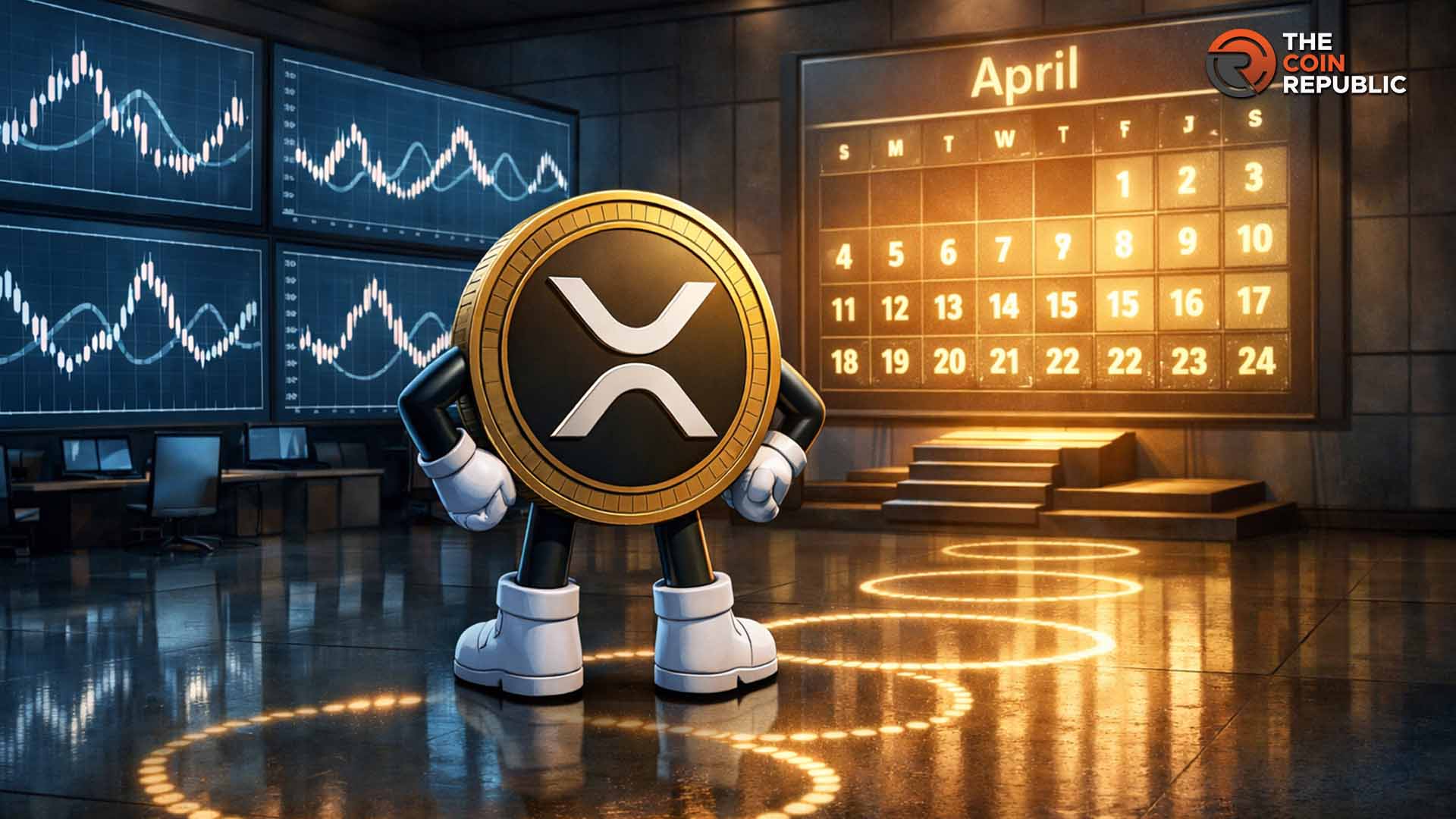
Historical data indicates April has been XRP's strongest month, with an average return of 24.8% since 2014, suggesting potential for a significant price rally. Despite historical bullishness in April, current market uncertainty due to geopolitical tensions (US-Iran conflict) and XRP's recent March decline introduces significant downside risk. Analysts are divided on XRP's near-term trajectory, with some anticipating a rebound based on seasonal trends and others predicting a continued decline mirroring last year's performance. The median April gain for XRP is only 2%, indicating that the high average return is driven by a few outlier years, suggesting that a broad-based rally is not guaranteed.
XRP Ledger demonstrated robust scalability by sustaining over 120 TPS with low fees, indicating strong performance under load that could be crucial for upcoming bull market activity. The network's ability to handle high transaction volumes without congestion or fee spikes suggests underlying efficiency improvements or increased DEX activity, providing a positive signal for its capacity. While generally positive, a user report of fee increases at 200 TPS highlights potential scaling limits that warrant monitoring as transaction demand grows. Recent developments in XRPL security enhancements and stablecoin testing by Ripple Labs, coupled with this throughput surge, suggest proactive preparations for increased network utility and adoption.

Despite Solana's network demonstrating significant developer growth, surpassing Ethereum, its token price action is showing weakness, indicating a divergence between fundamental development and market sentiment. Technical analysis reveals Solana's price has faced repeated rejections from a supply zone around $250, with cooling futures volume suggesting waning demand and a potential downside target towards the $52-$58 range. The article highlights a paradox where strong on-chain fundamentals like high developer count and transaction throughput are not translating into bullish price action for SOL, suggesting broader market conditions and technical resistance are currently overriding ecosystem strength.
Declining XRP exchange reserves to 2.75 billion indicate strong holder accumulation, suggesting potential for a price breakout driven by sustained demand despite recent price consolidation. The shift of XRP from exchanges to private wallets is a bullish signal for price appreciation, as it typically reflects a long-term holding sentiment and reduced selling pressure. Despite positive on-chain signals for XRP, the lack of institutional inflow into XRP ETFs, with potential for first monthly outflows, suggests a divergence between retail accumulation and institutional sentiment.
Short-term bearish analysis suggests a potential retest of the $60 demand zone due to persistent selling pressure and capped upside attempts above $100. Long-term optimistic outlook views the current ~77% drop from ATH as a strategic accumulation phase near the 0.618 Fibonacci retracement, with potential targets of $500-$1,000. Solana is at a critical juncture, balancing immediate bearish technicals with long-term bullish accumulation narratives, making it a watchlist candidate for volatility expansion.

Ondo Finance's strategic partnership with Franklin Templeton to tokenize ETFs signifies a major influx of traditional finance assets into the crypto space, potentially unlocking trillions in new capital flows. The collaboration positions Ondo Finance to further solidify its dominant 60% market share in tokenized stocks, indicating strong institutional adoption of its RWA infrastructure. Despite the significant fundamental development, ONDO's price action remains range-bound, suggesting a potential accumulation phase before a broader market recognition of the partnership's value. This development signals a growing trend of TradFi integration with crypto, where tokenized assets offer 24/7 access and DeFi composability, enhancing investor accessibility and market efficiency.
Ripple's RLUSD stablecoin saw significant minting on the XRP Ledger alongside burns on Ethereum, indicating a potential supply rebalancing effort by the company. Increased RLUSD activity and Ripple's focus on its utility as a settlement asset for enterprise use cases, including trade finance pilots, suggest a strategic push for broader adoption. A recent survey highlighting strong institutional preference for stablecoins, with 74% seeing potential for cash-flow efficiency, provides a favorable backdrop for RLUSD's development.
Bitcoin is currently at a critical support zone, with two distinct analyst views suggesting either a short-term bounce followed by a further decline or a potential relief rally if support holds. The immediate price action for Bitcoin hinges on the $65,000-$66,000 support level, with a hold potentially leading to a 6-8% rally, while a break could signal a move towards $60,000 or lower. Traders should monitor the $66,170 area and Fibonacci resistance levels around $69,483-$74,894 for potential short-term selling pressure, as a sustained breakout is not yet indicated by current technicals. The market sentiment remains cautious, with analysts warning of potential irrational price movements and the risk of early positioning, emphasizing the need for confirmation before committing to significant trades.
Signal context only. Validate with price action, liquidity, and risk limits before taking a position.
