
Navigating Crypto News

CoinFeather
Navigating Crypto News
Source, catalyst, and sector overlap from the latest feed.
Shiba Inu's hourly death cross indicates short-term bearish momentum, coinciding with broader market liquidations and ETF outflows, suggesting potential for further downside pressure. Despite a technical bearish signal, SHIB is attempting a relief rally, with key resistance at the 50 MA and support at $0.00000571 to monitor for potential short-term price action. The increase in Shiba Inu's open interest and derivatives volume suggests heightened trader activity and positioning adjustments, which could precede a more significant price move.
XRP Ledger demonstrated robust scalability by sustaining over 120 TPS with low fees, indicating strong performance under load that could be crucial for upcoming bull market activity. The network's ability to handle high transaction volumes without congestion or fee spikes suggests underlying efficiency improvements or increased DEX activity, providing a positive signal for its capacity. While generally positive, a user report of fee increases at 200 TPS highlights potential scaling limits that warrant monitoring as transaction demand grows. Recent developments in XRPL security enhancements and stablecoin testing by Ripple Labs, coupled with this throughput surge, suggest proactive preparations for increased network utility and adoption.
Live Feed
Loading the broader stream in the same flow as the homepage feed.
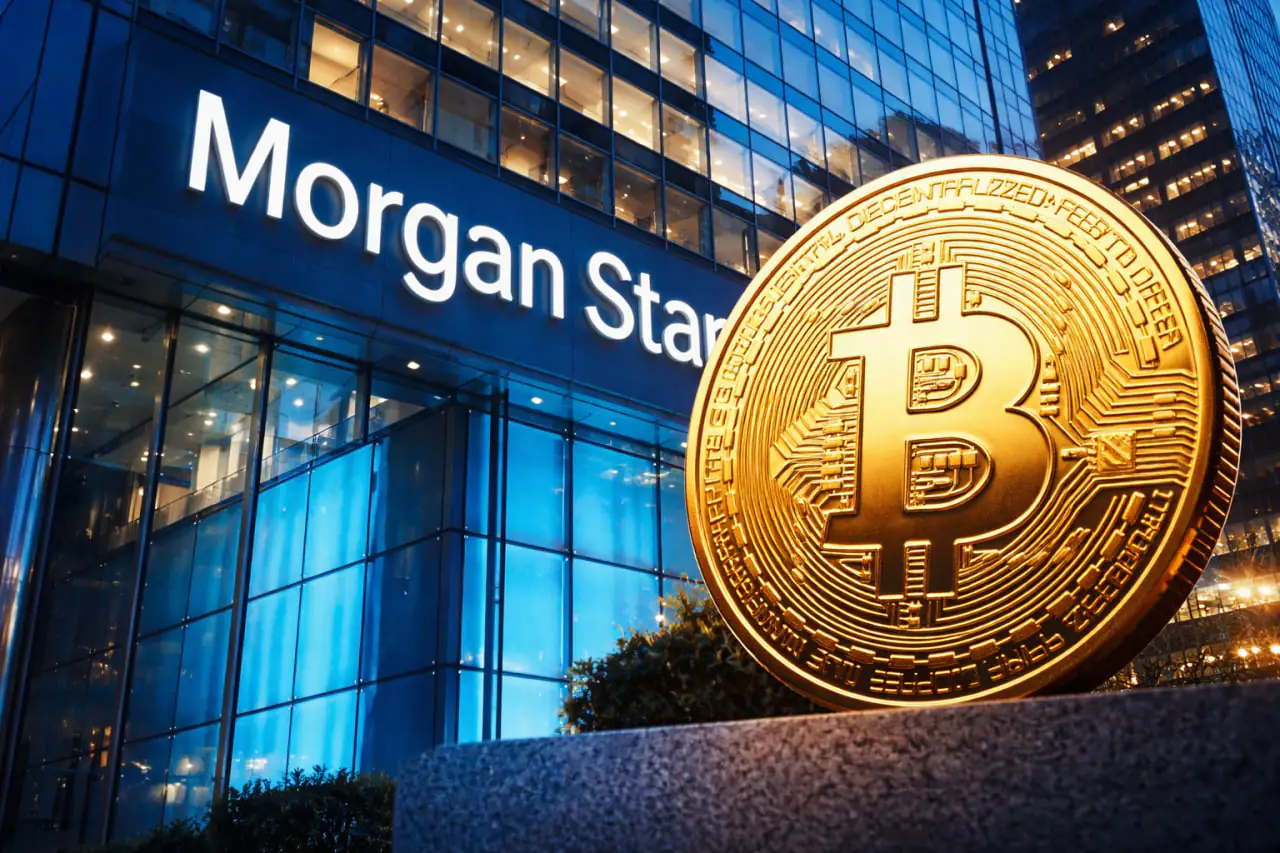
Morgan Stanley's aggressive 0.14% fee for its new Bitcoin ETF positions it as the cheapest U.S. spot offering, signaling intense competition with expected filings from firms like Goldman Sachs and potentially driving down fees across the sector. The launch of a major bank's Bitcoin ETF, coupled with low yields on traditional savings accounts, highlights Bitcoin's growing appeal as an alternative asset driven by both institutional adoption and retail dissatisfaction with banking economics. Pending legislation on stablecoins and market structure will be critical in defining the competitive landscape between traditional finance and digital assets, influencing how far crypto can challenge established banking services.

Wintermute's launch of 24/7 crude oil CFD trading signifies crypto's aggressive expansion into traditional macro markets, leveraging geopolitical volatility to capture demand for round-the-clock asset access. The increasing demand for 24/7 trading in assets like oil, driven by geopolitical events, positions crypto venues as crucial infrastructure for immediate market reaction, potentially shifting trading norms away from traditional business hours. The dual approach of crypto-native platforms like Hyperliquid and more institutional-leaning offerings like Wintermute's suggests a bifurcated but growing market for off-hours trading, catering to both retail speculation and institutional hedging needs. The broader trend of financial markets moving towards extended trading hours and tokenized formats, exemplified by developments in traditional finance and crypto, indicates a structural shift that crypto is actively leading and benefiting from.
Escalating geopolitical tensions in the Strait of Hormuz are driving Brent crude oil prices above $111, with JPMorgan warning of a potential spike to $120 if supply disruptions persist. The market faces a critical turning point as diplomatic efforts clash with ongoing military developments and shipping risks, creating significant uncertainty for energy prices. Major banks like Goldman Sachs and Standard Chartered are revising forecasts upward, signaling a potential for sustained higher oil prices due to the severity of the supply shock. With alternative routes and strategic reserves nearing capacity, the market is vulnerable to a deeper supply crisis if the Strait of Hormuz does not reopen within the next 1-3 weeks.

The CEO of a Kraken-backed SPAC suggests crypto is more resilient to AI disruption than traditional SaaS, implying a potential shift in investor focus towards digital assets as AI dominates software innovation. While AI is presented as the primary growth narrative, crypto, particularly stablecoins and payments, is identified as a strong secondary thematic for investment, indicating continued relevance despite market cycles. The SPAC is actively seeking crypto-native deals valued between $2B-$10B, signaling institutional interest in funding and potentially consolidating promising projects within the crypto ecosystem. The potential for tokenization to finance expensive AI infrastructure build-outs presents a novel intersection of AI and crypto, suggesting new avenues for yield generation and investment.

Despite Solana's network demonstrating significant developer growth, surpassing Ethereum, its token price action is showing weakness, indicating a divergence between fundamental development and market sentiment. Technical analysis reveals Solana's price has faced repeated rejections from a supply zone around $250, with cooling futures volume suggesting waning demand and a potential downside target towards the $52-$58 range. The article highlights a paradox where strong on-chain fundamentals like high developer count and transaction throughput are not translating into bullish price action for SOL, suggesting broader market conditions and technical resistance are currently overriding ecosystem strength.

Google's significant investment in Anthropic's data center infrastructure signals a deepening partnership and a substantial commitment to AI development, potentially impacting demand for related compute and hardware resources. The judicial block on the Pentagon's directive against Anthropic suggests a more stable regulatory environment for AI firms, allowing for continued operations and potential government contracts. The dual developments of major infrastructure investment and regulatory reprieve for Anthropic indicate a strengthening position for the AI company, which could translate to increased demand for its services and underlying technologies.

AI agents are increasingly dominating arbitrage opportunities in prediction markets due to their speed, capturing short-lived mispricings that humans cannot exploit. The growing sophistication of AI in prediction markets raises concerns about potential market manipulation and the need for regulatory guardrails. The evolution from simple execution bots to advanced AI systems signifies a fundamental shift in trading, favoring participants who leverage automation and AI. While AI enhances access to complex trading strategies for retail participants, it also intensifies competition with institutional players already utilizing similar technologies.
Short-term bearish analysis suggests a potential retest of the $60 demand zone due to persistent selling pressure and capped upside attempts above $100. Long-term optimistic outlook views the current ~77% drop from ATH as a strategic accumulation phase near the 0.618 Fibonacci retracement, with potential targets of $500-$1,000. Solana is at a critical juncture, balancing immediate bearish technicals with long-term bullish accumulation narratives, making it a watchlist candidate for volatility expansion.

Ondo Finance's strategic partnership with Franklin Templeton to tokenize ETFs signifies a major influx of traditional finance assets into the crypto space, potentially unlocking trillions in new capital flows. The collaboration positions Ondo Finance to further solidify its dominant 60% market share in tokenized stocks, indicating strong institutional adoption of its RWA infrastructure. Despite the significant fundamental development, ONDO's price action remains range-bound, suggesting a potential accumulation phase before a broader market recognition of the partnership's value. This development signals a growing trend of TradFi integration with crypto, where tokenized assets offer 24/7 access and DeFi composability, enhancing investor accessibility and market efficiency.

Anthropic's leaked AI model, Capybara, signifies a potential leap in AI capabilities, raising concerns about cybersecurity risks within DeFi and smart contract auditing. The advancement of centralized AI models like Anthropic's Capybara could widen the competitive gap with decentralized AI networks such as Bittensor, potentially impacting the valuation of AI tokens. The leak of a highly capable AI model, despite its cybersecurity implications, highlights human error in data management, creating an ironic cautionary tale for tech companies.
Bitcoin is currently at a critical support zone, with two distinct analyst views suggesting either a short-term bounce followed by a further decline or a potential relief rally if support holds. The immediate price action for Bitcoin hinges on the $65,000-$66,000 support level, with a hold potentially leading to a 6-8% rally, while a break could signal a move towards $60,000 or lower. Traders should monitor the $66,170 area and Fibonacci resistance levels around $69,483-$74,894 for potential short-term selling pressure, as a sustained breakout is not yet indicated by current technicals. The market sentiment remains cautious, with analysts warning of potential irrational price movements and the risk of early positioning, emphasizing the need for confirmation before committing to significant trades.
Signal context only. Validate with price action, liquidity, and risk limits before taking a position.
Quick market read from this story
Declining XRP exchange reserves to 2.75 billion indicate strong holder accumulation, suggesting potential for a price breakout driven by sustained demand despite recent price consolidation.
The shift of XRP from exchanges to private wallets is a bullish signal for price appreciation, as it typically reflects a long-term holding sentiment and reduced selling pressure.
Despite positive on-chain signals for XRP, the lack of institutional inflow into XRP ETFs, with potential for first monthly outflows, suggests a divergence between retail accumulation and institutional sentiment.
Deep Dive
Despite recent mixed price action and retracements, exchange data indicates that traders are actively buying XRP, with a substantial decline in tokens available on exchanges. This suggests a potential for a significant price recovery.
Data from CryptoQuant reveals that the amount of XRP held on all exchanges has fallen to approximately 2.75 billion XRP as of Saturday, March 28. This represents a notable decrease from over 2.8 billion XRP recorded earlier in the week.
A reduction in XRP exchange reserves is considered a bullish signal, as it implies that holders are moving XRP into private wallets for long-term holding, indicating increased buying activity that could drive prices higher.
Following the drop in exchange reserves, XRP has experienced a price increase. Trading at $1.33 at the time of writing, XRP saw a mild gain of 0.23%. This positive shift, coupled with intensifying buying activity, could signal the start of a significant price breakout.
While XRP has shown price strength in March with several rallies breaking key resistance levels, institutional demand has largely stalled throughout the month. Daily XRP ETF flows show minimal new institutional capital and consistent withdrawals.
XRP ETFs are on the verge of recording their first monthly outflow since their launch, reflecting a period of subdued institutional interest despite the token's recent price performance.
