
Navigating Crypto News

CoinFeather
Navigating Crypto News

Quick market read from this story
Wintermute's launch of 24/7 crude oil CFD trading signifies crypto's aggressive expansion into traditional macro markets, leveraging geopolitical volatility to capture demand for round-the-clock asset access.
The increasing demand for 24/7 trading in assets like oil, driven by geopolitical events, positions crypto venues as crucial infrastructure for immediate market reaction, potentially shifting trading norms away from traditional business hours.
The dual approach of crypto-native platforms like Hyperliquid and more institutional-leaning offerings like Wintermute's suggests a bifurcated but growing market for off-hours trading, catering to both retail speculation and institutional hedging needs.
The broader trend of financial markets moving towards extended trading hours and tokenized formats, exemplified by developments in traditional finance and crypto, indicates a structural shift that crypto is actively leading and benefiting from.
Deep Dive
The traditional oil market's predictable schedule is being disrupted by geopolitical events, creating an opportunity for crypto platforms to offer 24/7 trading. Companies like Wintermute are launching continuous crude oil CFD offerings, catering to a market demanding immediate exposure to price fluctuations, regardless of traditional trading hours.
Geopolitical tensions, particularly concerning Iran, have led to unpredictable price swings in oil markets, occurring at all hours. This has rendered legacy futures venues too slow and inaccessible for traders seeking to react instantly. For example, on March 24, over $500 million in crude bets were placed just before a US announcement on Iran, causing significant market shifts. Brent crude fell from approximately $112 to $99, and WTI dropped from roughly $99 to $86, yet prices remained over 40% higher than pre-Iran levels.
Crypto platforms are stepping in to fill this liquidity gap. Hyperliquid saw an oil-linked perpetual contract generate over $1.2 billion in 24-hour volume, becoming its second-most traded market. This surge highlights the growing demand for continuous trading of commodities like oil, which is increasingly viewed as a 24/7 macro asset.
Wintermute's offering allows users to post both fiat and crypto as collateral for round-the-clock trading via OTC channels. This contrasts with Hyperliquid's more public, perpetuals-focused model, indicating two distinct approaches to capturing the demand for off-hours oil trading: a crypto-native, public-facing model and a more institutional, dealer-led approach.
The move towards 24/7 trading is not limited to commodities. The broader financial industry is embracing longer trading days and tokenized assets. Recent developments include the SEC's approval for tokenized stock trading, the NYSE's work on a tokenized securities platform, and plans for extended trading hours from Nasdaq and CME Group. Nasdaq plans to introduce 24-hour trading on its primary US exchange in the latter half of 2026, while CME Group will launch 24/7 cryptocurrency futures and options trading on May 29.
These shifts are training investors to expect constant trading access, with crypto companies leading the way. Oil, with its significant role in inflation, war premiums, and global economics, adds substantial weight to this transition, demonstrating crypto's ability to integrate into major global market conversations.
Despite the momentum, extended-hour trading presents challenges such as thinner liquidity, wider spreads, and the risk of early price moves overstating conviction. Concerns about investor protection, costs, volatility, and liquidity in near-continuous markets are being raised by financial institutions.
However, the direction is clear. S&P Dow Jones Indices recently licensed the S&P 500 to Trade[XYZ] for perpetual contracts on Hyperliquid, enabling 24/7 trading on a decentralized platform. This signifies a broader trend where benchmark providers, exchanges, and crypto venues are building infrastructure for a market that operates around the clock. The race is on for platforms to establish durable franchises by becoming the go-to venues for off-hours oil speculation and hedging, moving beyond niche enthusiast arenas to become integral parts of the broader oil market.
Source, catalyst, and sector overlap from the latest feed.
Wall Street's renewed focus on tokenization, driven by BMO, Nasdaq, and regulatory developments, signals a significant shift towards integrating digital assets into traditional finance for enhanced efficiency and 24/7 operations. The push for tokenization by major financial institutions like BlackRock and JPMorgan highlights a strategic move to leverage blockchain for faster settlement and more mobile collateral, aiming to improve market liquidity and reduce friction during stressed periods. Regulatory bodies and Congress are actively engaging with tokenization, indicating a move towards adapting existing securities laws and potentially creating new frameworks to govern digital assets, which could reshape market structure. While institutions are embracing tokenization for efficiency and control, challenges like fragmentation and interoperability remain, suggesting that the full realization of promised improvements may take time and face hurdles.
The regulatory crackdown on crypto prediction markets, driven by their increasing similarity to sports betting, poses a significant risk to the sector's growth and operational model. The core dispute centers on whether prediction markets are regulated as financial derivatives (CFTC) or illegal gambling (states), with potential legislation aiming to ban sports bets entirely from these platforms. Product design and settlement clarity are crucial for prediction markets to maintain legitimacy and argue for federal oversight, as poorly defined contracts can easily be classified as gambling. The conflict is evolving from a jurisdictional dispute to a fundamental debate over the existence of sports prediction markets in their current form, potentially leading to a hybrid regulatory regime with stricter rules.
Bitcoin's historical seasonality is highly conditional on the year's current state (YTD performance and regime), suggesting that simple calendar averages are unreliable trading signals without this context. The year 2026 has deviated from typical seasonal patterns, particularly with a negative January followed by a negative February, placing it in a 'repair-or-failure' state that requires Q2 performance to validate any potential second-half rally. A strong Q1 performance historically improves the odds of a positive full-year return but often leads to a weaker Q2, indicating that while the overall trend may be constructive, tactical entry points can become challenging. The critical test for 2026 lies in Q2; if Bitcoin cannot achieve a significant rebound by June, the market's optimistic seasonal narratives for the latter half of the year become less credible, shifting the focus to downside risk.
Bitcoin's technical structure has deteriorated, with key support levels broken, suggesting a potential decline to $61,700 if macro pressures persist. Elevated Treasury yields and Middle East risk are creating a challenging macro backdrop, increasing the downside pressure on Bitcoin. Donald Trump's social media posts represent a significant political catalyst that could influence Bitcoin's price direction over the weekend, with de-escalation potentially leading to a relief rally and hardened rhetoric exacerbating losses. The market is currently trading based on the potential for further downside rather than rebuilding previous support, making $66,900 and $68,000 critical reclaim levels for any bullish recovery.
David Sacks leaves office with wins for crypto infrastructure, while Bitcoin holders are still waiting David Sacks is out of the formal White House crypto czar role after exhausting the 130-day limit attached to his special government employee status. The change closes the clearest window for a scorecard. The record is substantial, yet it falls […] The post White House crypto czar leaves office after securing crypto wins for banks and institutions instead of Bitcoin appeared first on CryptoSlate.
Solana's dominance in tokenized RWA volume, approaching 98%, highlights its strategic positioning in a growing market segment, potentially driving future demand. A TD Sequential buy signal on the 4-hour chart suggests a potential short-term price reversal for SOL, warranting trader attention to immediate price action. Sustained high transaction volumes, with Solana handling a significant portion of global crypto transactions, indicate robust network activity that could support price consolidation and future upside. The recurring monthly bullish engulfing pattern, if confirmed, could signal a significant upward trend continuation for SOL, aligning with long-term price targets.
Ripple CEO Brad Garlinghouse's comparison of stablecoins to a 'ChatGPT moment' for corporate finance signals a significant potential shift in business treasury and payment strategies. The projected growth of stablecoin flows to $56.6T by 2030, with RLUSD emerging as a challenger, indicates a substantial market opportunity and increasing competition in the stablecoin sector. Ripple's strategic expansion into stablecoins with RLUSD, now the 10th largest, positions the company to capitalize on the growing demand for efficient digital payment solutions in corporate finance. The ongoing discussion around US stablecoin regulation, highlighted by Garlinghouse's concerns, suggests that regulatory clarity could be a major catalyst for broader adoption and market development.
The easing of geopolitical tensions with Iran, signaled by oil prices falling below $100, is creating a more favorable macro environment, potentially driving capital rotation into riskier assets like cryptocurrencies. Pepeto is positioning itself as a high-potential 'next crypto to explode' with a Binance listing imminent, a $8 million presale raise, and projected 100x returns, leveraging its co-founder's history with Pepe and its utility features like zero-fee trading and a risk scorer. While large-cap assets like BTC and AVAX show signs of recovery and utility-driven growth (RWA, AI), the article emphasizes that the most significant multiples this cycle are likely to come from early-stage presale entries like Pepeto, which offers a combination of product utility and exchange listing catalysts.
Ripple CEO Brad Garlinghouse likens stablecoins to crypto's 'ChatGPT moment,' signaling a potential inflection point for business adoption and integration into traditional finance. The projected growth of stablecoin flows to $56.6 trillion by 2030, as predicted by Bloomberg Intelligence, underscores their increasing importance as a payment tool in global finance. While Tether (USDT) and Circle (USDC) dominate current stablecoin trading volume, Ripple's recent acquisitions and launch of its own stablecoin (RLUSD) indicate a strategic push to capture market share. The potential passage of the CLARITY Act is viewed by Ripple as a catalyst for accelerating stablecoin payments and broader blockchain adoption, highlighting the critical role of regulatory clarity in the US.
Washington state has filed a lawsuit against Kalshi, alleging it offers illegal gambling products, escalating regulatory pressure on prediction markets. The legal actions by Washington and Nevada against Kalshi, and Nevada's injunction against Coinbase's prediction market offerings, signal a growing state-level challenge to the classification of prediction markets. This trend of state-level regulatory scrutiny on prediction markets could lead to increased legal uncertainty and potential operational restrictions for platforms operating in multiple jurisdictions.
Ethereum's price recovery above $2,000 follows a significant drop amplified by an all-time high in futures leverage, indicating that while the immediate sell-off pressure has eased, the underlying market fragility due to extreme leverage has reduced but not disappeared. Despite the price volatility and leverage unwind, development activity within the Ethereum ecosystem, led by projects like MetaMask and ChainLink, remains robust, suggesting continued fundamental building independent of short-term market fluctuations. The recovery from the $1,971 low to $2,024 still leaves ETH significantly below its recent high of $2,200, and the macro conditions that initiated the sell-off persist, implying that further upside may be capped without a shift in broader market sentiment.
Kalshi's acquisition of a futures commission merchant license enables margin trading for professional clients, a significant development for institutional adoption in prediction markets. The introduction of margin trading by Kalshi differentiates it from crypto-native prediction platforms and could attract greater institutional capital by reducing upfront capital requirements. Despite regulatory scrutiny, the prediction market sector is experiencing growth, evidenced by Kalshi's substantial funding round and increased trading volumes, suggesting a maturing market.
Shiba Inu's open interest has significantly retreated from recent highs, indicating a cooling of futures market activity and potentially reduced speculative interest. Despite muted derivatives activity, SHIB has shown a recent price uptick, suggesting a potential divergence between futures sentiment and spot market momentum. The current lack of clear directional signals in the futures market, coupled with minor spot price gains, positions SHIB as a watchlist asset pending further developments.
Morgan Stanley's aggressive fee for its new Bitcoin ETF signals a new phase of institutional competition, shifting the battleground to basis points and distribution. The launch highlights Bitcoin's growing appeal as an alternative to traditional banking, driven by low depositor yields and high net interest income for banks. The convergence of institutional adoption, retail dissatisfaction with banking, and evolving regulatory frameworks suggests Bitcoin is becoming a standard portfolio component, with the key question being who sets the terms. The introduction of a low-cost Bitcoin ETF by a major institution like Morgan Stanley, coupled with expected similar moves from competitors like Goldman Sachs, indicates a significant shift in how digital assets are integrated into mainstream finance.
Live Feed
Loading the broader stream in the same flow as the homepage feed.

Ripple CTO emeritus David Schwartz clarified XRP escrow functionality, debunking misconceptions that funds were earmarked for specific individuals. The clarification highlights that XRP escrow operates on automated, condition-based releases, not pre-allocated contracts for specific parties, reinforcing the transparency of the XRP Ledger's mechanics. While not a direct price catalyst, the debunking of misinformation addresses potential FUD (Fear, Uncertainty, Doubt) surrounding XRP's supply dynamics, which could be viewed positively by long-term holders.

Canada's proposed ban on crypto donations, mirroring UK actions, signals a growing global regulatory trend towards restricting digital asset use in political financing due to transparency concerns. Despite crypto donations being permitted since 2019, their minimal adoption in Canadian elections suggests this ban will have little immediate impact on the crypto market, but it highlights increasing governmental scrutiny. The legislation groups crypto with other less traceable funding methods, indicating a broader governmental effort to enhance electoral integrity by limiting anonymous or pseudonymous financial flows.

Bitcoin's valuation has compressed significantly, with the Mayer Multiple in lower percentiles, suggesting it may have already priced in tighter monetary conditions unlike equities which are just beginning to reprice. The shift in Fed rate cut expectations, driven by rising energy prices and inflation concerns, implies a less accommodative macro environment that could pressure risk assets, but Bitwise argues BTC's prior adjustment offers reduced downside. While traditional markets face renewed downside risk from macro shifts, Bitcoin's earlier repricing suggests it might be better positioned to weather the storm, though its correlation with altcoins remains high.
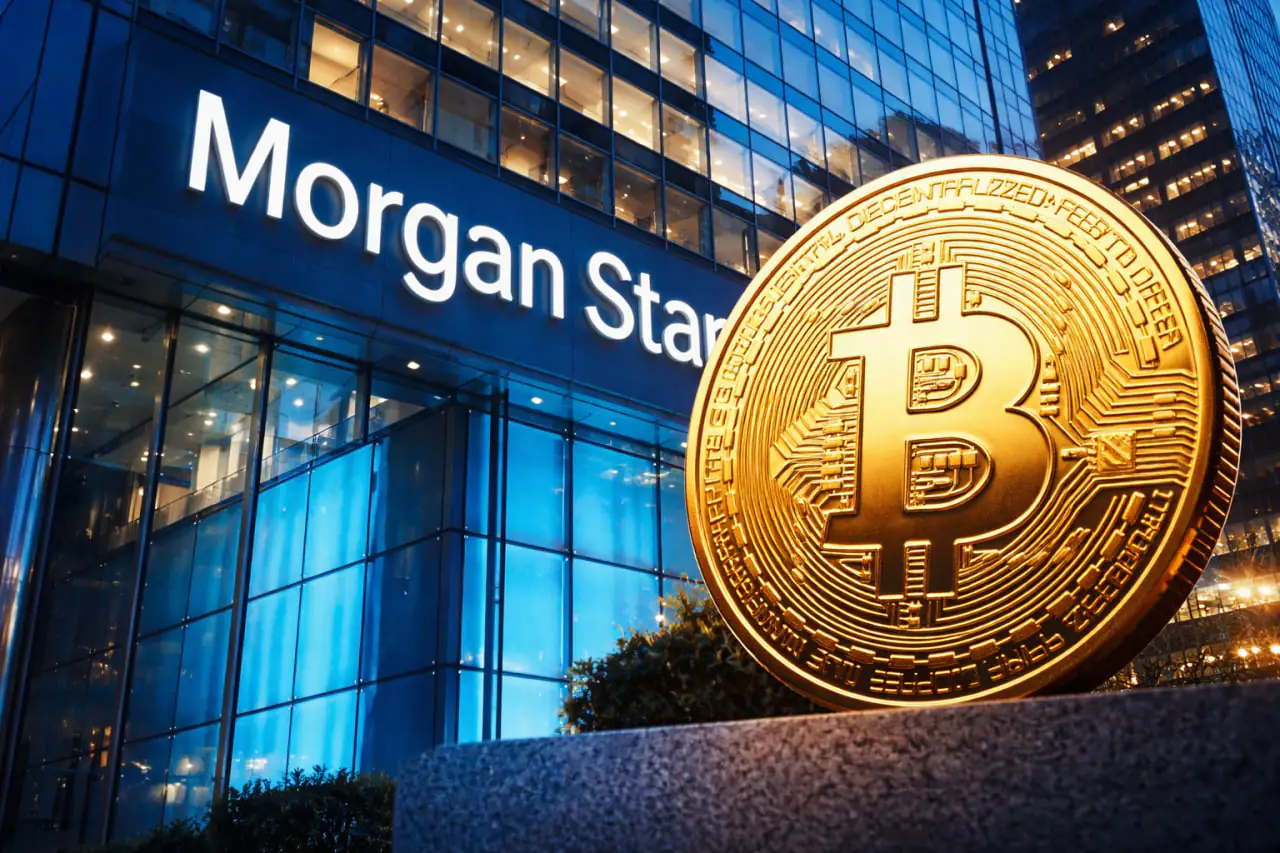
Morgan Stanley's aggressive 0.14% fee for its new Bitcoin ETF positions it as the cheapest U.S. spot offering, signaling intense competition with expected filings from firms like Goldman Sachs and potentially driving down fees across the sector. The launch of a major bank's Bitcoin ETF, coupled with low yields on traditional savings accounts, highlights Bitcoin's growing appeal as an alternative asset driven by both institutional adoption and retail dissatisfaction with banking economics. Pending legislation on stablecoins and market structure will be critical in defining the competitive landscape between traditional finance and digital assets, influencing how far crypto can challenge established banking services.

GameStop's strategic shift of nearly all its Bitcoin holdings into a covered call options strategy on Coinbase Prime signals a move to generate yield from its treasury assets, potentially impacting its balance sheet classification and earnings reporting. The decision to use Bitcoin as collateral for options trading implies GameStop is willing to cap its upside potential in exchange for immediate income, reflecting a cautious stance on near-term BTC price appreciation. CEO Ryan Cohen's comments suggesting "way more compelling" opportunities than Bitcoin indicate a potential long-term strategic re-evaluation of the company's digital asset holdings, warranting close observation of future capital allocation decisions. This move by a significant corporate holder like GameStop could influence other companies with Bitcoin treasuries to explore similar yield-generating strategies, potentially increasing the use of crypto assets in traditional finance-adjacent operations.

Major blockchain networks like Bitcoin, Ethereum, and Solana are actively developing strategies to counter the future threat of quantum computing, indicating a proactive shift from theoretical concern to practical implementation. The differing approaches to quantum resistance across Bitcoin (debate and gradual proposals), Ethereum (phased integration and architectural changes), and Solana (experimental tooling) highlight a lack of industry-wide consensus on the urgency and optimal solutions for this long-term risk. While the quantum threat is acknowledged as a significant long-term risk, the current market reaction is muted, suggesting that immediate repricing is unlikely as preparations are still in early stages and practical attacks are perceived as distant.

Shiba Inu's hourly death cross indicates short-term bearish momentum, coinciding with broader market liquidations and ETF outflows, suggesting potential for further downside pressure. Despite a technical bearish signal, SHIB is attempting a relief rally, with key resistance at the 50 MA and support at $0.00000571 to monitor for potential short-term price action. The increase in Shiba Inu's open interest and derivatives volume suggests heightened trader activity and positioning adjustments, which could precede a more significant price move.
Escalating geopolitical tensions in the Strait of Hormuz are driving Brent crude oil prices above $111, with JPMorgan warning of a potential spike to $120 if supply disruptions persist. The market faces a critical turning point as diplomatic efforts clash with ongoing military developments and shipping risks, creating significant uncertainty for energy prices. Major banks like Goldman Sachs and Standard Chartered are revising forecasts upward, signaling a potential for sustained higher oil prices due to the severity of the supply shock. With alternative routes and strategic reserves nearing capacity, the market is vulnerable to a deeper supply crisis if the Strait of Hormuz does not reopen within the next 1-3 weeks.

Coinbase's research chief highlights Ethereum's potential mispricing, citing regulatory clarity and strong institutional interest from products like BlackRock's ETF as key drivers. The recent classification of ETH as a digital commodity, with staking explicitly outside securities law, provides a significant regulatory "clean pass" that may unlock further institutional adoption. Anticipation of a major announcement regarding Ethereum's future monetary policy and issuance rate at EthCC[9] could serve as a near-term catalyst for price appreciation. Despite current market sentiment, institutional investors are increasing digital asset allocations, suggesting a potential disconnect between market perception and underlying demand for assets like ETH.

The CEO of a Kraken-backed SPAC suggests crypto is more resilient to AI disruption than traditional SaaS, implying a potential shift in investor focus towards digital assets as AI dominates software innovation. While AI is presented as the primary growth narrative, crypto, particularly stablecoins and payments, is identified as a strong secondary thematic for investment, indicating continued relevance despite market cycles. The SPAC is actively seeking crypto-native deals valued between $2B-$10B, signaling institutional interest in funding and potentially consolidating promising projects within the crypto ecosystem. The potential for tokenization to finance expensive AI infrastructure build-outs presents a novel intersection of AI and crypto, suggesting new avenues for yield generation and investment.
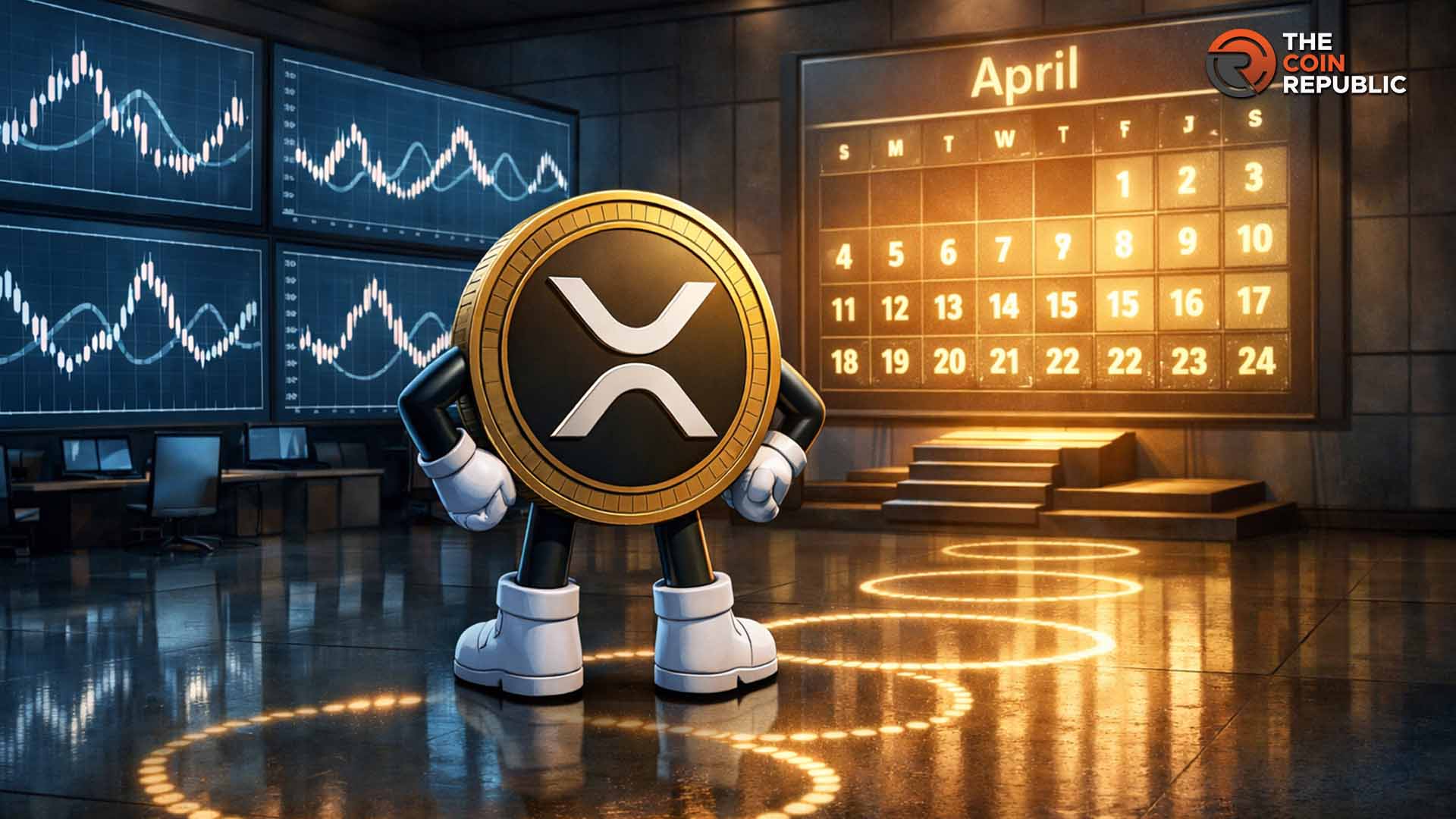
Historical data indicates April has been XRP's strongest month, with an average return of 24.8% since 2014, suggesting potential for a significant price rally. Despite historical bullishness in April, current market uncertainty due to geopolitical tensions (US-Iran conflict) and XRP's recent March decline introduces significant downside risk. Analysts are divided on XRP's near-term trajectory, with some anticipating a rebound based on seasonal trends and others predicting a continued decline mirroring last year's performance. The median April gain for XRP is only 2%, indicating that the high average return is driven by a few outlier years, suggesting that a broad-based rally is not guaranteed.
XRP Ledger demonstrated robust scalability by sustaining over 120 TPS with low fees, indicating strong performance under load that could be crucial for upcoming bull market activity. The network's ability to handle high transaction volumes without congestion or fee spikes suggests underlying efficiency improvements or increased DEX activity, providing a positive signal for its capacity. While generally positive, a user report of fee increases at 200 TPS highlights potential scaling limits that warrant monitoring as transaction demand grows. Recent developments in XRPL security enhancements and stablecoin testing by Ripple Labs, coupled with this throughput surge, suggest proactive preparations for increased network utility and adoption.

Despite Solana's network demonstrating significant developer growth, surpassing Ethereum, its token price action is showing weakness, indicating a divergence between fundamental development and market sentiment. Technical analysis reveals Solana's price has faced repeated rejections from a supply zone around $250, with cooling futures volume suggesting waning demand and a potential downside target towards the $52-$58 range. The article highlights a paradox where strong on-chain fundamentals like high developer count and transaction throughput are not translating into bullish price action for SOL, suggesting broader market conditions and technical resistance are currently overriding ecosystem strength.

Google's significant investment in Anthropic's data center infrastructure signals a deepening partnership and a substantial commitment to AI development, potentially impacting demand for related compute and hardware resources. The judicial block on the Pentagon's directive against Anthropic suggests a more stable regulatory environment for AI firms, allowing for continued operations and potential government contracts. The dual developments of major infrastructure investment and regulatory reprieve for Anthropic indicate a strengthening position for the AI company, which could translate to increased demand for its services and underlying technologies.
Signal context only. Validate with price action, liquidity, and risk limits before taking a position.
