
Navigating Crypto News

CoinFeather
Navigating Crypto News

Quick market read from this story
GameStop has transitioned its Bitcoin holdings into an options income strategy, pledging BTC to Coinbase for covered calls, indicating a shift from a simple buy-and-hold approach.
The company no longer directly holds its Bitcoin, now accounting for it as a receivable due to Coinbase's ability to rehypothecate the assets, altering its balance sheet treatment.
While GameStop maintains economic exposure, the pledged Bitcoin is now encumbered by counterparty risk and derivative contracts, changing its liquidity and risk profile.
Deep Dive
GameStop has transformed its substantial $368 million bitcoin stash into an income-generating strategy through options trading, rather than exiting its holdings as previously speculated. The company transferred nearly all of its 4,709 BTC to Coinbase Prime in January, a move that initially sparked concerns about a potential sale amid falling crypto prices.
Instead of selling, GameStop has implemented an over-the-counter covered-call strategy. The company has written short-dated call options on its bitcoin holdings, with strike prices ranging between $105,000 and $110,000 and expiries through late March. This strategy is designed to generate income from option premiums while capping potential gains above the specified strike prices.
According to the company's annual report filed on Tuesday, this strategy has resulted in a $0.7 million liability related to the options and a $2.3 million unrealized gain. Some of these covered-call contracts expired unexercised, with the associated collateral remaining with Coinbase Credit.
The structure of this options strategy has led to a change in how GameStop accounts for its bitcoin holdings. Because Coinbase can rehypothecate or redeploy the pledged bitcoin, GameStop no longer classifies these assets as directly held. Instead, the company now records a receivable, representing its right to reclaim an equivalent amount of BTC at a later date.
This marks a significant departure from its previous buy-and-hold approach. While GameStop maintains that its economic exposure remains comparable to holding bitcoin directly, the position is no longer unencumbered. It is now held with a counterparty and tied to derivative contracts.
At the end of the fiscal year, the receivables linked to the pledged bitcoin were valued at $368.3 million. The company also recorded a $59.7 million unrealized loss, attributed to the decline in bitcoin's price.
Source, catalyst, and sector overlap from the latest feed.
Geopolitical de-escalation signals from the US President have provided a temporary reprieve for risk assets, allowing Bitcoin and other cryptocurrencies to pare earlier losses. The market's reaction highlights the sensitivity of crypto assets to broader macroeconomic and geopolitical events, with a pause in conflict potentially easing pressure on yields and risk appetite. While the immediate price action shows a modest recovery, the underlying concerns regarding rising bond yields and potential Fed rate hikes persist, suggesting that the crypto market's broader trend may remain under pressure.
OKX's decision to delay its IPO, prioritizing long-term shareholder value over immediate market entry, signals a cautious approach to public listings within the crypto industry. The exchange's strategic investment from ICE, valuing the company at $25 billion, suggests a strong underlying business despite the IPO postponement, potentially indicating a robust foundation for future growth. OKX's emphasis on building a durable company over decades, rather than timing the market, reflects a strategic shift towards sustainable growth and away from the speculative frenzy seen in past crypto booms. Concerns about past poor performance of crypto IPOs, as highlighted by OKX's executive, suggest a potential for continued investor skepticism towards similar listings, impacting the broader exchange sector.
MicroStrategy's preferred equity (STRC) has recovered to par value faster than its historical average, enabling the company to raise capital for further Bitcoin accumulation. The faster recovery of STRC to $100 par value suggests improved market confidence or demand for the instrument, directly facilitating MicroStrategy's strategy of buying Bitcoin with newly issued equity. This development allows MicroStrategy to continue its Bitcoin buying strategy, potentially increasing its BTC holdings and reinforcing its position as a major corporate holder, which could indirectly support Bitcoin's market narrative.
Institutional investors are hesitant to adopt public blockchains due to transparency concerns that conflict with traditional risk management and trading strategies. The core issue for institutional adoption is not blockchain technology itself, but its implementation, with a strong preference for private, permissioned networks offering greater control over data and access. While tokenization of real-world assets is gaining traction, its successful integration into traditional finance hinges on the development of private blockchains that address privacy and market structure concerns like front-running. The divergence between public blockchain transparency and institutional needs suggests a bifurcated market where private solutions will likely dominate for traditional finance integration.
Crypto prices and risk assets remain at the mercy of macro headlines for now, one analyst said.
A significant 1,086% surge in Shiba Inu's token burn rate, coupled with exchange reserves hitting a two-year low, suggests a tightening supply dynamic that could support price appreciation if demand remains consistent. The shift of SHIB tokens from exchanges to self-custodial wallets indicates increased long-term holder conviction, reducing immediate sell pressure and potentially creating a more favorable environment for price discovery. Despite the positive supply-side developments, SHIB is currently testing a key resistance level around $0.00000625, with trading volume not yet reflecting strong speculative interest, implying a need for further catalysts to break through.
Ripple's significant RLUSD token burns, totaling over 35 million tokens across Ethereum and XRP Ledger, indicate active supply management by the stablecoin treasury. While token burns are routine for stablecoin peg maintenance, the scale and short timeframe of these recent burns have prompted community discussion about liquidity management and potential underlying market dynamics. The market cap fluctuation from $1.6 billion to $1.4 billion due to these burns highlights the direct impact of supply adjustments on stablecoin valuation and circulating supply.
The upcoming $3.7 billion options expiry on Deribit introduces a significant event risk, potentially driving short-term price volatility for Bitcoin and Ethereum. Geopolitical tensions and macro events are increasing overall market volatility, pressuring Bitcoin and Ethereum prices ahead of key support levels. Analysts suggest that while short-term retracements are expected, the health of Bitcoin and Ethereum's price action will depend on their ability to hold critical support levels around $106,000 and $2,700 respectively. The put-call ratios and max pain points for both BTC and ETH options indicate a mixed to bearish sentiment among traders, suggesting caution is warranted.
Cardano's treasury may allocate 5-10% of its ADA holdings to Bitcoin and stablecoins, aiming to generate yield and potentially fund ADA buy-backs. The proposed integration of XRP and RLUSD into Cardano's DeFi ecosystem signals an effort to boost network activity and interoperability. While Cardano's ETF prospects remain uncertain with a slight decrease in probability, the proposed treasury diversification and integrations could be viewed as strategic moves to enhance its market appeal. Charles Hoskinson's proposals, while criticized by some as last-ditch efforts, represent a significant shift in Cardano's treasury management and ecosystem expansion strategy.
Nasdaq's tokenization initiatives, including supporting offshore platforms like Kraken, risk creating a bifurcated market for tokenized equities, potentially leading to price discrepancies and fragmented liquidity. The development signals a significant shift towards mainstream adoption of tokenized assets, with traditional exchanges exploring blockchain technology for equity trading, which could increase competition and introduce new trading paradigms. Investors may face challenges navigating dual markets for the same assets, potentially impacting traditional exchange activity and requiring new risk management strategies for price volatility across platforms.
Japan's Financial Services Agency has issued warning letters to KuCoin for unregistered OTC derivatives trading, signaling continued regulatory scrutiny on exchanges operating in the region. This regulatory action by the FSA, following previous warnings and app removal requests, suggests a tightening environment for crypto exchanges targeting Japanese residents. The development highlights the ongoing risk of regulatory enforcement for platforms not adhering to local financial instrument laws, potentially impacting KuCoin's operations and user base in Japan.
XRP's market structure is shifting as speculative leverage on Binance has significantly decreased by approximately 78%, suggesting a move towards spot demand-driven price action rather than futures positioning. Growing crypto adoption in Africa, with over $205 billion in on-chain value, provides a narrative tailwind for XRP, aligning with Ripple's focus on payments and cross-border transactions in emerging markets. Despite reduced leverage and increased on-chain activity on the XRP Ledger, traders are closely watching key support levels around $1.37-$1.40, as a break below could trigger a ~16% correction due to a bearish head-and-shoulders pattern.
Live Feed
Loading the broader stream in the same flow as the homepage feed.

XRP ETFs experienced their first monthly net outflows in March after a strong launch, indicating a cooling of initial demand and suggesting that sustained institutional interest will require more than just early-wave enthusiasm. Despite ETF outflows, the broader institutional case for XRP remains robust, evidenced by significant Goldman Sachs exposure and a substantial percentage of institutional investors planning future allocations, highlighting a shift towards deeper integration beyond simple product subscriptions. Ripple's expansion into payments, custody, stablecoins, and prime brokerage, alongside XRPL's growing tokenization capabilities and RWA adoption, provides a more layered institutional narrative for XRP that transcends short-term ETF fund flows.

The Trump DOJ's inconsistent stance on prosecuting crypto privacy developers creates legal uncertainty, making it harder for developers to obtain binding legal clarity on their activities. Despite stated intentions not to prosecute, federal prosecutors have continued to pursue cases against developers of privacy tools, leading to convictions and ongoing trials. A recent Texas judge's ruling dismissed a developer's lawsuit due to the DOJ's stated policy, highlighting a legal loophole that allows for continued prosecution without clear standing for developers to challenge it. The lack of clear legal precedent and the DOJ's shifting approach to privacy software development pose a significant risk to innovation in the privacy-focused crypto sector.

OpenAI's decision to cancel its erotic chatbot mode, following the shelving of Sora, signals a strategic pivot towards a unified AI platform, potentially impacting investor sentiment towards specialized AI tools. The cancellation of the erotic chatbot mode, despite earlier plans, highlights the evolving ethical considerations and regulatory scrutiny surrounding AI development, which could influence future product roadmaps and market perception. While this development is primarily within the AI sector, the broader implications of AI companies navigating societal impact and user dependency could indirectly affect market confidence in AI-driven crypto projects.

Historical data suggests that when Bitcoin's supply in profit drops to around 50%, it has preceded significant bull runs, with past instances showing gains of over 655%. The current market dynamic differs from previous cycles due to a substantial portion of Bitcoin being held by long-term holders like ETFs and corporations, who exhibit lower sensitivity to short-term price fluctuations, potentially altering the typical accumulation phase behavior. Reduced short-term holder inflows to exchanges like Binance indicate a decrease in reactive selling pressure, aligning with valuation models that suggest limited downside risk relative to long-term upside potential. While historical profitability metrics point to potential accumulation zones, the elevated profitability of long-term holders, driven by institutional adoption, suggests a potentially different market cycle evolution compared to prior bear market bottoms.
Solana is testing a critical demand zone between $91.45 and $82.60, with failure to hold this level potentially leading to significant downside targets at $53.10, $35.40, and $23.60. Bearish technical patterns, including a rising wedge and a break below $120 support, suggest a continuation of the downtrend, with immediate downside risks towards $80 and $70-$65 if the current support fails. Despite bearish signals, Solana is also trading along a rising trendline support, presenting a potential recovery scenario above $100 if buyers defend the current levels and break through the $90-$95 resistance. Solana is at a decisive technical crossroads, trading near $87.65 with significant price compression, indicating a potential breakout setup that could lead to a rapid move above $100 or a deeper correction.
Geopolitical uncertainty stemming from Middle East conflict is driving defensive capital flows into stablecoins and liquid staking tokens, indicating a market preference for yield and capital preservation over speculative assets. Bitcoin and Ethereum experienced declines mirroring traditional markets, suggesting a correlation with broader macroeconomic sentiment and risk-off behavior among investors. Conflicting statements regarding Iran's willingness to negotiate have created volatility, with crypto markets reacting to shifts in geopolitical risk perception. Traders are positioning for potential downside in Bitcoin, with prediction markets showing a higher probability of a price drop to $55,000 than a significant rally.
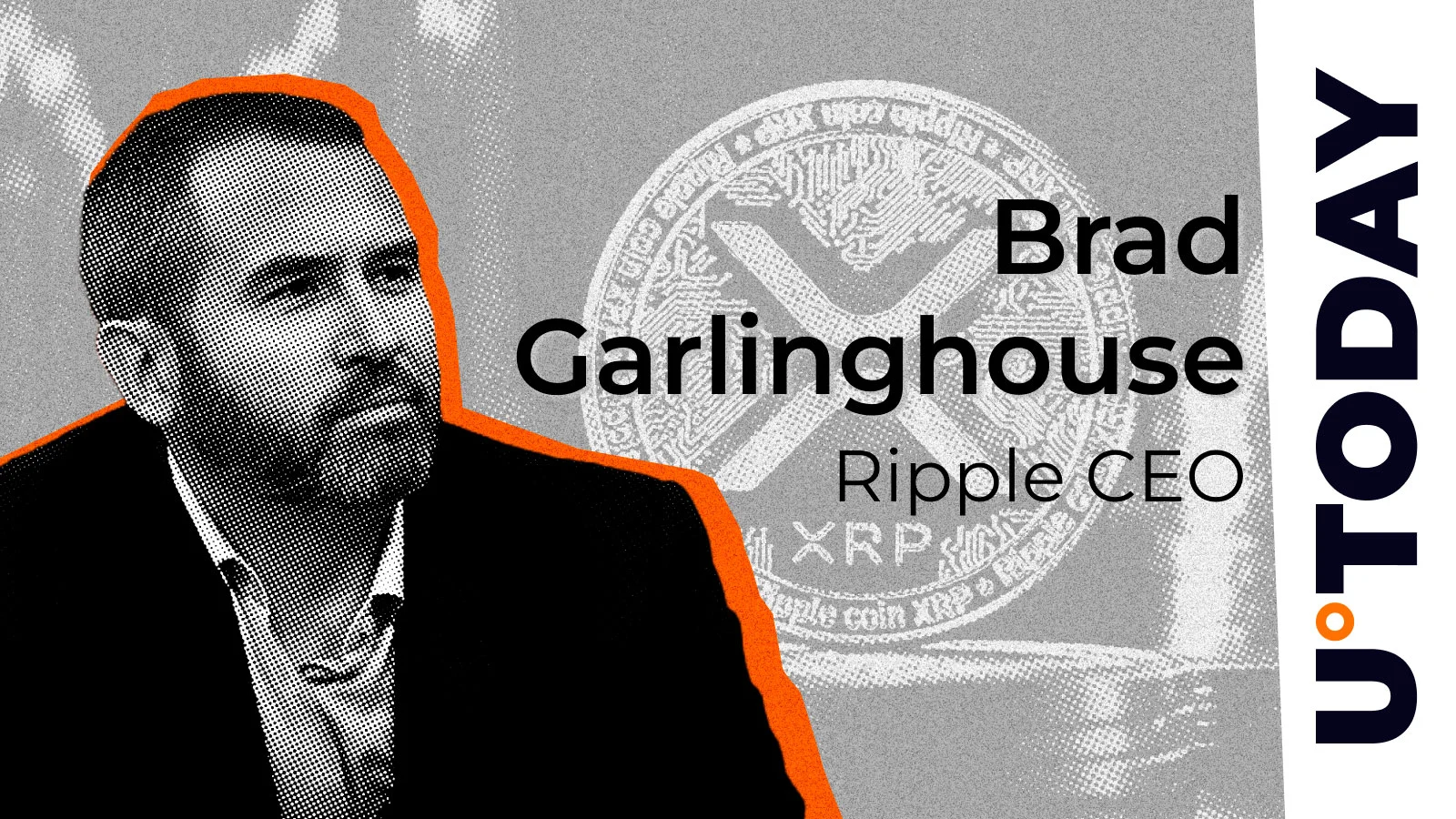
Ripple CEO Brad Garlinghouse indicates a neutral stance on the Clarity Act, suggesting Ripple is not heavily invested in its passage despite acknowledging White House support. Garlinghouse's comments on stablecoins, particularly the potential for Ripple to launch its own compliant stablecoin, suggest a strategic move into the stablecoin market. The discussion around stablecoin proliferation and Ripple's past role in USDC minting highlights potential market shifts and competitive dynamics within the stablecoin sector.

Twenty One Capital's ascent to the second-largest publicly traded Bitcoin holder signals a shift in corporate treasury strategies, potentially indicating a preference for more conservative, long-term BTC accumulation over debt-fueled expansion. The sale of 15,133 BTC by MARA, attributed to servicing debt, serves as a cautionary tale for the industry, highlighting the risks of aggressive borrowing and the potential for capitulation among miners and treasury companies in challenging market conditions. The changing landscape of Bitcoin treasuries, with Twenty One Capital overtaking MARA, suggests a potential consolidation or re-evaluation of strategies within the crypto treasury and mining sectors, impacting investor sentiment towards these entities.

Monument Bank's initiative to tokenize £250 million in retail deposits on the Midnight network signifies a significant step towards integrating traditional banking products with public blockchain infrastructure. This development, targeting mass-affluent clients and maintaining FSCS protection, could serve as a blueprint for other banks looking to leverage blockchain for core banking services, potentially increasing adoption of privacy-focused networks. The broader context of NYSE and Nasdaq advancing tokenized market infrastructure alongside this retail banking move suggests a growing institutional and regulatory acceptance of tokenization across various financial sectors. While the technical analysis indicates a consolidation phase for the Midnight token, the fundamental development of securing a U.K. bank for tokenized deposits presents a strong long-term bullish narrative for the project's utility and adoption.

Wikipedia's new policy prohibiting AI-generated text for articles signals a growing concern over content accuracy and verifiability, potentially impacting platforms reliant on user-generated content. The distinction between AI-assisted copyediting and AI-generated content is crucial, with Wikipedia allowing the former under strict human oversight, highlighting a nuanced approach to AI integration. This development underscores the challenges in maintaining content integrity in the age of LLMs, a concern that could extend to other decentralized platforms and knowledge bases. While not a direct crypto event, the policy reflects broader societal discussions on AI's role and potential risks, which can indirectly influence investor sentiment towards AI-integrated crypto projects.

Institutional investors are increasing their Bitcoin allocation, evidenced by ETF inflows and asset manager filings, suggesting a potential floor around $70,000 despite broader market volatility. The potential for increased US retirement fund investment in Bitcoin via a proposed Labor Department rule and Coinbase's mortgage down payment initiative signals growing mainstream integration and liquidity unlocking mechanisms. Geopolitical tensions and rising oil prices are creating macro headwinds, causing US equity market sell-offs and capping Bitcoin's upside potential above $70,000, despite strong institutional demand. While institutional adoption is a bullish structural factor for Bitcoin, current macro risks from geopolitical instability and inflation concerns are creating near-term price suppression and volatility.

The offer of a 10-20% bounty by Fenbushi Capital founder Bo Shen to recover $42 million in stolen crypto highlights the persistent challenges in asset recovery and the evolving role of advanced on-chain tools and AI. While the theft occurred in 2022, the renewed focus on recovery, leveraging new AI and on-chain analysis capabilities, suggests a potential for uncovering new leads or previously inaccessible information. The involvement of prominent on-chain analysts like ZachXBT and Taylor Monahan, alongside law enforcement, indicates a complex investigation where community participation and advanced forensic techniques are crucial.

Corporate Bitcoin treasury buying has significantly contracted, with Strategy (MicroStrategy) now accounting for 98% of recent purchases, indicating a shift from a broader trend to a single dominant buyer. The financing model for corporate Bitcoin treasuries, reliant on rising prices and favorable equity premiums, is faltering as Bitcoin's price has declined, making it harder for companies to issue stock for further BTC acquisition. The weakening demand from corporate treasuries outside of Strategy suggests a potential reduction in incremental buying pressure for Bitcoin, impacting market dynamics for companies that previously leveraged stock issuance for BTC accumulation. Signs of stress are emerging within the corporate treasury sector, with some companies selling Bitcoin to support stock prices and others facing mounting unrealized losses, signaling a more selective and challenging environment ahead.

A new benchmark, ARC-AGI-3, reveals a significant gap between current AI models and true Artificial General Intelligence (AGI), with leading models scoring below 1% compared to human performance. The benchmark's focus on generalization and learning from scratch in novel environments, rather than pattern recall, highlights a fundamental limitation in current AI capabilities, challenging recent AGI claims from industry leaders. The stark performance difference suggests that despite advancements, AI systems lack the reasoning and adaptability of humans, indicating that the market may be overestimating the current state of AGI development. The ARC Prize Foundation's $2 million competition with open-source requirements aims to drive progress in true AGI, but current results indicate a long road ahead, potentially tempering near-term speculative enthusiasm around AI-driven crypto narratives.
Signal context only. Validate with price action, liquidity, and risk limits before taking a position.
