
Navigating Crypto News

CoinFeather
Navigating Crypto News
Quick market read from this story
Monacoin's upcoming halving in late 2026, reducing block rewards from 6.25 to 3.125 MONA, is a predictable supply-side event that historically correlates with price cycles due to increased scarcity.
The halving mechanism is designed to reduce inflation and could potentially increase the long-term valuation of MONA, though broader market conditions will also significantly influence price action.
Miners will face reduced profitability post-halving, potentially leading to consolidation in mining operations and a greater reliance on transaction fees for revenue.
Deep Dive
Monacoin (MONA), a prominent Japanese cryptocurrency known for its strong community backing, operates on a fixed supply model similar to Bitcoin, utilizing a halving mechanism to control inflation and ensure long-term scarcity. Understanding these halving events is crucial for investors, traders, and miners as they significantly influence MONA’s supply dynamics, mining profitability, and potential price cycles.
A halving is a programmed event that reduces the reward miners receive for validating transactions by 50%. This action directly slows the rate at which new Monacoin enters circulation. For Monacoin, this occurs every 1,051,200 blocks, approximately every 3 years, with the primary goal of gradually decreasing inflation and increasing scarcity.
Monacoin has experienced several halvings since its inception in 2013:
The next Monacoin halving is anticipated around December 2026, which will further reduce the block reward from 6.25 MONA to 3.125 MONA.
Monacoin utilizes a Proof-of-Work (PoW) consensus mechanism with a block time of 1.5 minutes. The total supply is capped at 105,120,000 MONA. Each halving event effectively halves the mining reward, thereby slowing the issuance of new coins and contributing to a deflationary effect over time.
Monacoin halvings are significant for several reasons:
While both Monacoin and Bitcoin employ halving, key differences exist. Monacoin has a shorter halving interval (approximately 3 years) compared to Bitcoin's 4 years, a faster block time (1.5 minutes vs. 10 minutes), and a larger supply cap (105.12 million MONA vs. 21 million BTC). Monacoin's faster cycle could lead to distinct market dynamics.
As Monacoin progresses through its halving cycles, inflation is expected to steadily decline, and mining rewards will increasingly depend on transaction fees. This controlled scarcity could support long-term valuation, although overall price movements are also influenced by broader cryptocurrency market conditions.
Source, catalyst, and sector overlap from the latest feed.
A significant 1,086% surge in Shiba Inu's token burn rate, coupled with exchange reserves hitting a two-year low, suggests a tightening supply dynamic that could support price appreciation if demand remains consistent. The shift of SHIB tokens from exchanges to self-custodial wallets indicates increased long-term holder conviction, reducing immediate sell pressure and potentially creating a more favorable environment for price discovery. Despite the positive supply-side developments, SHIB is currently testing a key resistance level around $0.00000625, with trading volume not yet reflecting strong speculative interest, implying a need for further catalysts to break through.
Solana is testing a critical demand zone between $91.45 and $82.60, with failure to hold this level potentially leading to significant downside targets at $53.10, $35.40, and $23.60. Bearish technical patterns, including a rising wedge and a break below $120 support, suggest a continuation of the downtrend, with immediate downside risks towards $80 and $70-$65 if the current support fails. Despite bearish signals, Solana is also trading along a rising trendline support, presenting a potential recovery scenario above $100 if buyers defend the current levels and break through the $90-$95 resistance. Solana is at a decisive technical crossroads, trading near $87.65 with significant price compression, indicating a potential breakout setup that could lead to a rapid move above $100 or a deeper correction.
XRP's market structure is shifting as speculative leverage on Binance has significantly decreased by approximately 78%, suggesting a move towards spot demand-driven price action rather than futures positioning. Growing crypto adoption in Africa, with over $205 billion in on-chain value, provides a narrative tailwind for XRP, aligning with Ripple's focus on payments and cross-border transactions in emerging markets. Despite reduced leverage and increased on-chain activity on the XRP Ledger, traders are closely watching key support levels around $1.37-$1.40, as a break below could trigger a ~16% correction due to a bearish head-and-shoulders pattern.
Economist Peter Schiff warns of a potential US housing market crisis exceeding 2008 levels, driven by collapsing affordability due to rising mortgage rates, insurance, taxes, and utilities. The current housing market risks are primarily linked to affordability erosion rather than excessive leverage, creating a feedback loop of lower demand and price pressure. Geopolitical tensions and persistent inflation, exacerbated by potential conflict and Fed policy, add a new layer of risk, with higher oil prices being a key concern for increased costs. The article draws parallels to China's housing market downturn, highlighting the vulnerability of housing markets to extreme monetary conditions and converging economic pressures.
XRP Ledger's integration of AI for proactive security threat detection signifies a maturation of its infrastructure, aiming to enhance reliability for scaling global payments and tokenized assets. The shift from reactive to proactive security measures, driven by AI, positions XRPL to better support increasing transaction volumes and the growth of stablecoins like RLUSD, potentially boosting institutional confidence. XRPL's concurrent launch of AI-powered Agent Commerce alongside security enhancements suggests a strategic push towards optimizing on-chain payments and autonomous agent functionality, leveraging AI for both efficiency and safety.
Bitcoin's recent breach of the $70,000 support level, influenced by geopolitical tensions and options expirations, suggests near-term volatility and potential for further downside. Despite price pullbacks, on-chain data indicates continued whale and retail accumulation, hinting at underlying bullish conviction that could fuel a future rally. Analysts are monitoring key price levels like $48,387 and $36,657 as potential dip-buying opportunities, historically preceding significant bull runs. Broader economic pressures including rising unemployment, inflation, and geopolitical conflicts are creating a cautious market environment, potentially leading to a recessionary outlook that could impact crypto prices.
GameStop has transitioned its Bitcoin holdings into an options income strategy, pledging BTC to Coinbase for covered calls, indicating a shift from a simple buy-and-hold approach. The company no longer directly holds its Bitcoin, now accounting for it as a receivable due to Coinbase's ability to rehypothecate the assets, altering its balance sheet treatment. While GameStop maintains economic exposure, the pledged Bitcoin is now encumbered by counterparty risk and derivative contracts, changing its liquidity and risk profile.
MicroStrategy's preferred equity (STRC) has recovered to par value faster than its historical average, enabling the company to raise capital for further Bitcoin accumulation. The faster recovery of STRC to $100 par value suggests improved market confidence or demand for the instrument, directly facilitating MicroStrategy's strategy of buying Bitcoin with newly issued equity. This development allows MicroStrategy to continue its Bitcoin buying strategy, potentially increasing its BTC holdings and reinforcing its position as a major corporate holder, which could indirectly support Bitcoin's market narrative.
Ripple's significant RLUSD token burns, totaling over 35 million tokens across Ethereum and XRP Ledger, indicate active supply management by the stablecoin treasury. While token burns are routine for stablecoin peg maintenance, the scale and short timeframe of these recent burns have prompted community discussion about liquidity management and potential underlying market dynamics. The market cap fluctuation from $1.6 billion to $1.4 billion due to these burns highlights the direct impact of supply adjustments on stablecoin valuation and circulating supply.
The impending expiry of $15.58 billion in Bitcoin and Ethereum options today introduces potential for short-term price volatility as markets gravitate towards 'max pain' levels. While put/call ratios suggest a bullish leaning, Bitcoin's current trading price below key resistance levels indicates a bearish bias unless a significant upward move occurs before expiry. Ethereum's options expiry is expected to result in less pronounced price action compared to Bitcoin, with the ETH price likely to remain range-bound due to its proximity to the 'max pain' level. Traders should monitor Bitcoin's ability to break above $72,000-$75,000 for a bullish shift, while a sustained move below $70,000 could signal further weakness post-expiry.
The expiration of $13.5 billion in BTC and ETH options on Deribit today, the largest settlement of Q1 2026, is creating market volatility and potentially driving capital towards new presale opportunities like Pepeto. Pepeto, a new meme exchange built by the co-founder of the original Pepe coin, is attracting significant capital ($8M+ raised) and is positioned for a potential 100x return, especially with an upcoming Binance listing. While SOL and ADA are showing signs of recovery, with potential upside targets of 26% and 55% respectively, the article emphasizes that presale entries like Pepeto offer the highest potential for life-changing multiples.
Disruptions to Russian oil exports by Ukraine, coupled with Middle East tensions, are prolonging elevated energy prices, which could lead to persistent inflation and pressure central banks to maintain or increase borrowing costs, negatively impacting risk assets like Bitcoin. Traders are pricing in a potential Federal Reserve rate hike within two weeks, driven by sticky inflation concerns stemming from energy market instability, suggesting a near-term bearish outlook for Bitcoin as liquidity tightens. The article suggests that Bitcoin's recent resilience may be tested, with the $65,000–$75,000 range becoming vulnerable to a downside break due to these macroeconomic pressures.
Institutional investors are showing increased interest in XRP, with 25% planning to add it to their portfolios in 2026, indicating a potential shift in altcoin allocation strategies. Despite a broader market slowdown, XRP's volatility has decreased to multi-month lows, which historically precedes significant price movements, suggesting a potential breakout is imminent. The growing institutional adoption of XRP, alongside other major altcoins, signals a maturing market where diversification beyond Bitcoin and Ethereum is becoming a key strategy for large investors.
Rising US 10-year Treasury yields to 4.42% are tightening financial conditions, signaling a potential shift in investor preference towards safer assets over riskier ones like Bitcoin and equities. Despite macro headwinds, Bitcoin has shown relative resilience, trading in a tight range near $68,000 and outperforming equities in recent weeks, suggesting underlying accumulation during dips. Options market data indicates caution with downside protection being bought, but not panic, implying that while investors are hedging, a severe selloff is not yet priced in. The market's focus is shifting to macroeconomic forces, with continued yield increases potentially pressuring Bitcoin to trade more on macro signals than crypto-specific developments.
Live Feed
Loading the broader stream in the same flow as the homepage feed.

Hyperliquid's HYPE price is at a critical juncture with near-equal long and short positions totaling $3.46 billion, indicating a stalemate driven by whale activity. The historical price action of HYPE shows a pattern of extreme volatility, with sharp rallies followed by significant pullbacks, suggesting the current consolidation could precede a substantial move. The unique native matching system on Hyperliquid, where the protocol automatically creates opposing positions, ensures balanced trades and clear risk management, contributing to the current price battle. Despite balanced positions, short traders are committing more margin and have realized higher profits, indicating potential short-term downward pressure on HYPE.

Tether's engagement of KPMG for a comprehensive audit of its USDT reserves signifies a proactive step towards enhancing transparency and addressing regulatory concerns, potentially bolstering market confidence in the stablecoin's backing. The move beyond BDO Italia's attestations to a full audit by a 'Big Four' firm like KPMG indicates a maturing approach to reserve management, which could set a precedent for other stablecoin issuers facing increased scrutiny. By hiring PwC to prepare its systems, Tether is demonstrating a commitment to robust internal controls, a critical factor for maintaining stability and trust, especially as the company explores U.S. expansion.

Brazil's new law empowers authorities to freeze, seize, and liquidate crypto assets linked to serious crimes, signaling a more aggressive stance on illicit finance. The legislation allows for early liquidation of seized crypto before conviction and redirects these funds to public security, potentially impacting the available supply of certain assets if significant seizures occur. This development enhances Brazil's ability to cooperate internationally on asset recovery, potentially increasing the risk for criminals attempting to move illicit funds across borders. While Brazil considered a national Bitcoin reserve, the focus has shifted to utilizing seized crypto, indicating a pragmatic approach to asset management and law enforcement funding.

The arrest of a key facilitator in a transnational crypto scam network highlights a global effort to dismantle illicit operations, potentially reducing the prevalence of crypto-related fraud. Increased law enforcement action against scam compounds, supported by blockchain tracing tools, signals a maturing regulatory environment that could indirectly benefit legitimate crypto adoption by improving ecosystem trust. This development underscores the growing intersection of organized crime and cryptocurrency, emphasizing the need for enhanced crypto forensics and cross-border cooperation to combat financial crime.

David Sacks' departure from his White House crypto czar role removes a key advocate for initiatives like the Clarity Act, potentially slowing regulatory progress. While Sacks is stepping down as czar, his continued role on PCAST suggests ongoing, albeit broader, influence on AI and crypto policy, mitigating immediate negative impact. The uncertainty surrounding a potential replacement or redistribution of responsibilities for crypto policy leadership could create a period of watchful waiting for market participants. The unfinished status of key legislative proposals like the Clarity Act and Strategic Bitcoin Reserve, coupled with Sacks' exit, may lead to increased volatility or reduced investor confidence in near-term regulatory clarity.

Brazil's new law enabling the seizure and liquidation of crypto assets linked to crime represents a significant regulatory development, potentially impacting illicit finance flows and increasing the available supply of seized assets for public security funding. The practical application of this law could lead to increased on-chain monitoring and enforcement actions against criminal entities utilizing cryptocurrencies, signaling a more assertive stance by Brazilian authorities. While the law targets criminal activity, the mechanism for liquidating seized assets could introduce new dynamics to the market for those specific cryptocurrencies, depending on the volume and frequency of sales.
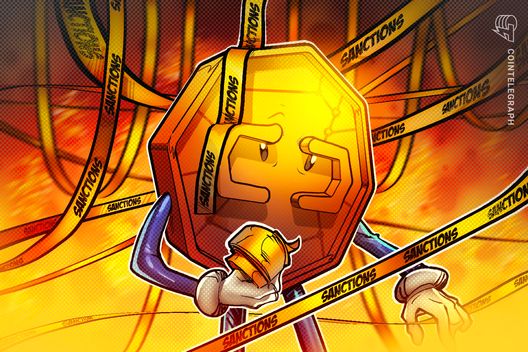
UK sanctions on Xinbi, a $20B crypto guarantee marketplace, aim to isolate illicit actors from legitimate crypto services, potentially reducing the perceived risk of crypto for mainstream adoption. The UK's targeted approach highlights a distinction between legitimate and illicit crypto ecosystems, which could positively influence the industry's reputation and regulatory perception. By cutting off access to legitimate crypto ties, these sanctions directly impact the operational capacity of scam networks, suggesting a proactive regulatory stance against crypto-enabled fraud.

Ripple CTO Emeritus David Schwartz has directly refuted claims of pre-allocated XRP escrow contracts, aiming to dispel market FUD and reinforce transparency regarding token distribution. The denial of secret institutional contracts suggests Ripple's strategy relies on organic utility rather than artificial incentives, potentially impacting investor perception of XRP's long-term demand drivers. By debunking conspiracy theories, Ripple seeks to build trust and focus on fundamental adoption, which could be viewed positively by long-term holders if utility gains traction.
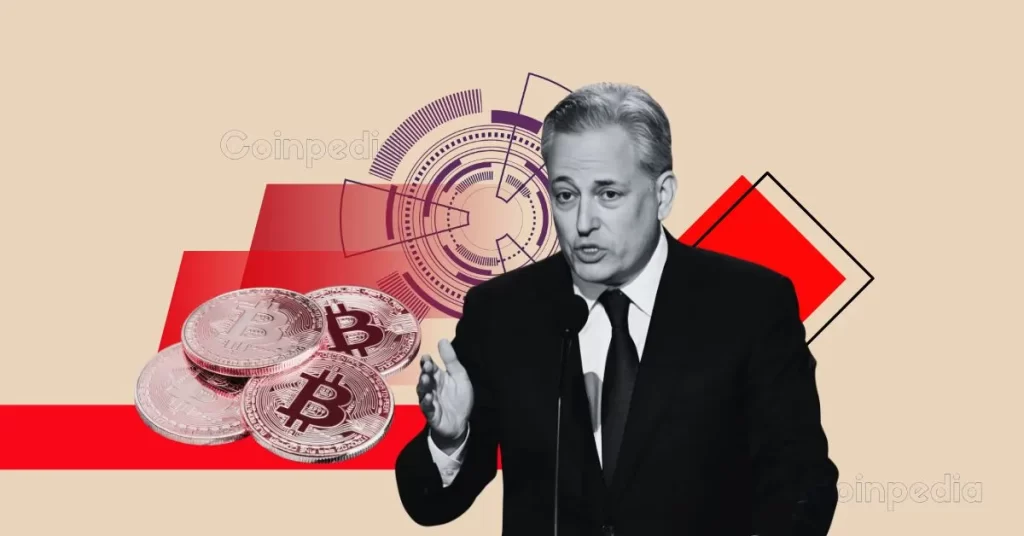
David Sacks' departure from his White House AI and crypto advisor role, while a transition to a broader science and technology council, signals a potential shift in direct government influence on digital asset policy. The move is primarily an administrative change due to term limits, suggesting no immediate policy shift but removing a key figure from direct crypto advisory within the White House. Sacks' continued role on the President's Council of Advisors on Science and Technology indicates ongoing, albeit indirect, influence on technology policy, which could still encompass digital assets.

The significant capital outflow from Bitcoin exchanges ($1.68 billion in one week) suggests a shift towards self-custody and accumulation, potentially reducing sell-side pressure and supporting prices above key levels. Pepeto is being positioned as a high-potential "next crypto to explode" with claims of 100x gains, driven by its utility exchange features and an upcoming Binance listing, which is a common narrative for presale tokens seeking to capitalize on market interest. While BNB and DOGE are mentioned as chasing recovery, their described potential upside (26% for BNB, 50% for DOGE) is presented as less explosive compared to the projected gains for Pepeto, highlighting a focus on early-stage, high-risk/high-reward opportunities. The article emphasizes the importance of early entry into presale tokens like Pepeto before major exchange listings, framing it as a critical strategy for capturing significant returns, especially in a market seeking the next breakout asset.

The post Pi Network News: Referral Rewards Are Finally Moving to Mainnet, But There Is One Condition appeared first on Coinpedia Fintech News Pi Network has officially started rolling out its Second Migration Phase after Pi Day 2026, allowing users to transfer additional balances to the mainnet. This follows the initial migration stage and opens the door for deeper participation in the ecosystem. So far, more than 119,000 users have finished this phase, showing steady progress as access …

ARK Invest's adoption of Kalshi's prediction market data signals a growing institutional interest in alternative data sources for investment decision-making and risk management. The integration of prediction market insights into ARK's workflow suggests a potential shift towards more dynamic and forward-looking investment strategies, leveraging real-time sentiment and expectations. The increasing use of prediction markets by entities like the Federal Reserve and academic institutions highlights their evolving role as valuable tools for gauging economic and market sentiment beyond traditional metrics.

A US federal judge has temporarily blocked the Pentagon's ban on Anthropic, a significant development for the AI firm's government contracts and market position. The ruling suggests the Pentagon's actions against Anthropic may have been arbitrary and an abuse of discretion, potentially impacting future government dealings with AI companies. This temporary injunction provides Anthropic with crucial breathing room, allowing it to continue operations and potentially renegotiate terms with the Pentagon.

XRP's sharp late-session sell-off below $1.36, accompanied by a spike in volume, indicates forced liquidations rather than profit-taking, suggesting weak underlying support. Rising leverage in XRP, with traders adding positions despite falling prices, creates a fragile setup where compressed volatility could precede a larger directional move. The immediate trading focus for XRP is on holding $1.35 as support; a break below this level could trigger further downside towards $1.30, while reclaiming $1.40 is necessary for structural stabilization.
Signal context only. Validate with price action, liquidity, and risk limits before taking a position.
