
Navigating Crypto News

CoinFeather
Navigating Crypto News

Quick market read from this story
The integration of AI agents into commerce, handling on-chain contracts and payments, signals a potential shift towards durable transactional growth and increased network usage for the crypto market.
Stablecoins like USDC are positioned to benefit significantly as they are expected to become the native currency for machine-to-machine commerce, with circulation already showing substantial year-over-year growth.
The development of AI-driven commerce could represent a fundamental catalyst for crypto prices, moving beyond speculative hype towards genuine utility and structural demand for on-chain assets.
Significant challenges remain regarding trust, security, and regulatory clarity for AI agents executing on-chain transactions, which could temper adoption and introduce new risks.
Deep Dive
The cryptocurrency market is anticipating a significant shift driven by the rise of AI agents, which are expected to handle an increasing volume of on-chain transactions, payments, and settlements. This development could foster durable transactional growth and strengthen the broader crypto market by increasing structural liquidity and network usage. Industry leaders and investors suggest that the next market upswing may be fueled more by AI-driven commerce and machine-to-machine interactions than by traditional hype cycles.
Crypto infrastructure is rapidly evolving to support this vision of agentic finance. Companies like Circle are developing blockchains capable of handling millions of small, low-cost payments, while Coinbase has launched an experimental HTTP payments protocol (x402) that has already processed a substantial volume of automated transactions. The core idea is that blockchains will serve as the backend for a future machine economy, with stablecoins potentially becoming the native currency for machine-to-machine commerce. Projects are also focusing on identity and trust, with initiatives like World’s AgentKit aiming to bind AI agents to unique humans via decentralized IDs to distinguish real users from bots and ensure a "proof of personhood." The significant year-over-year increase in stablecoin circulation, such as a 72% rise for USDC, indicates growing institutional capacity for higher on-chain volumes.
The potential market for agentic commerce is substantial, with projections indicating it could represent a significant portion of global e-commerce. Bain estimates that agentic AI could account for up to 25% of U.S. online sales by 2030, translating to $300–$500 billion, while McKinsey projects a global market of $3–5 trillion by 2030. If even a fraction of this activity settles in crypto, it could create a substantial demand wave for on-chain assets and services. This narrative is already showing early signs of impacting crypto prices, with instances of market rallies following positive news related to AI and fintech adoption. The increasing utility of crypto assets as tools for machine-driven demand, rather than just speculation, could lead to sustained price appreciation and trading volumes.
Despite the optimism, significant challenges remain for the widespread adoption of AI agents in crypto. Consumer trust is a major hurdle, with surveys indicating low confidence in AI for making payments due to concerns over privacy and reliability. Technological risks include the potential for severe tail events if AI executes on-chain trades without adequate safeguards; solutions like survivability-aware execution layers have shown promise in mitigating losses. Regulatory clarity is also a critical issue, as the legal framework for AI agent actions, accountability, and potential malicious behavior is still undefined. Furthermore, establishing robust identity verification and ensuring interoperability across different blockchain networks are essential for preventing abuse and enabling seamless agentic commerce.
Addressing regulatory ambiguity, establishing clear identity protocols, and fostering interoperability are crucial for the future of agentic commerce. Regulators worldwide need to provide clear guidelines to prevent stalled adoption and legal complications. Strong identity verification tools are vital for distinguishing legitimate users from bad actors and ensuring compliance. The current fragmentation of blockchain ecosystems presents technical challenges, with a lack of universal standards for agent payments hindering progress. However, cross-chain technologies are expected to bridge these gaps, enabling agents to operate across different networks. Projects that successfully navigate these challenges are likely to lead the next wave of crypto innovation.
The agentic finance narrative is gaining momentum as a potential catalyst for a new crypto cycle, supported by industry data and forecasts. Stablecoins and programmable money are seen as native to code and capable of instant, micro-increment settlements, offering a distinct advantage over traditional fiat rails. As businesses integrate AI-driven payments at scale, crypto assets could transition from speculative instruments to essential infrastructure for the autonomous economy. This shift implies that demand for liquidity and payment rails will become structural, driven by actual economic activity rather than speculative hype. The fixed-supply nature of many crypto assets could also make them attractive in an economy increasingly driven by machine-to-machine transactions.
Source, catalyst, and sector overlap from the latest feed.
Mastercard's $1.8 billion acquisition of BVNK signifies a major institutional embrace of stablecoin infrastructure, integrating on-chain payments into its vast card network. The deal positions Mastercard to compete directly with crypto exchanges and fintechs in the rapidly growing digital currency payments market, estimated at over $350 billion. This strategic move by Mastercard validates stablecoins as a core component of future financial services, potentially accelerating cross-border remittances and business payments. The acquisition provides a compliant on-chain payment rail for banks and crypto firms, bridging traditional finance with Web3 assets and enhancing interoperability.
PayPal's expansion of its PYUSD stablecoin to 68 additional countries significantly broadens its utility for international remittances and payments, potentially driving adoption by offering cheaper, faster transactions and interest-like rewards. The integration of a 4% annual reward on PYUSD balances globally transforms user wallets into interest-bearing accounts, incentivizing long-term holding and increasing platform engagement, which could boost PYUSD's circulating supply. This strategic move by PayPal positions it as a major player in the digital payments and stablecoin space, directly challenging existing remittance services and potentially increasing institutional interest in stablecoins as a hedging tool against market volatility.
The XRP Ledger's milestone of 7.7 million holders, coupled with a five-week high in active addresses, signals increasing adoption and utility, potentially driving further demand for XRP. Ripple's partnership with i-Payout to enhance cross-border payments into the US and Canada represents a tangible expansion of Ripple's payment infrastructure, reinforcing its position in the remittances sector. The confluence of increased network activity, ecosystem partnerships, and positive market momentum has propelled XRP price above $1.5, indicating strong short-term bullish sentiment with key resistance levels to watch.
A prominent trader, Machi Big Brother, is significantly increasing leveraged long positions on BTC, ETH, and HYPE, indicating strong conviction despite prior unrealized losses, suggesting a potential short-term bullish sentiment driven by whale activity. Institutional accumulation signals are strengthening with BlackRock showing net Bitcoin inflows and an Ethereum whale acquiring and staking a substantial amount of ETH, reinforcing the bullish outlook for major cryptocurrencies. The convergence of whale accumulation and institutional interest, coupled with increased trading volume, suggests a potential market uptrend, making leveraged positions more attractive but also increasing risk for traders.
Coinbase stock's recent 4.4% surge is directly correlated with the strength of Bitcoin and Ethereum, highlighting its role as a proxy for broader crypto market activity and investor sentiment. The potential $25 billion partnership exploration with Bybit introduces a significant growth angle for Coinbase, potentially offering Bybit a compliant U.S. market entry and altering institutional perceptions of offshore exchanges. Despite positive momentum from crypto rallies and corporate actions like share buybacks, Coinbase stock remains highly sensitive to crypto market volatility and regulatory developments, necessitating close monitoring of on-chain flows and price action. The stock's beta of approximately 2.25 indicates that Coinbase amplifies crypto market swings, suggesting that while current rallies are beneficial, sharp downturns could lead to substantial reversals.
Cardano's integration with LayerZero marks its largest interoperability rollout, fundamentally shifting its position from a siloed ecosystem to a connected player within the broader crypto landscape. The LayerZero OFT standard enables over 700 existing tokens to deploy on Cardano and grants access to over $90 billion in cross-chain liquidity, addressing historical compatibility challenges with EVM chains. While the infrastructure is now in place, actual growth hinges on adoption by token issuers, developers, and users, as past integrations have shown mixed results despite increased accessibility. This development structurally addresses a key limitation for Cardano, positioning it to compete more effectively in the multi-chain environment, though its success will depend on execution and user migration.
The article positions Ethereum, Bitcoin, and Solana as market leaders for the next cycle, but highlights Pepeto's presale as a potential high-upside opportunity due to its infrastructure products and experienced founder. Pepeto's development of dedicated infrastructure (Swap, Bridge, Exchange) for the $45 billion meme coin economy, coupled with a SolidProof audit and token burns, suggests a focus on utility within a speculative sector. The mention of a PEPE cofounder directing operations and a previous successful venture implies a narrative of experienced leadership aiming to replicate past success, potentially attracting speculative capital. With exchange listings approaching and a presale price of $0.000000186, the scarcity narrative is being emphasized to drive demand, positioning it as a potential early-stage opportunity before broader market access.
Ripple's strategic expansion into Brazil, including applying for a VASP license, signals a commitment to regulated digital asset services and cross-border payments in a key Latin American market. The integration of custody, payments, and stablecoin settlement solutions, alongside partnerships with local institutions, positions Ripple to capitalize on Brazil's growing financial technology sector. The increasing adoption of Ripple's RLUSD stablecoin by Brazilian exchanges and fintechs, coupled with the firm's existing global licenses, suggests a growing institutional appetite for compliant digital asset infrastructure.
The confirmed cyberattack on Bitrefill, involving drained crypto wallets and exposed user records, directly impacts user trust and security within the payments sector. The suspected involvement of the Lazarus Group, a North Korea-linked entity, highlights ongoing geopolitical risks and sophisticated threat actors targeting crypto infrastructure. While Bitrefill stores minimal sensitive data, the breach of 18,500 user records, including wallet addresses and emails, necessitates increased vigilance from users against potential phishing attempts.
The SEC and CFTC's joint guidance categorizes crypto assets into five buckets, with Bitcoin, Ethereum, XRP, and Dogecoin explicitly classified as digital commodities, reducing regulatory uncertainty for major tokens. This regulatory clarity is expected to boost institutional confidence and potentially attract more capital to the U.S. crypto market by providing a clearer framework for exchanges and product development. While core blockchain functions are clarified as non-securities, tokens marketed for profit or as investment contracts will still fall under securities laws, maintaining a nuanced regulatory landscape. The establishment of a 'token taxonomy' signals a shift towards a more defined regulatory environment, potentially easing the path for early-stage projects through 'harbor exemptions' once decentralized.
Bitrefill experienced a cyberattack exposing 18,500 customer records, including email and crypto addresses, raising concerns about platform security and customer data protection. The attack, potentially linked to the Lazarus Group, highlights ongoing threats to crypto payment platforms and the need for robust security measures to prevent data breaches. While the breach involved access to hot wallets, the extent of fund transfer and the specific cryptocurrencies affected are not detailed, requiring further investigation into financial impact.
Bitrefill's infrastructure was compromised by the Lazarus Group, leading to the exposure of 18,500 purchase records and the transfer of funds from hot wallets. The company will cover all losses from operational capital, indicating financial resilience despite the security breach. This incident highlights ongoing threats from sophisticated state-sponsored hacking groups targeting crypto platforms and underscores the need for enhanced security measures. While customer data was not the primary target, the exposure of payment and IP addresses necessitates user vigilance against potential phishing or social engineering attempts.
Live Feed
Loading the broader stream in the same flow as the homepage feed.

The SEC and CFTC's joint guidance on crypto asset classification, while intended to reduce regulatory uncertainty, has not yet provided enough momentum for Bitcoin to break through the $75,000 resistance level. Despite the clarity provided by the new guidance, Bitcoin's inability to sustain a move above $75,000 suggests that other market factors, such as the upcoming Federal Reserve interest rate decision, are currently overshadowing regulatory developments. The classification of crypto tokens into five categories aims to create a more predictable regulatory environment, potentially supporting institutional adoption and innovation, but immediate price action indicates a cautious market response.
Kohl's is halting store closures despite a sales decline, shifting strategy to optimize existing locations and improve performance, indicating a focus on operational efficiency over physical expansion. While profitability has improved due to cost controls and inventory management, the continued drop in customer traffic and net sales presents a significant challenge to Kohl's turnaround efforts and future growth prospects. Analysts remain skeptical of Kohl's recovery, citing persistent sales weakness and a projected flat to declining sales outlook for the upcoming year, suggesting a cautious approach for investors.
The NCLT's approval of Adani Enterprises' ₹14,535 crore resolution plan for Jaiprakash Associates Limited (JAL) is a significant development, directly impacting JP Power's stock performance. Adani's acquisition of JAL, which includes a 24% stake in JP Power, is expected to bring improved management and financial backing, potentially leading to expansion and easier access to capital for JP Power. The approved resolution plan includes the delisting of JAL's securities from stock exchanges, a key event that investors should monitor for its implications on liquidity and trading.
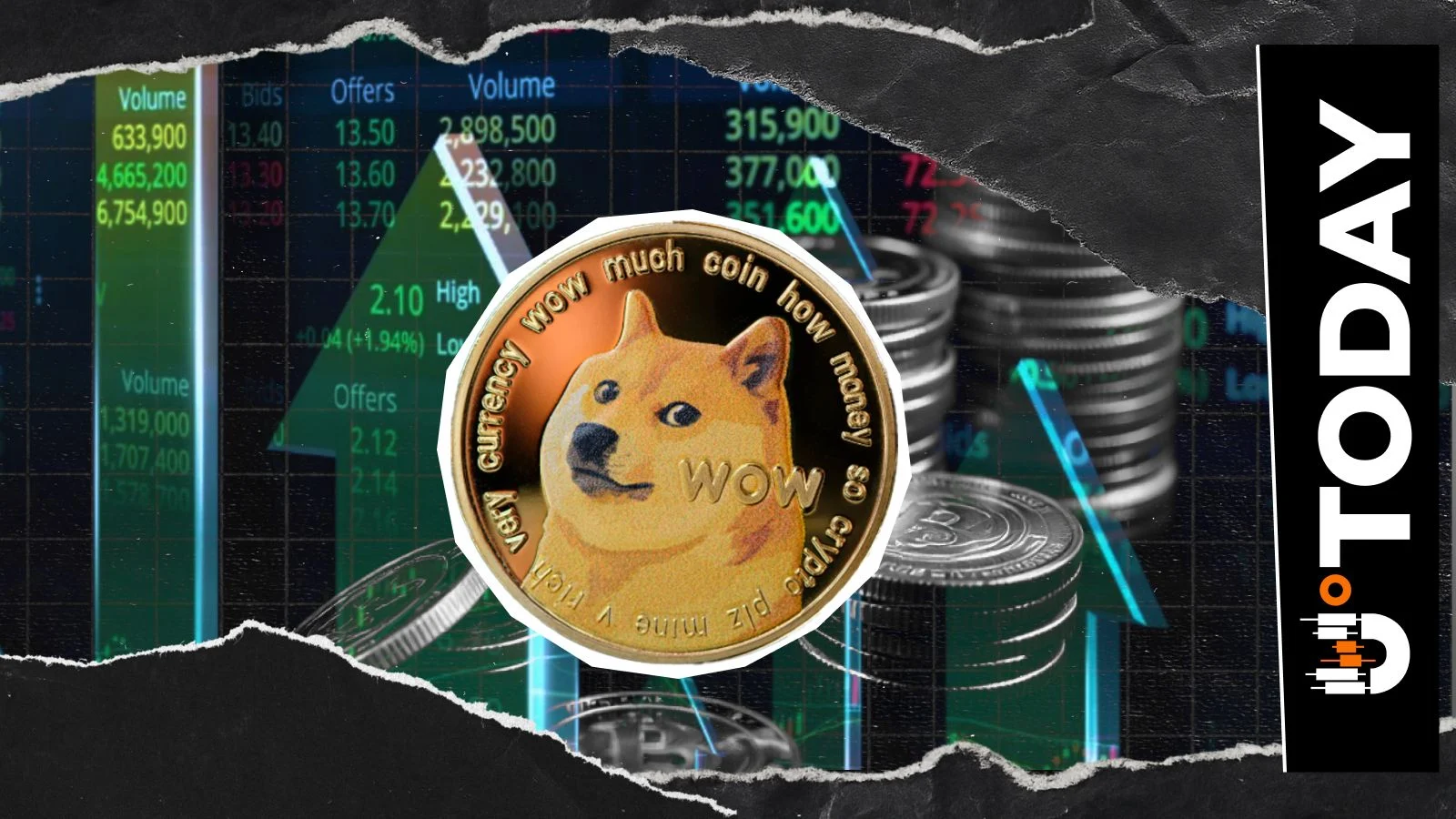
Dogecoin's recent surge above $0.10, while psychologically appealing, is unlikely to signal a sustained rally due to repeated failures to hold this level and its position below the critical 50 EMA resistance. The 50 EMA remains the primary technical barrier for DOGE, and reclaiming it is necessary to indicate a potential trend reversal, suggesting that current price action above $0.10 is more consolidation than a confirmed bullish shift. True historical resistance at $0.11 presents the next significant hurdle for Dogecoin; failure to break this level would reinforce the existing downtrend pattern of lower highs, limiting the impact of the recent price move.
US spot Bitcoin ETFs have extended their inflow streak to seven consecutive days, totaling approximately $1.2 billion, indicating sustained institutional interest despite falling short of previous record streaks. While Bitcoin ETFs show a positive inflow trend, overall year-to-date flows remain negative, suggesting a cautious market sentiment that requires further sustained inflows to reverse the trend. Altcoin ETFs, particularly for ETH and SOL, are also experiencing renewed inflows, with XRP ETFs seeing their first positive day after a significant losing streak, signaling a potential broadening of institutional appetite beyond Bitcoin. Despite recent inflows, Ether ETFs continue to face substantial year-to-date outflows, highlighting a divergence in institutional preference between Bitcoin and Ether products.
Trump NFTs, initially launched at $99, now trade with floor prices around $40-$60, indicating a significant drop from peak hype but sustained collector interest for rare items. The value of Trump NFTs is primarily driven by speculation, political relevance, and broader NFT market trends, rather than intrinsic utility, positioning them as highly speculative collectibles. While specific rare Trump NFTs have seen substantial resale profits, the overall market performance suggests a cooling phase, making them a high-risk, high-reward collectible asset.

Bitcoin faces potential downside risk towards a $69,000 liquidation zone, where approximately $4 billion in long positions are vulnerable, suggesting a technically driven price drop rather than a fundamental one. The upcoming Federal Reserve decision, while expected to result in unchanged interest rates, could still trigger significant volatility in Bitcoin due to market reactions to Jerome Powell's commentary on future policy. Traders should monitor Bitcoin's price action around the $71,000 support level, as a break below this could accelerate selling pressure and bring the $69,000 liquidation zone into play.

Ethereum's price is consolidating into a bullish pennant pattern, suggesting a potential continuation of its recent rally. Whale accumulation and increasing derivatives open interest indicate strong conviction among large holders and traders, supporting a bullish outlook. A breakout above the $2,400 resistance level, confirmed by strong volume, could trigger a significant upward move towards $2,600-$2,700.
Ethereum is consolidating near a critical resistance zone between $2,300 and $2,400, with significant liquidation levels on both sides indicating potential for a volatile breakout or breakdown. The market is currently awaiting signals from Jerome Powell's speech, which could influence ETH's price direction amidst a tight range and substantial long positions at risk if a downside move occurs. A confirmed breakout above the $2,400 resistance could trigger a short squeeze, potentially propelling ETH towards the $3,000 to $3,050 range, while failure to hold above $2,200 risks a drop to $2,000.
Pi Network's Protocol 20 Mainnet upgrade enables programmable smart contracts, potentially unlocking new decentralized applications and services for its 17.7 million verified users. The upgrade signifies a move towards greater utility and ecosystem development for Pi Network, which has seen recent exchange listings and a substantial market cap, though broader utility releases are still pending careful testing. While the upgrade introduces core infrastructure for dApps and NFTs, the market impact remains to be seen as the team emphasizes further testing before wider adoption.

Increased adoption of cryptocurrency for goods and services in Australia, doubling to 12%, indicates a growing perception of crypto as a practical payment method. Despite rising adoption, banking friction for Australian crypto users has worsened, with 30% experiencing transaction delays or rejections, highlighting ongoing institutional caution. The report underscores the critical need for clear licensing and regulation in Australia to bridge the gap between crypto exchanges and traditional banks, fostering greater certainty for investors and businesses. The findings suggest that while crypto usage is growing, persistent banking hurdles and a lack of regulatory clarity are significant impediments to broader mainstream adoption in Australia.
Signal context only. Validate with price action, liquidity, and risk limits before taking a position.
