
Navigating Crypto News

CoinFeather
Navigating Crypto News
Quick market read from this story
Pi Network's Protocol 20 Mainnet upgrade enables programmable smart contracts, potentially unlocking new decentralized applications and services for its 17.7 million verified users.
The upgrade signifies a move towards greater utility and ecosystem development for Pi Network, which has seen recent exchange listings and a substantial market cap, though broader utility releases are still pending careful testing.
While the upgrade introduces core infrastructure for dApps and NFTs, the market impact remains to be seen as the team emphasizes further testing before wider adoption.
Deep Dive
Pi Network has officially launched its full Mainnet upgrade, enabling support for programmable smart contracts. This significant development allows for the creation of decentralized applications (dApps), NFTs, escrow systems, and subscription services on the network. Founded in 2019 by Stanford graduates Nicolas Kokkalis and Chengdiao Fan, Pi Network now boasts 17.7 million verified users.
Following recent exchange listings, including on Kraken, Pi Network's native token is trading around $0.1735 with a market capitalization of approximately $1.7 billion. The Pi Network team has indicated a focus on rigorous testing and security audits before rolling out broader utility features to its user base.
Source, catalyst, and sector overlap from the latest feed.
Bhutan's significant Bitcoin outflows totaling over $72 million in a single day, coupled with a year-long absence of mining inflows, strongly suggests a potential cessation or substantial reduction in its Bitcoin mining operations. The consistent selling pressure from Bhutan, which has offloaded over $40 million since January and holds significantly less than its peak holdings, indicates a strategic shift from accumulation to treasury management, potentially impacting market supply dynamics. While Bhutan still holds substantial Bitcoin reserves, the ongoing outflows and lack of mining rewards suggest a transition away from active mining, signaling a potential change in its long-term crypto strategy and market participation.
Live Feed
Loading the broader stream in the same flow as the homepage feed.
The article clarifies that 'Shibetoshi Nakamoto' is the pseudonym for Billy Markus, the co-creator of Dogecoin, distinguishing him from Bitcoin's Satoshi Nakamoto. Dogecoin's origin as a parody highlights the potential for community-driven projects and internet culture to create significant market value, even without traditional fundamental underpinnings. Billy Markus's continued commentary on crypto trends from the sidelines, despite having left Dogecoin development early, positions him as an influential voice on market psychology and industry hype.

UK lawmakers are proposing an immediate moratorium on crypto donations to political parties, citing risks of foreign interference and lack of safeguards. The recommendation suggests a significant regulatory hurdle for crypto adoption in political finance, potentially impacting sentiment and future policy. This development highlights ongoing global regulatory scrutiny of crypto's role in traditional financial and political systems.

The shutdown of Tally, a significant DAO tooling platform, signals a broader market challenge in monetizing governance infrastructure, suggesting that current business models may not be sustainable. Despite Tally's substantial user base and transaction volume, its closure highlights the difficulty in translating on-chain activity into viable revenue, indicating a potential shift in how crypto infrastructure projects are valued. The failure of Tally to proceed with an ICO and its subsequent shutdown underscores the market's skepticism towards governance tokens as a sustainable funding mechanism for infrastructure plays. Industry commentary suggests that the next generation of DAO coordination tools may need to focus on capital coordination rather than solely on voting portals to achieve product-market fit.
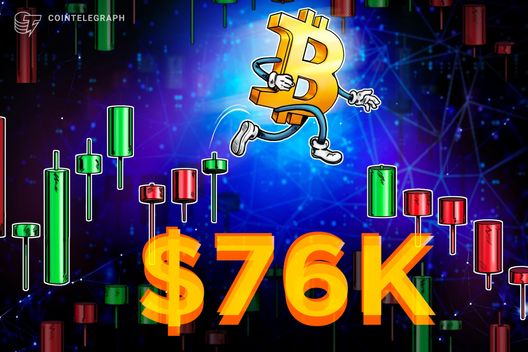
Bitcoin price is consolidating below its six-week high of $76,000, with traders anticipating volatility from the upcoming FOMC meeting and Jerome Powell's speech. While the Fed is widely expected to hold interest rates steady, Powell's commentary will be the key catalyst for potential price swings, as market participants look for shifts in monetary policy tone. Continued demand from spot Bitcoin ETFs, evidenced by recent inflows, provides underlying support, but failure to break $76,000 resistance could lead to a pullback towards $60,000 support levels. The market is closely watching for any dovish signals from Powell that could trigger a unwinding of hedges and potentially boost both equities and Bitcoin prices.
The SEC and CFTC have jointly classified 16 cryptocurrencies, including XRP, SHIB, DOGE, and ADA, as digital commodities rather than securities, providing significant regulatory clarity for the market. This reclassification by US regulators is a major development that could reduce legal uncertainty for these assets and potentially encourage broader institutional adoption and investor confidence. The explicit naming of these assets as non-securities by the SEC and CFTC is a positive signal for projects previously facing regulatory ambiguity, potentially impacting their market perception and trading dynamics.

Mastercard's acquisition of BVNK for up to $1.8 billion signals a strategic shift by legacy payment giants to integrate stablecoin infrastructure, aiming to capture value in the growing digital payments sector. The move by Mastercard, alongside Visa's ongoing stablecoin initiatives, indicates that traditional finance is actively acquiring key blockchain middleware rather than waiting for it to mature independently, potentially altering the competitive landscape. This development suggests that the primary value capture in the stablecoin ecosystem may shift towards infrastructure and distribution layers controlled by incumbents, rather than solely the token or protocol layer. The increasing regulatory clarity, exemplified by the GENIUS Act, is accelerating the integration of stablecoins into mainstream financial systems, making acquisitions like BVNK a strategic imperative for established players.
Binance's decision to delist eight altcoins, including FORTH, HOOK, LRC, and SXP, signals reduced liquidity and potential price pressure for these specific assets. The delisting announcement, effective April 1, 2026, for spot trading, suggests a strategic move by Binance to streamline its offerings, potentially impacting user confidence in the affected tokens. Traders holding the delisted assets must act by March 24 for futures and June 1 for withdrawals to avoid potential losses or forced conversion into stablecoins.
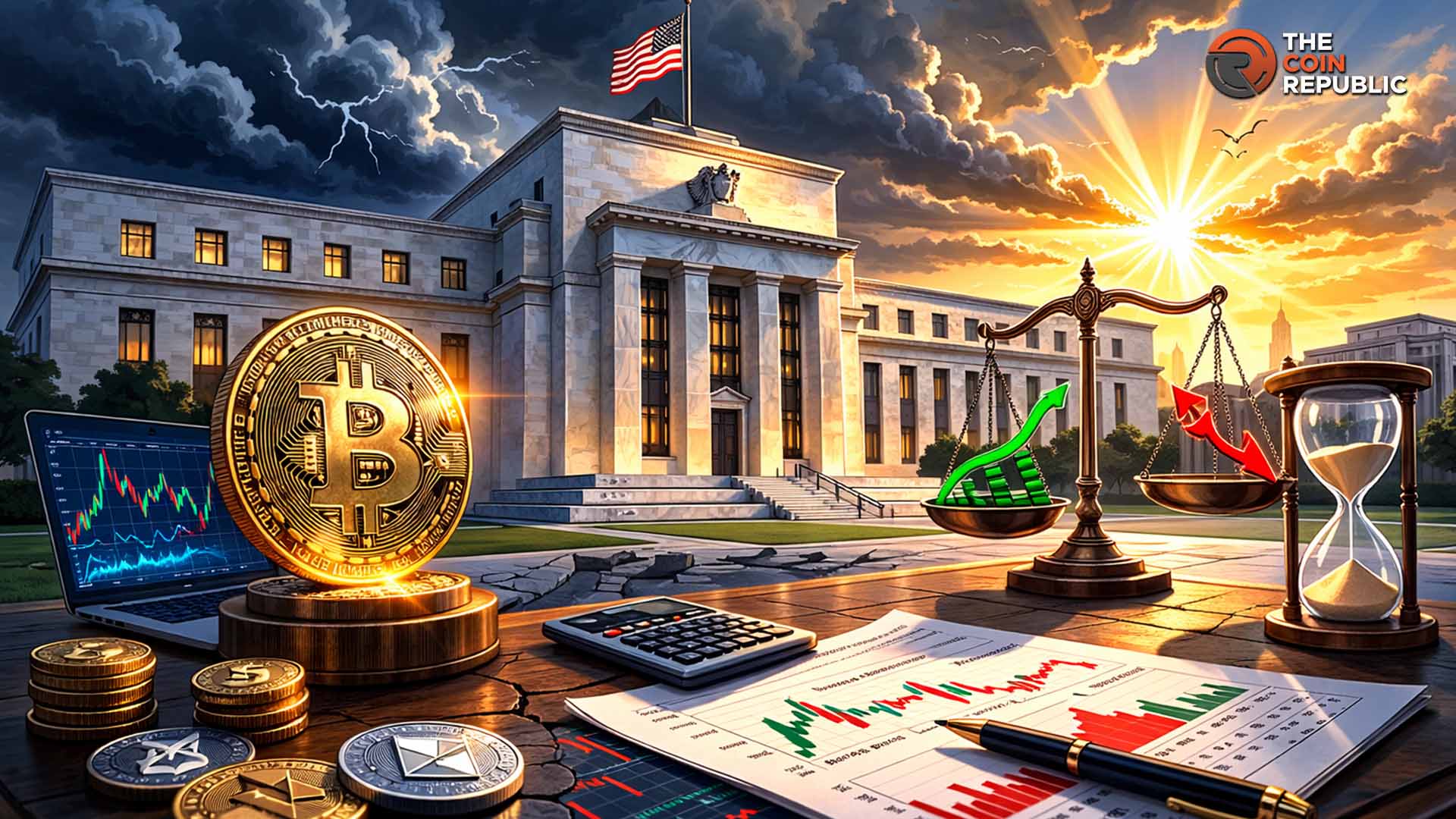
The crypto market is experiencing sideways action due to anticipation of key macroeconomic data releases, specifically the Federal Reserve's rate decision and U.S. PPI figures. A hawkish pause or higher-than-expected PPI data could negatively impact risk assets like Bitcoin by strengthening inflation fears and delaying potential Fed rate cuts. Conversely, a lighter or in-line PPI print could provide relief, potentially leading traders to favor risk assets in anticipation of future Fed easing.

The SEC and CFTC's joint MOU and XRP's classification as a digital commodity removes significant regulatory uncertainty, potentially unlocking institutional capital and clearing a path for new financial products. XRP's flip of BNB for the #4 market cap position, coupled with renewed ETF inflows, signals a strong shift in market sentiment and capital allocation towards the asset following the regulatory clarity. The regulatory decision to classify XRP as a commodity, alongside Bitcoin and Ethereum, suggests a broader shift in how established cryptocurrencies are viewed by regulators, potentially impacting other assets. Improved technical indicators, including a bullish MACD crossover and RSI in positive territory, combined with the fundamental catalyst, suggest potential for further upside if key resistance levels are breached.
Signal context only. Validate with price action, liquidity, and risk limits before taking a position.
Binance's decision to delist eight tokens, including FORTH, HOOK, LRC, and RDNT, signals a move towards portfolio optimization and potentially reduces liquidity for these specific assets. The delisting announcement on April 1, 2026, provides a clear timeline for users to exit positions, with immediate price reactions observed for some affected tokens like IDEX and A2Z. While the delisting impacts individual tokens, the broader market implication is a signal of Binance's ongoing efforts to maintain listing quality, which could be viewed positively for exchange integrity.
