
Navigating Crypto News

CoinFeather
Navigating Crypto News
Quick market read from this story
The joint classification of XRP as a digital commodity by the SEC and CFTC removes significant regulatory uncertainty, potentially paving the way for increased institutional investment and broader market adoption.
This regulatory clarity for XRP, alongside other major tokens like BTC and ETH, signals a more stable environment for crypto innovation and could influence future regulatory approaches for other digital assets.
The resolution of XRP's long-standing legal ambiguity, stemming from the Ripple-SEC case, shifts focus towards its real-world utility and adoption, presenting a positive outlook for holders and the broader ecosystem.
Deep Dive
In a significant development for the cryptocurrency market, the U.S. Securities and Exchange Commission (SEC) and the Commodity Futures Trading Commission (CFTC) have jointly classified XRP as a digital commodity. This classification places XRP alongside major cryptocurrencies like Bitcoin (BTC), Ethereum (ETH), and Dogecoin (DOGE), resolving years of regulatory ambiguity regarding its status as a potential unregistered security.
This definitive stance by the SEC and CFTC is expected to reshape the regulatory landscape for digital assets. By providing clear guidelines, the decision aims to bolster investor confidence and encourage greater institutional participation in the crypto market. Ripple's Chief Legal Officer, Stuart Alderoty, described the announcement as a long-awaited breakthrough, stating, "We always knew XRP wasn't a security and now the SEC has made clear what it is: a digital commodity." He also highlighted the role of the Crypto Task Force in this pivotal moment.
The classification follows years of legal proceedings, notably the Ripple-SEC case that concluded in August 2025. Ripple CEO Brad Garlinghouse anticipates a positive outlook for XRP holders over the next five years, attributing this to the expanding adoption of blockchain technology and increasing institutional interest. The removal of regulatory uncertainty creates a more stable and predictable environment for XRP, potentially accelerating its integration into mainstream financial systems.
Analysts suggest that the joint recognition of XRP as a digital commodity could prompt other regulators to adopt clearer and more consistent rules for various cryptocurrencies. This clarity reduces regulatory risks for developers and companies, fostering an environment conducive to innovation and scaling. The decision signifies a broader evolution for the crypto market, positioning digital assets as increasingly integral to the future of global finance rather than remaining on the periphery.
Source, catalyst, and sector overlap from the latest feed.
The classification of Shiba Inu as a digital commodity by the SEC and CFTC provides regulatory clarity, potentially increasing institutional interest and paving the way for future ETF prospects. This regulatory shift from potential security to commodity status for SHIB could lead to wider adoption and integration into traditional financial frameworks, reducing perceived risk for investors. While SHIB's commodity classification is a positive development for its market integration, the immediate price impact remains to be seen, especially given its recent 2.07% decline.
The article clarifies that 'Shibetoshi Nakamoto' is the pseudonym for Billy Markus, the co-creator of Dogecoin, distinguishing him from Bitcoin's Satoshi Nakamoto. Dogecoin's origin as a parody highlights the potential for community-driven projects and internet culture to create significant market value, even without traditional fundamental underpinnings. Billy Markus's continued commentary on crypto trends from the sidelines, despite having left Dogecoin development early, positions him as an influential voice on market psychology and industry hype.
Kohl's is halting store closures despite a sales decline, shifting strategy to optimize existing locations and improve performance, indicating a focus on operational efficiency over physical expansion. While profitability has improved due to cost controls and inventory management, the continued drop in customer traffic and net sales presents a significant challenge to Kohl's turnaround efforts and future growth prospects. Analysts remain skeptical of Kohl's recovery, citing persistent sales weakness and a projected flat to declining sales outlook for the upcoming year, suggesting a cautious approach for investors.
The NCLT's approval of Adani Enterprises' ₹14,535 crore resolution plan for Jaiprakash Associates Limited (JAL) is a significant development, directly impacting JP Power's stock performance. Adani's acquisition of JAL, which includes a 24% stake in JP Power, is expected to bring improved management and financial backing, potentially leading to expansion and easier access to capital for JP Power. The approved resolution plan includes the delisting of JAL's securities from stock exchanges, a key event that investors should monitor for its implications on liquidity and trading.
The SEC and CFTC's joint guidance categorizes crypto assets into five buckets, with Bitcoin, Ethereum, XRP, and Dogecoin explicitly classified as digital commodities, reducing regulatory uncertainty for major tokens. This regulatory clarity is expected to boost institutional confidence and potentially attract more capital to the U.S. crypto market by providing a clearer framework for exchanges and product development. While core blockchain functions are clarified as non-securities, tokens marketed for profit or as investment contracts will still fall under securities laws, maintaining a nuanced regulatory landscape. The establishment of a 'token taxonomy' signals a shift towards a more defined regulatory environment, potentially easing the path for early-stage projects through 'harbor exemptions' once decentralized.
The SEC and CFTC's joint guidance classifying most crypto assets as non-securities, excluding Bitcoin mining, staking, and airdrops, fundamentally alters the regulatory landscape in the US. This clarification is expected to reduce legal risk for projects and encourage innovation by providing a clearer path for token classification and broker offerings. The introduction of safe harbor frameworks for startups and entrepreneurs, alongside the potential for unregistered platforms to list non-security assets, signals a more accommodating regulatory environment for crypto businesses in the US. The explicit categorization of assets into digital commodities, collectibles, tools, stablecoins, and securities provides a much-needed framework, potentially unlocking new avenues for development and investment by reducing the ambiguity previously imposed by the Howey Test.
The Federal Reserve's policy decision and forward guidance are critical for Bitcoin's immediate price action, with a hawkish stance potentially capping upside near $80,000 while a dovish signal could fuel a breakout. Persistent inflation concerns, exacerbated by rising energy prices, are forcing the Fed to balance weakening economic indicators with price stability, creating a complex macro backdrop for risk assets like Bitcoin. Uncertainty surrounding Jerome Powell's reappointment adds a secondary layer of complexity, potentially influencing medium-term policy expectations and market sentiment beyond the immediate Fed decision. Despite macro headwinds, strong institutional demand via Bitcoin ETFs and corporate accumulation by entities like Strategy suggest underlying support for BTC, potentially cushioning downside risks.
UK lawmakers are calling for an immediate halt to cryptocurrency donations to political parties, citing risks to public trust and election integrity. The proposed moratorium highlights concerns over the anonymity and traceability of crypto transactions, particularly with the use of mixers and AI-assisted payment splitting. While regulated exchanges can mitigate some risks, the committee believes the current framework is insufficient, pushing for enhanced powers for the Electoral Commission to trace funds and verify donors.
Connecticut's suspension of Bitcoin Depot's money transmission license, citing violations and a worsening revenue outlook, signals increasing regulatory headwinds for crypto ATM operators. Bitcoin Depot's projected 30-40% revenue decline in 2026, coupled with ongoing enforcement actions in multiple states and a significant stock price drop, indicates substantial operational and financial challenges. The cumulative regulatory actions and negative financial outlook for Bitcoin Depot suggest a potential contraction in the physical crypto access point market, impacting user accessibility and potentially driving more activity onto digital platforms.
The Federal Reserve's monetary policy stance, particularly its forward guidance on interest rates, is identified as a critical near-term driver for Bitcoin's price action. A hawkish Fed outlook could pressure Bitcoin towards $65,000 by signaling prolonged higher rates and reduced liquidity, impacting risk assets. Conversely, an accommodative Fed tone suggesting potential rate cuts could boost Bitcoin, potentially driving prices above $75,000 on increased liquidity and improved sentiment. Despite potential directional catalysts, the market anticipates short-term volatility around the FOMC announcement and PPI data, with a 'sell the news' dynamic possible.
Charles Edwards identifies a sustained move above $80,000 as the key indicator for Bitcoin's true bull market return, signaling widespread institutional profitability. Breaching the $80,000 level would remove the last significant resistance, potentially initiating a price discovery phase for Bitcoin with reduced sell-side pressure. Despite the bullish price target, Edwards maintains his long-term concern about quantum computing threats, viewing the current rally as an opportunity to build defenses before 2028.
The upcoming US PPI data and Federal Reserve meeting, including Jerome Powell's speech, are critical catalysts expected to drive significant volatility in Bitcoin and altcoins due to their direct impact on inflation expectations and monetary policy outlook. Market participants are closely monitoring the Federal Reserve's stance on inflation and potential rate cuts, as a hawkish tone or higher-than-expected inflation readings could pressure crypto prices, while dovish signals might support a rally. Bitcoin's price action shows sensitivity to key support and resistance levels around $73,900 and $76,000, with a break below these levels potentially triggering a sharp downside move, while Ethereum and other altcoins exhibit mixed but cautiously optimistic strength.
Live Feed
Loading the broader stream in the same flow as the homepage feed.

New benchmark results indicate that leading AI models like GPT-4 Vision still significantly lag human performance in visual math reasoning, suggesting current AI capabilities are far from achieving Artificial General Intelligence (AGI). The development of the MATHVISTA benchmark highlights the critical need for higher quality, multimodal training and evaluation data to drive meaningful progress in AI reasoning beyond simple pattern matching. The findings imply that advancements in AI may depend more on data quality and evaluation methodologies than solely on increasing model size, potentially impacting the development trajectory of AI-focused blockchain projects.

RedotPay is defending internal team consolidations amidst reports of executive turnover and potential funding talks, suggesting a focus on operational efficiency as the company scales. Despite reports of executive churn and China sensitivities, RedotPay asserts no urgent need for new funding due to strong cash flow, while still remaining open to investors. The company's prior fundraising success in 2025, totaling $194 million, positions it for potential future growth and IPO aspirations, though recent executive changes warrant monitoring.

Federal Reserve Chair Powell's commentary on inflation and interest rate policy, particularly regarding the 'higher for longer' bias, is expected to be a primary driver for Bitcoin traders in the near term. A hawkish Fed stance, potentially influenced by oil price shocks and inflation concerns, could lead to Bitcoin consolidating below $75,000, signaling a pause in its upward momentum despite ETF inflows. The market is closely watching the Fed's growth and inflation projections, as any indication of delayed rate cuts due to persistent inflation could dampen the supportive interest-rate backdrop for cryptocurrencies. While major cryptocurrencies like BTC and ETH are trading sideways, smaller altcoins are showing gains, suggesting a potential rotation or increased speculative interest in less liquid assets.
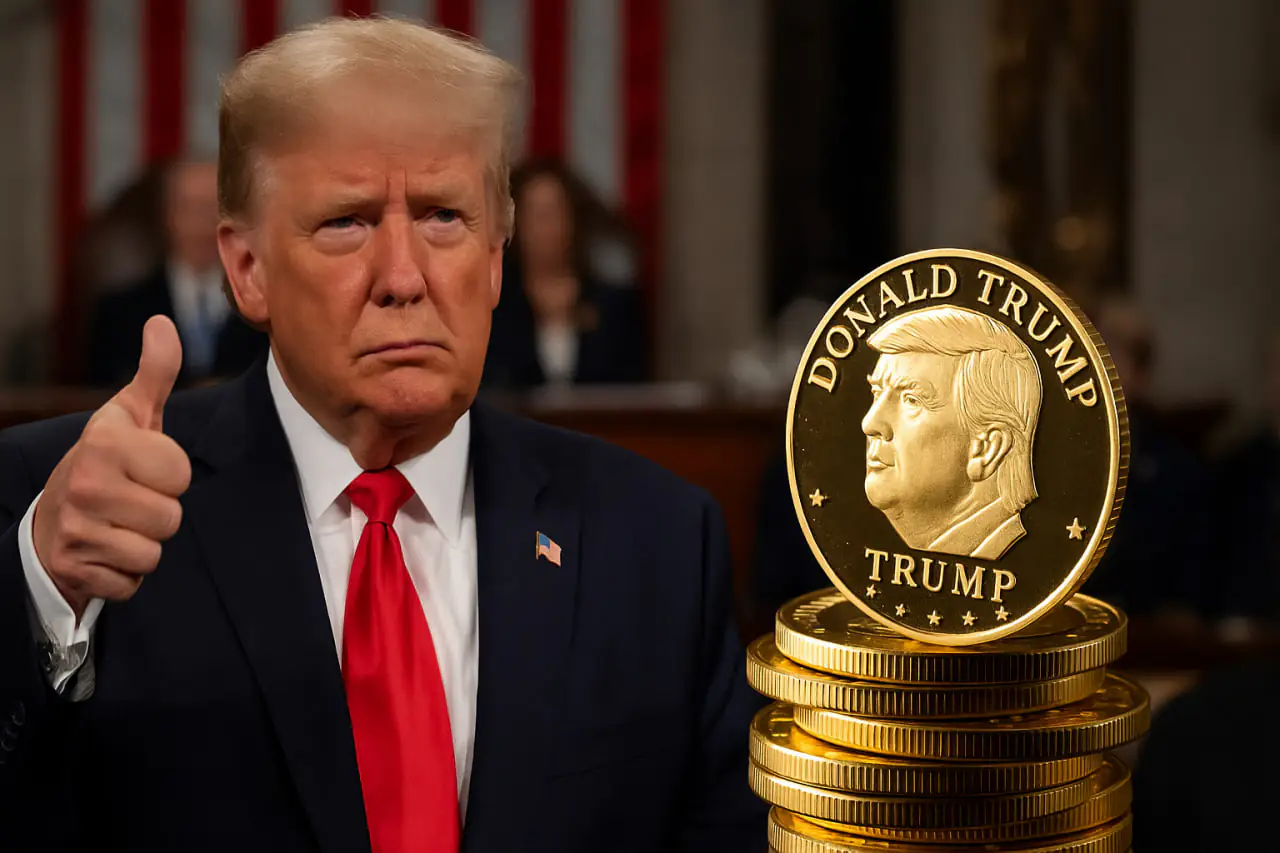
The TRUMP memecoin rally is driven by a highly concentrated ownership structure, with the top 10 wallets controlling over 91% of the supply, indicating that price action is dictated by a small group of holders. The recent price surge coincided with an increase in large wallet accumulation and anticipation of a Mar-a-Lago event, suggesting the market may have already priced in the news before retail awareness. Despite a recent price increase and bullish technical indicators, the concentrated ownership and historical "sell the news" pattern from a similar past event pose significant risks for sustained upside. Regulatory scrutiny from the proposed MEME Act and ethical concerns surrounding the Mar-a-Lago event add a layer of political risk that could impact future price action for the TRUMP memecoin.
MicroStrategy's aggressive Bitcoin acquisition strategy, funded by preferred stock, signals a shift towards a novel profit model focused on BTC accumulation rather than traditional GAAP metrics. The company's reliance on high-yield preferred stock (STRC) for funding introduces significant fixed costs and dilution risks, creating a leveraged bet on Bitcoin's appreciation that could pressure MSTR if the market stalls. Despite reporting a 'Bitcoin Gain,' the underlying economics of MicroStrategy's strategy are complex, with substantial debt obligations and a premium valuation relative to its Bitcoin holdings, suggesting potential downside if the market sentiment shifts.

Bhutan's significant Bitcoin outflows totaling over $72 million in a single day, coupled with a year-long absence of mining inflows, strongly suggests a potential cessation or substantial reduction in its Bitcoin mining operations. The consistent selling pressure from Bhutan, which has offloaded over $40 million since January and holds significantly less than its peak holdings, indicates a strategic shift from accumulation to treasury management, potentially impacting market supply dynamics. While Bhutan still holds substantial Bitcoin reserves, the ongoing outflows and lack of mining rewards suggest a transition away from active mining, signaling a potential change in its long-term crypto strategy and market participation.

UK lawmakers are proposing an immediate moratorium on crypto donations to political parties, citing risks of foreign interference and lack of safeguards. The recommendation suggests a significant regulatory hurdle for crypto adoption in political finance, potentially impacting sentiment and future policy. This development highlights ongoing global regulatory scrutiny of crypto's role in traditional financial and political systems.

Binance's decision to delist eight tokens, including FORTH, HOOK, LRC, and RDNT, signals a move towards portfolio optimization and potentially reduces liquidity for these specific assets. The delisting announcement on April 1, 2026, provides a clear timeline for users to exit positions, with immediate price reactions observed for some affected tokens like IDEX and A2Z. While the delisting impacts individual tokens, the broader market implication is a signal of Binance's ongoing efforts to maintain listing quality, which could be viewed positively for exchange integrity.

Bitcoin's recent eight-day winning streak faces a 'sell the news' risk ahead of the FOMC meeting, as historical data from Two Prime indicates post-meeting weakness for BTC. Despite markets pricing a near certainty of a Fed rate hold, the historical pattern suggests the FOMC meeting event itself, rather than the outcome, drives short-term bearish volatility for Bitcoin. With inflation concerns from Middle East conflict and oil prices, coupled with a weakening jobs market, the Fed's flexibility to ease policy is limited, potentially exacerbating downside pressure on BTC post-meeting. The current market sentiment, characterized by stalled futures open interest and slightly negative funding rates, indicates reduced appetite for new longs and a cautious stance ahead of the Federal Reserve's decision.

Bitcoin is consolidating around $74,000 with reduced trading volume, indicating a pause in bullish momentum as traders await the Federal Reserve meeting for directional cues. Derivatives markets show a cautious sentiment with stalled futures open interest and slightly negative funding rates, suggesting reduced appetite for new long positions ahead of key macro events. Despite Bitcoin's consolidation, the altcoin market is showing strength with the 'Altcoin Season' index at a six-month high, and specific coins like ZEC and MORPHO outperforming. The market is in a risk-sensitive holding pattern due to geopolitical tensions and Fed uncertainty, with traders hedging for potential downside volatility post-meeting.
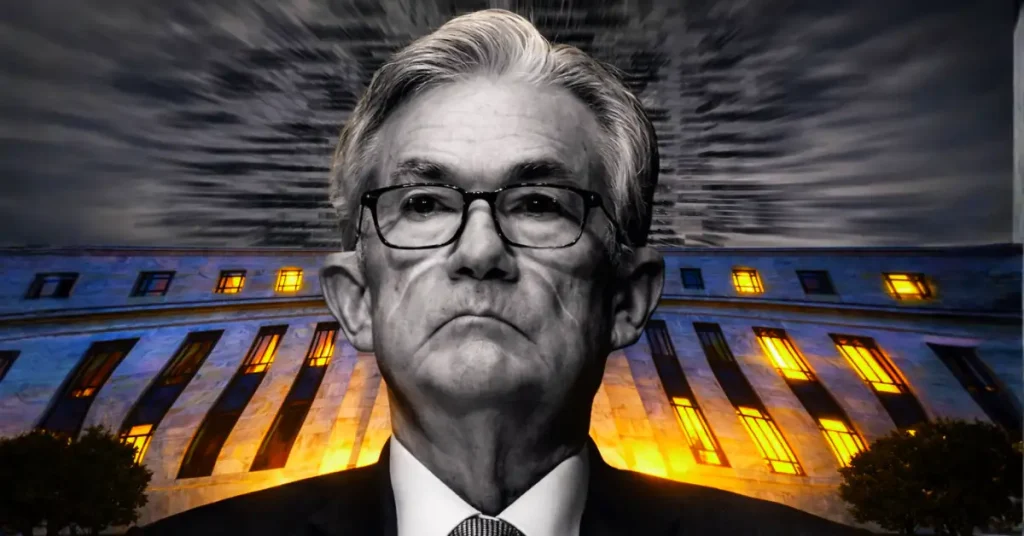
The Federal Reserve's FOMC meeting is expected to result in unchanged interest rates, with market focus shifting to Jerome Powell's speech for any forward guidance on potential rate cuts. A lack of clear signals on future rate cuts from Powell could exert short-term downward pressure on Bitcoin and altcoins, potentially reversing recent relief rallies. The market's expectation for rate cuts in 2026 has diminished, with experts now anticipating later or fewer cuts, suggesting a prolonged period of higher interest rates impacting risk assets.
Signal context only. Validate with price action, liquidity, and risk limits before taking a position.
