
Navigating Crypto News

CoinFeather
Navigating Crypto News

Quick market read from this story
Binance's decision to delist eight altcoins, including FORTH, HOOK, LRC, and SXP, signals reduced liquidity and potential price pressure for these specific assets.
The delisting announcement, effective April 1, 2026, for spot trading, suggests a strategic move by Binance to streamline its offerings, potentially impacting user confidence in the affected tokens.
Traders holding the delisted assets must act by March 24 for futures and June 1 for withdrawals to avoid potential losses or forced conversion into stablecoins.
Deep Dive
Cryptocurrency exchange Binance has announced the delisting of several tokens from its platform, including A2Z, FORTH, HOOK, IDEX, LRC, NTRN, RDNT, and SXP. This move will affect spot trading, futures trading, and user deposits and withdrawals, with specific deadlines set for each action.
Spot trading for the affected tokens is scheduled to cease on April 1, 2026, at 03:00 UTC. All outstanding spot orders will be automatically canceled. For futures trading, positions will be closed earlier, on March 24. Binance is strongly advising users to manage or close their existing trades and automated trading bots before these respective deadlines to prevent potential losses.
The exchange will stop accepting deposits for these tokens on April 2. Withdrawals will continue to be supported until June 1. Binance also noted that it reserves the right to convert any remaining balances of these tokens into stablecoins at a later date, although this is not guaranteed.
Source, catalyst, and sector overlap from the latest feed.
The upcoming US PPI data and Federal Reserve meeting, including Jerome Powell's speech, are critical catalysts expected to drive significant volatility in Bitcoin and altcoins due to their direct impact on inflation expectations and monetary policy outlook. Market participants are closely monitoring the Federal Reserve's stance on inflation and potential rate cuts, as a hawkish tone or higher-than-expected inflation readings could pressure crypto prices, while dovish signals might support a rally. Bitcoin's price action shows sensitivity to key support and resistance levels around $73,900 and $76,000, with a break below these levels potentially triggering a sharp downside move, while Ethereum and other altcoins exhibit mixed but cautiously optimistic strength.
Live Feed
Loading the broader stream in the same flow as the homepage feed.
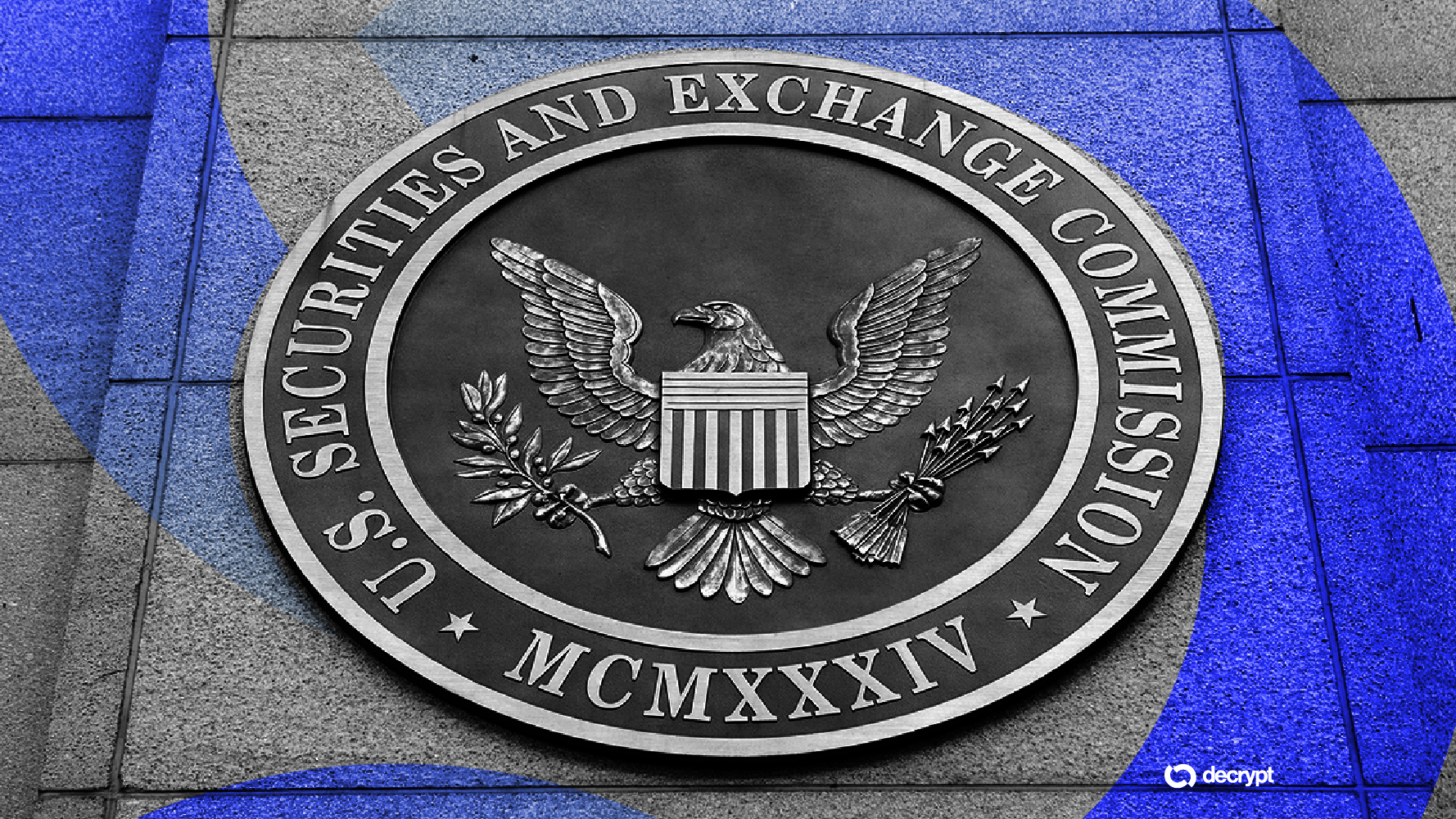
The SEC and CFTC's joint guidance classifying most crypto assets as non-securities, excluding Bitcoin mining, staking, and airdrops, fundamentally alters the regulatory landscape in the US. This clarification is expected to reduce legal risk for projects and encourage innovation by providing a clearer path for token classification and broker offerings. The introduction of safe harbor frameworks for startups and entrepreneurs, alongside the potential for unregistered platforms to list non-security assets, signals a more accommodating regulatory environment for crypto businesses in the US. The explicit categorization of assets into digital commodities, collectibles, tools, stablecoins, and securities provides a much-needed framework, potentially unlocking new avenues for development and investment by reducing the ambiguity previously imposed by the Howey Test.

The Federal Reserve's policy decision and forward guidance are critical for Bitcoin's immediate price action, with a hawkish stance potentially capping upside near $80,000 while a dovish signal could fuel a breakout. Persistent inflation concerns, exacerbated by rising energy prices, are forcing the Fed to balance weakening economic indicators with price stability, creating a complex macro backdrop for risk assets like Bitcoin. Uncertainty surrounding Jerome Powell's reappointment adds a secondary layer of complexity, potentially influencing medium-term policy expectations and market sentiment beyond the immediate Fed decision. Despite macro headwinds, strong institutional demand via Bitcoin ETFs and corporate accumulation by entities like Strategy suggest underlying support for BTC, potentially cushioning downside risks.

New benchmark results indicate that leading AI models like GPT-4 Vision still significantly lag human performance in visual math reasoning, suggesting current AI capabilities are far from achieving Artificial General Intelligence (AGI). The development of the MATHVISTA benchmark highlights the critical need for higher quality, multimodal training and evaluation data to drive meaningful progress in AI reasoning beyond simple pattern matching. The findings imply that advancements in AI may depend more on data quality and evaluation methodologies than solely on increasing model size, potentially impacting the development trajectory of AI-focused blockchain projects.

The Federal Reserve's monetary policy stance, particularly its forward guidance on interest rates, is identified as a critical near-term driver for Bitcoin's price action. A hawkish Fed outlook could pressure Bitcoin towards $65,000 by signaling prolonged higher rates and reduced liquidity, impacting risk assets. Conversely, an accommodative Fed tone suggesting potential rate cuts could boost Bitcoin, potentially driving prices above $75,000 on increased liquidity and improved sentiment. Despite potential directional catalysts, the market anticipates short-term volatility around the FOMC announcement and PPI data, with a 'sell the news' dynamic possible.

RedotPay is defending internal team consolidations amidst reports of executive turnover and potential funding talks, suggesting a focus on operational efficiency as the company scales. Despite reports of executive churn and China sensitivities, RedotPay asserts no urgent need for new funding due to strong cash flow, while still remaining open to investors. The company's prior fundraising success in 2025, totaling $194 million, positions it for potential future growth and IPO aspirations, though recent executive changes warrant monitoring.

Charles Edwards identifies a sustained move above $80,000 as the key indicator for Bitcoin's true bull market return, signaling widespread institutional profitability. Breaching the $80,000 level would remove the last significant resistance, potentially initiating a price discovery phase for Bitcoin with reduced sell-side pressure. Despite the bullish price target, Edwards maintains his long-term concern about quantum computing threats, viewing the current rally as an opportunity to build defenses before 2028.

Federal Reserve Chair Powell's commentary on inflation and interest rate policy, particularly regarding the 'higher for longer' bias, is expected to be a primary driver for Bitcoin traders in the near term. A hawkish Fed stance, potentially influenced by oil price shocks and inflation concerns, could lead to Bitcoin consolidating below $75,000, signaling a pause in its upward momentum despite ETF inflows. The market is closely watching the Fed's growth and inflation projections, as any indication of delayed rate cuts due to persistent inflation could dampen the supportive interest-rate backdrop for cryptocurrencies. While major cryptocurrencies like BTC and ETH are trading sideways, smaller altcoins are showing gains, suggesting a potential rotation or increased speculative interest in less liquid assets.

The TRUMP memecoin rally is driven by a highly concentrated ownership structure, with the top 10 wallets controlling over 91% of the supply, indicating that price action is dictated by a small group of holders. The recent price surge coincided with an increase in large wallet accumulation and anticipation of a Mar-a-Lago event, suggesting the market may have already priced in the news before retail awareness. Despite a recent price increase and bullish technical indicators, the concentrated ownership and historical "sell the news" pattern from a similar past event pose significant risks for sustained upside. Regulatory scrutiny from the proposed MEME Act and ethical concerns surrounding the Mar-a-Lago event add a layer of political risk that could impact future price action for the TRUMP memecoin.

MicroStrategy's aggressive Bitcoin acquisition strategy, funded by preferred stock, signals a shift towards a novel profit model focused on BTC accumulation rather than traditional GAAP metrics. The company's reliance on high-yield preferred stock (STRC) for funding introduces significant fixed costs and dilution risks, creating a leveraged bet on Bitcoin's appreciation that could pressure MSTR if the market stalls. Despite reporting a 'Bitcoin Gain,' the underlying economics of MicroStrategy's strategy are complex, with substantial debt obligations and a premium valuation relative to its Bitcoin holdings, suggesting potential downside if the market sentiment shifts.
The article clarifies that 'Shibetoshi Nakamoto' is the pseudonym for Billy Markus, the co-creator of Dogecoin, distinguishing him from Bitcoin's Satoshi Nakamoto. Dogecoin's origin as a parody highlights the potential for community-driven projects and internet culture to create significant market value, even without traditional fundamental underpinnings. Billy Markus's continued commentary on crypto trends from the sidelines, despite having left Dogecoin development early, positions him as an influential voice on market psychology and industry hype.

UK lawmakers are proposing an immediate moratorium on crypto donations to political parties, citing risks of foreign interference and lack of safeguards. The recommendation suggests a significant regulatory hurdle for crypto adoption in political finance, potentially impacting sentiment and future policy. This development highlights ongoing global regulatory scrutiny of crypto's role in traditional financial and political systems.

Bitcoin's recent eight-day winning streak faces a 'sell the news' risk ahead of the FOMC meeting, as historical data from Two Prime indicates post-meeting weakness for BTC. Despite markets pricing a near certainty of a Fed rate hold, the historical pattern suggests the FOMC meeting event itself, rather than the outcome, drives short-term bearish volatility for Bitcoin. With inflation concerns from Middle East conflict and oil prices, coupled with a weakening jobs market, the Fed's flexibility to ease policy is limited, potentially exacerbating downside pressure on BTC post-meeting. The current market sentiment, characterized by stalled futures open interest and slightly negative funding rates, indicates reduced appetite for new longs and a cautious stance ahead of the Federal Reserve's decision.

Bitcoin is consolidating around $74,000 with reduced trading volume, indicating a pause in bullish momentum as traders await the Federal Reserve meeting for directional cues. Derivatives markets show a cautious sentiment with stalled futures open interest and slightly negative funding rates, suggesting reduced appetite for new long positions ahead of key macro events. Despite Bitcoin's consolidation, the altcoin market is showing strength with the 'Altcoin Season' index at a six-month high, and specific coins like ZEC and MORPHO outperforming. The market is in a risk-sensitive holding pattern due to geopolitical tensions and Fed uncertainty, with traders hedging for potential downside volatility post-meeting.
Signal context only. Validate with price action, liquidity, and risk limits before taking a position.
Bhutan's significant Bitcoin outflows totaling over $72 million in a single day, coupled with a year-long absence of mining inflows, strongly suggests a potential cessation or substantial reduction in its Bitcoin mining operations. The consistent selling pressure from Bhutan, which has offloaded over $40 million since January and holds significantly less than its peak holdings, indicates a strategic shift from accumulation to treasury management, potentially impacting market supply dynamics. While Bhutan still holds substantial Bitcoin reserves, the ongoing outflows and lack of mining rewards suggest a transition away from active mining, signaling a potential change in its long-term crypto strategy and market participation.
