
Navigating Crypto News

CoinFeather
Navigating Crypto News
Quick market read from this story
XRP Ledger's surge to 2.7 million daily transactions and over $460 million in tokenized assets indicates significant real-world utility growth, potentially signaling future value appreciation despite current price stagnation.
The approval of AUDD, an Australian dollar-backed stablecoin on the XRP Ledger, represents a key regulatory development that could facilitate broader institutional adoption and on-chain financial activity.
Despite a substantial increase in network activity and tokenized asset value, XRP's price remains subdued, suggesting a decoupling of on-chain fundamentals from short-term market sentiment or macroeconomic influences.
The expansion of tokenized assets and potential entry into the crypto options market on the XRP Ledger highlight its evolving capabilities beyond payments, positioning it as a versatile platform for next-generation financial infrastructure.
Deep Dive
The XRP Ledger (XRPL) is experiencing a significant surge in activity, processing approximately 2.7 million transactions per day. This marks one of the highest levels of network activity in its history, underscoring the growing adoption and real-world usage of its fast, low-cost infrastructure, which is optimized for payments and financial services.
Beyond transaction volume, the XRP Ledger's ecosystem is rapidly expanding. The network now hosts over $460 million in tokenized assets, including stablecoins, tokenized commodities, and other representations of real-world financial instruments. This growth in tokenization, a key innovation in blockchain, enhances liquidity and efficiency for traditional assets by bringing them on-chain.
The XRPL is also poised to enter the crypto options market, which could further diversify its use cases and deepen network activity. This potential evolution highlights the network's adaptability and its role in developing next-generation financial infrastructure.
Despite the robust increase in on-chain activity, the market price of XRP has remained relatively subdued, trading around $1.38. This disconnect between accelerating network fundamentals and muted price performance has sparked discussion among analysts. While historically, rising blockchain activity is seen as a bullish indicator, short-term crypto prices are often influenced more by broader market sentiment and macroeconomic factors.
In a significant development for traditional finance integration, Australia's financial regulator, ASIC, has licensed AUDC to issue AUDD, a regulated Australian-dollar-backed stablecoin on the XRP Ledger. This move could facilitate the movement of money on-chain for banks and financial institutions, signaling deeper integration between traditional finance and blockchain technology.
Source, catalyst, and sector overlap from the latest feed.
LinkedIn's successful 2011 IPO at $45 per share, surging over 100% on debut, demonstrated significant investor appetite for professional networking platforms. The acquisition by Microsoft in 2016 for $26.2 billion at $196 per share marked the delisting of LNKD, shifting investment exposure to MSFT. LinkedIn's historical performance as LNKD serves as a case study for tech IPOs, highlighting the potential for high growth, market valuation, and eventual acquisition.
While a $100 XRP price is theoretically possible, it hinges on unprecedented global adoption of Ripple's payment technology and a dramatic expansion of the overall crypto market cap, making it an extremely unlikely near-term scenario. The primary obstacle to a $100 XRP valuation is the immense market capitalization required, estimated at over $6 trillion, which would necessitate XRP becoming one of the most valuable assets globally and rivaling Bitcoin's historical peak market cap. Despite the long-term speculative potential, XRP faces significant competition from stablecoins, CBDCs, and other payment networks, alongside inherent market volatility and supply-side challenges, leading most analysts to project more conservative price targets.
The article provides a forward-looking overview of top investment banks in 2026, highlighting their roles in capital raising, M&A, and trading, which are foundational to traditional finance. While the article focuses on traditional finance, its mention of Goldman Sachs' activity in 'fintech investments' and links to related crypto news suggest potential intersections with the digital asset space. The analysis of major investment banks like JPMorgan, Goldman Sachs, and Morgan Stanley offers context for how large financial institutions operate, which can indirectly inform strategies for crypto projects seeking institutional adoption or partnerships.
Solana's stablecoin transfer volume has surged 3.2x year-over-year to $972B, indicating significant growth in network activity and DeFi adoption on the platform. SOL is consolidating between $77 and $92, with bullish divergence on daily charts suggesting potential for an upward move if resistance at $90-$92 is decisively broken. A breakout above $92 could target the $115-$120 resistance zone, supported by strong demand absorption at the $77 support level and improving short-term indicators.
Diminishing holder confidence, evidenced by small holders offloading 80M DOGE and increased Coin Days Destroyed (CDD) from long-term holders, signals potential for increased sell-side pressure despite a neutral technical setup. Dogecoin is currently consolidating within a descending wedge pattern, with key support at $0.088 and resistance at $0.103, indicating a period of indecision that could precede a significant price move. The combination of technical consolidation and deteriorating on-chain holder conviction suggests a cautious outlook, as a breakdown below support could accelerate if confidence continues to erode.
Investors are suing JPMorgan Chase, alleging the bank facilitated a $328 million crypto Ponzi scheme by allowing suspicious transactions and fund flows. The lawsuit highlights a potential failure in JPMorgan's KYC/AML processes, despite CEO Jamie Dimon's public skepticism towards Bitcoin. This development could lead to increased scrutiny of traditional financial institutions' involvement with cryptocurrency-related activities and potential regulatory implications.
CFTC Chair Michael Selig's warning about crypto market manipulation and fraud signals increased regulatory scrutiny, potentially impacting exchange operations and derivatives platforms. The explicit reference to preventing 'another FTX' highlights a heightened focus on enforcement and risk controls, suggesting a more aggressive stance from regulators towards market integrity. While expressing concerns, the CFTC aims to foster innovation within the U.S., indicating a balancing act between oversight and encouraging domestic crypto development.
The landmark MOU between the SEC and CFTC establishes a clear jurisdictional framework, classifying Bitcoin and Ethereum as commodities, which should reduce regulatory uncertainty and potentially encourage institutional adoption. This agreement signals a significant shift from an enforcement-led approach to a more coherent regulatory environment, effectively ending the 'Wild West' era for crypto in the US and providing a clearer path for innovation and compliance. While not solving all issues, the MOU's focus on coordinated oversight and data sharing aims to reduce duplicative burdens on firms, fostering a more streamlined operational landscape for crypto businesses.
The SEC and CFTC have reached a settlement, signaling a potential end to the 'regulation by enforcement' era and aiming to clarify the security vs. commodity debate for digital assets. CFTC Commissioner Caroline Pham's six-point plan proposes regulatory harmonization, modernization of financial frameworks, and fit-for-purpose rules to establish the US as a global crypto capital. This development could significantly reduce legal uncertainty and litigation costs for crypto firms, potentially fostering innovation and attracting capital to the US market.
Utah's HB243 bill, defining proposition betting as gambling and set for the governor's signature, signals a state-level regulatory crackdown on prediction markets like Kalshi and Polymarket. The legal battle between prediction markets, which argue they are federally regulated derivatives, and state regulators highlights a growing jurisdictional conflict that could impact the broader crypto derivatives space. CFTC Chair Michael Selig's strong stance on defending the agency's authority over prediction markets suggests potential future legal confrontations and regulatory uncertainty for these platforms. Governor Cox's intent to sign the bill, citing concerns about targeting young people, indicates a conservative approach to emerging financial technologies within the state.
Bitcoin buyers are showing increased activity in derivatives markets, indicated by positive net taker volume, suggesting a potential shift in short-term sentiment. The critical resistance level for Bitcoin to break the current downtrend is identified at $78,000, a level that has historically acted as a significant price ceiling. Despite signs of a relief rally, the overall market remains in a bearish phase, with the $78,000 mark being crucial for a sustained trend reversal. Continued inflows into spot Bitcoin ETFs provide underlying support, but the price action is currently constrained within a consolidation range, awaiting a decisive breakout.
Ripple's executive highlights a strategic shift from speculative crypto trading to real-world utility, emphasizing the role of stablecoins and digital assets in enterprise treasury operations. The partnership with Mastercard signifies a move towards integrating blockchain technology with traditional financial infrastructure, potentially accelerating mainstream adoption of digital currencies for payments. Ripple's ongoing expansion, including licensing acquisitions and focus on emerging markets, indicates a broader strategy to embed its solutions within global financial systems.
Despite Bitcoin's resilience around $70,000, significant open interest in $20,000 puts on Deribit suggests a portion of the market is positioning for a potential downturn, indicating underlying caution. While some traders are selling far out-of-the-money puts as a premium-gathering strategy, the sheer volume of open interest in $20,000 puts warrants attention as a potential indicator of bearish sentiment or hedging activity. The article highlights that excess leverage is being flushed out of BTC, which analysts suggest could create a more stable foundation for future upside moves, contrasting with the bearish options positioning. Broader market volatility, driven by rising oil prices and geopolitical tensions, is increasing volatility in U.S. Treasury markets, which could lead to financial tightening and pressure risk assets like cryptocurrencies.
Strategy's STRC product is driving significant Bitcoin accumulation, with an estimated 7,000 BTC purchased this week, highlighting its role as a key capital strategy engine. Despite strong demand and a high yield (11.5%), Two Prime CEO Alexander Blume warns of inherent risks in the STRC product, emphasizing that yields above Treasuries come with additional risk. Corporate interest in STRC is growing, with Strive and Apyx disclosing allocations, suggesting a broader trend of institutional adoption of yield-generating crypto-linked instruments. The STRC structure, while designed to maintain a $100 par value, carries the risk of trading below par if confidence in Strategy, Bitcoin, or the product itself erodes, potentially causing significant damage.
Live Feed
Loading the broader stream in the same flow as the homepage feed.

The surge in Binance's futures-to-spot volume ratio to 5.1 indicates a market increasingly driven by leveraged positions rather than direct asset ownership, suggesting heightened sensitivity to liquidations and potential for outsized, short-lived price swings. While derivatives growth can signal market maturation, a significant imbalance where futures volume outpaces spot suggests increased market fragility, potentially leading to amplified volatility even if the net price movement is minimal over time. The confluence of high futures-to-spot ratios with negative on-chain demand and rising supply in loss suggests that current price action may be more susceptible to sharp corrections, as underlying demand appears weak despite derivative market activity.

Bitcoin demonstrates significant resilience, holding near $70,000 despite widespread market pessimism and geopolitical tensions, outperforming traditional assets like the S&P 500 and gold. Persistent negative funding rates on Bitcoin perpetual futures and a deeply fearful sentiment index suggest that bearish sentiment is entrenched, yet price action contradicts this outlook. Institutional accumulation, evidenced by demand for Bitcoin ETFs like IBIT and private transactions, appears to be a key driver supporting Bitcoin's price against prevailing negative market sentiment. The current market environment, characterized by geopolitical risk and stock market losses, is highlighting Bitcoin's potential role as a safe-haven or uncorrelated asset, despite its own internal market fear indicators.
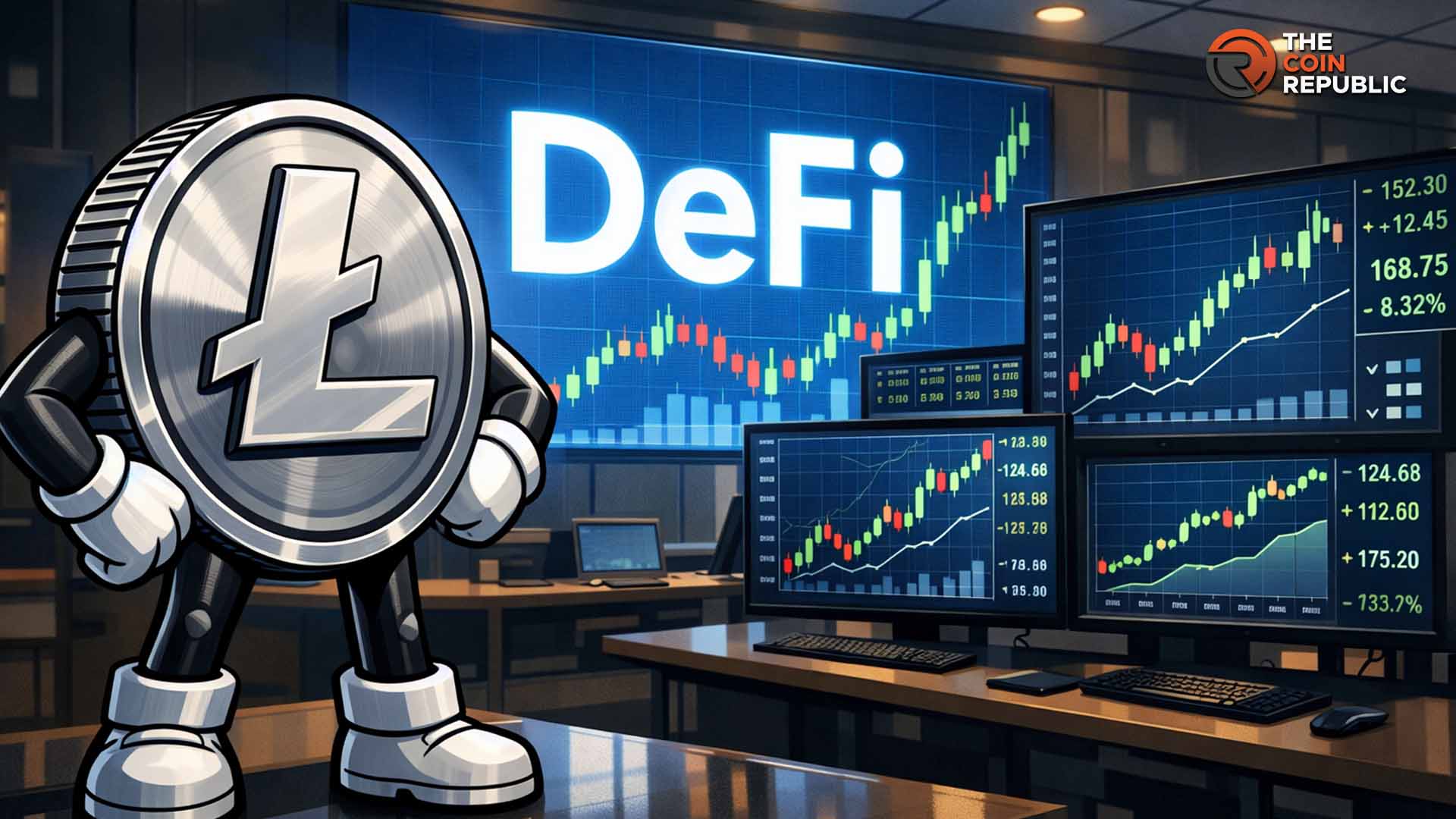
Litecoin's expansion to the Base network as a wrapped asset (cbLTC) enhances its DeFi accessibility, potentially attracting new use cases for the established cryptocurrency. Despite increased DeFi access, LTC price remains in a sideways range, with declining active addresses suggesting a lack of broad market enthusiasm despite some on-chain accumulation signals. The integration into Base offers Litecoin a pathway to leverage Layer 2 ecosystems, but its impact on price action is currently muted by weak overall demand and subdued whale activity.

The staking of over $1 million in RIVER tokens tightens circulating supply, potentially amplifying price movements on increased demand. RIVER token is consolidating within a key demand zone between $14.5 and $18, suggesting potential for a bullish continuation if support holds. A decisive breakout above $18.5 could trigger a new bullish leg for RIVER, with targets potentially reaching the $22-$30 range.

Rising open interest in Bitcoin and Ether derivatives, coupled with flat-to-negative funding rates, indicates a shift towards cautious, bearish positioning among traders despite stable spot prices. Altcoins are demonstrating relative strength against Bitcoin, with DeFi and AI-focused tokens showing gains, suggesting a potential rotation into riskier assets within a broader risk-off macro environment. The premium on Bitcoin and Ether put options over call options, particularly at lower strike prices like $20,000 for BTC, signals a growing demand for downside protection and bearish sentiment among sophisticated market participants. The market appears to be awaiting a decisive breakout in Bitcoin's price range; a confirmed move above $74,000 with strong volume could trigger further rotation into speculative altcoins.

Dogecoin is consolidating within a descending triangle, indicating a potential continuation of the bearish trend unless a decisive breakout occurs. Key support at $0.09 is critical for DOGE; failure to hold this level could lead to a breakdown towards $0.075 and $0.065. Traders should monitor the descending resistance trendline and the $0.09 support zone for signals of a potential breakout or breakdown in the coming weeks. Technical indicators like RSI and MACD remain bearish, suggesting sustained selling pressure despite declining volume as traders await clarity.

Bitcoin miners are pivoting infrastructure towards AI compute and grid-balancing services, creating a new revenue stream that positions them as undervalued data center peers. The increasing demand for AI infrastructure presents a structural opportunity for Bitcoin miners to monetize existing assets and diversify beyond mining operations. While Bitcoin remains range-bound, the easing of selling pressure from long-term holders suggests a stabilization in price action, potentially supporting current levels. The intersection of AI demand and energy infrastructure highlights a symbiotic relationship where Bitcoin miners can provide grid stability while capitalizing on compute power needs.
Mastercard's brief, public "Fueling the future of the digital payment world" reply to Ripple signifies a growing acceptance of digital assets as operational tools, moving beyond experimental phases. The exchange between Ripple and Mastercard, though not a formal partnership, indicates a pragmatic shift in traditional finance towards exploring blockchain and stablecoins for improving cross-border payment efficiency. While no direct partnership is announced, the public validation from a major payment network like Mastercard suggests a potential future integration of blockchain solutions, impacting the broader payments sector.

Samson Mow's question highlights a key debate on whether Bitcoin's price appreciation to $1 million or Michael Saylor's firm Strategy accumulating 1 million BTC will occur first, framing a significant long-term outlook for BTC holders. Strategy's recent acquisition of nearly 18,000 BTC for $1.28 billion indicates continued aggressive accumulation by a major institutional player, reinforcing demand at current price levels. Analysts suggest Bitcoin is showing signs of a near-term relief rally, supported by decreased negative funding rates on perpetual futures and increased whale accumulation, potentially signaling short-term upside.
Signal context only. Validate with price action, liquidity, and risk limits before taking a position.
