
Navigating Crypto News

CoinFeather
Navigating Crypto News
Quick market read from this story
The article provides a forward-looking overview of top investment banks in 2026, highlighting their roles in capital raising, M&A, and trading, which are foundational to traditional finance.
While the article focuses on traditional finance, its mention of Goldman Sachs' activity in 'fintech investments' and links to related crypto news suggest potential intersections with the digital asset space.
The analysis of major investment banks like JPMorgan, Goldman Sachs, and Morgan Stanley offers context for how large financial institutions operate, which can indirectly inform strategies for crypto projects seeking institutional adoption or partnerships.
Deep Dive
Investment banks are pivotal to the global financial system, assisting corporations with capital raising, mergers and acquisitions (M&A), and market trading, while also advising governments and large institutions. In 2026, the sector is characterized by dominant global players, often termed “bulge bracket” banks, which manage some of the world’s largest financial deals and generate billions in advisory and underwriting fees annually.
Several prominent institutions consistently lead the investment banking landscape due to their extensive global reach, deal-making expertise, and strong industry reputation. These include Goldman Sachs, JPMorgan Chase, Morgan Stanley, Bank of America Securities, Citigroup, and Barclays Investment Bank.
Founded in 1869, Goldman Sachs is a highly prestigious investment bank renowned for advising on major mergers and acquisitions. It consistently ranks at the top for M&A advisory and high-profile transactions, serving corporations, governments, and institutional investors with services like capital raising, financial advisory, asset management, and trading. The firm is also active in technology and fintech investments. Its strengths lie in its global reputation, M&A expertise, access to institutional clients, and strong research services, though it is highly competitive and charges premium fees.
As the largest bank in the United States by assets, JPMorgan Chase is a globally influential financial institution. Its investment banking division is a consistent leader in global deal-making, advising companies on mergers, helping governments raise capital, and managing complex financing. JPMorgan's scale provides an advantage, offering integrated financial solutions across its extensive corporate banking, asset management, and trading operations. Its key advantages include its size, broad financial services, strong deal pipeline, and advanced technology, but its large structure can slow decisions, and it faces significant regulatory scrutiny.
Morgan Stanley is a leading Wall Street investment bank, particularly recognized for its strength in equity capital markets and advisory services. The firm has been instrumental in numerous high-profile IPOs and corporate mergers. It has diversified its revenue streams by expanding its wealth management and investment management divisions. The Institutional Securities Group focuses on capital raising, strategic transactions, and risk management for companies. Strengths include leadership in IPO underwriting, strategic advisory, a diversified business model, and strong research teams, while facing revenue fluctuations, heavy competition, and high operational costs.
Bank of America Securities, the investment banking arm of Bank of America, is a major global financial institution. It offers advisory services for M&A, equity and debt financing, and risk management, consistently ranking among the top firms in global investment banking revenue. The bank leverages strong relationships with large corporate clients and government institutions. Its advantages include a strong global presence, access to a vast client base, excellent underwriting capabilities, and competitive M&A advisory, balanced by a large bureaucracy, high regulatory oversight, and a competitive deal environment.
Citigroup stands out as one of the most internationally diversified investment banks, with operations in over 90 countries and a significant presence in emerging markets. The firm provides corporate banking, capital markets, M&A, and financial advisory services, with particular renown for its fixed-income trading and global transaction banking. Citigroup's global reach makes it a key player in cross-border deals and international financing. Its strengths include extensive global presence, fixed-income expertise, a large institutional client network, and strong emerging market exposure, though it has faced historical restructuring challenges and high regulatory oversight.
Barclays Investment Bank is a leading European investment banking institution headquartered in London, offering corporate advisory, capital markets, trading, and research services. Its global capabilities were significantly enhanced after acquiring parts of Lehman Brothers in 2008. Barclays remains a major force in debt capital markets, equity trading, and international corporate advisory. Key strengths include its strong European market presence, capital markets expertise, global client network, and research teams, while facing exposure to European economic cycles and competition from U.S. giants.
These leading investment banks play a crucial role in shaping the global economy in 2026 by financing innovation, supporting corporate growth, and managing complex international financial transactions. Understanding their strengths is vital for investors, entrepreneurs, and finance professionals navigating the modern financial landscape.
Source, catalyst, and sector overlap from the latest feed.
Solana's stablecoin transfer volume has surged 3.2x year-over-year to $972B, indicating significant growth in network activity and DeFi adoption on the platform. SOL is consolidating between $77 and $92, with bullish divergence on daily charts suggesting potential for an upward move if resistance at $90-$92 is decisively broken. A breakout above $92 could target the $115-$120 resistance zone, supported by strong demand absorption at the $77 support level and improving short-term indicators.
Diminishing holder confidence, evidenced by small holders offloading 80M DOGE and increased Coin Days Destroyed (CDD) from long-term holders, signals potential for increased sell-side pressure despite a neutral technical setup. Dogecoin is currently consolidating within a descending wedge pattern, with key support at $0.088 and resistance at $0.103, indicating a period of indecision that could precede a significant price move. The combination of technical consolidation and deteriorating on-chain holder conviction suggests a cautious outlook, as a breakdown below support could accelerate if confidence continues to erode.
Solana is testing key resistance levels, with a breakout above $100 needed to confirm a shift from its seven-month descending channel and support a stronger bullish reversal. The formation of a large cup and handle pattern suggests potential for a significant long-term breakout, but confirmation requires sustained price action above the pattern's resistance. While bullish chart patterns are emerging, the lack of confirmed breakouts means traders should remain cautious, awaiting decisive price action before anticipating substantial upside.
Ripple launches a $750M buyback program to repurchase shares at a $50B valuation, signaling strong financial health.
Mastercard's new Crypto Partner Program, involving over 85 firms including Ripple and Solana, signals a significant push towards integrating digital assets into mainstream payment systems, potentially increasing demand for associated infrastructure and tokens. The program's focus on practical applications like cross-border remittances and B2B payments, rather than speculation, suggests a maturing market where blockchain technology is being leveraged for efficiency and programmability in global commerce. This initiative by a major financial player like Mastercard, building on previous collaborations, indicates a growing institutional acceptance and strategic investment in blockchain payment solutions, which could drive adoption and create new revenue streams for participating projects.
Live Feed
Loading the broader stream in the same flow as the homepage feed.

The LITRO project aims to tokenize 1 litre of crude oil, indexed to benchmarks like Brent and WTI, targeting a January 2027 debut to modernize the $6 trillion oil market. By leveraging blockchain for 24/7 trading and redemption, LITRO seeks to replace archaic paper-based systems, potentially reducing settlement times and capital lock-up for a more accessible market. The project's focus on verified reserves and physical redemption, built on Arbitrum, positions it as a significant RWA play aiming to bridge traditional commodity markets with digital assets. With a clear development timeline including a March-May 2026 testnet and MVP completion by end-March 2026, LITRO presents a structured approach to tokenizing a major global commodity.
The FDIC's proposed rule to exclude payment stablecoins from federal deposit insurance, including pass-through coverage, signals a clear regulatory stance that stablecoins are not equivalent to bank deposits. This regulatory clarification, stemming from the GENIUS Act, creates a distinct advantage for tokenized deposits issued by FDIC-insured banks over non-bank stablecoin issuers, potentially driving institutional capital towards regulated banking products. The divergence in compliance paths between Circle and Tether, with Tether launching a new OCC-supervised token, highlights the evolving landscape and potential market shifts driven by these new regulatory requirements. The FDIC's proposal, by reinforcing the GENIUS Act's prohibition on government safety nets for stablecoins, suggests that issuers must rely solely on their own reserve infrastructure, increasing counterparty risk for users of non-bank stablecoins.
Bittensor (TAO) is exhibiting relative strength against a consolidating market, with recent price action and technical patterns suggesting potential upside. The identification of a bullish Adam & Eve pattern, coupled with positive derivatives data and potential short liquidation cascades, indicates a growing bullish sentiment and a possible near-term price surge towards $270. Traders should monitor TAO's ability to break through immediate resistance levels around $205-$220, as this could trigger further upward momentum and validate the bullish technical setup.

Metaplanet's strategic pivot to funding Bitcoin infrastructure in Japan signals a proactive approach to capitalize on anticipated regulatory clarity and market growth. The establishment of Metaplanet Ventures, with a significant capital allocation and multi-pronged program (investment, incubation, grants), indicates a long-term commitment to ecosystem development beyond simple BTC accumulation. The initial investment in JPYC Inc., a yen-denominated stablecoin issuer, highlights a focus on building foundational financial tools within Japan's evolving crypto landscape. While Metaplanet maintains its core strategy of BTC accumulation, this expansion into ecosystem building suggests a potential for diversified revenue streams and increased influence within the Japanese crypto market.
Kraken's listing of PI token on March 13, just before Pi Day, provides increased accessibility and potential liquidity for the asset. Despite the listing news, PI remains significantly below its all-time high, indicating that current price action may not fully reflect its past valuation. The upcoming Pi Day and potential new DeFi tool launches could act as catalysts for increased trading activity and price appreciation in the short term.
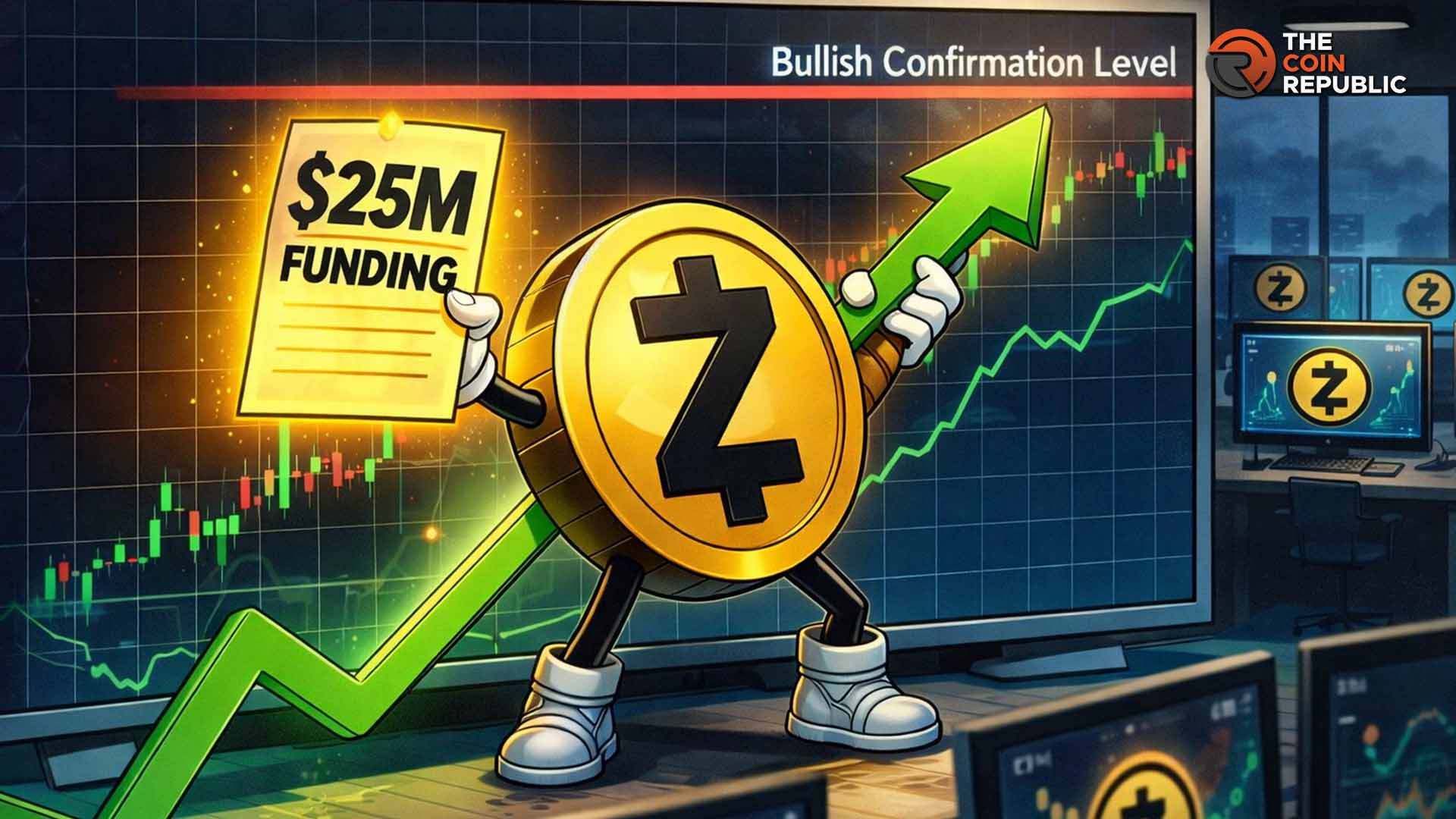
Major VC funding of $25 million for ZODL, the Zcash Open Development Lab, led by Paradigm and a16z, signals renewed institutional confidence and addresses prior governance uncertainty. Accumulation by Zcash whales (182% increase for standard whales, 19% for mega whales) coupled with significant exchange outflows (43%) suggests reduced sell-side pressure ahead of a potential price breakout. The Zcash price must achieve a daily close above $250, supported by a Chaikin Money Flow (CMF) break above its trendline, to confirm the bullish momentum and invalidate the risk of a failed bounce. While the recent 10% rally is positive, the market awaits confirmation above the $250 resistance level, with potential upside targets at $283 and $340 if the bullish case solidifies.

Aave founder Stani Kulechov proposes a significant DAO governance overhaul, suggesting professional teams handle day-to-day decisions to improve efficiency and mitigate political maneuvering. The proposed changes aim to address Aave's governance cracks, highlighted by concentrated voting power (three wallets controlling over 58%) and recent departures of key contributors due to funding and IP disputes. While Aave maintains a substantial $26.5B TVL, the ongoing governance dysfunction poses a risk to its competitive edge in the DeFi sector, potentially impacting investor confidence and future development. Kulechov's call for reform aligns with broader industry trends towards modular governance and liquid democracy, suggesting a potential shift in how DAOs operate to foster more effective decision-making.

Across Protocol's proposal to transition from a DAO to a U.S. C-corporation has triggered an 80% price surge in its ACX token, indicating market optimism towards a traditional corporate structure for institutional deal-making. The proposed structure offers ACX holders a choice between exchanging tokens for equity or a USDC buyout at a 25% premium, creating a floor for the token price and driving speculative interest above the buyout level. This move represents a significant reversal of the prevailing DAO model in DeFi, suggesting that some protocols may find traditional corporate structures more conducive to growth and partnerships. The market reaction, with ACX outperforming BTC and the CoinDesk 20, highlights a potential shift in investor sentiment favoring projects that prioritize pragmatic business structures over pure decentralization for commercial success.
Toncoin is showing signs of structural repair and accumulation, moving away from downside pressure and stabilizing above long-term support. The article presents a bullish long-term outlook for Toncoin, projecting potential price targets of $10 by 2026 and $50 by 2030, contingent on sustained ecosystem expansion and adoption. Traders should monitor the $2.50-$3.00 range as a key resistance level that, if reclaimed, could signal a shift from accumulation to a sustained uptrend.
India's establishment of a "Virtual Asset Lab" signals an intensified regulatory approach aimed at controlling offshore crypto platforms targeting its citizens. The blocking of 85 crypto URLs indicates a proactive stance by Indian authorities to enforce compliance, potentially impacting user access to unregistered exchanges. This regulatory push, following the implementation of high crypto taxes, suggests a challenging environment for offshore platforms seeking to operate within or target the Indian market.

Developer exodus from blockchain to AI infrastructure signifies a potential long-term shift in talent allocation, impacting future innovation pace in the crypto space. The significant decline in active developers across major Layer 1s like Ethereum and Solana, alongside newer chains, suggests a consolidation phase and reduced development momentum. While overall developer activity is down, the growth in experienced developers and wallet infrastructure indicates a focus on core development and essential tools within the remaining crypto ecosystem. The strong pull of AI projects, backed by venture funding and commercial demand, presents a challenge for crypto to re-attract talent, potentially slowing down the development of new blockchain applications.
Kraken's listing of Pi Network's $PI token on March 13th provides significant market access for a project known for its mobile-first mining approach. The listing on a major exchange like Kraken is a key catalyst for Pi Network, potentially increasing liquidity and adoption for its utility-focused ecosystem. Traders should monitor the initial trading performance of $PI post-listing for insights into broader market sentiment towards mobile-mining projects and their tokenomics.

New Zealand's FMA has ruled that the NZDD stablecoin is not a financial product, providing a degree of regulatory clarity for specific stablecoin implementations. This designation, stemming from a fintech sandbox pilot, signals a pragmatic approach by the FMA towards blockchain innovation, potentially encouraging further development in the region. While this specific ruling offers clarity for NZDD, it does not set a precedent for all stablecoins, indicating that future regulatory assessments will remain product-specific.
Significant institutional demand for Bitcoin and Ethereum is evidenced by the substantial net inflows into US spot ETFs on March 11, 2026, indicating a positive market sentiment driven by major asset managers. The substantial purchase of BTC by ETFs, equivalent to approximately four days of newly mined supply, suggests a potential tightening of available supply and could exert upward price pressure on Bitcoin. While Grayscale continued to offload Bitcoin, the net positive inflows across multiple ETFs, particularly from BlackRock and Fidelity, highlight a shift in institutional capital allocation towards spot Bitcoin and Ethereum products.
The appointment of Stephen Gregory, a seasoned executive with prior experience at Currency.com, Gemini, and CEX.IO, as the new CEO of Binance.US signals a strategic move to bolster compliance and operational rigor amidst ongoing regulatory scrutiny. Gregory's background in compliance is particularly relevant given Binance.US's current regulatory challenges, suggesting a focus on navigating legal complexities and rebuilding trust with regulators and users. While the leadership change itself is not a direct trading catalyst, it sets the stage for potential future developments in Binance.US's operational strategy and market positioning, which could indirectly impact market sentiment towards the exchange.

VanEck CEO's assertion of a Bitcoin bottom, coupled with the halving cycle narrative, suggests a potential shift towards altcoin outperformance, a historically observed market dynamic. The article highlights Pepeto's presale success ($7.87M raised) and upcoming listing as a potential catalyst, positioning it as a high-upside opportunity if the predicted altcoin season materializes. While TAO and SUI are presented as recovery plays with AI and adoption catalysts respectively, their potential upside is framed as modest compared to the speculative gains possible from presale entries like Pepeto.
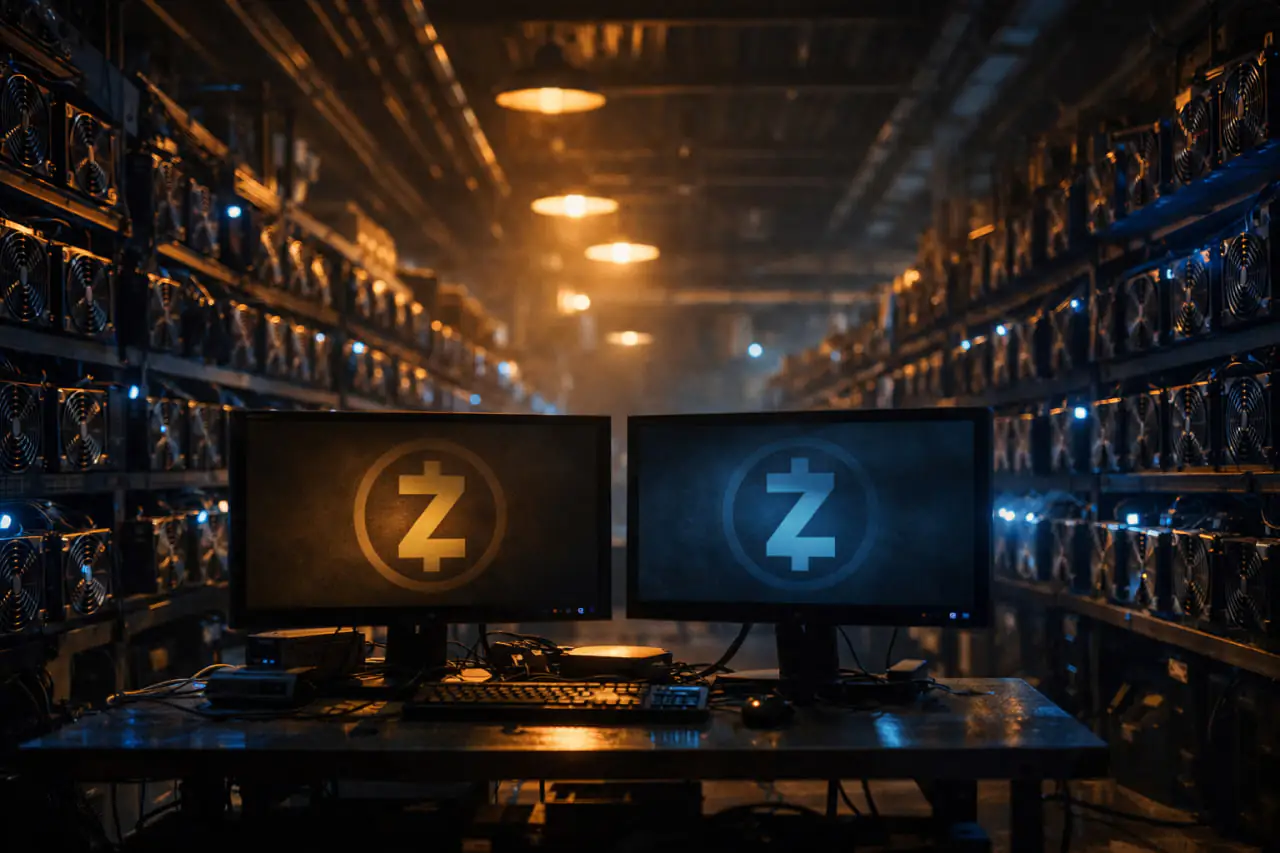
Foundry Digital's entry into Zcash mining with institutional-grade infrastructure, despite ZEC trading significantly below its all-time high, signals a potential long-term confidence play by a major player in the mining sector. The launch of a compliant, U.S.-based mining pool for Zcash aims to address institutional demand for regulated infrastructure, potentially mitigating some of the risks associated with privacy coins amidst increasing global regulatory scrutiny. While Foundry's move provides a crucial infrastructure upgrade, the Zcash ecosystem faces significant headwinds from internal development turmoil and intensifying regulatory crackdowns on privacy coins, creating a complex risk-reward scenario for ZEC.
Coinbase leadership has publicly denied allegations of lobbying against Bitcoin's de minimis tax exemption, refuting claims that they favor stablecoins like USDC for payment adoption. The controversy highlights a potential conflict of interest for Coinbase, given its significant revenue generation from stablecoin reserves, which could be impacted by Bitcoin's broader adoption as a medium of exchange. Despite the strong denials, the accusations and subsequent debate underscore the ongoing tension between Bitcoin maximalism and the business interests of major crypto exchanges regarding payment adoption and tax policy.

Cardano's treasury is proposed to invest ADA into ecosystem projects, with revenue share and ADA buybacks intended to create sustainable demand and fund growth. The 2026 roadmap signals a strategic shift from infrastructure to utility and user experience, aiming to boost developer activity and real network usage. While the new funding strategy could support a gradual ADA recovery, the asset remains in a cautious market structure until key resistance levels are reclaimed.

Despite current AI agent payment volumes being significantly lower than initially reported, the substantial investment in underlying infrastructure by major players signals a strong long-term conviction in this emerging market. The discrepancy in reported payment volumes highlights the early-stage nature of measurement tools and the ongoing development of the AI agent transaction ecosystem. Coinbase's expansion of its x402 Facilitator to Polygon, supporting USDC payments, indicates a strategic move to capture future machine-to-machine transaction growth by enabling efficient, low-fee settlements. The increasing integration of x402 by major payment and internet companies, alongside Coinbase CEO's prediction of AI agents surpassing humans in transaction volume, suggests a potential paradigm shift in digital commerce.
Signal context only. Validate with price action, liquidity, and risk limits before taking a position.
