
Navigating Crypto News

CoinFeather
Navigating Crypto News

Quick market read from this story
The LITRO project aims to tokenize 1 litre of crude oil, indexed to benchmarks like Brent and WTI, targeting a January 2027 debut to modernize the $6 trillion oil market.
By leveraging blockchain for 24/7 trading and redemption, LITRO seeks to replace archaic paper-based systems, potentially reducing settlement times and capital lock-up for a more accessible market.
The project's focus on verified reserves and physical redemption, built on Arbitrum, positions it as a significant RWA play aiming to bridge traditional commodity markets with digital assets.
With a clear development timeline including a March-May 2026 testnet and MVP completion by end-March 2026, LITRO presents a structured approach to tokenizing a major global commodity.
Deep Dive
LITRO, a blockchain-based platform for tokenized oil, is set to revolutionize the $6 trillion global oil market by replacing its archaic, paper-based settlement systems with 24/7, on-chain trading and redemption. The project, spearheaded by Baron Lamarre, co-founder of the International Digital Exchange (INDEX), aims to debut in early 2027 with each LITRO token representing 1 litre of real crude, indexed to benchmarks like Brent and West Texas Intermediate.
The global oil trading machinery is currently dominated by legacy exchanges, extensive paperwork, and high barriers to entry, making it inaccessible for many. Traditional commodity deals often face lengthy settlement times, sometimes up to 90 days, which ties up significant capital. This inefficiency is particularly problematic amidst current geopolitical conflicts that disrupt supply chains and increase market volatility. LITRO's blockchain-based approach promises faster, more accessible, and transparent trading, addressing the limitations of traditional exchanges like CME and ICE that often sideline smaller and mid-sized investors.
LITRO's model involves oil producers pledging their certified reserves to the INDEX platform. These reserves undergo meticulous verification by independent auditors for quantity, authenticity, and ownership before LITRO tokens are minted on a strict 1:1 basis with physical oil volume. While the physical oil remains in the producer's custody, the legal title is digitally assigned to the INDEX system. The project is being built on Arbitrum, an Ethereum scaling solution, with compatibility for any EVM-compatible blockchain.
A key feature of LITRO is its promise of 24/7 liquidity and direct redemption, allowing token holders to redeem for cash or physical crude oil. The platform incorporates a sophisticated smart logistics routing system to manage this process. This system is designed to match oil grades, arrange transportation, issue necessary documentation like bills of lading and certificates, and coordinate delivery. Leveraging IoT sensors, AIS vessel tracking, and AI optimization, the system aims to automate the entire redemption-to-delivery process, enabling token holders to eventually take physical custody of their oil.
LITRO is currently in its early stages, with its testnet and product demo scheduled from March to May 2026, and an official launch planned for January 2027. INDEX is in discussions with Capital Union Bank to serve as a banking partner, with other investor and partner deals expected to finalize upon completion of the Minimum Viable Product (MVP1) by the end of March 2026. The successful execution of this vision could signify a major shift towards transparent, 24/7 blockchain-based operations in global energy markets.
Source, catalyst, and sector overlap from the latest feed.
Metaplanet's strategic pivot to funding Bitcoin infrastructure in Japan signals a proactive approach to capitalize on anticipated regulatory clarity and market growth. The establishment of Metaplanet Ventures, with a significant capital allocation and multi-pronged program (investment, incubation, grants), indicates a long-term commitment to ecosystem development beyond simple BTC accumulation. The initial investment in JPYC Inc., a yen-denominated stablecoin issuer, highlights a focus on building foundational financial tools within Japan's evolving crypto landscape. While Metaplanet maintains its core strategy of BTC accumulation, this expansion into ecosystem building suggests a potential for diversified revenue streams and increased influence within the Japanese crypto market.
Across Protocol's proposal to transition from a DAO to a U.S. C-corporation has triggered an 80% price surge in its ACX token, indicating market optimism towards a traditional corporate structure for institutional deal-making. The proposed structure offers ACX holders a choice between exchanging tokens for equity or a USDC buyout at a 25% premium, creating a floor for the token price and driving speculative interest above the buyout level. This move represents a significant reversal of the prevailing DAO model in DeFi, suggesting that some protocols may find traditional corporate structures more conducive to growth and partnerships. The market reaction, with ACX outperforming BTC and the CoinDesk 20, highlights a potential shift in investor sentiment favoring projects that prioritize pragmatic business structures over pure decentralization for commercial success.
Developer exodus from blockchain to AI infrastructure signifies a potential long-term shift in talent allocation, impacting future innovation pace in the crypto space. The significant decline in active developers across major Layer 1s like Ethereum and Solana, alongside newer chains, suggests a consolidation phase and reduced development momentum. While overall developer activity is down, the growth in experienced developers and wallet infrastructure indicates a focus on core development and essential tools within the remaining crypto ecosystem. The strong pull of AI projects, backed by venture funding and commercial demand, presents a challenge for crypto to re-attract talent, potentially slowing down the development of new blockchain applications.
XRP is consolidating near $1.38, with Bollinger Bands tightening on the daily chart, indicating a potential breakout is imminent as traders await U.S. CPI data. Despite subdued price action, robust on-chain activity with over 2.7 million daily transactions and $1.4 billion in XRP-linked investment products suggests underlying network health and sustained institutional interest. Ripple's commencement of a $750 million share buyback, valuing the company at approximately $50 billion, provides a fundamental positive backdrop for XRP, independent of short-term market fluctuations. Traders are closely monitoring the $1.35-$1.37 support and $1.40-$1.42 resistance levels, with a decisive break in either direction likely to dictate XRP's near-term price trajectory.
Geopolitical tensions in the Middle East are directly impacting Bitcoin's price, causing it to fall below $69,500 as oil prices surge above $100. The repeated pattern of Bitcoin rallies being cut short by Middle East conflict escalations suggests a lack of fundamental bullish momentum, with on-chain data indicating negative demand and rising supply in loss. The resurgence of oil prices above $100 due to geopolitical events complicates the macroeconomic outlook, potentially delaying anticipated interest rate cuts from the Federal Reserve. The correlation between rising oil prices and declining Bitcoin price highlights a risk-off sentiment in the market, impacting other major cryptocurrencies like Ether, Solana, and XRP.
UEX US is expanding its digital finance ecosystem by integrating traditional payment methods like PayPal and Zelle, aiming to simplify onboarding and asset management for new users. The platform's focus on 'working assets' through daily APY accruals on savings accounts presents a yield-generation opportunity, though users should remain aware of market volatility and inherent risks. By offering familiar withdrawal channels and transparent exchange functionality, UEX US seeks to build user trust and bridge the gap between traditional finance and digital assets. The expansion into asset representations for XAU and XAG, alongside global market plans, indicates a strategic move towards broader digital asset offerings and international reach.
Despite current AI agent payment volumes being significantly lower than initially reported, the substantial investment in underlying infrastructure by major players signals a strong long-term conviction in this emerging market. The discrepancy in reported payment volumes highlights the early-stage nature of measurement tools and the ongoing development of the AI agent transaction ecosystem. Coinbase's expansion of its x402 Facilitator to Polygon, supporting USDC payments, indicates a strategic move to capture future machine-to-machine transaction growth by enabling efficient, low-fee settlements. The increasing integration of x402 by major payment and internet companies, alongside Coinbase CEO's prediction of AI agents surpassing humans in transaction volume, suggests a potential paradigm shift in digital commerce.
Metaplanet is pivoting from pure Bitcoin accumulation to ecosystem development by launching venture and asset management arms, signaling a strategic shift to generate diversified revenue streams beyond direct BTC holdings. The firm's $25 million investment plan in Japan's Bitcoin infrastructure, including a stake in the first licensed yen stablecoin (JPYC), aims to capitalize on favorable regulatory frameworks and foster local innovation. Despite significant unrealized losses on its BTC holdings, Metaplanet's move into venture capital and asset management could provide a pathway to long-term value creation by supporting the growth of Bitcoin-related services.
The listing of ICP on South Korea's Upbit exchange, the largest in the region, is a significant catalyst for increased demand and potential price appreciation. The introduction of ICP Cloud Engines, enabling major cloud providers to deploy smart contracts, signals a strategic move to integrate Internet Computer into existing cloud infrastructure, potentially boosting adoption and long-term value. Despite past performance, the combination of exchange listings and new product developments suggests a potential shift in market sentiment for ICP, warranting a closer look for short-to-medium term trading opportunities.
Solmate Infrastructure's strategic pivot to establish a Solana hub in Abu Dhabi signals a significant corporate restructuring and a focused push into digital asset infrastructure. The company's rebranding from Brera Holdings PLC to Solmate Infrastructure PLC, while retaining its Nasdaq ticker SLMT, indicates a deliberate effort to align its identity with its new blockchain-centric mission. Reinvestment of capital from winding down underperforming soccer teams into Solana infrastructure development highlights a clear strategic priority and potential for ecosystem growth. Despite the positive corporate developments, the SOL price has shown resilience rather than significant upside, suggesting broader market pressures are currently overshadowing project-specific news.
While a $100 XRP price is theoretically possible, it hinges on unprecedented global adoption of Ripple's payment technology and a dramatic expansion of the overall crypto market cap, making it an extremely unlikely near-term scenario. The primary obstacle to a $100 XRP valuation is the immense market capitalization required, estimated at over $6 trillion, which would necessitate XRP becoming one of the most valuable assets globally and rivaling Bitcoin's historical peak market cap. Despite the long-term speculative potential, XRP faces significant competition from stablecoins, CBDCs, and other payment networks, alongside inherent market volatility and supply-side challenges, leading most analysts to project more conservative price targets.
The Memorandum of Understanding between the SEC and CFTC signals a significant step towards regulatory clarity in the US crypto market, potentially reducing conflicts and encouraging institutional investment. This coordinated regulatory approach aims to streamline policy, enforcement, and frameworks, which could lower friction for exchanges and intermediaries and foster lawful innovation. The agreement addresses long-standing agency disagreements on digital asset classification, potentially unlocking billions in sidelined capital by providing a more predictable environment for investors.
Major VC funding of $25 million for ZODL, the Zcash Open Development Lab, led by Paradigm and a16z, signals renewed institutional confidence and addresses prior governance uncertainty. Accumulation by Zcash whales (182% increase for standard whales, 19% for mega whales) coupled with significant exchange outflows (43%) suggests reduced sell-side pressure ahead of a potential price breakout. The Zcash price must achieve a daily close above $250, supported by a Chaikin Money Flow (CMF) break above its trendline, to confirm the bullish momentum and invalidate the risk of a failed bounce. While the recent 10% rally is positive, the market awaits confirmation above the $250 resistance level, with potential upside targets at $283 and $340 if the bullish case solidifies.
Live Feed
Loading the broader stream in the same flow as the homepage feed.

FTMining's cloud mining platform lowers the barrier to entry for Bitcoin mining by eliminating the need for hardware and technical expertise, potentially attracting new retail investors to the asset. The introduction of a registration bonus and various contract options suggests a strategy to onboard new users and generate revenue through rented computing power, impacting the accessibility of Bitcoin mining. While presented as a simplified mining solution, the article focuses on the service provider rather than direct asset appreciation, indicating a neutral stance on immediate price action for BTC itself.
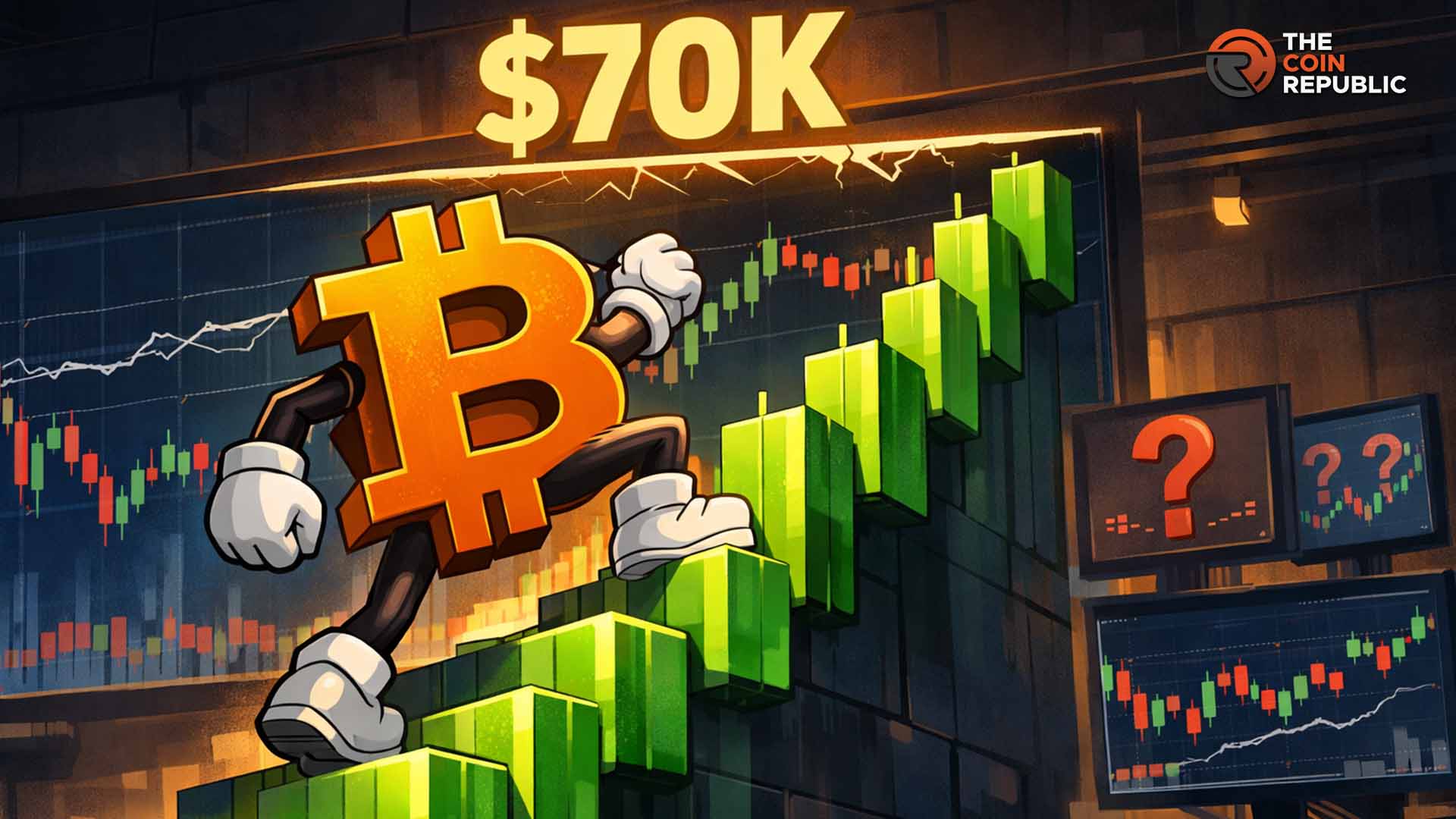
Bitcoin has reclaimed the $70,000 level, supported by steady ETF inflows, but cautious derivatives data and macro uncertainty suggest limited conviction for a sustained breakout. While ETF inflows are positive, previous outflows and ongoing geopolitical/economic risks are tempering trader optimism, indicating a potential for consolidation or a retest of lower support levels. Derivatives markets show low probability for significant upside by March 27, with open interest gradually increasing, suggesting that while new positions are forming, aggressive bullish bets are being avoided. Institutional accumulation via strategies like MicroStrategy's equity issuance continues to provide structural support, creating a pipeline for capital into Bitcoin despite short-term market indecision.
Despite a significant 45% drawdown in XRP's spot price, the recently launched XRP ETFs are showing unexpected resilience, indicating strong investor conviction. The sustained inflows into XRP ETFs, even amidst market volatility, suggest a potentially loyal investor base that may continue to support the asset. While total assets under management have decreased due to price depreciation, the continued presence of significant capital in XRP ETFs highlights their market relevance and potential for future price discovery.

US prosecutors are actively opposing Sam Bankman-Fried's bid for a retrial, arguing that the defense's cited evidence does not meet the legal threshold for new discoveries. The legal proceedings surrounding Sam Bankman-Fried's conviction continue, with the prosecution's stance suggesting a low probability of overturning the existing verdict through a retrial. The ongoing legal challenges for Sam Bankman-Fried, despite speculation about pardons, highlight the persistent regulatory and legal risks within the broader crypto ecosystem.

Arthur Hayes maintains a $250,000 Bitcoin price target for 2026, contingent on a shift in global central bank monetary policy towards easing. Traders should monitor Federal Reserve actions and geopolitical developments, as Hayes suggests a potential Bitcoin price drop below $60,000 due to cascading liquidations if tensions escalate. The core catalyst for Hayes's bullish outlook is not war itself, but the subsequent "money printing" by central banks, implying a patient approach is warranted until liquidity conditions improve. Despite the long-term bullish prediction, Hayes advises against immediate investment, highlighting that current tight monetary policy presents headwinds for a near-term crypto rally.

The hijacking of Bonk.fun's domain and subsequent wallet-draining attack represents a direct security threat to users interacting with the platform, potentially leading to immediate financial losses and a loss of confidence in the project's security infrastructure. While the exploit appears contained to users who signed a fraudulent prompt on the compromised site, the incident highlights ongoing risks associated with domain security and smart contract interactions in the memecoin ecosystem. The reported losses, though limited in scope so far, serve as a cautionary signal for traders to exercise extreme vigilance regarding website interactions and transaction approvals, especially for platforms handling token launches or swaps.

The FDIC's proposed rule to exclude payment stablecoins from federal deposit insurance, including pass-through coverage, signals a clear regulatory stance that stablecoins are not equivalent to bank deposits. This regulatory clarification, stemming from the GENIUS Act, creates a distinct advantage for tokenized deposits issued by FDIC-insured banks over non-bank stablecoin issuers, potentially driving institutional capital towards regulated banking products. The divergence in compliance paths between Circle and Tether, with Tether launching a new OCC-supervised token, highlights the evolving landscape and potential market shifts driven by these new regulatory requirements. The FDIC's proposal, by reinforcing the GENIUS Act's prohibition on government safety nets for stablecoins, suggests that issuers must rely solely on their own reserve infrastructure, increasing counterparty risk for users of non-bank stablecoins.
XRP's current consolidation phase, marked by a Bollinger Band squeeze and rising RSI, suggests a potential build-up of buying pressure preceding a significant price move. The price structure resembles Wyckoff accumulation, indicating that a breakout above the $1.46-$1.50 resistance zone could trigger a bullish expansion towards $1.65 and $1.80. While a breakout scenario is plausible, traders should monitor the $1.32 support level, as a breakdown could invalidate the bullish structure and lead to further downside.
Strike (STRK) is presented as a DeFi lending protocol with price predictions ranging significantly by 2030, contingent on the recovery and expansion of the DeFi lending sector. The article highlights STRK's current trading within a descending channel, indicating short-term bearish pressure, with key support at $0.038 and resistance at $0.052. Long-term price targets for STRK, such as $0.158 by 2026 and $6.29 by 2030, are heavily dependent on renewed DeFi liquidity, increased market participation, and broader decentralized lending adoption.
Bittensor (TAO) is exhibiting relative strength against a consolidating market, with recent price action and technical patterns suggesting potential upside. The identification of a bullish Adam & Eve pattern, coupled with positive derivatives data and potential short liquidation cascades, indicates a growing bullish sentiment and a possible near-term price surge towards $270. Traders should monitor TAO's ability to break through immediate resistance levels around $205-$220, as this could trigger further upward momentum and validate the bullish technical setup.
Kraken's listing of PI token on March 13, just before Pi Day, provides increased accessibility and potential liquidity for the asset. Despite the listing news, PI remains significantly below its all-time high, indicating that current price action may not fully reflect its past valuation. The upcoming Pi Day and potential new DeFi tool launches could act as catalysts for increased trading activity and price appreciation in the short term.

Aave founder Stani Kulechov proposes a significant DAO governance overhaul, suggesting professional teams handle day-to-day decisions to improve efficiency and mitigate political maneuvering. The proposed changes aim to address Aave's governance cracks, highlighted by concentrated voting power (three wallets controlling over 58%) and recent departures of key contributors due to funding and IP disputes. While Aave maintains a substantial $26.5B TVL, the ongoing governance dysfunction poses a risk to its competitive edge in the DeFi sector, potentially impacting investor confidence and future development. Kulechov's call for reform aligns with broader industry trends towards modular governance and liquid democracy, suggesting a potential shift in how DAOs operate to foster more effective decision-making.
Toncoin is showing signs of structural repair and accumulation, moving away from downside pressure and stabilizing above long-term support. The article presents a bullish long-term outlook for Toncoin, projecting potential price targets of $10 by 2026 and $50 by 2030, contingent on sustained ecosystem expansion and adoption. Traders should monitor the $2.50-$3.00 range as a key resistance level that, if reclaimed, could signal a shift from accumulation to a sustained uptrend.
Signal context only. Validate with price action, liquidity, and risk limits before taking a position.
