
Navigating Crypto News

CoinFeather
Navigating Crypto News

Quick market read from this story
Arthur Hayes maintains a $250,000 Bitcoin price target for 2026, contingent on a shift in global central bank monetary policy towards easing.
Traders should monitor Federal Reserve actions and geopolitical developments, as Hayes suggests a potential Bitcoin price drop below $60,000 due to cascading liquidations if tensions escalate.
The core catalyst for Hayes's bullish outlook is not war itself, but the subsequent "money printing" by central banks, implying a patient approach is warranted until liquidity conditions improve.
Despite the long-term bullish prediction, Hayes advises against immediate investment, highlighting that current tight monetary policy presents headwinds for a near-term crypto rally.
Deep Dive
Arthur Hayes, co-founder of BitMEX, has reiterated his ambitious $250,000 Bitcoin (BTC) price prediction for 2026. However, he emphasized that the anticipated rally is contingent upon global central banks, particularly the U.S. Federal Reserve, shifting towards monetary easing and injecting liquidity into the market. Hayes stated he would not invest in Bitcoin currently, preferring to wait for this policy change.
Hayes expressed concerns that the ongoing U.S.–Iran conflict could trigger a significant market sell-off. He warned that such tensions might lead to cascading liquidations, potentially pushing Bitcoin's price below $60,000. While acknowledging the current market uncertainty, Hayes maintains his long-term bullish outlook, viewing money printing by central banks as a positive catalyst for Bitcoin's price appreciation.
The co-founder of BitMEX highlighted the critical role of U.S. monetary policy in driving the next Bitcoin rally. He believes that as long as the Federal Reserve maintains high interest rates or tightens policy further, any substantial crypto rally will face significant headwinds. Conversely, a pivot to easing, often referred to as "money printing," is seen as the primary trigger for the Bitcoin price to ascend towards his $250,000 target. Hayes indicated that traders and analysts should exercise patience, as the realization of his prediction may depend on the timing of central bank policy shifts.
At the time of reporting, Bitcoin (BTC) was trading around $69,926, significantly below its all-time high. Hayes's cautious stance is partly informed by Bitcoin's recent price action, including a brief retest of the $60,000 level in early February. He suggests that further risk-off market movements could challenge recent price lows. Hayes's perspective aligns with the broader thesis that Bitcoin's market cycles are closely tied to global liquidity conditions, making central bank policy a key factor to monitor.
Source, catalyst, and sector overlap from the latest feed.
Empresex is positioning itself as a reliable exchange focused on efficiency and transparency, targeting users seeking pragmatic solutions over complex systems. The platform emphasizes optimized transaction flows for both crypto and fiat, aiming to minimize internal delays while adhering to regulatory compliance. Transparent pricing and a multi-layered security framework are highlighted as core features, aiming to build user trust and operational stability. By integrating with various payment rails and focusing on a streamlined user experience, Empresex seeks to offer a dependable gateway for managing digital and fiat assets.
FTMining's cloud mining platform lowers the barrier to entry for Bitcoin mining by eliminating the need for hardware and technical expertise, potentially attracting new retail investors to the asset. The introduction of a registration bonus and various contract options suggests a strategy to onboard new users and generate revenue through rented computing power, impacting the accessibility of Bitcoin mining. While presented as a simplified mining solution, the article focuses on the service provider rather than direct asset appreciation, indicating a neutral stance on immediate price action for BTC itself.
Bitcoin has reclaimed the $70,000 level, supported by steady ETF inflows, but cautious derivatives data and macro uncertainty suggest limited conviction for a sustained breakout. While ETF inflows are positive, previous outflows and ongoing geopolitical/economic risks are tempering trader optimism, indicating a potential for consolidation or a retest of lower support levels. Derivatives markets show low probability for significant upside by March 27, with open interest gradually increasing, suggesting that while new positions are forming, aggressive bullish bets are being avoided. Institutional accumulation via strategies like MicroStrategy's equity issuance continues to provide structural support, creating a pipeline for capital into Bitcoin despite short-term market indecision.
Major VC funding of $25 million for ZODL, the Zcash Open Development Lab, led by Paradigm and a16z, signals renewed institutional confidence and addresses prior governance uncertainty. Accumulation by Zcash whales (182% increase for standard whales, 19% for mega whales) coupled with significant exchange outflows (43%) suggests reduced sell-side pressure ahead of a potential price breakout. The Zcash price must achieve a daily close above $250, supported by a Chaikin Money Flow (CMF) break above its trendline, to confirm the bullish momentum and invalidate the risk of a failed bounce. While the recent 10% rally is positive, the market awaits confirmation above the $250 resistance level, with potential upside targets at $283 and $340 if the bullish case solidifies.
The listing of ICP on South Korea's Upbit exchange, the largest in the region, is a significant catalyst for increased demand and potential price appreciation. The introduction of ICP Cloud Engines, enabling major cloud providers to deploy smart contracts, signals a strategic move to integrate Internet Computer into existing cloud infrastructure, potentially boosting adoption and long-term value. Despite past performance, the combination of exchange listings and new product developments suggests a potential shift in market sentiment for ICP, warranting a closer look for short-to-medium term trading opportunities.
XRP's current consolidation phase, marked by a Bollinger Band squeeze and rising RSI, suggests a potential build-up of buying pressure preceding a significant price move. The price structure resembles Wyckoff accumulation, indicating that a breakout above the $1.46-$1.50 resistance zone could trigger a bullish expansion towards $1.65 and $1.80. While a breakout scenario is plausible, traders should monitor the $1.32 support level, as a breakdown could invalidate the bullish structure and lead to further downside.
Toncoin is showing signs of structural repair and accumulation, moving away from downside pressure and stabilizing above long-term support. The article presents a bullish long-term outlook for Toncoin, projecting potential price targets of $10 by 2026 and $50 by 2030, contingent on sustained ecosystem expansion and adoption. Traders should monitor the $2.50-$3.00 range as a key resistance level that, if reclaimed, could signal a shift from accumulation to a sustained uptrend.
Developer exodus from blockchain to AI infrastructure signifies a potential long-term shift in talent allocation, impacting future innovation pace in the crypto space. The significant decline in active developers across major Layer 1s like Ethereum and Solana, alongside newer chains, suggests a consolidation phase and reduced development momentum. While overall developer activity is down, the growth in experienced developers and wallet infrastructure indicates a focus on core development and essential tools within the remaining crypto ecosystem. The strong pull of AI projects, backed by venture funding and commercial demand, presents a challenge for crypto to re-attract talent, potentially slowing down the development of new blockchain applications.
Live Feed
Loading the broader stream in the same flow as the homepage feed.

Spot crypto ETFs saw a net inflow of $174 million on March 11, reversing a recent trend of outflows and suggesting some institutional investors view current price levels as potential entry points. Despite the positive ETF flows, market sentiment remains cautious, indicated by the Fear & Greed Index at 26, suggesting that sustained price recovery is contingent on broader macro conditions and stabilization above key price levels. Institutional demand for Bitcoin ETFs is increasingly concentrated in BlackRock's IBIT, while Ethereum ETFs showed balanced inflows across multiple issuers, indicating a potential shift in preferred investment vehicles. Solana ETFs, despite offering staking yields, have not attracted significant institutional demand, with recent flows remaining minimal, reflecting broader price weakness and competition within the ETF market.
While a $100 XRP price is theoretically possible, it hinges on unprecedented global adoption of Ripple's payment technology and a dramatic expansion of the overall crypto market cap, making it an extremely unlikely near-term scenario. The primary obstacle to a $100 XRP valuation is the immense market capitalization required, estimated at over $6 trillion, which would necessitate XRP becoming one of the most valuable assets globally and rivaling Bitcoin's historical peak market cap. Despite the long-term speculative potential, XRP faces significant competition from stablecoins, CBDCs, and other payment networks, alongside inherent market volatility and supply-side challenges, leading most analysts to project more conservative price targets.

Despite a significant 45% drawdown in XRP's spot price, the recently launched XRP ETFs are showing unexpected resilience, indicating strong investor conviction. The sustained inflows into XRP ETFs, even amidst market volatility, suggest a potentially loyal investor base that may continue to support the asset. While total assets under management have decreased due to price depreciation, the continued presence of significant capital in XRP ETFs highlights their market relevance and potential for future price discovery.

US prosecutors are actively opposing Sam Bankman-Fried's bid for a retrial, arguing that the defense's cited evidence does not meet the legal threshold for new discoveries. The legal proceedings surrounding Sam Bankman-Fried's conviction continue, with the prosecution's stance suggesting a low probability of overturning the existing verdict through a retrial. The ongoing legal challenges for Sam Bankman-Fried, despite speculation about pardons, highlight the persistent regulatory and legal risks within the broader crypto ecosystem.
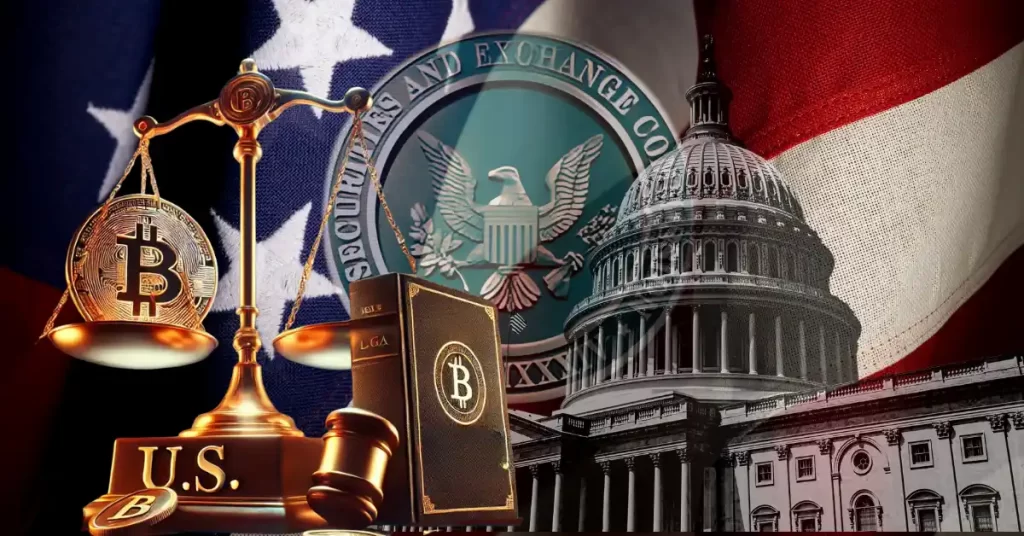
The Memorandum of Understanding between the SEC and CFTC signals a significant step towards regulatory clarity in the US crypto market, potentially reducing conflicts and encouraging institutional investment. This coordinated regulatory approach aims to streamline policy, enforcement, and frameworks, which could lower friction for exchanges and intermediaries and foster lawful innovation. The agreement addresses long-standing agency disagreements on digital asset classification, potentially unlocking billions in sidelined capital by providing a more predictable environment for investors.

The hijacking of Bonk.fun's domain and subsequent wallet-draining attack represents a direct security threat to users interacting with the platform, potentially leading to immediate financial losses and a loss of confidence in the project's security infrastructure. While the exploit appears contained to users who signed a fraudulent prompt on the compromised site, the incident highlights ongoing risks associated with domain security and smart contract interactions in the memecoin ecosystem. The reported losses, though limited in scope so far, serve as a cautionary signal for traders to exercise extreme vigilance regarding website interactions and transaction approvals, especially for platforms handling token launches or swaps.
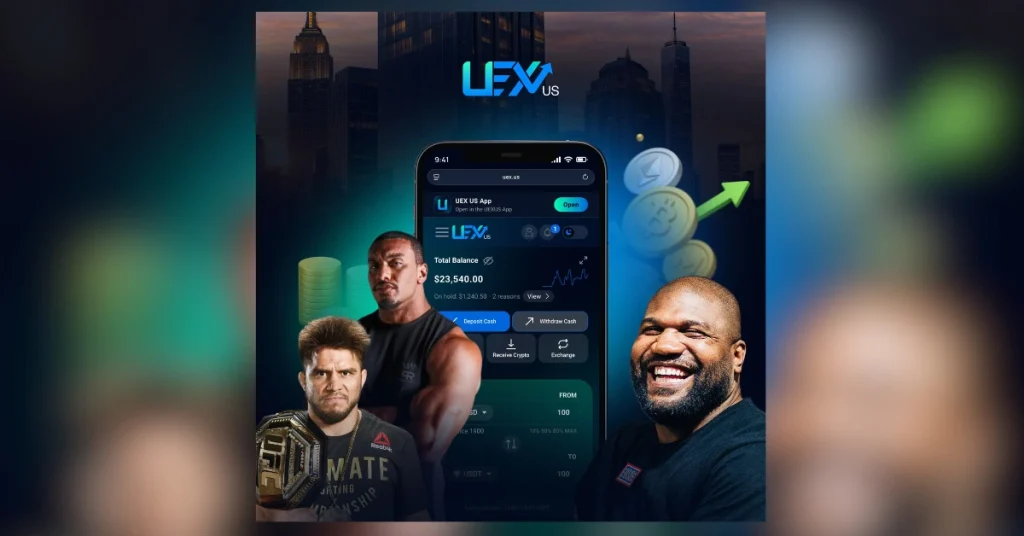
UEX US is expanding its digital finance ecosystem by integrating traditional payment methods like PayPal and Zelle, aiming to simplify onboarding and asset management for new users. The platform's focus on 'working assets' through daily APY accruals on savings accounts presents a yield-generation opportunity, though users should remain aware of market volatility and inherent risks. By offering familiar withdrawal channels and transparent exchange functionality, UEX US seeks to build user trust and bridge the gap between traditional finance and digital assets. The expansion into asset representations for XAU and XAG, alongside global market plans, indicates a strategic move towards broader digital asset offerings and international reach.

The LITRO project aims to tokenize 1 litre of crude oil, indexed to benchmarks like Brent and WTI, targeting a January 2027 debut to modernize the $6 trillion oil market. By leveraging blockchain for 24/7 trading and redemption, LITRO seeks to replace archaic paper-based systems, potentially reducing settlement times and capital lock-up for a more accessible market. The project's focus on verified reserves and physical redemption, built on Arbitrum, positions it as a significant RWA play aiming to bridge traditional commodity markets with digital assets. With a clear development timeline including a March-May 2026 testnet and MVP completion by end-March 2026, LITRO presents a structured approach to tokenizing a major global commodity.

The FDIC's proposed rule to exclude payment stablecoins from federal deposit insurance, including pass-through coverage, signals a clear regulatory stance that stablecoins are not equivalent to bank deposits. This regulatory clarification, stemming from the GENIUS Act, creates a distinct advantage for tokenized deposits issued by FDIC-insured banks over non-bank stablecoin issuers, potentially driving institutional capital towards regulated banking products. The divergence in compliance paths between Circle and Tether, with Tether launching a new OCC-supervised token, highlights the evolving landscape and potential market shifts driven by these new regulatory requirements. The FDIC's proposal, by reinforcing the GENIUS Act's prohibition on government safety nets for stablecoins, suggests that issuers must rely solely on their own reserve infrastructure, increasing counterparty risk for users of non-bank stablecoins.

Strike (STRK) is presented as a DeFi lending protocol with price predictions ranging significantly by 2030, contingent on the recovery and expansion of the DeFi lending sector. The article highlights STRK's current trading within a descending channel, indicating short-term bearish pressure, with key support at $0.038 and resistance at $0.052. Long-term price targets for STRK, such as $0.158 by 2026 and $6.29 by 2030, are heavily dependent on renewed DeFi liquidity, increased market participation, and broader decentralized lending adoption.
Bittensor (TAO) is exhibiting relative strength against a consolidating market, with recent price action and technical patterns suggesting potential upside. The identification of a bullish Adam & Eve pattern, coupled with positive derivatives data and potential short liquidation cascades, indicates a growing bullish sentiment and a possible near-term price surge towards $270. Traders should monitor TAO's ability to break through immediate resistance levels around $205-$220, as this could trigger further upward momentum and validate the bullish technical setup.

Metaplanet's strategic pivot to funding Bitcoin infrastructure in Japan signals a proactive approach to capitalize on anticipated regulatory clarity and market growth. The establishment of Metaplanet Ventures, with a significant capital allocation and multi-pronged program (investment, incubation, grants), indicates a long-term commitment to ecosystem development beyond simple BTC accumulation. The initial investment in JPYC Inc., a yen-denominated stablecoin issuer, highlights a focus on building foundational financial tools within Japan's evolving crypto landscape. While Metaplanet maintains its core strategy of BTC accumulation, this expansion into ecosystem building suggests a potential for diversified revenue streams and increased influence within the Japanese crypto market.

Kraken's listing of PI token on March 13, just before Pi Day, provides increased accessibility and potential liquidity for the asset. Despite the listing news, PI remains significantly below its all-time high, indicating that current price action may not fully reflect its past valuation. The upcoming Pi Day and potential new DeFi tool launches could act as catalysts for increased trading activity and price appreciation in the short term.

Aave founder Stani Kulechov proposes a significant DAO governance overhaul, suggesting professional teams handle day-to-day decisions to improve efficiency and mitigate political maneuvering. The proposed changes aim to address Aave's governance cracks, highlighted by concentrated voting power (three wallets controlling over 58%) and recent departures of key contributors due to funding and IP disputes. While Aave maintains a substantial $26.5B TVL, the ongoing governance dysfunction poses a risk to its competitive edge in the DeFi sector, potentially impacting investor confidence and future development. Kulechov's call for reform aligns with broader industry trends towards modular governance and liquid democracy, suggesting a potential shift in how DAOs operate to foster more effective decision-making.
Signal context only. Validate with price action, liquidity, and risk limits before taking a position.
