
Navigating Crypto News

CoinFeather
Navigating Crypto News
Quick market read from this story
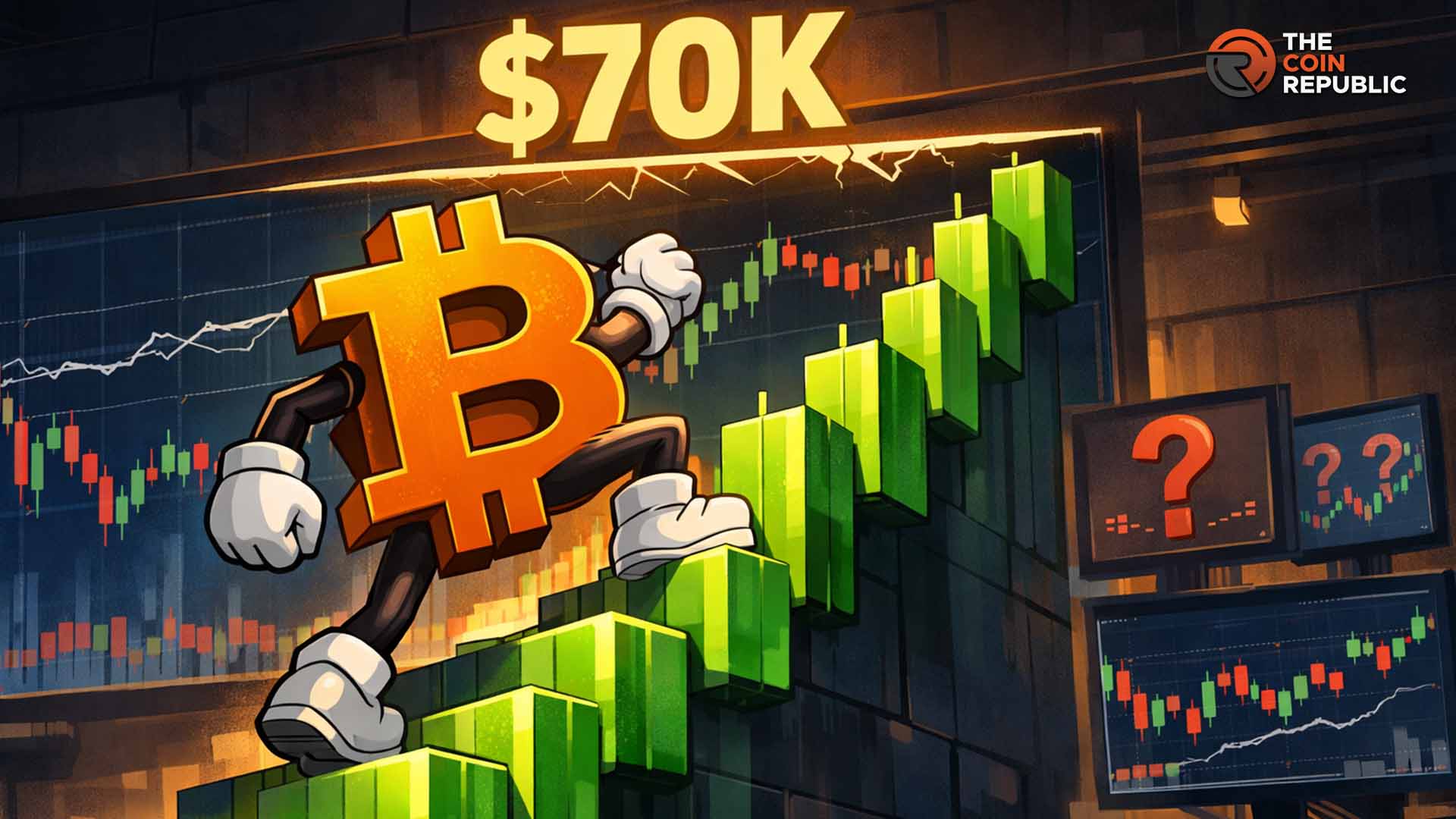
Bitcoin has reclaimed the $70,000 level, supported by steady ETF inflows, but cautious derivatives data and macro uncertainty suggest limited conviction for a sustained breakout.
While ETF inflows are positive, previous outflows and ongoing geopolitical/economic risks are tempering trader optimism, indicating a potential for consolidation or a retest of lower support levels.
Derivatives markets show low probability for significant upside by March 27, with open interest gradually increasing, suggesting that while new positions are forming, aggressive bullish bets are being avoided.
Institutional accumulation via strategies like MicroStrategy's equity issuance continues to provide structural support, creating a pipeline for capital into Bitcoin despite short-term market indecision.
Source, catalyst, and sector overlap from the latest feed.
Circle's launch of USDC and CCTP on Morph enhances cross-chain DeFi capabilities by enabling native liquidity and reducing risks associated with bridged assets. The integration of CCTP on Morph allows for secure, burn-and-mint USDC transfers across 21 networks, improving capital efficiency and user experience within the Morph ecosystem. Circle's expansion to 32 blockchains signifies a strategic push for interoperability and scalability, reinforcing its position as a leading stablecoin provider in the growing digital economy. The news coincides with a positive outlook from Bernstein on Circle's stock (CRCL), predicting significant gains driven by the increasing adoption of stablecoins in AI and cross-border payments.
Live Feed
Loading the broader stream in the same flow as the homepage feed.
XRP Ledger's surge to 2.7 million daily transactions and over $460 million in tokenized assets indicates significant real-world utility growth, potentially signaling future value appreciation despite current price stagnation. The approval of AUDD, an Australian dollar-backed stablecoin on the XRP Ledger, represents a key regulatory development that could facilitate broader institutional adoption and on-chain financial activity. Despite a substantial increase in network activity and tokenized asset value, XRP's price remains subdued, suggesting a decoupling of on-chain fundamentals from short-term market sentiment or macroeconomic influences. The expansion of tokenized assets and potential entry into the crypto options market on the XRP Ledger highlight its evolving capabilities beyond payments, positioning it as a versatile platform for next-generation financial infrastructure.

Samson Mow's question highlights a key debate on whether Bitcoin's price appreciation to $1 million or Michael Saylor's firm Strategy accumulating 1 million BTC will occur first, framing a significant long-term outlook for BTC holders. Strategy's recent acquisition of nearly 18,000 BTC for $1.28 billion indicates continued aggressive accumulation by a major institutional player, reinforcing demand at current price levels. Analysts suggest Bitcoin is showing signs of a near-term relief rally, supported by decreased negative funding rates on perpetual futures and increased whale accumulation, potentially signaling short-term upside.

South Korea's regulatory action against Bithumb, the second-largest exchange, threatens to reroute retail flows and degrade the 'kimchi premium' pricing signal, impacting market structure and transparency. The enforcement action highlights a broader trend of tightening AML/KYC rules in South Korea, potentially distorting regional price discovery as exchanges face compliance pressures. While the direct impact on Bithumb may be a partial suspension, the systemic effect on venue concentration and the reliability of Korean pricing as a retail sentiment gauge is a key concern for traders. The development suggests a potential shift of South Korean crypto capital offshore if local access becomes too restrictive, further complicating market analysis.

Shiba Inu faces significant selling pressure, trading below key long-term moving averages and struggling to overcome the 26 EMA resistance, indicating a lack of buying momentum. The current consolidation pattern suggests market indecision, with a high probability of a false breakout if buying interest does not materialize, potentially prolonging the downtrend. The upcoming test of the 26 EMA will serve as a critical gauge for market sentiment, with a sustained break potentially signaling a recovery, while failure could reinforce the existing bearish structure.
While a $100 XRP price is theoretically possible, it hinges on unprecedented global adoption of Ripple's payment technology and a dramatic expansion of the overall crypto market cap, making it an extremely unlikely near-term scenario. The primary obstacle to a $100 XRP valuation is the immense market capitalization required, estimated at over $6 trillion, which would necessitate XRP becoming one of the most valuable assets globally and rivaling Bitcoin's historical peak market cap. Despite the long-term speculative potential, XRP faces significant competition from stablecoins, CBDCs, and other payment networks, alongside inherent market volatility and supply-side challenges, leading most analysts to project more conservative price targets.

US prosecutors are actively opposing Sam Bankman-Fried's bid for a retrial, arguing that the defense's cited evidence does not meet the legal threshold for new discoveries. The legal proceedings surrounding Sam Bankman-Fried's conviction continue, with the prosecution's stance suggesting a low probability of overturning the existing verdict through a retrial. The ongoing legal challenges for Sam Bankman-Fried, despite speculation about pardons, highlight the persistent regulatory and legal risks within the broader crypto ecosystem.
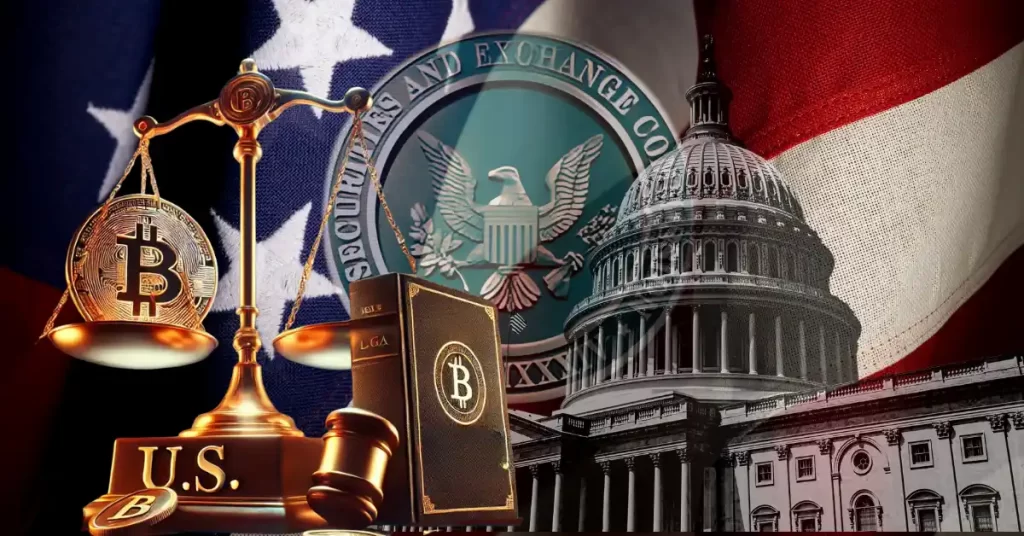
The Memorandum of Understanding between the SEC and CFTC signals a significant step towards regulatory clarity in the US crypto market, potentially reducing conflicts and encouraging institutional investment. This coordinated regulatory approach aims to streamline policy, enforcement, and frameworks, which could lower friction for exchanges and intermediaries and foster lawful innovation. The agreement addresses long-standing agency disagreements on digital asset classification, potentially unlocking billions in sidelined capital by providing a more predictable environment for investors.

The hijacking of Bonk.fun's domain and subsequent wallet-draining attack represents a direct security threat to users interacting with the platform, potentially leading to immediate financial losses and a loss of confidence in the project's security infrastructure. While the exploit appears contained to users who signed a fraudulent prompt on the compromised site, the incident highlights ongoing risks associated with domain security and smart contract interactions in the memecoin ecosystem. The reported losses, though limited in scope so far, serve as a cautionary signal for traders to exercise extreme vigilance regarding website interactions and transaction approvals, especially for platforms handling token launches or swaps.
Signal context only. Validate with price action, liquidity, and risk limits before taking a position.
Empresex is positioning itself as a reliable exchange focused on efficiency and transparency, targeting users seeking pragmatic solutions over complex systems. The platform emphasizes optimized transaction flows for both crypto and fiat, aiming to minimize internal delays while adhering to regulatory compliance. Transparent pricing and a multi-layered security framework are highlighted as core features, aiming to build user trust and operational stability. By integrating with various payment rails and focusing on a streamlined user experience, Empresex seeks to offer a dependable gateway for managing digital and fiat assets.
