
Navigating Crypto News

CoinFeather
Navigating Crypto News

Quick market read from this story
Samson Mow's question highlights a key debate on whether Bitcoin's price appreciation to $1 million or Michael Saylor's firm Strategy accumulating 1 million BTC will occur first, framing a significant long-term outlook for BTC holders.
Strategy's recent acquisition of nearly 18,000 BTC for $1.28 billion indicates continued aggressive accumulation by a major institutional player, reinforcing demand at current price levels.
Analysts suggest Bitcoin is showing signs of a near-term relief rally, supported by decreased negative funding rates on perpetual futures and increased whale accumulation, potentially signaling short-term upside.
Deep Dive
JAN3 CEO Samson Mow, a prominent Bitcoin advocate, has posed a significant question to the crypto community: Will Bitcoin reach $1 million per coin before Michael Saylor's company, Strategy, accumulates 1 million BTC? This query comes as the flagship cryptocurrency, Bitcoin (BTC), has recently dipped below the $70,000 mark.
Strategy currently holds just over 700,000 BTC. To reach its target of 1 million coins, the company needs to acquire approximately 300,000 more Bitcoins. Mow's question highlights the race between the potential price appreciation of Bitcoin and the aggressive accumulation strategy employed by Saylor's firm.
In a recent development, Strategy announced the purchase of 17,994 BTC for about $1.28 billion, at an average price of $70,946 per coin. This acquisition brought their total holdings to 738,731 BTC, valued at over $51 billion.
Meanwhile, some analysts suggest that Bitcoin is showing signs of an impending relief rally. Andreja Cobeljic, Head of Derivatives Trading at Amina Bank, noted in a recent interview that despite negative headlines, such as Bitcoin's decline on a day when crude oil prices surged due to Middle East tensions, the digital asset presents a constructive setup.
Cobeljic identified two key factors supporting a potential near-term rally for Bitcoin. Firstly, negative funding rates on BTC perpetual futures have reached their lowest point in the past month. Secondly, there has been a noticeable increase in Bitcoin accumulation by whales, who have been actively buying during price dips, particularly in the $60,000 range.
Source, catalyst, and sector overlap from the latest feed.
Ripple's executive highlights a strategic shift from speculative crypto trading to real-world utility, emphasizing the role of stablecoins and digital assets in enterprise treasury operations. The partnership with Mastercard signifies a move towards integrating blockchain technology with traditional financial infrastructure, potentially accelerating mainstream adoption of digital currencies for payments. Ripple's ongoing expansion, including licensing acquisitions and focus on emerging markets, indicates a broader strategy to embed its solutions within global financial systems.
The SEC and CFTC have reached a settlement, signaling a potential end to the 'regulation by enforcement' era and aiming to clarify the security vs. commodity debate for digital assets. CFTC Commissioner Caroline Pham's six-point plan proposes regulatory harmonization, modernization of financial frameworks, and fit-for-purpose rules to establish the US as a global crypto capital. This development could significantly reduce legal uncertainty and litigation costs for crypto firms, potentially fostering innovation and attracting capital to the US market.
Shiba Inu faces significant selling pressure, trading below key long-term moving averages and struggling to overcome the 26 EMA resistance, indicating a lack of buying momentum. The current consolidation pattern suggests market indecision, with a high probability of a false breakout if buying interest does not materialize, potentially prolonging the downtrend. The upcoming test of the 26 EMA will serve as a critical gauge for market sentiment, with a sustained break potentially signaling a recovery, while failure could reinforce the existing bearish structure.
Despite a significant 45% drawdown in XRP's spot price, the recently launched XRP ETFs are showing unexpected resilience, indicating strong investor conviction. The sustained inflows into XRP ETFs, even amidst market volatility, suggest a potentially loyal investor base that may continue to support the asset. While total assets under management have decreased due to price depreciation, the continued presence of significant capital in XRP ETFs highlights their market relevance and potential for future price discovery.
Coinbase leadership has publicly denied allegations of lobbying against Bitcoin's de minimis tax exemption, refuting claims that they favor stablecoins like USDC for payment adoption. The controversy highlights a potential conflict of interest for Coinbase, given its significant revenue generation from stablecoin reserves, which could be impacted by Bitcoin's broader adoption as a medium of exchange. Despite the strong denials, the accusations and subsequent debate underscore the ongoing tension between Bitcoin maximalism and the business interests of major crypto exchanges regarding payment adoption and tax policy.
Bitcoin miners are pivoting infrastructure towards AI compute and grid-balancing services, creating a new revenue stream that positions them as undervalued data center peers. The increasing demand for AI infrastructure presents a structural opportunity for Bitcoin miners to monetize existing assets and diversify beyond mining operations. While Bitcoin remains range-bound, the easing of selling pressure from long-term holders suggests a stabilization in price action, potentially supporting current levels. The intersection of AI demand and energy infrastructure highlights a symbiotic relationship where Bitcoin miners can provide grid stability while capitalizing on compute power needs.
Significant daily inflows into Bitcoin ETFs, totaling $251 million and led by major institutions like BlackRock and Fidelity, indicate renewed institutional confidence and potential accumulation at current price levels. The article promotes Pepeto, an exchange token, by drawing parallels to historical high-performing exchange tokens like BNB and OKB, suggesting it could offer substantial returns due to its presale pricing and upcoming exchange listing. While Bitcoin ETFs demonstrate institutional interest, the article positions Pepeto as a higher-growth potential asset, emphasizing its presale valuation and the potential for significant price appreciation upon listing, particularly on exchanges like Binance. The narrative highlights the historical success of exchange tokens, suggesting that Pepeto's zero-fee trading across multiple blockchains and experienced team could position it to capture significant volume and deliver outsized returns compared to large-cap assets like Bitcoin.
Metaplanet's strategic pivot to funding Bitcoin infrastructure in Japan signals a proactive approach to capitalize on anticipated regulatory clarity and market growth. The establishment of Metaplanet Ventures, with a significant capital allocation and multi-pronged program (investment, incubation, grants), indicates a long-term commitment to ecosystem development beyond simple BTC accumulation. The initial investment in JPYC Inc., a yen-denominated stablecoin issuer, highlights a focus on building foundational financial tools within Japan's evolving crypto landscape. While Metaplanet maintains its core strategy of BTC accumulation, this expansion into ecosystem building suggests a potential for diversified revenue streams and increased influence within the Japanese crypto market.
Major VC funding of $25 million for ZODL, the Zcash Open Development Lab, led by Paradigm and a16z, signals renewed institutional confidence and addresses prior governance uncertainty. Accumulation by Zcash whales (182% increase for standard whales, 19% for mega whales) coupled with significant exchange outflows (43%) suggests reduced sell-side pressure ahead of a potential price breakout. The Zcash price must achieve a daily close above $250, supported by a Chaikin Money Flow (CMF) break above its trendline, to confirm the bullish momentum and invalidate the risk of a failed bounce. While the recent 10% rally is positive, the market awaits confirmation above the $250 resistance level, with potential upside targets at $283 and $340 if the bullish case solidifies.
VanEck CEO's assertion of a Bitcoin bottom, coupled with the halving cycle narrative, suggests a potential shift towards altcoin outperformance, a historically observed market dynamic. The article highlights Pepeto's presale success ($7.87M raised) and upcoming listing as a potential catalyst, positioning it as a high-upside opportunity if the predicted altcoin season materializes. While TAO and SUI are presented as recovery plays with AI and adoption catalysts respectively, their potential upside is framed as modest compared to the speculative gains possible from presale entries like Pepeto.
Bitcoin's consolidation around $70K, despite strong spot support, indicates cautious market sentiment and a struggle to extend gains, driven by a mix of dip-buying interest and trader de-risking. Significant liquidations exceeding $350M across BTC and ETH highlight the ongoing punishment of over-leveraged traders in a choppy market, where price action is characterized by stop-outs on both long and short positions. Ethereum and altcoins are exhibiting beta-like behavior to Bitcoin, with selective capital flows favoring narratives like AI and L2s, while the broader altcoin market underperforms amid Bitcoin's range-bound price action. The current market environment, marked by 'extreme fear' and 'ping-pong' liquidation patterns, suggests a lack of clear directional conviction and a high degree of short-term volatility for traders.
BlackRock's launch of the iShares Staked Ethereum Trust ETF (ETHB) introduces a product that combines spot ether exposure with staking rewards, directly addressing investor demand for yield within traditional ETF structures. The introduction of ETHB signifies a strategic move by BlackRock to capture crypto-native investors who previously held back from ETFs due to the loss of staking yield, potentially increasing institutional adoption of ether. By offering staking rewards, the ETHB ETF aims to make ether more attractive to institutional investors by providing a cash-flow-like characteristic, potentially enhancing its comparability to other income-generating assets in portfolio models.
Bitcoin buyers are showing increased activity in derivatives markets, indicated by positive net taker volume, suggesting a potential shift in short-term sentiment. The critical resistance level for Bitcoin to break the current downtrend is identified at $78,000, a level that has historically acted as a significant price ceiling. Despite signs of a relief rally, the overall market remains in a bearish phase, with the $78,000 mark being crucial for a sustained trend reversal. Continued inflows into spot Bitcoin ETFs provide underlying support, but the price action is currently constrained within a consolidation range, awaiting a decisive breakout.
The surge in Binance's futures-to-spot volume ratio to 5.1 indicates a market increasingly driven by leveraged positions rather than direct asset ownership, suggesting heightened sensitivity to liquidations and potential for outsized, short-lived price swings. While derivatives growth can signal market maturation, a significant imbalance where futures volume outpaces spot suggests increased market fragility, potentially leading to amplified volatility even if the net price movement is minimal over time. The confluence of high futures-to-spot ratios with negative on-chain demand and rising supply in loss suggests that current price action may be more susceptible to sharp corrections, as underlying demand appears weak despite derivative market activity.
Despite Bitcoin's resilience around $70,000, significant open interest in $20,000 puts on Deribit suggests a portion of the market is positioning for a potential downturn, indicating underlying caution. While some traders are selling far out-of-the-money puts as a premium-gathering strategy, the sheer volume of open interest in $20,000 puts warrants attention as a potential indicator of bearish sentiment or hedging activity. The article highlights that excess leverage is being flushed out of BTC, which analysts suggest could create a more stable foundation for future upside moves, contrasting with the bearish options positioning. Broader market volatility, driven by rising oil prices and geopolitical tensions, is increasing volatility in U.S. Treasury markets, which could lead to financial tightening and pressure risk assets like cryptocurrencies.
Live Feed
Loading the broader stream in the same flow as the homepage feed.
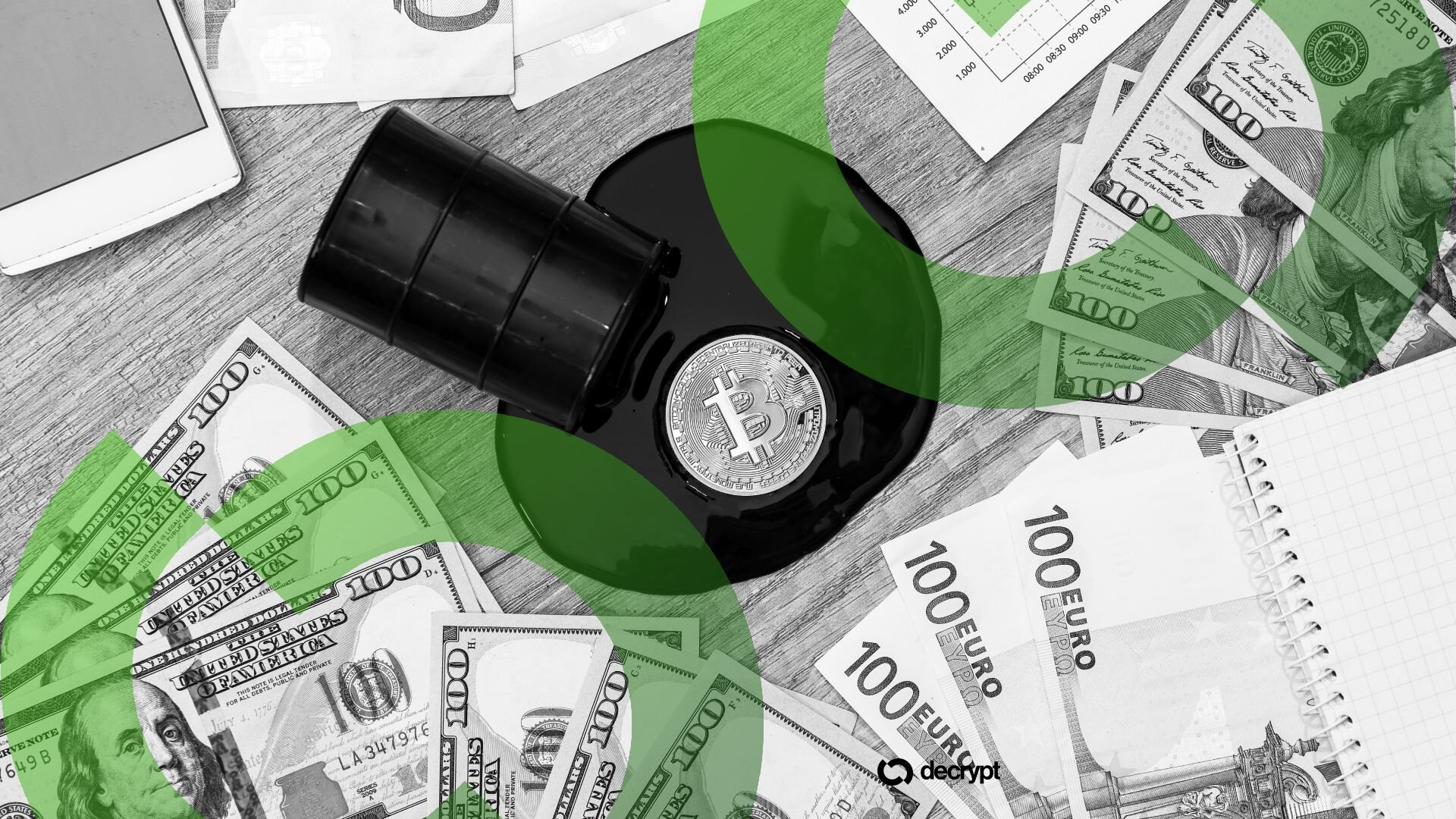
Geopolitical tensions in the Gulf are driving oil prices above $100, creating a risk-off environment that initially pressures Bitcoin but may foster long-term structural demand for censorship-resistant assets. The sustained high oil prices diminish the likelihood of a near-term Federal Reserve pivot, suggesting Bitcoin may remain range-bound or trend downwards through Q1 due to tighter financial conditions. Despite short-term volatility, Bitcoin has demonstrated resilience by outperforming gold and the Nasdaq-100 since the recent escalation of conflict, indicating a potential decoupling from traditional risk assets under prolonged geopolitical stress. Analysts are divided on Bitcoin's immediate trajectory, with market participants assigning equal probability to significant upward or downward price movements, reflecting uncertainty in the current macro environment.

Binance's lawsuit against the Wall Street Journal over alleged defamatory reporting on Iran-linked transactions signals a significant legal battle that could impact regulatory scrutiny and public perception of the exchange's compliance efforts. The exchange's strong denial and counter-suit suggest a strategic defense against claims that could have material implications for its operational integrity and market standing. This development highlights the ongoing tension between crypto exchanges and media outlets regarding reporting on compliance and illicit finance, potentially influencing investor confidence in the short term.
Ghana's launch of a 12-month crypto regulatory sandbox for 11 firms signifies a proactive approach to integrating digital assets, potentially paving the way for clearer operational frameworks and increased institutional confidence in the region. The sandbox initiative, following Ghana's Virtual Asset Service Providers Act, allows regulators to observe real-world crypto operations, assess risks, and refine licensing rules, which could lead to a more structured and compliant market environment. By testing services under supervision, participating firms gain an opportunity to adapt to emerging regulations, potentially de-risking future full-scale operations and attracting further investment into Ghana's developing digital asset ecosystem.

Victims of a Chinese fraud are challenging a UK redress plan for 61,000 seized Bitcoin, arguing it could prevent them from capturing the asset's significant gains. The legal dispute highlights the complex issue of crypto asset appreciation between seizure and restitution, potentially impacting how authorities handle future confiscated digital assets. A UK High Court hearing will determine whether English or Chinese law governs the claims, a decision that could set a precedent for international crypto asset recovery cases.
LinkedIn's successful 2011 IPO at $45 per share, surging over 100% on debut, demonstrated significant investor appetite for professional networking platforms. The acquisition by Microsoft in 2016 for $26.2 billion at $196 per share marked the delisting of LNKD, shifting investment exposure to MSFT. LinkedIn's historical performance as LNKD serves as a case study for tech IPOs, highlighting the potential for high growth, market valuation, and eventual acquisition.

Investors are suing JPMorgan Chase, alleging the bank facilitated a $328 million crypto Ponzi scheme by allowing suspicious transactions and fund flows. The lawsuit highlights a potential failure in JPMorgan's KYC/AML processes, despite CEO Jamie Dimon's public skepticism towards Bitcoin. This development could lead to increased scrutiny of traditional financial institutions' involvement with cryptocurrency-related activities and potential regulatory implications.

Strategy's STRC product is driving significant Bitcoin accumulation, with an estimated 7,000 BTC purchased this week, highlighting its role as a key capital strategy engine. Despite strong demand and a high yield (11.5%), Two Prime CEO Alexander Blume warns of inherent risks in the STRC product, emphasizing that yields above Treasuries come with additional risk. Corporate interest in STRC is growing, with Strive and Apyx disclosing allocations, suggesting a broader trend of institutional adoption of yield-generating crypto-linked instruments. The STRC structure, while designed to maintain a $100 par value, carries the risk of trading below par if confidence in Strategy, Bitcoin, or the product itself erodes, potentially causing significant damage.

Bitcoin demonstrates significant resilience, holding near $70,000 despite widespread market pessimism and geopolitical tensions, outperforming traditional assets like the S&P 500 and gold. Persistent negative funding rates on Bitcoin perpetual futures and a deeply fearful sentiment index suggest that bearish sentiment is entrenched, yet price action contradicts this outlook. Institutional accumulation, evidenced by demand for Bitcoin ETFs like IBIT and private transactions, appears to be a key driver supporting Bitcoin's price against prevailing negative market sentiment. The current market environment, characterized by geopolitical risk and stock market losses, is highlighting Bitcoin's potential role as a safe-haven or uncorrelated asset, despite its own internal market fear indicators.
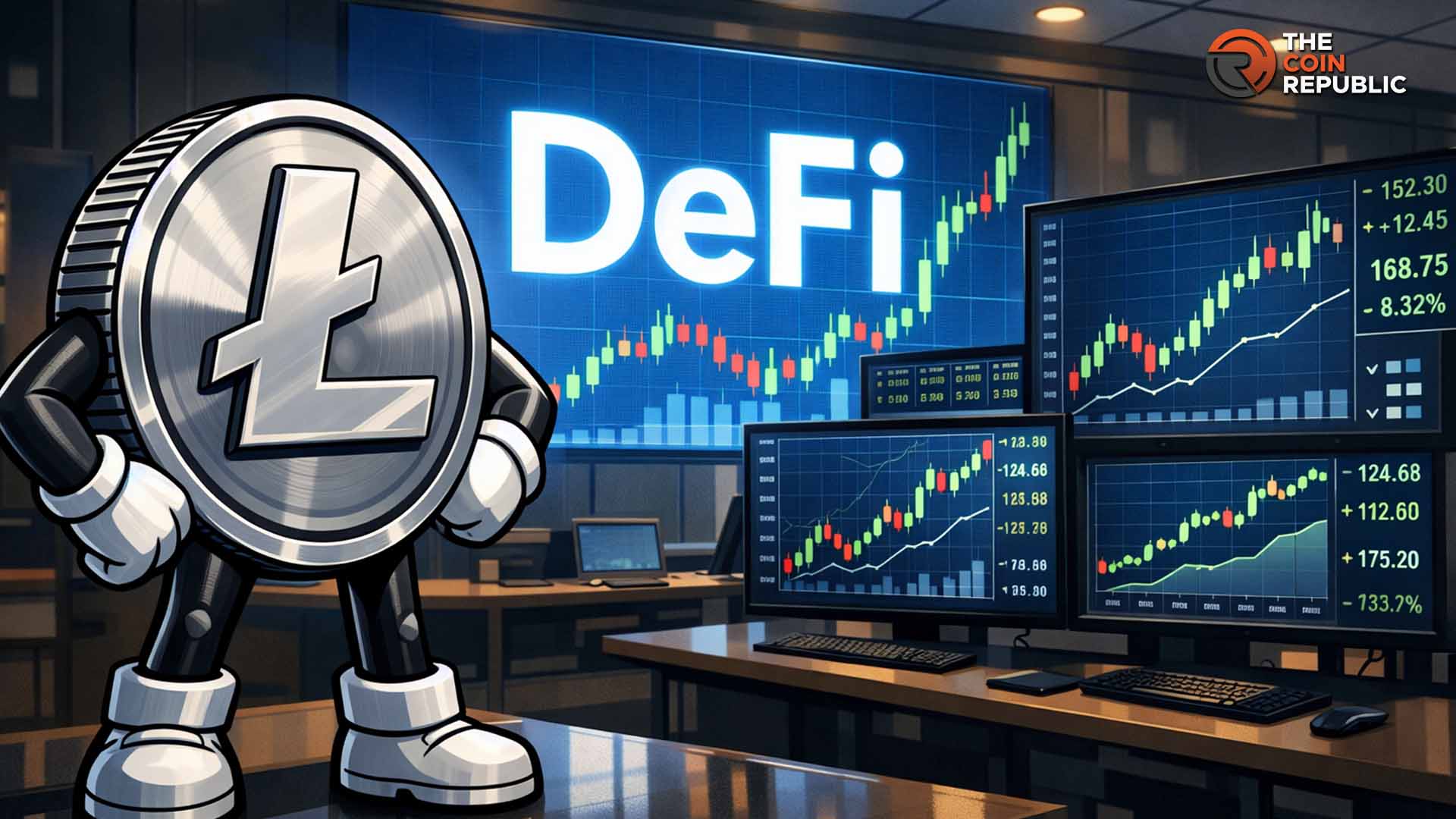
Litecoin's expansion to the Base network as a wrapped asset (cbLTC) enhances its DeFi accessibility, potentially attracting new use cases for the established cryptocurrency. Despite increased DeFi access, LTC price remains in a sideways range, with declining active addresses suggesting a lack of broad market enthusiasm despite some on-chain accumulation signals. The integration into Base offers Litecoin a pathway to leverage Layer 2 ecosystems, but its impact on price action is currently muted by weak overall demand and subdued whale activity.

The staking of over $1 million in RIVER tokens tightens circulating supply, potentially amplifying price movements on increased demand. RIVER token is consolidating within a key demand zone between $14.5 and $18, suggesting potential for a bullish continuation if support holds. A decisive breakout above $18.5 could trigger a new bullish leg for RIVER, with targets potentially reaching the $22-$30 range.
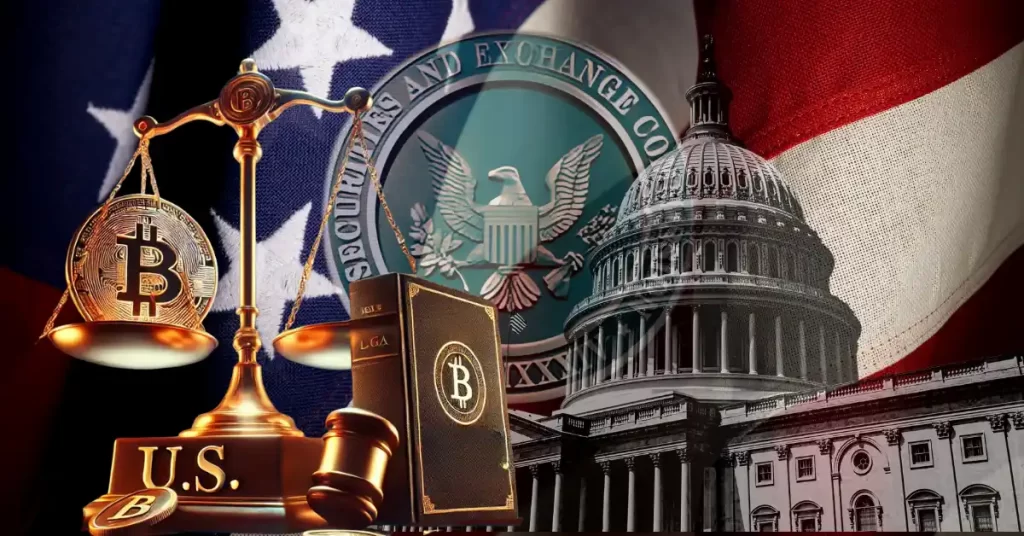
CFTC Chair Michael Selig's warning about crypto market manipulation and fraud signals increased regulatory scrutiny, potentially impacting exchange operations and derivatives platforms. The explicit reference to preventing 'another FTX' highlights a heightened focus on enforcement and risk controls, suggesting a more aggressive stance from regulators towards market integrity. While expressing concerns, the CFTC aims to foster innovation within the U.S., indicating a balancing act between oversight and encouraging domestic crypto development.

Rising open interest in Bitcoin and Ether derivatives, coupled with flat-to-negative funding rates, indicates a shift towards cautious, bearish positioning among traders despite stable spot prices. Altcoins are demonstrating relative strength against Bitcoin, with DeFi and AI-focused tokens showing gains, suggesting a potential rotation into riskier assets within a broader risk-off macro environment. The premium on Bitcoin and Ether put options over call options, particularly at lower strike prices like $20,000 for BTC, signals a growing demand for downside protection and bearish sentiment among sophisticated market participants. The market appears to be awaiting a decisive breakout in Bitcoin's price range; a confirmed move above $74,000 with strong volume could trigger further rotation into speculative altcoins.

Dogecoin is consolidating within a descending triangle, indicating a potential continuation of the bearish trend unless a decisive breakout occurs. Key support at $0.09 is critical for DOGE; failure to hold this level could lead to a breakdown towards $0.075 and $0.065. Traders should monitor the descending resistance trendline and the $0.09 support zone for signals of a potential breakout or breakdown in the coming weeks. Technical indicators like RSI and MACD remain bearish, suggesting sustained selling pressure despite declining volume as traders await clarity.
Signal context only. Validate with price action, liquidity, and risk limits before taking a position.
