
Navigating Crypto News

CoinFeather
Navigating Crypto News

Quick market read from this story
Across Protocol's proposal to transition from a DAO to a U.S. C-corporation has triggered an 80% price surge in its ACX token, indicating market optimism towards a traditional corporate structure for institutional deal-making.
The proposed structure offers ACX holders a choice between exchanging tokens for equity or a USDC buyout at a 25% premium, creating a floor for the token price and driving speculative interest above the buyout level.
This move represents a significant reversal of the prevailing DAO model in DeFi, suggesting that some protocols may find traditional corporate structures more conducive to growth and partnerships.
The market reaction, with ACX outperforming BTC and the CoinDesk 20, highlights a potential shift in investor sentiment favoring projects that prioritize pragmatic business structures over pure decentralization for commercial success.
Deep Dive
The DeFi protocol Across Protocol is proposing a significant structural change, moving from its current Decentralized Autonomous Organization (DAO) and token model to a traditional U.S. C-corporation. This move aims to overcome hurdles in securing institutional partnerships and integrations, which the team believes are hindered by the existing DAO structure.
The proposal, initially a non-binding 'temp-check' poll to gauge community sentiment, offers ACX token holders two primary options. They can either exchange their ACX tokens for equity in the new U.S. C-corporation, tentatively named "AcrossCo," or sell their tokens for USDC at a 25% premium to the previous 30-day average trading price, which equates to $0.04375 per token. The token saw an 80% jump to $0.06 following the announcement.
Holders of over 5 million ACX tokens can convert directly to equity. Smaller holders, with a minimum of 250,000 ACX (approximately $10,000 at current prices), can access equity through a no-fee Special Purpose Vehicle (SPV) structure. All participants receive a 1:1 token-to-share ratio for equity conversion, ensuring equal treatment regardless of holding size.
For those opting out of equity, the USDC buyout window will open within three months of the proposal's approval and remain open for six months, funded by the protocol's liquid assets. A community call is scheduled for March 18, with formal discussions concluding on March 25, followed by a Snapshot vote on March 26. If approved, the conversion process is expected to begin in early April.
The Across Protocol team stated that the token and DAO structure has "materially impacted" their ability to close partnerships and that a traditional legal entity would improve their capacity for enforceable contracts and revenue agreements. Despite the current ACX price trading above the proposed buyout floor, the market reaction, including an 80% surge and a 24-hour trading volume of $149 million (3.5 times the token's market cap), indicates significant speculative interest around the proposal's potential outcomes.
Source, catalyst, and sector overlap from the latest feed.
The LITRO project aims to tokenize 1 litre of crude oil, indexed to benchmarks like Brent and WTI, targeting a January 2027 debut to modernize the $6 trillion oil market. By leveraging blockchain for 24/7 trading and redemption, LITRO seeks to replace archaic paper-based systems, potentially reducing settlement times and capital lock-up for a more accessible market. The project's focus on verified reserves and physical redemption, built on Arbitrum, positions it as a significant RWA play aiming to bridge traditional commodity markets with digital assets. With a clear development timeline including a March-May 2026 testnet and MVP completion by end-March 2026, LITRO presents a structured approach to tokenizing a major global commodity.
Metaplanet's strategic pivot to funding Bitcoin infrastructure in Japan signals a proactive approach to capitalize on anticipated regulatory clarity and market growth. The establishment of Metaplanet Ventures, with a significant capital allocation and multi-pronged program (investment, incubation, grants), indicates a long-term commitment to ecosystem development beyond simple BTC accumulation. The initial investment in JPYC Inc., a yen-denominated stablecoin issuer, highlights a focus on building foundational financial tools within Japan's evolving crypto landscape. While Metaplanet maintains its core strategy of BTC accumulation, this expansion into ecosystem building suggests a potential for diversified revenue streams and increased influence within the Japanese crypto market.
Developer exodus from blockchain to AI infrastructure signifies a potential long-term shift in talent allocation, impacting future innovation pace in the crypto space. The significant decline in active developers across major Layer 1s like Ethereum and Solana, alongside newer chains, suggests a consolidation phase and reduced development momentum. While overall developer activity is down, the growth in experienced developers and wallet infrastructure indicates a focus on core development and essential tools within the remaining crypto ecosystem. The strong pull of AI projects, backed by venture funding and commercial demand, presents a challenge for crypto to re-attract talent, potentially slowing down the development of new blockchain applications.
XRP is consolidating near $1.38, with Bollinger Bands tightening on the daily chart, indicating a potential breakout is imminent as traders await U.S. CPI data. Despite subdued price action, robust on-chain activity with over 2.7 million daily transactions and $1.4 billion in XRP-linked investment products suggests underlying network health and sustained institutional interest. Ripple's commencement of a $750 million share buyback, valuing the company at approximately $50 billion, provides a fundamental positive backdrop for XRP, independent of short-term market fluctuations. Traders are closely monitoring the $1.35-$1.37 support and $1.40-$1.42 resistance levels, with a decisive break in either direction likely to dictate XRP's near-term price trajectory.
Geopolitical tensions in the Middle East are directly impacting Bitcoin's price, causing it to fall below $69,500 as oil prices surge above $100. The repeated pattern of Bitcoin rallies being cut short by Middle East conflict escalations suggests a lack of fundamental bullish momentum, with on-chain data indicating negative demand and rising supply in loss. The resurgence of oil prices above $100 due to geopolitical events complicates the macroeconomic outlook, potentially delaying anticipated interest rate cuts from the Federal Reserve. The correlation between rising oil prices and declining Bitcoin price highlights a risk-off sentiment in the market, impacting other major cryptocurrencies like Ether, Solana, and XRP.
Ripple Labs executed a significant burn of 25 million RLUSD stablecoins, a move intended to reduce circulating supply and potentially curb inflationary pressures, which could be interpreted as a bullish signal for XRP's price. The substantial RLUSD burn, coupled with Ripple's ongoing global licensing strategy and expansion into markets like Australia, suggests a concerted effort to strengthen its ecosystem and drive demand for its products and services. Market analysts are linking the RLUSD burn and positive technical indicators to a potential XRP price rally, with some predicting a significant upward trend if current corrective phases conclude and a bullish wave begins.
MicroStrategy's STRC preferred stock issuance is generating significant capital, enabling rapid Bitcoin accumulation that could soon surpass BlackRock's ETF holdings. The increasing demand for STRC, driven by its attractive yield and use of proceeds for BTC acquisition, suggests a potential shift in institutional capital allocation towards Bitcoin-correlated assets. While STRC offers a novel way to gain Bitcoin exposure, investors must weigh the potential for significant capital appreciation against the inherent risks of preferred stock and dividend variability. STRC's growing influence highlights a potential new avenue for capital to enter the Bitcoin market, drawing parallels to the traditional fixed-income market and suggesting substantial future buying power.
USDC's market cap reaching an all-time high of $78.25 billion, driven by a $600 million mint, signals increasing liquidity which can be a precursor to broader market upside. The distribution of new USDC mints across Ethereum and Solana highlights their continued importance for DeFi and efficient tokenized transactions, respectively. The surge in USDC is partly attributed to the growing demand for tokenized real-world assets (RWAs), positioning Circle as a key player in this expanding market segment. While USDC growth is strong, USDT still holds a dominant market share, indicating that while Circle is gaining traction, surpassing Tether remains a long-term prospect.
Brera Holdings' significant stock price drop follows its strategic pivot towards Solana infrastructure, signaling a potential shift in market perception and investor confidence. The firm's divestment of underperforming soccer assets to fund its Solana focus, coupled with a planned stock split, indicates a restructuring effort aimed at aligning with blockchain industry growth. Ark Invest's recent trimming of its Brera Holdings position, despite maintaining a substantial stake, suggests a cautious outlook from a key institutional investor on the company's transformation.
Solmate Infrastructure's strategic pivot to becoming a Solana-focused digital infrastructure hub in Abu Dhabi, coupled with a reverse stock split, signals a move to attract institutional capital and streamline operations. The company's increased focus on Solana validators, staking services, and specialized hardware deployment in the UAE, backed by prior significant funding, positions it to capitalize on regional digital economy growth. While the corporate restructuring and rebranding aim to align with blockchain operations, the cancellation of the RockawayX merger indicates potential challenges in executing all strategic partnerships.
Aave founder Stani Kulechov proposes a significant DAO governance overhaul, suggesting professional teams handle day-to-day decisions to improve efficiency and mitigate political maneuvering. The proposed changes aim to address Aave's governance cracks, highlighted by concentrated voting power (three wallets controlling over 58%) and recent departures of key contributors due to funding and IP disputes. While Aave maintains a substantial $26.5B TVL, the ongoing governance dysfunction poses a risk to its competitive edge in the DeFi sector, potentially impacting investor confidence and future development. Kulechov's call for reform aligns with broader industry trends towards modular governance and liquid democracy, suggesting a potential shift in how DAOs operate to foster more effective decision-making.
Cardano's treasury is proposed to invest ADA into ecosystem projects, with revenue share and ADA buybacks intended to create sustainable demand and fund growth. The 2026 roadmap signals a strategic shift from infrastructure to utility and user experience, aiming to boost developer activity and real network usage. While the new funding strategy could support a gradual ADA recovery, the asset remains in a cautious market structure until key resistance levels are reclaimed.
Metaplanet's establishment of Metaplanet Ventures signals a strategic move to foster Bitcoin ecosystem growth in Japan, anticipating regulatory clarity and potential international competitiveness. The venture firm's focus on payments, lending, stablecoins, and tokenization indicates a broad approach to building regulated Bitcoin financial infrastructure, potentially impacting DeFi and RWA sectors. With a planned investment of 4 billion JPY over 2-3 years, Metaplanet is demonstrating significant commitment to developing Japan's crypto landscape, funded by its existing Bitcoin operations.
The SEC and CFTC's coordination pact aims to harmonize crypto regulations, potentially reducing compliance friction and encouraging institutional capital to enter the market by clarifying asset classifications and jurisdictional overlaps. This regulatory alignment signals a maturing phase for the digital asset industry, offering a more predictable framework for builders and potentially preventing firms from seeking more favorable jurisdictions offshore. The agreement could streamline processes for compliant products to reach the market by reducing redundant approvals and navigating divergent supervisory expectations between the two agencies.
The domain hijacking of Bonk.fun, a Solana launchpad backed by Raydium and BONK, highlights ongoing frontend vulnerabilities in the crypto space despite increasing institutional interest. While the full extent of losses is undisclosed, the swift community alerts and the operator's statement suggest that damage may be limited to users who interacted with the compromised site post-breach. This incident serves as a reminder for users to remain vigilant regarding domain security and to verify terms-of-service agreements on any platform, especially during periods of rapid development.
Live Feed
Loading the broader stream in the same flow as the homepage feed.

Despite a significant 45% drawdown in XRP's spot price, the recently launched XRP ETFs are showing unexpected resilience, indicating strong investor conviction. The sustained inflows into XRP ETFs, even amidst market volatility, suggest a potentially loyal investor base that may continue to support the asset. While total assets under management have decreased due to price depreciation, the continued presence of significant capital in XRP ETFs highlights their market relevance and potential for future price discovery.

US prosecutors are actively opposing Sam Bankman-Fried's bid for a retrial, arguing that the defense's cited evidence does not meet the legal threshold for new discoveries. The legal proceedings surrounding Sam Bankman-Fried's conviction continue, with the prosecution's stance suggesting a low probability of overturning the existing verdict through a retrial. The ongoing legal challenges for Sam Bankman-Fried, despite speculation about pardons, highlight the persistent regulatory and legal risks within the broader crypto ecosystem.

Arthur Hayes maintains a $250,000 Bitcoin price target for 2026, contingent on a shift in global central bank monetary policy towards easing. Traders should monitor Federal Reserve actions and geopolitical developments, as Hayes suggests a potential Bitcoin price drop below $60,000 due to cascading liquidations if tensions escalate. The core catalyst for Hayes's bullish outlook is not war itself, but the subsequent "money printing" by central banks, implying a patient approach is warranted until liquidity conditions improve. Despite the long-term bullish prediction, Hayes advises against immediate investment, highlighting that current tight monetary policy presents headwinds for a near-term crypto rally.

The hijacking of Bonk.fun's domain and subsequent wallet-draining attack represents a direct security threat to users interacting with the platform, potentially leading to immediate financial losses and a loss of confidence in the project's security infrastructure. While the exploit appears contained to users who signed a fraudulent prompt on the compromised site, the incident highlights ongoing risks associated with domain security and smart contract interactions in the memecoin ecosystem. The reported losses, though limited in scope so far, serve as a cautionary signal for traders to exercise extreme vigilance regarding website interactions and transaction approvals, especially for platforms handling token launches or swaps.

The FDIC's proposed rule to exclude payment stablecoins from federal deposit insurance, including pass-through coverage, signals a clear regulatory stance that stablecoins are not equivalent to bank deposits. This regulatory clarification, stemming from the GENIUS Act, creates a distinct advantage for tokenized deposits issued by FDIC-insured banks over non-bank stablecoin issuers, potentially driving institutional capital towards regulated banking products. The divergence in compliance paths between Circle and Tether, with Tether launching a new OCC-supervised token, highlights the evolving landscape and potential market shifts driven by these new regulatory requirements. The FDIC's proposal, by reinforcing the GENIUS Act's prohibition on government safety nets for stablecoins, suggests that issuers must rely solely on their own reserve infrastructure, increasing counterparty risk for users of non-bank stablecoins.
Bittensor (TAO) is exhibiting relative strength against a consolidating market, with recent price action and technical patterns suggesting potential upside. The identification of a bullish Adam & Eve pattern, coupled with positive derivatives data and potential short liquidation cascades, indicates a growing bullish sentiment and a possible near-term price surge towards $270. Traders should monitor TAO's ability to break through immediate resistance levels around $205-$220, as this could trigger further upward momentum and validate the bullish technical setup.

Kraken's listing of PI token on March 13, just before Pi Day, provides increased accessibility and potential liquidity for the asset. Despite the listing news, PI remains significantly below its all-time high, indicating that current price action may not fully reflect its past valuation. The upcoming Pi Day and potential new DeFi tool launches could act as catalysts for increased trading activity and price appreciation in the short term.
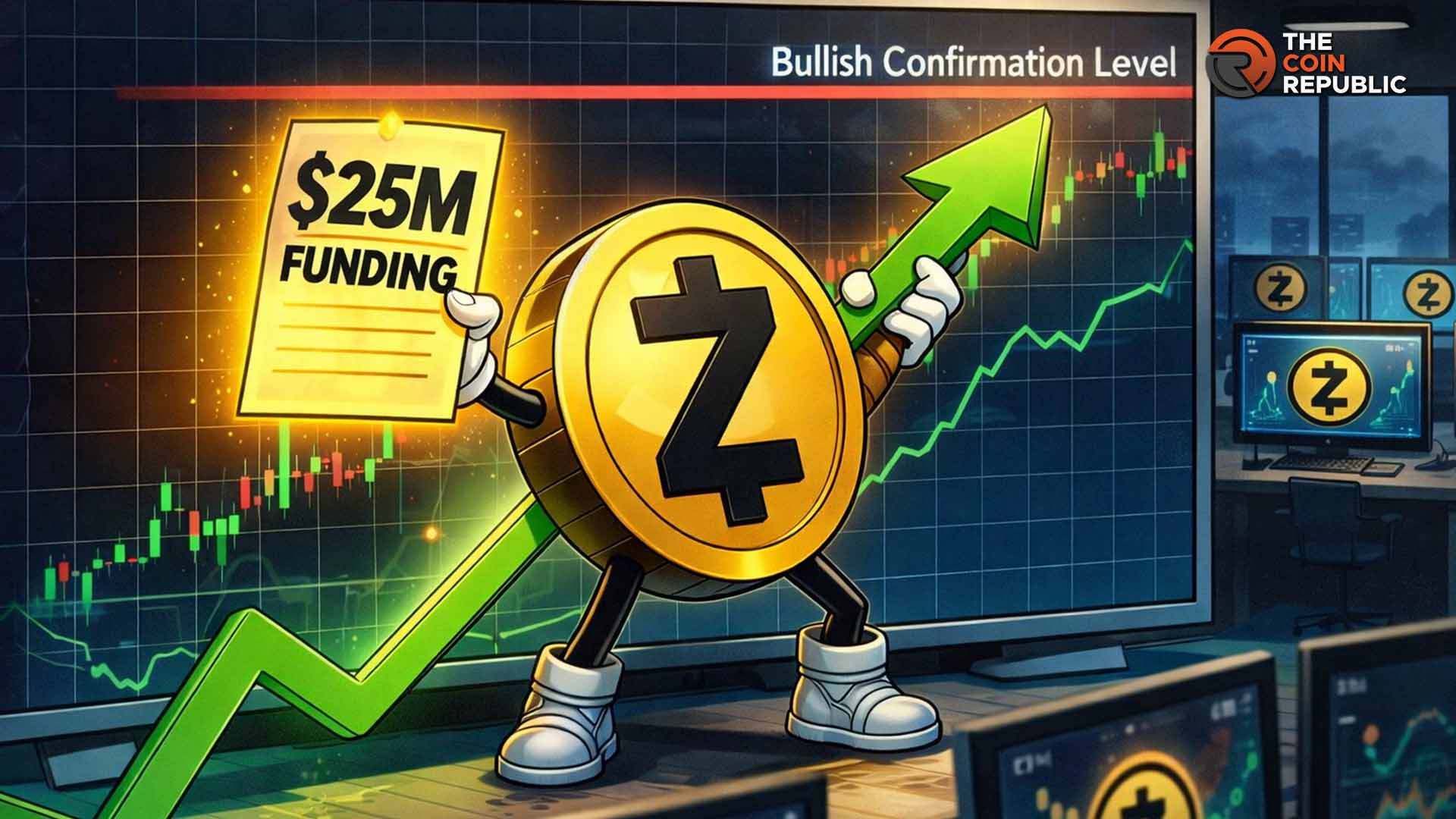
Major VC funding of $25 million for ZODL, the Zcash Open Development Lab, led by Paradigm and a16z, signals renewed institutional confidence and addresses prior governance uncertainty. Accumulation by Zcash whales (182% increase for standard whales, 19% for mega whales) coupled with significant exchange outflows (43%) suggests reduced sell-side pressure ahead of a potential price breakout. The Zcash price must achieve a daily close above $250, supported by a Chaikin Money Flow (CMF) break above its trendline, to confirm the bullish momentum and invalidate the risk of a failed bounce. While the recent 10% rally is positive, the market awaits confirmation above the $250 resistance level, with potential upside targets at $283 and $340 if the bullish case solidifies.
Toncoin is showing signs of structural repair and accumulation, moving away from downside pressure and stabilizing above long-term support. The article presents a bullish long-term outlook for Toncoin, projecting potential price targets of $10 by 2026 and $50 by 2030, contingent on sustained ecosystem expansion and adoption. Traders should monitor the $2.50-$3.00 range as a key resistance level that, if reclaimed, could signal a shift from accumulation to a sustained uptrend.
India's establishment of a "Virtual Asset Lab" signals an intensified regulatory approach aimed at controlling offshore crypto platforms targeting its citizens. The blocking of 85 crypto URLs indicates a proactive stance by Indian authorities to enforce compliance, potentially impacting user access to unregistered exchanges. This regulatory push, following the implementation of high crypto taxes, suggests a challenging environment for offshore platforms seeking to operate within or target the Indian market.
Kraken's listing of Pi Network's $PI token on March 13th provides significant market access for a project known for its mobile-first mining approach. The listing on a major exchange like Kraken is a key catalyst for Pi Network, potentially increasing liquidity and adoption for its utility-focused ecosystem. Traders should monitor the initial trading performance of $PI post-listing for insights into broader market sentiment towards mobile-mining projects and their tokenomics.

New Zealand's FMA has ruled that the NZDD stablecoin is not a financial product, providing a degree of regulatory clarity for specific stablecoin implementations. This designation, stemming from a fintech sandbox pilot, signals a pragmatic approach by the FMA towards blockchain innovation, potentially encouraging further development in the region. While this specific ruling offers clarity for NZDD, it does not set a precedent for all stablecoins, indicating that future regulatory assessments will remain product-specific.
Significant institutional demand for Bitcoin and Ethereum is evidenced by the substantial net inflows into US spot ETFs on March 11, 2026, indicating a positive market sentiment driven by major asset managers. The substantial purchase of BTC by ETFs, equivalent to approximately four days of newly mined supply, suggests a potential tightening of available supply and could exert upward price pressure on Bitcoin. While Grayscale continued to offload Bitcoin, the net positive inflows across multiple ETFs, particularly from BlackRock and Fidelity, highlight a shift in institutional capital allocation towards spot Bitcoin and Ethereum products.
The appointment of Stephen Gregory, a seasoned executive with prior experience at Currency.com, Gemini, and CEX.IO, as the new CEO of Binance.US signals a strategic move to bolster compliance and operational rigor amidst ongoing regulatory scrutiny. Gregory's background in compliance is particularly relevant given Binance.US's current regulatory challenges, suggesting a focus on navigating legal complexities and rebuilding trust with regulators and users. While the leadership change itself is not a direct trading catalyst, it sets the stage for potential future developments in Binance.US's operational strategy and market positioning, which could indirectly impact market sentiment towards the exchange.

VanEck CEO's assertion of a Bitcoin bottom, coupled with the halving cycle narrative, suggests a potential shift towards altcoin outperformance, a historically observed market dynamic. The article highlights Pepeto's presale success ($7.87M raised) and upcoming listing as a potential catalyst, positioning it as a high-upside opportunity if the predicted altcoin season materializes. While TAO and SUI are presented as recovery plays with AI and adoption catalysts respectively, their potential upside is framed as modest compared to the speculative gains possible from presale entries like Pepeto.
Signal context only. Validate with price action, liquidity, and risk limits before taking a position.
