
Navigating Crypto News

CoinFeather
Navigating Crypto News

Quick market read from this story
XRP Ledger active wallets are experiencing significant losses, with a 41% average decline in returns, indicating potential capitulation among holders and a possible shift towards a market base formation.
Despite on-chain losses, Ripple's strategic expansion in Africa, driven by clearer regulatory frameworks, suggests a long-term growth narrative that could support future XRP Ledger activity.
Mixed inflows into XRP ETFs, with total assets near $940 million, signal cautious institutional sentiment, suggesting that while interest exists, large-scale conviction is yet to materialize.
The confluence of stressed holder returns, ongoing African expansion, and mixed ETF flows presents a balanced market picture for XRP, characterized by potential accumulation phases amidst current holder pain.
Source, catalyst, and sector overlap from the latest feed.
Pi Network's successful distribution of KYC validator rewards, distributing over 26 million PI coins, signals a move towards a more decentralized workforce and utility beyond basic mining. The V21.2 protocol upgrade is positioned as a foundational enhancement for Pi Network, aiming to improve stability, scalability, and security, which could support future development and dApp integration. While Pi Network is trading near $0.17, its potential to reach $0.30 is contingent on broader market sentiment, particularly Bitcoin's performance above $69,000, and overcoming key resistance levels around $0.20.
Live Feed
Loading the broader stream in the same flow as the homepage feed.
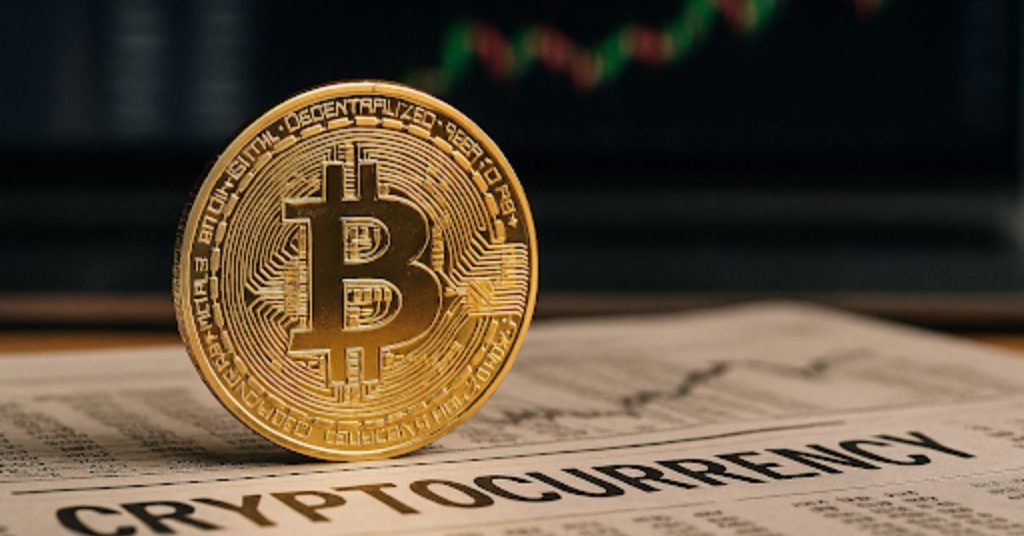
Bitcoin's correlation shift indicates it's now front-running central bank policy, suggesting that market participants are anticipating monetary shifts, which could lead to pre-announcement price movements. The Pepeto presale, with over $8 million locked and a confirmed Binance listing, is presented as a significant cycle opportunity, potentially offering higher returns than BTC's projected gains due to its presale-to-listing price differential. With BTC price predictions targeting a modest 16% upside to $80,000 and facing resistance, the narrative suggests that alternative opportunities like the Pepeto presale offer a more compelling risk-reward profile for traders seeking substantial gains.
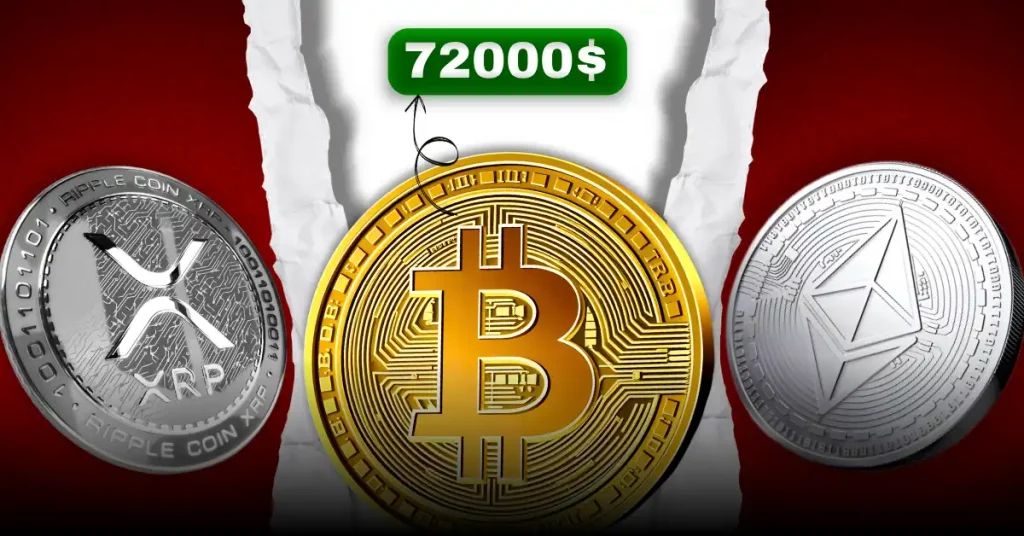
Easing geopolitical tensions in the Middle East, particularly regarding US-Iran relations, has triggered a positive risk-on sentiment in crypto markets, driving prices for Bitcoin, Ethereum, and XRP higher. Improved liquidity conditions due to cooling oil prices, a consequence of reduced war fears, are facilitating capital rotation back into crypto and equities, supporting the current market rally. Technical indicators for Bitcoin, Ethereum, and XRP show positive momentum with prices reclaiming key moving averages, suggesting potential for further upside if resistance levels are broken.

XRP's breakout above $1.37, supported by whale accumulation and strong volume, signals potential short-term upside, but traders must monitor for confirmation above $1.40-$1.42 to invalidate the broader downtrend. Despite the tactical breakout, XRP's trend reversal remains unconfirmed due to ongoing ETF outflows and mixed long-term conviction, suggesting a cautious approach is warranted. Ripple's strategic positioning within the growing stablecoin market and deepening ties in Asia, particularly Japan, could provide fundamental support for XRP's ecosystem development.

Anthropic's AI model has demonstrated a significant capability to discover thousands of critical software vulnerabilities, including decades-old bugs, signaling a potential paradigm shift in cybersecurity defense and offense. The limited release of Anthropic's Claude Mythos Preview and the formation of Project Glasswing with major tech players suggest a strategic move to leverage AI for proactive threat detection and patching, potentially enhancing overall software security. While AI-driven vulnerability discovery promises a more secure future, the "transitional period" is acknowledged as "fraught," implying potential near-term risks from the proliferation of these capabilities before robust defenses are universally implemented. The news highlights the growing intersection of AI and cybersecurity, with potential implications for blockchain protocols and infrastructure that rely on secure software, though no specific crypto assets are directly mentioned as affected.

The market experienced a significant short squeeze as a U.S.-Iran ceasefire announcement triggered a rapid Bitcoin rally above $72,000, liquidating $427 million in short positions. The unexpected geopolitical de-escalation caused a violent repricing of risk assets, with Bitcoin and Ether seeing substantial liquidations as heavily bearish sentiment unraveled. The short-term impact hinges on the duration of the ceasefire, with Bitcoin's ability to sustain its move above $72,000 dependent on continued de-escalation in the Middle East. The event highlights the market's sensitivity to geopolitical events and the potential for rapid sentiment shifts, as evidenced by the extreme positioning prior to the announcement.

The SEC's admission that certain past enforcement actions lacked investor benefit signals a strategic shift away from 'regulation by enforcement' towards prioritizing genuine investor protection. This change in SEC enforcement philosophy, under Chair Paul Atkins, suggests a potentially more favorable regulatory environment for crypto projects, moving away from aggressive novel legal theories. While the SEC is de-emphasizing volume, it continues to pursue cases involving clear fraud and manipulation, indicating that significant misconduct will still face regulatory action. The reduction in enforcement actions by approximately 30% under the new leadership could lead to reduced legal uncertainty for some crypto firms, potentially encouraging innovation and investment.

Established DeFi protocols like Uniswap and Layer-1 networks such as Polkadot are experiencing price declines, indicating broader market weakness that may lead traders to seek opportunities in early-stage projects. BlockDAG's presale phase at a fixed $0.000016 price point offers a distinct entry strategy compared to the declining market performance of established assets, potentially attracting speculative interest. The contrast between declining established cryptocurrencies and a project in its presale phase highlights a market dynamic where investors may be re-evaluating risk and seeking early-stage growth potential.

The FDIC's proposed rules, implementing the GENIUS Act, will regulate stablecoin issuers but explicitly exclude stablecoin holders from direct deposit insurance, signaling a nuanced regulatory approach. While direct insurance for stablecoin holders is denied due to the GENIUS Act, the FDIC aims to provide indirect assurance through elevated regulatory and supervisory standards for issuers. The FDIC is actively seeking public feedback on 144 questions regarding stablecoin regulation, indicating a period of potential rule refinement before final implementation.

Geopolitical de-escalation between the US and Iran has directly correlated with a Bitcoin price surge above $72,000, indicating a historical sensitivity of crypto markets to global stability. The market's rapid relief rally suggests that traders perceive reduced geopolitical risk as a positive catalyst, potentially unlocking capital that was previously on the sidelines due to uncertainty. While this ceasefire is temporary, any sustained period of reduced global conflict could provide a tailwind for risk assets like Bitcoin, especially if it coincides with other positive market developments.
Signal context only. Validate with price action, liquidity, and risk limits before taking a position.
The US SEC's proposal moving to the White House for final review signals a significant step towards regulatory clarity for the digital asset industry. The proposed startup and fundraising exemptions, along with an investment contract safe harbor for decentralized tokens, could foster innovation by reducing compliance burdens for early-stage projects. This regulatory development, coupled with recent SEC-CFTC coordination, suggests a more structured approach to crypto oversight in the US, potentially impacting market participant strategies.
