
Navigating Crypto News

CoinFeather
Navigating Crypto News

Quick market read from this story
Pi Network's successful distribution of KYC validator rewards, distributing over 26 million PI coins, signals a move towards a more decentralized workforce and utility beyond basic mining.
The V21.2 protocol upgrade is positioned as a foundational enhancement for Pi Network, aiming to improve stability, scalability, and security, which could support future development and dApp integration.
While Pi Network is trading near $0.17, its potential to reach $0.30 is contingent on broader market sentiment, particularly Bitcoin's performance above $69,000, and overcoming key resistance levels around $0.20.
Source, catalyst, and sector overlap from the latest feed.
XRP Ledger active wallets are experiencing significant losses, with a 41% average decline in returns, indicating potential capitulation among holders and a possible shift towards a market base formation. Despite on-chain losses, Ripple's strategic expansion in Africa, driven by clearer regulatory frameworks, suggests a long-term growth narrative that could support future XRP Ledger activity. Mixed inflows into XRP ETFs, with total assets near $940 million, signal cautious institutional sentiment, suggesting that while interest exists, large-scale conviction is yet to materialize. The confluence of stressed holder returns, ongoing African expansion, and mixed ETF flows presents a balanced market picture for XRP, characterized by potential accumulation phases amidst current holder pain.
Live Feed
Loading the broader stream in the same flow as the homepage feed.

JPMorgan CEO Jamie Dimon identifies blockchain technology, stablecoins, and tokenization as direct competitive threats to traditional banking, signaling a strategic imperative for banks to adopt these innovations. Dimon's acknowledgment of blockchain's efficiency, despite his continued skepticism towards public cryptocurrencies like Bitcoin, highlights a bifurcated view within traditional finance towards underlying technology versus speculative assets. The bank's investment in its proprietary blockchain platform, Kinexys, underscores a proactive approach to integrating distributed ledger technology to maintain market share against emerging fintech and blockchain-native competitors.

Three new wallets profited significantly on Polymarket by correctly predicting a US-Iran ceasefire, raising concerns about potential insider trading given the low probability bets placed before the announcement. The event highlights the growing use of crypto-based prediction markets for geopolitical events, but also amplifies regulatory scrutiny regarding market manipulation and insider information. While the profits are substantial for the individuals involved, the direct market impact on major crypto assets is minimal as the news pertains to a specific prediction market event rather than a broader crypto market catalyst.

Coinbase's acquisition of an Australian financial services license signals a strategic expansion into traditional finance products, potentially increasing its addressable market and revenue streams. The move positions Coinbase to compete directly with traditional financial services providers in Australia, leveraging crypto's speed and execution for stock trading and payments. This regulatory milestone in Australia, with its comprehensive digital asset framework, could set a precedent for other jurisdictions looking to integrate crypto exchanges into their financial systems.
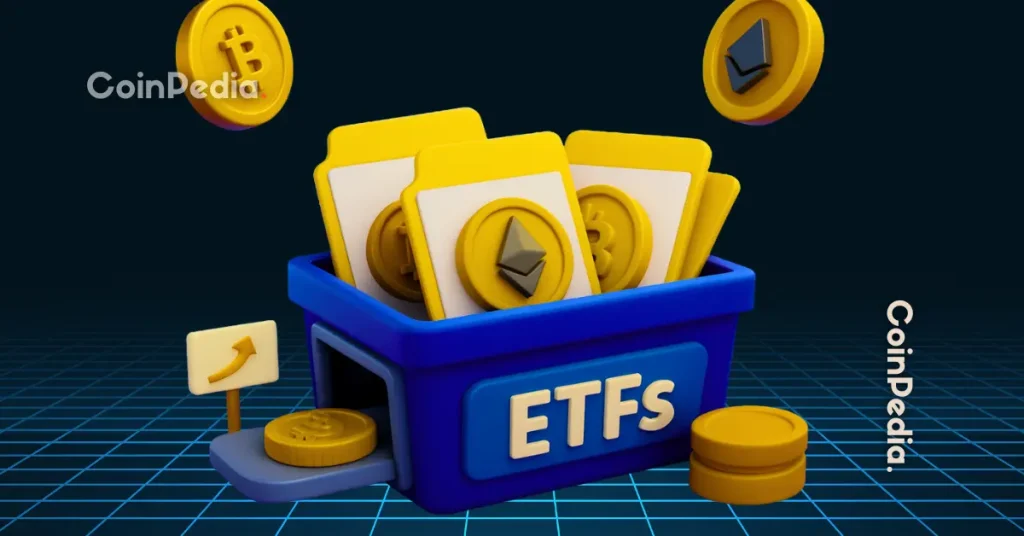
Significant outflows from Bitcoin and Ethereum spot ETFs on April 7th indicate a potential shift in institutional sentiment, suggesting short-term selling pressure may impact prices. While BTC and ETH ETFs experienced net outflows, the inflow into XRP ETFs highlights selective investor interest, implying a nuanced market sentiment rather than a broad downturn. The observed outflows from major crypto ETFs could signal a period of consolidation or a precursor to further price adjustments, warranting close monitoring of subsequent trading days.

Morgan Stanley's debut of a spot Bitcoin ETF, MSBT, signifies a major institutional endorsement and a competitive fee structure at 0.14%, potentially attracting significant inflows and influencing market dynamics. The launch of MSBT by a top-tier U.S. bank with $1.9 trillion in assets under management marks a significant milestone for Bitcoin's mainstream financialization, reinforcing its role as an institutional-grade asset. With a lower fee than many competitors, Morgan Stanley's Bitcoin ETF is positioned to capture market share, potentially leading to increased demand for spot Bitcoin and influencing pricing strategies of other ETF issuers. Morgan Stanley's expansion into digital assets, including planned Solana ETFs and E*Trade integration, signals a broader strategic commitment to the crypto market, potentially driving further institutional adoption.

Ethereum's net taker volume and open interest indicate a potential 'regime shift' with returning demand in derivatives markets, suggesting a possible positive trend restart if spot markets and ETFs provide support. Bulls must defend the critical $2,000 support level, as holding this zone is essential for a positive trend change and avoiding a potential new yearly low, with significant ETH acquisition occurring around this price point. Positive inflows into spot ETH ETFs, reaching $120 million, signal renewed demand from US investors, which could further propel ETH price higher if the current bullish momentum is sustained.

Academic research suggests that the energy and computational requirements for a quantum computer to successfully mine Bitcoin are astronomically high, approaching stellar output, effectively rendering a 51% attack via quantum mining physically unattainable. The article debunks sensationalized claims of imminent quantum threats to Bitcoin by highlighting research that demonstrates past "quantum factoring breakthroughs" were based on flawed premises or simplified problems, easily replicated with older technology. While quantum attacks on Bitcoin mining are deemed impractical, the threat to older or reused wallet addresses remains a genuine long-term concern, prompting ongoing development of quantum-resistant solutions. Market participants appear to be pricing in the quantum threat as a distant concern, with higher probabilities assigned to wallet security upgrades rather than fundamental changes to Bitcoin's mining algorithm in the near term.
Morgan Stanley's entry into the Bitcoin ETF market with a low 0.14% fee signals increased institutional competition and potential fee compression across the sector. The bank's aggressive fee strategy and leveraging of its advisor network suggest a strong push for adoption, potentially drawing significant capital into Bitcoin ETFs. Morgan Stanley's broader ambitions, including applications for custody, trading, staking, and additional crypto ETFs (Ether, Solana), indicate a strategic, long-term commitment to the digital asset space.

Bitcoin's correlation shift indicates it's now front-running central bank policy, suggesting that market participants are anticipating monetary shifts, which could lead to pre-announcement price movements. The Pepeto presale, with over $8 million locked and a confirmed Binance listing, is presented as a significant cycle opportunity, potentially offering higher returns than BTC's projected gains due to its presale-to-listing price differential. With BTC price predictions targeting a modest 16% upside to $80,000 and facing resistance, the narrative suggests that alternative opportunities like the Pepeto presale offer a more compelling risk-reward profile for traders seeking substantial gains.
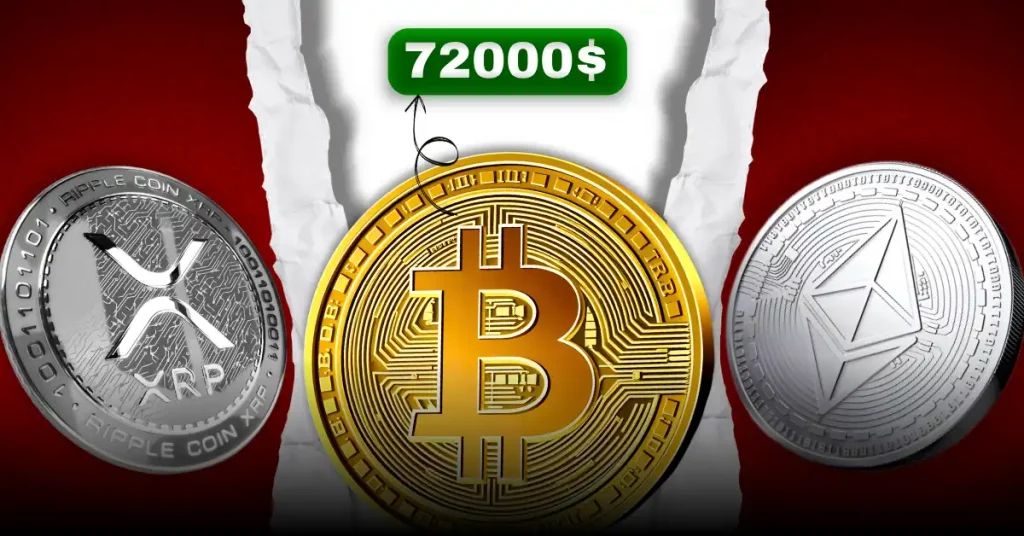
Easing geopolitical tensions in the Middle East, particularly regarding US-Iran relations, has triggered a positive risk-on sentiment in crypto markets, driving prices for Bitcoin, Ethereum, and XRP higher. Improved liquidity conditions due to cooling oil prices, a consequence of reduced war fears, are facilitating capital rotation back into crypto and equities, supporting the current market rally. Technical indicators for Bitcoin, Ethereum, and XRP show positive momentum with prices reclaiming key moving averages, suggesting potential for further upside if resistance levels are broken.

XRP's breakout above $1.37, supported by whale accumulation and strong volume, signals potential short-term upside, but traders must monitor for confirmation above $1.40-$1.42 to invalidate the broader downtrend. Despite the tactical breakout, XRP's trend reversal remains unconfirmed due to ongoing ETF outflows and mixed long-term conviction, suggesting a cautious approach is warranted. Ripple's strategic positioning within the growing stablecoin market and deepening ties in Asia, particularly Japan, could provide fundamental support for XRP's ecosystem development.
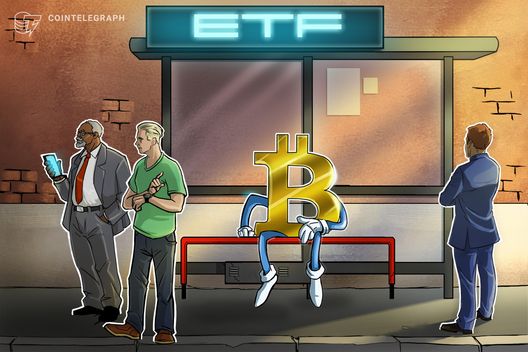
Morgan Stanley's launch of its Bitcoin ETF at a market-leading 0.14% fee introduces significant competitive pressure on existing ETFs, potentially driving down fees across the sector. The entry of a major commercial bank like Morgan Stanley into the spot Bitcoin ETF market, especially with a low-fee offering, signals increasing institutional acceptance and could attract substantial new capital from traditional finance. This development, coupled with Morgan Stanley's other crypto initiatives like potential ETH and SOL ETFs, indicates a broader strategic push by the bank into digital assets, suggesting a bullish outlook on the long-term integration of crypto into financial services. The launch of MSBT on NYSE Arca, a major exchange, provides enhanced accessibility for traditional investors and reinforces Bitcoin's position as a legitimate asset class within regulated financial markets.

Anthropic's AI model has demonstrated a significant capability to discover thousands of critical software vulnerabilities, including decades-old bugs, signaling a potential paradigm shift in cybersecurity defense and offense. The limited release of Anthropic's Claude Mythos Preview and the formation of Project Glasswing with major tech players suggest a strategic move to leverage AI for proactive threat detection and patching, potentially enhancing overall software security. While AI-driven vulnerability discovery promises a more secure future, the "transitional period" is acknowledged as "fraught," implying potential near-term risks from the proliferation of these capabilities before robust defenses are universally implemented. The news highlights the growing intersection of AI and cybersecurity, with potential implications for blockchain protocols and infrastructure that rely on secure software, though no specific crypto assets are directly mentioned as affected.
Signal context only. Validate with price action, liquidity, and risk limits before taking a position.
The US SEC's proposal moving to the White House for final review signals a significant step towards regulatory clarity for the digital asset industry. The proposed startup and fundraising exemptions, along with an investment contract safe harbor for decentralized tokens, could foster innovation by reducing compliance burdens for early-stage projects. This regulatory development, coupled with recent SEC-CFTC coordination, suggests a more structured approach to crypto oversight in the US, potentially impacting market participant strategies.
