
Navigating Crypto News

CoinFeather
Navigating Crypto News

Quick market read from this story
Bitmine's significant accumulation of 4.8 million ETH, valued at $10.2 billion, represents a substantial conviction from a major player, yet the market has not yet reflected this in ETH's price.
The upcoming NYSE uplisting for Bitmine on April 9th, backed by prominent investors, could serve as a catalyst for increased institutional interest and potential ETH price appreciation.
Pepeto's imminent Binance listing and successful presale, raising over $8.78M, positions it as a potential high-growth opportunity, drawing parallels to early ETH market dynamics.
While ETH price predictions suggest significant long-term upside, the current sideways movement contrasts with Pepeto's potential for rapid gains post-listing, offering a distinct risk-reward profile.
Source, catalyst, and sector overlap from the latest feed.
Bitcoin's recent surge above $70,000 is attributed to a geopolitical ceasefire, which has also positively impacted traditional markets and other cryptocurrencies, indicating a broader risk-on sentiment. Increased institutional inflows into US Spot Bitcoin ETFs, totaling $471 million, alongside positive derivatives market sentiment and the introduction of a new Bitcoin ETF by Morgan Stanley, suggest strong underlying demand supporting the price action. While technical indicators suggest trend continuation, Bitcoin's price trajectory towards $80,000 is contingent on the sustained geopolitical stability and the opening of the Strait of Hormuz, highlighting the sensitivity to external macro factors.
Live Feed
Loading the broader stream in the same flow as the homepage feed.

Will quantum-safe cryptography slow Ethereum? It is likely to affect gas fees, validator load and network efficiency, prompting Ethereum to pursue a broader redesign strategy.

Alchemy's new AgentPay tool addresses critical interoperability issues in emerging AI-driven payment systems, potentially streamlining integration for merchants and paving the way for wider adoption of agentic finance. By acting as a translation layer, AgentPay aims to simplify the complex landscape of AI payment protocols, reducing friction for businesses and enabling seamless transactions between disparate AI agents. The development signals a move towards greater infrastructure maturity in the AI and payments intersection within crypto, positioning Alchemy as a key enabler for future agentic economic activity.
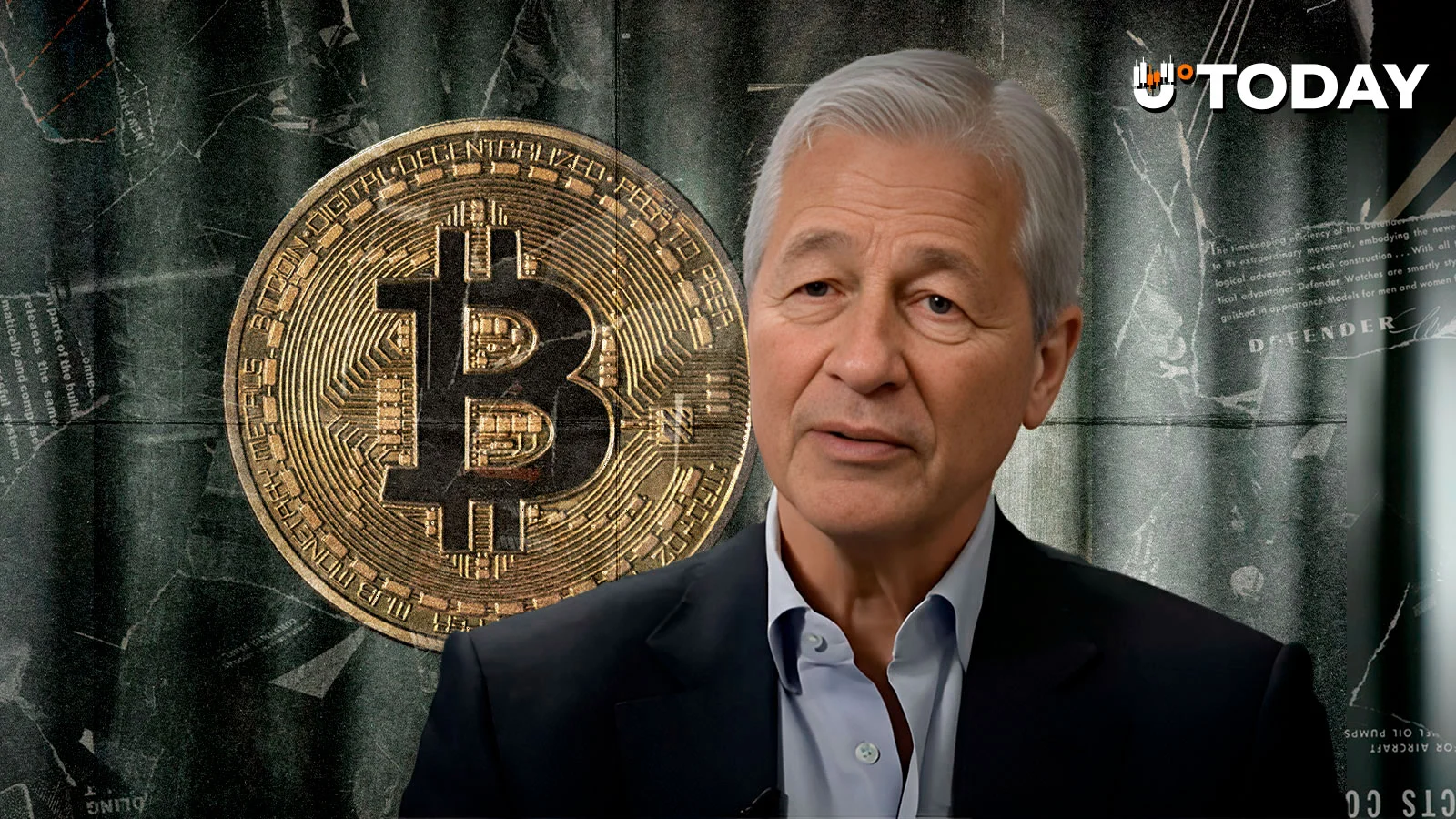
JPMorgan CEO Jamie Dimon identifies blockchain technology, stablecoins, and tokenization as direct competitive threats to traditional banking, signaling a strategic imperative for banks to adopt these innovations. Dimon's acknowledgment of blockchain's efficiency, despite his continued skepticism towards public cryptocurrencies like Bitcoin, highlights a bifurcated view within traditional finance towards underlying technology versus speculative assets. The bank's investment in its proprietary blockchain platform, Kinexys, underscores a proactive approach to integrating distributed ledger technology to maintain market share against emerging fintech and blockchain-native competitors.
Geopolitical de-escalation, specifically a ceasefire between the US, Iran, and Israel, has significantly improved global sentiment, triggering a risk-on wave that is driving crypto prices higher. Bitcoin's reclaim of the $70,000 level is a critical technical development, flipping resistance into support and signaling a potential continuation of the rally towards $75K-$76K. Ethereum and XRP are also showing strong bullish momentum, with key price levels reclaimed, indicating sustained demand and growing market confidence across major cryptocurrencies. The current crypto rally is characterized by clear strength and follow-through, driven by a catalyst-backed macro relief and sentiment spike, suggesting further upside potential if key support levels are maintained.

Ethereum's stablecoin supply reaching $180 billion signifies robust on-chain liquidity and growing institutional interest, potentially fueling a sustained bull cycle driven by RWA tokenization. The projected $850 billion in "new flows" to Ethereum by 2030, if realized, indicates a significant long-term growth trajectory for the network as a hub for stablecoins and tokenized assets. Despite strong growth, potential competition from rival chains, regulatory uncertainties, and macroeconomic volatility remain key factors that could impede further upside for Ethereum's stablecoin dominance.

Three new wallets profited significantly on Polymarket by correctly predicting a US-Iran ceasefire, raising concerns about potential insider trading given the low probability bets placed before the announcement. The event highlights the growing use of crypto-based prediction markets for geopolitical events, but also amplifies regulatory scrutiny regarding market manipulation and insider information. While the profits are substantial for the individuals involved, the direct market impact on major crypto assets is minimal as the news pertains to a specific prediction market event rather than a broader crypto market catalyst.
Coinbase's acquisition of an Australian financial services license signals a strategic expansion into traditional finance products, potentially increasing its addressable market and revenue streams. The move positions Coinbase to compete directly with traditional financial services providers in Australia, leveraging crypto's speed and execution for stock trading and payments. This regulatory milestone in Australia, with its comprehensive digital asset framework, could set a precedent for other jurisdictions looking to integrate crypto exchanges into their financial systems.
Signal context only. Validate with price action, liquidity, and risk limits before taking a position.
Iran's significant loss of Bitcoin mining power, dropping from 9 EH/s to 2 EH/s, directly contributes to a 5.8% QoQ decline in the global hashrate, indicating reduced network security and potentially higher transaction fees if sustained. Geopolitical conflict and infrastructure risks in Iran are forcing miners offline, highlighting the vulnerability of mining operations to regional instability and impacting global hashrate distribution. The combination of reduced mining profitability due to falling Bitcoin prices and geopolitical disruptions in Iran creates a challenging environment for miners, potentially leading to further consolidation or shutdowns.
