
Navigating Crypto News

CoinFeather
Navigating Crypto News
Quick market read from this story
XRP's price surge is directly linked to the announced Iran ceasefire, which removed a significant geopolitical risk premium from the market.
The rally was characterized by sustained buying and volume, indicating genuine demand rather than a short-lived spike, and broke through key resistance levels.
While the ceasefire provides a 14-day window, the upcoming CPI and PPI data on Friday will be critical in determining the market's next directional move, especially for XRP's ability to sustain gains.
The short positioning that dominated XRP's derivatives market prior to the ceasefire provided fuel for the breakout, but its sustainability hinges on Friday's inflation data and the Fed's reaction.
Source, catalyst, and sector overlap from the latest feed.
IPO Genie has reported distributing over 12.5 billion $IPO tokens during its presale phase, indicating significant early investor participation in its private-market access platform. The $IPO token's utility is defined by access tiers, staking, and governance, suggesting a foundational role in the platform's ecosystem and potential for ongoing demand. This presale milestone, occurring within the 'Crypto Presale 2026' landscape, provides a tangible data point for project development and market interest in private market access solutions. While the presale distribution is a positive indicator, the long-term success hinges on continued platform development, execution of planned initiatives like airdrops and promotions, and addressing access limitations in private markets.
Live Feed
Loading the broader stream in the same flow as the homepage feed.
The integration of SWIFT's blockchain ledger with Ripple Treasury, backed by major banks like BBVA, BNP Paribas, and Citi, signals a significant convergence of traditional finance and blockchain technology for cross-border payments. This development positions Ripple as a key intermediary, leveraging SWIFT's messaging infrastructure with digital assets, potentially leading to faster settlement times and reduced costs for global transactions. With over 100 banks piloting Ripple's solutions, the initiative indicates strong institutional adoption and a potential shift in how financial institutions approach international transfers, benefiting assets like XRP if directly integrated.

MEXC's new CEO plans to pivot the exchange from a memecoin-centric platform to a broader 'trade everything' venue, targeting retail traders with expanded offerings like tokenized equities and commodities. This strategic shift positions MEXC as a potential competitor to platforms like Robinhood, focusing on a zero-fee model and diverse asset speculation rather than institutional adoption. The exchange faces significant challenges in balancing its growth ambitions with past regulatory issues, particularly concerning its compliance record and past fund-freezing incidents. Usi's strategy bets on the enduring appeal of retail speculation across various volatile assets, contrasting with competitors' focus on institutional flows and derivatives.
The recent ceasefire between the US, Israel, and Iran is viewed as a temporary de-escalation, with underlying geopolitical risks remaining, suggesting potential for short-term volatility in crypto markets. Crypto's market behavior is evolving beyond a simple crisis hedge, now showing increased correlation with traditional macro indicators like interest rates and energy prices, making oil price movements a more significant driver than geopolitical headlines alone. While the ceasefire may provide temporary relief, a sustained rise in oil prices due to potential Strait of Hormuz disruptions could pressure crypto by exacerbating inflation fears and maintaining tight monetary policy, leading to liquidity drains. The market sentiment is cautiously bearish in the short term due to liquidity and rate pressures, but a bullish outlook is contingent on the ceasefire holding and oil prices stabilizing, indicating a complex interplay of factors influencing crypto's direction.

The DOGEBALL presale, ending May 2nd, 2026, offers early investors a potential 37.5x ROI based on a projected listing price of $0.015 from the current stage 2 price of $0.0004. DOGEBALL's launch of a custom Ethereum Layer 2 for gaming, coupled with a partnership with Falcon Interactive and a $1M prize pool for its native game, signals a strategic move to capture the gaming and infrastructure sectors. The project emphasizes functional, testable code and immediate yield with 80% APY staking rewards during the presale, aiming to attract smart money seeking utility over speculative meme coins. The presale includes a limited-time bonus code (DB25) for an additional 25% tokens, incentivizing immediate participation and potentially accelerating demand before the official launch.

ARK Invest's strategic purchase of $13 million in HOOD shares signals confidence in Robinhood's evolving business model beyond traditional trading, particularly its role in the new government-backed 'Trump Accounts' initiative. Robinhood's selection by the US Treasury for the 'Trump Accounts' program, coupled with ARK's increased stake, suggests potential for expanded user acquisition and integration into mainstream financial products, despite recent revenue challenges. The market's positive reaction to the 'Trump Accounts' news, with HOOD surging in after-hours trading, indicates that Robinhood's stock may be sensitive to new government partnerships and strategic initiatives, potentially outweighing recent declines in crypto revenue.
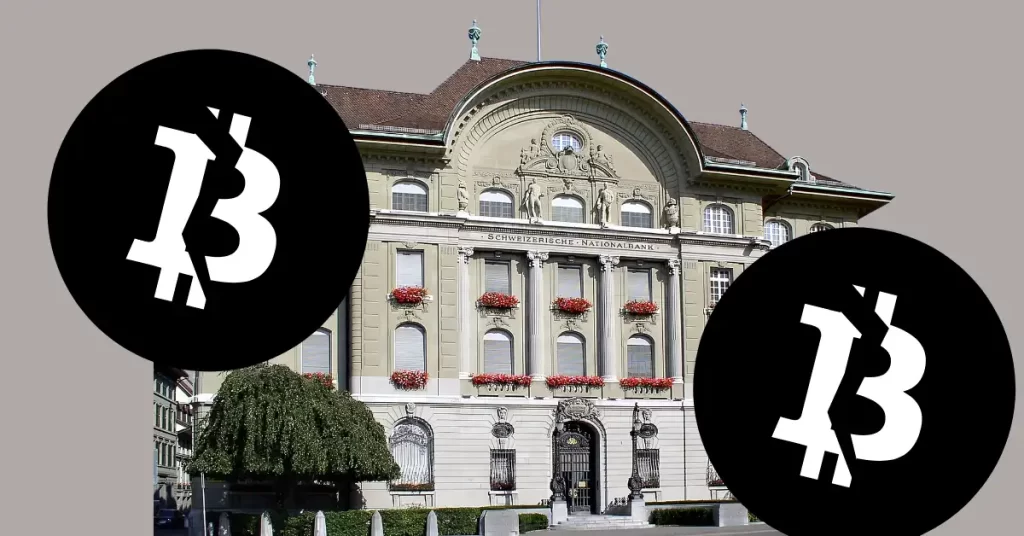
Major Swiss banks launching a CHF stablecoin sandbox signals traditional finance's increasing engagement with blockchain technology, potentially paving the way for regulated digital currency adoption. The controlled testing environment allows for real-world evaluation of blockchain payment efficiency and settlement speed, providing crucial data for future scaling and integration. This initiative by established financial institutions could position Switzerland as a key hub for regulated stablecoin development and usage, influencing global stablecoin market dynamics.

Major Swiss banks, including UBS, are collaborating in a 2026 sandbox to test Swiss franc stablecoin use cases, signaling a significant step towards institutional adoption of blockchain payment rails. The initiative by prominent financial institutions indicates a growing trend of traditional finance exploring and integrating digital asset technologies for practical applications. While the sandbox is set for 2026, the prior discontinuation of Bitcoin Suisse's CryptoFranc highlights the challenges and evolving landscape for stablecoin issuance in Switzerland.

Will quantum-safe cryptography slow Ethereum? It is likely to affect gas fees, validator load and network efficiency, prompting Ethereum to pursue a broader redesign strategy.

Alchemy's new AgentPay tool addresses critical interoperability issues in emerging AI-driven payment systems, potentially streamlining integration for merchants and paving the way for wider adoption of agentic finance. By acting as a translation layer, AgentPay aims to simplify the complex landscape of AI payment protocols, reducing friction for businesses and enabling seamless transactions between disparate AI agents. The development signals a move towards greater infrastructure maturity in the AI and payments intersection within crypto, positioning Alchemy as a key enabler for future agentic economic activity.
Bitcoin's recent surge above $70,000 is attributed to a geopolitical ceasefire, which has also positively impacted traditional markets and other cryptocurrencies, indicating a broader risk-on sentiment. Increased institutional inflows into US Spot Bitcoin ETFs, totaling $471 million, alongside positive derivatives market sentiment and the introduction of a new Bitcoin ETF by Morgan Stanley, suggest strong underlying demand supporting the price action. While technical indicators suggest trend continuation, Bitcoin's price trajectory towards $80,000 is contingent on the sustained geopolitical stability and the opening of the Strait of Hormuz, highlighting the sensitivity to external macro factors.
Iran's significant loss of Bitcoin mining power, dropping from 9 EH/s to 2 EH/s, directly contributes to a 5.8% QoQ decline in the global hashrate, indicating reduced network security and potentially higher transaction fees if sustained. Geopolitical conflict and infrastructure risks in Iran are forcing miners offline, highlighting the vulnerability of mining operations to regional instability and impacting global hashrate distribution. The combination of reduced mining profitability due to falling Bitcoin prices and geopolitical disruptions in Iran creates a challenging environment for miners, potentially leading to further consolidation or shutdowns.
Signal context only. Validate with price action, liquidity, and risk limits before taking a position.
Established DeFi protocols like Uniswap and Layer-1 networks such as Polkadot are experiencing price declines, indicating broader market weakness that may lead traders to seek opportunities in early-stage projects. BlockDAG's presale phase at a fixed $0.000016 price point offers a distinct entry strategy compared to the declining market performance of established assets, potentially attracting speculative interest. The contrast between declining established cryptocurrencies and a project in its presale phase highlights a market dynamic where investors may be re-evaluating risk and seeking early-stage growth potential.
