
Navigating Crypto News

CoinFeather
Navigating Crypto News

Quick market read from this story
BlockDAG is nearing the end of its presale phase at $0.000016, signaling a transition to open market trading and potential price discovery based on supply and demand dynamics.
Hyperliquid faces a near-term price adjustment risk due to an upcoming token unlock of approximately 9.92 million tokens, which will increase circulating supply.
AVAX is trading around $9, showing modest recent gains and potential for upward movement if momentum builds, supported by ongoing network activity and institutional interest in RWA and ETF developments.
Source, catalyst, and sector overlap from the latest feed.
Bitcoin's price action on Binance shows a constructive higher low and higher high structure, supported by a rising 50 SMA, indicating bullish momentum despite recent consolidation. A significant collapse in Binance exchange inflows to 842 BTC on April 11, down from a peak of ~4,900 BTC, suggests reduced selling pressure and a tightening supply picture. The confluence of five Binance on-chain datasets, including low inflows, high whale concentration, and stablecoin reserves, points to a whale-guided rally with potential for further upside. With the Squeeze Risk Oscillator at -0.32 and MVRV Adaptive Z-Score crossing its 30-day SMA, the market exhibits reduced short-term selling pressure and a decreased probability of new lows.
Live Feed
Loading the broader stream in the same flow as the homepage feed.
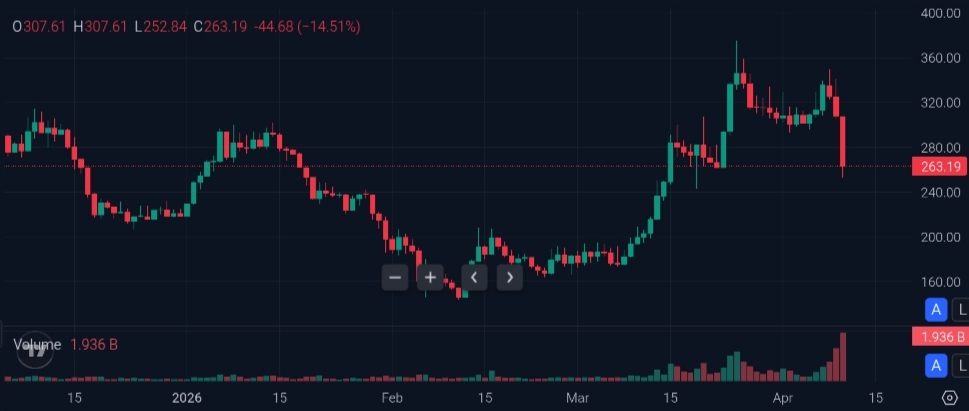
Key Insights: Bittensor dropped by almost one-fifth as Covenant AI pulled out of the network and sold TAO tokens. Sam Dare charged Jacob Steeves with centralized control, terming governance to be a decentralization theatre. Analysts attribute the Bittensor price crash to panic selling, and a massive exit by the subnet, but others consider that the […] The post Here’s Why Bittensor Price Crashed 20%, Will TAO Crypto Bounce Back? appeared first on The Coin Republic.
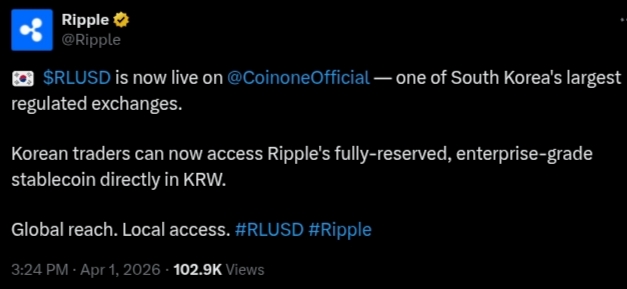
Ripple's RLUSD stablecoin securing a listing on Coinone in South Korea expands its accessibility to a regulated market and offers Korean traders direct trading against the Korean won. The RLUSD listing on Coinone, coupled with the recent Convera partnership, enhances its utility for cross-border payments and enterprise treasury needs, aligning with Ripple's strategy to integrate blockchain into traditional finance. An independent Deloitte audit confirming overcollateralization for RLUSD reinforces its 1:1 peg to the USD, addressing potential concerns about stablecoin stability and regulatory compliance.
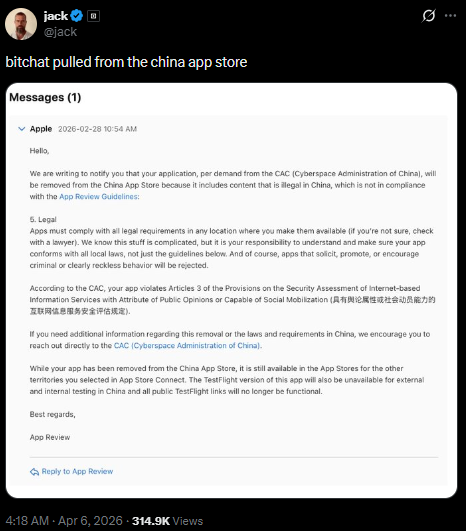
Apple's removal of Jack Dorsey's Bitchat from the China App Store highlights the ongoing tension between decentralized communication technology and stringent government censorship. The app's reliance on offline mesh networks demonstrates a strategy to circumvent internet controls, but regulatory bodies like the CAC are actively enforcing compliance with local laws. Despite the ban in China, Bitchat's global download numbers suggest continued user interest in censorship-resistant communication tools, indicating potential for adoption in other markets. This event underscores the regulatory risks for crypto-related applications operating in or seeking access to markets with strict internet governance, potentially impacting investor sentiment towards similar projects.
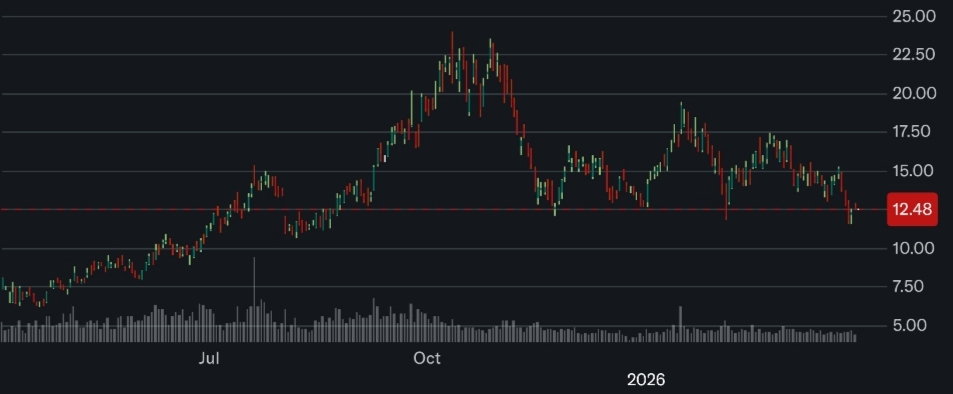
Riot Platforms' sale of 500 BTC for $34M has triggered an immediate 5% stock price decline, indicating investor sensitivity to miner treasury management during market volatility. Despite the short-term stock sell-off, analysts maintain a bullish outlook on RIOT, with a $25.84 price target, suggesting confidence in the company's long-term strategy and potential for a significant rally. Riot's strategic pivot towards AI and data centers presents a potential new revenue stream, which could offset declining mining margins and justify its high valuation multiples if executed successfully.
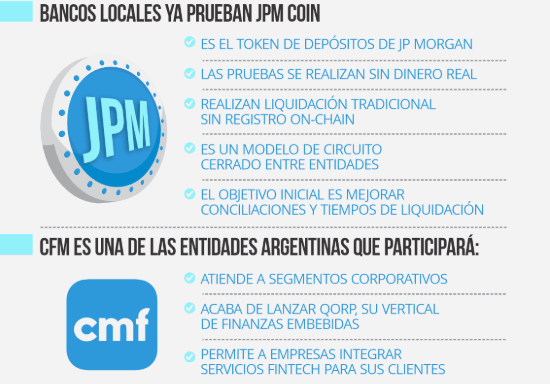
JPMorgan's JPM Coin pilot in Argentina signifies a potential step towards broader institutional adoption of stablecoins for interbank settlements, contingent on regulatory evolution. The internal testing phase highlights current regulatory constraints in Argentina, limiting immediate customer-facing applications and suggesting a longer-term outlook for widespread use. This development, alongside JPMorgan's exploration of Bitcoin and Ethereum ETFs, indicates a strategic shift by traditional finance institutions towards integrating digital assets into their services.
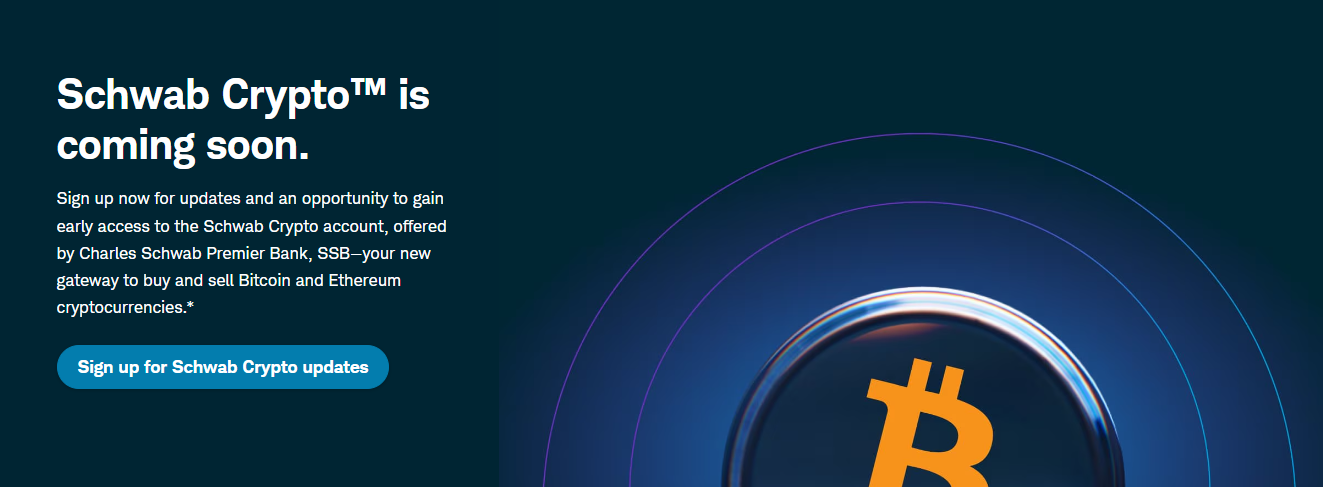
Charles Schwab's entry into crypto trading with a 2026 launch date signals a significant mainstream adoption trend, potentially increasing liquidity and demand for BTC and ETH. The phased rollout starting with employees and select clients suggests a cautious approach by Schwab, indicating a focus on regulatory compliance and operational stability before broader client access. Schwab's move into spot trading positions it as a direct competitor to existing crypto exchanges, potentially impacting market share and driving further innovation in the retail brokerage crypto space. Despite the positive development, the limitations on availability (specific states, territories) and the lack of insurance on crypto assets highlight ongoing risks and regulatory complexities for institutional players entering the market.
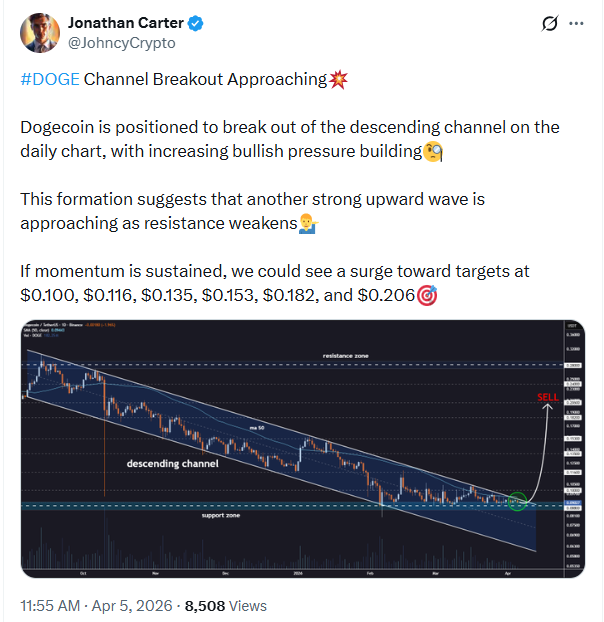
Increased trading volume and a Bollinger Bands squeeze suggest Dogecoin is poised for a significant price move, indicating heightened volatility ahead. Dogecoin's breakout from a descending channel, supported by a 63% volume surge, signals a potential bullish reversal and increased buying pressure. Historical logarithmic analysis indicates Dogecoin may be retesting a critical support level within a long-term uptrend channel, potentially leading to substantial gains if defended. Technical indicators point to potential upside targets for DOGE, with analysts projecting price movements to $0.15 or higher if bullish momentum continues post-channel breakout.
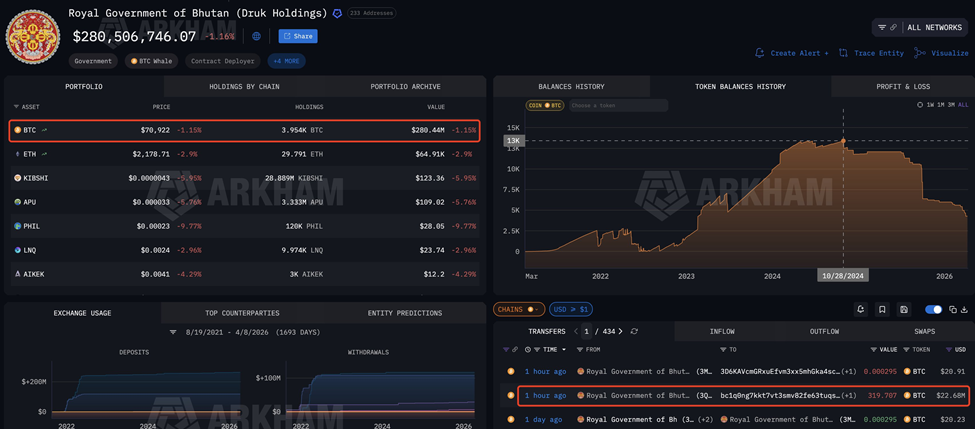
Bhutan's consistent offloading of Bitcoin, totaling $610 million, suggests a potential strategic exit from its sovereign reserve, impacting market sentiment among institutional holders. The timing of Bhutan's sales, often coinciding with price rallies, indicates a profit-taking strategy, which could encourage other holders to re-evaluate their positions. While Bhutan's sales are notable, the broader market context shows contrasting behavior from entities like MicroStrategy and BlackRock, highlighting diverse institutional approaches to Bitcoin holdings.
XRP liquidations surged to $732,000, with short traders bearing the brunt of losses as prices unexpectedly climbed, indicating a potential shift in market sentiment against bearish bets. Despite high leverage figures on Ripple Prime, the platform's risk management through a matched-book repo model and Ripple's backing suggests a controlled risk environment, mitigating immediate concerns. Ripple's RLUSD initiative, in partnership with Accion, has successfully facilitated over $53 million in loans to small businesses, demonstrating tangible real-world utility and impact beyond speculative trading. The combination of short-term trading volatility (liquidations) and long-term fundamental development (RLUSD lending) presents a dual narrative for XRP, impacting its market perception.

The potential resolution of the US-Iran conflict, particularly concerning the Strait of Hormuz and nuclear weapons, could remove a significant macro headwind for Bitcoin, potentially driving prices towards $75,000-$80,000. A breakdown in US-Iran diplomatic talks poses a direct risk to Bitcoin, with a potential retest of $65,000 support if geopolitical tensions escalate and oil prices rise. The prolonged period of 'extreme fear' indicated by the Crypto Fear and Greed Index suggests that a credible path to peace could trigger a significant shift in market sentiment and investor positioning.

Grayscale's Q2 2026 'Assets Under Consideration' list signals a strategic institutional pivot towards blockchain infrastructure, advanced DeFi, and AI integration, indicating a preference for long-term utility and scalability over speculative trends. The inclusion of numerous AI-related tokens and infrastructure projects suggests a growing institutional conviction in the convergence of AI and blockchain, positioning these sectors as key areas for future development and potential investment. Grayscale's focus on 'real yield' DeFi protocols and foundational infrastructure highlights a maturing institutional approach, prioritizing sustainable economic models and robust network layers for broader crypto ecosystem growth.

A federal court's temporary injunction against Arizona officials enforcing gambling laws on Kalshi's event contracts, siding with the CFTC, signals a potential shift in regulatory clarity for prediction markets under federal derivatives law. The ruling suggests that event contracts traded on CFTC-regulated markets are likely to be classified as 'swaps,' placing them under exclusive federal jurisdiction and potentially preempting state-level gambling regulations. This development, alongside a similar Nevada ruling, highlights an ongoing legal battle over the classification of prediction markets, with implications for platforms like Kalshi and Polymarket and their ability to operate across different states. While the Arizona injunction is temporary, it creates a near-term window of operational stability for Kalshi in that state, pending further court decisions on preliminary injunctions.

Dogecoin's price action is consolidating at a critical macro support level, suggesting a potential transition into a Wave 5 expansion phase historically associated with aggressive rallies. On-chain data, including a cooled MVRV ratio and stable network activity, supports an accumulation narrative, indicating strong hands may be accumulating DOGE at current levels. A confirmed breakout above the $0.10-$0.11 resistance zone could signal a shift in short-term momentum, targeting $0.14-$0.18, while a hold above the ascending trendline near $0.061 remains crucial for the bullish outlook. The current setup presents a high-stakes scenario for DOGE, with a confluence of technical indicators and on-chain metrics pointing towards a potential significant upward move if key support levels are maintained.
Signal context only. Validate with price action, liquidity, and risk limits before taking a position.
Bitcoin's recent push to $73K is met with mixed signals from derivatives markets, as a significant increase in open interest is not matched by proportional taker volume, suggesting potential bearish bets underlying the rally. Declining whale inflows to exchanges, hitting a 10-month low, indicate reduced selling pressure from large holders, while long-term holders continue to accumulate, providing a structural floor for price. The market faces two potential scenarios: a short squeeze driven by continued price strength above $72,000, or a pullback if the divergence in taker volume signals underlying weakness, with key support levels at $71,693 and $70,800. While on-chain data shows long-term holders accumulating and short-term holders distributing, this dynamic historically favors buyers but may not lead to a rapid resolution, suggesting a cautious approach.
