
Navigating Crypto News

CoinFeather
Navigating Crypto News

Quick market read from this story
Bitcoin's price action on Binance shows a constructive higher low and higher high structure, supported by a rising 50 SMA, indicating bullish momentum despite recent consolidation.
A significant collapse in Binance exchange inflows to 842 BTC on April 11, down from a peak of ~4,900 BTC, suggests reduced selling pressure and a tightening supply picture.
The confluence of five Binance on-chain datasets, including low inflows, high whale concentration, and stablecoin reserves, points to a whale-guided rally with potential for further upside.
With the Squeeze Risk Oscillator at -0.32 and MVRV Adaptive Z-Score crossing its 30-day SMA, the market exhibits reduced short-term selling pressure and a decreased probability of new lows.
Source, catalyst, and sector overlap from the latest feed.
IPO Genie's continued presale into Phase 80 in Q2 2026 indicates an ongoing fundraising effort rather than an immediate launch, suggesting a longer-term development cycle. The project's positioning as an AI-assisted platform for private-market and pre-IPO research, with its $IPO token functioning as a utility token, highlights a focus on platform utility and governance. Despite reaching Phase 80, the article emphasizes that early-stage crypto project risks remain high, urging investors to focus on product use case, token role, and clear disclosures over speculative claims. The market in Q2 2026 is characterized by increased selectivity in crypto presales, with a greater emphasis on project structure, utility, and transparency, making IPO Genie's continued activity a test of its fundamental value proposition.
Live Feed
Loading the broader stream in the same flow as the homepage feed.

The post No, Bitcoin Has Not Bottomed Yet: Analyst Who Called the Top Explains Why appeared first on Coinpedia Fintech News Bitcoin just had its best week in a while. The ceasefire rally, the CPI relief, $73,000 briefly touched. After weeks of grinding losses, it finally feels like something has changed. But one analyst who publicly called the top six months ago is not buying the narrative shift. According to Benjamin Cowen, founder of Into The …

Bitcoin traders are rebuilding bets on a move toward $80,000 as easing geopolitical tensions, firmer institutional demand, and a rebound above $70,000 revive appetite for upside exposure after weeks of defensive positioning. On Coinbase-owned Deribit, the largest venue for crypto options, the $80,000 call has become the single biggest strike by open interest this week, […] The post Bitcoin bulls are eyeing $100,000, yet the futures market hints at another dip first appeared first on CryptoSlate.

The U.S. government's movement of seized Bitcoin to Coinbase Prime signals a shift towards active management and potential integration into national reserves, moving beyond simple law enforcement asset liquidation. This development indicates a strategic re-evaluation of Bitcoin as a state asset, suggesting a long-term holding strategy rather than immediate selling, which could influence future market supply dynamics. While the immediate market reaction is calm due to the small transaction size, the underlying trend of governments treating crypto as a strategic asset warrants close observation for broader market implications.

Proposal 106 approval introduces smart contract rule changes to Tron, enhancing security by preventing malicious contract deletions and potentially boosting demand for TRX through adjusted energy costs. Tron's TVL has seen a significant increase of over 15% in the past four weeks, reaching $4.96 billion, indicating renewed investor confidence and potential liquidity return to the network. Despite positive network developments and TVL growth, TRX price is encountering resistance at its 6-month highs, suggesting a potential profit-taking phase if demand falters, though whale inflows show a bullish bias.

Zcash (ZEC) experienced a significant 35% weekly gain, outperforming major cryptocurrencies, driven by easing geopolitical tensions and positive infrastructure developments. Despite strong inflows and a 40% rally from recent lows, ZEC is in overbought territory, indicating potential for profit-taking and a near-term retracement. The planned institutional mining pool by Foundry Digital provides validation for ZEC's appeal, potentially counteracting concerns from the core development team's exit. Whale activity shows mixed signals with substantial inflows via Coinbase but significant outflows from derivatives markets, suggesting divided sentiment on ZEC's immediate price direction.

Bhutan's significant reduction in Bitcoin holdings, selling approximately 70% over 18 months, suggests a strategic shift away from its BTC reserves, potentially impacting market sentiment for holders of large, previously stable positions. The substantial liquidation of $215.7 million in Bitcoin this year, coupled with a decline in mining inflows, indicates a potential exit from Bitcoin mining operations, signaling a reduced demand-side pressure from sovereign entities. While the direct market impact of Bhutan's sales may be limited due to its relatively small size, the trend of a nation-state reducing its Bitcoin exposure could be interpreted as a bearish signal by some market participants, especially if other sovereign entities follow suit.
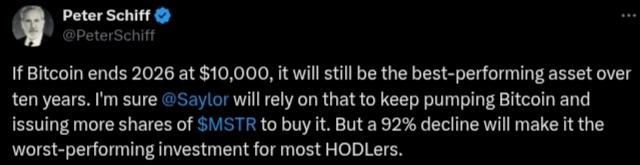
Peter Schiff's bearish commentary on Bitcoin, including a hypothetical $10K scenario, contrasts sharply with MicroStrategy's continued accumulation, highlighting a divergence in market sentiment and strategy. The article presents a worst-case scenario for Bitcoin potentially dropping to $10,000 due to macro factors like geopolitical tensions and liquidity collapse, suggesting significant downside risk if these conditions materialize. Despite bearish predictions and market volatility, MicroStrategy's recent $330 million BTC purchase underscores a strong conviction in Bitcoin's long-term value, potentially signaling confidence to other institutional investors. While some analysts predict a sharp decline, others, like Michaël van de Poppe, anticipate a near-term recovery to $86,000, indicating a divided outlook on Bitcoin's immediate price action amidst escalating geopolitical risks.
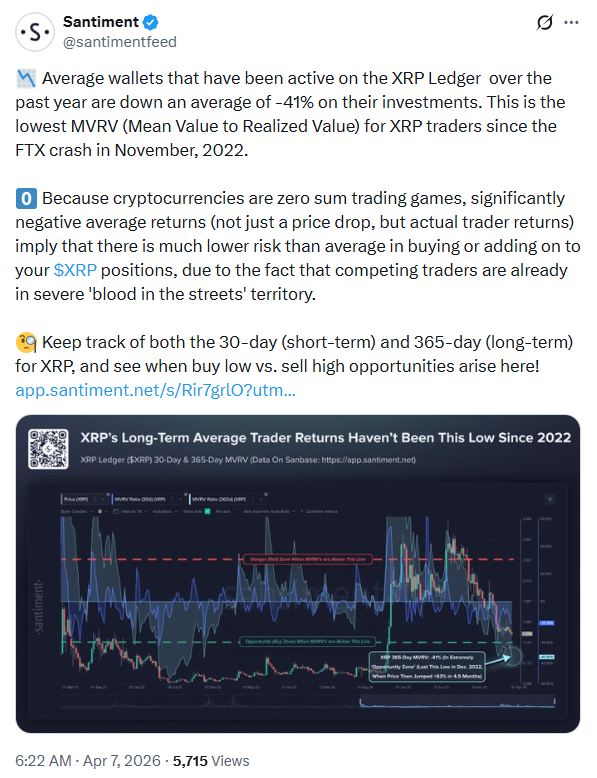
XRP Ledger active wallets are experiencing significant losses, with MVRV levels at their lowest since the FTX crash, suggesting that most weak hands may have already exited the market. Despite on-chain losses, Ripple's strategic expansion in Africa, driven by strengthening regulatory frameworks, indicates a long-term growth strategy that could support future XRP Ledger activity. Mixed inflows into XRP ETFs, with total assets near $940 million, signal cautious institutional interest, suggesting that large investors are still assessing the market rather than committing to firm long-term positions.
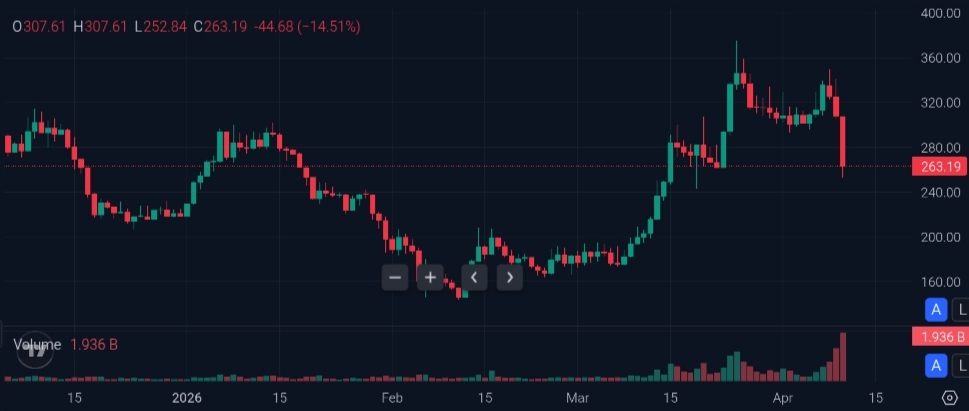
Key Insights: Bittensor dropped by almost one-fifth as Covenant AI pulled out of the network and sold TAO tokens. Sam Dare charged Jacob Steeves with centralized control, terming governance to be a decentralization theatre. Analysts attribute the Bittensor price crash to panic selling, and a massive exit by the subnet, but others consider that the […] The post Here’s Why Bittensor Price Crashed 20%, Will TAO Crypto Bounce Back? appeared first on The Coin Republic.
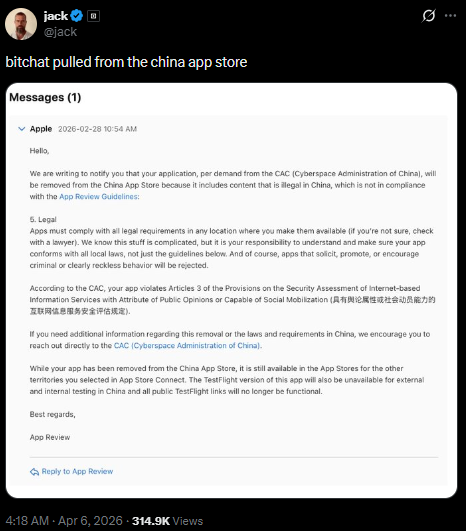
Apple's removal of Jack Dorsey's Bitchat from the China App Store highlights the ongoing tension between decentralized communication technology and stringent government censorship. The app's reliance on offline mesh networks demonstrates a strategy to circumvent internet controls, but regulatory bodies like the CAC are actively enforcing compliance with local laws. Despite the ban in China, Bitchat's global download numbers suggest continued user interest in censorship-resistant communication tools, indicating potential for adoption in other markets. This event underscores the regulatory risks for crypto-related applications operating in or seeking access to markets with strict internet governance, potentially impacting investor sentiment towards similar projects.
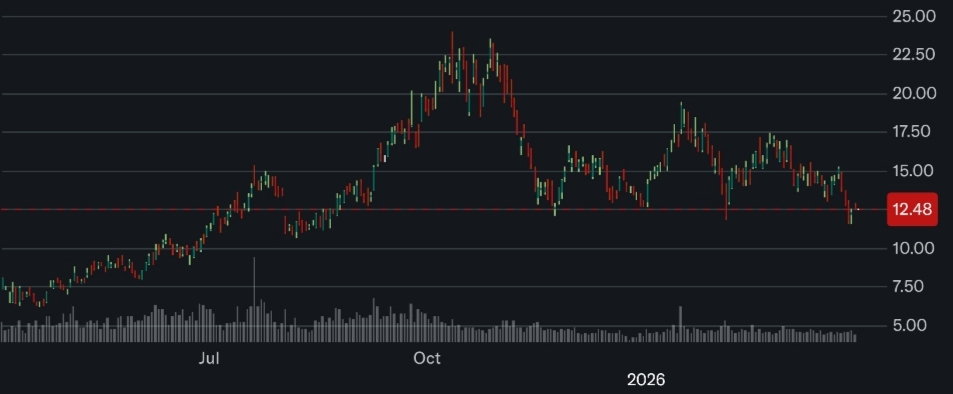
Riot Platforms' sale of 500 BTC for $34M has triggered an immediate 5% stock price decline, indicating investor sensitivity to miner treasury management during market volatility. Despite the short-term stock sell-off, analysts maintain a bullish outlook on RIOT, with a $25.84 price target, suggesting confidence in the company's long-term strategy and potential for a significant rally. Riot's strategic pivot towards AI and data centers presents a potential new revenue stream, which could offset declining mining margins and justify its high valuation multiples if executed successfully.

JPMorgan's JPM Coin pilot in Argentina signifies a potential step towards broader institutional adoption of stablecoins for interbank settlements, contingent on regulatory evolution. The internal testing phase highlights current regulatory constraints in Argentina, limiting immediate customer-facing applications and suggesting a longer-term outlook for widespread use. This development, alongside JPMorgan's exploration of Bitcoin and Ethereum ETFs, indicates a strategic shift by traditional finance institutions towards integrating digital assets into their services.
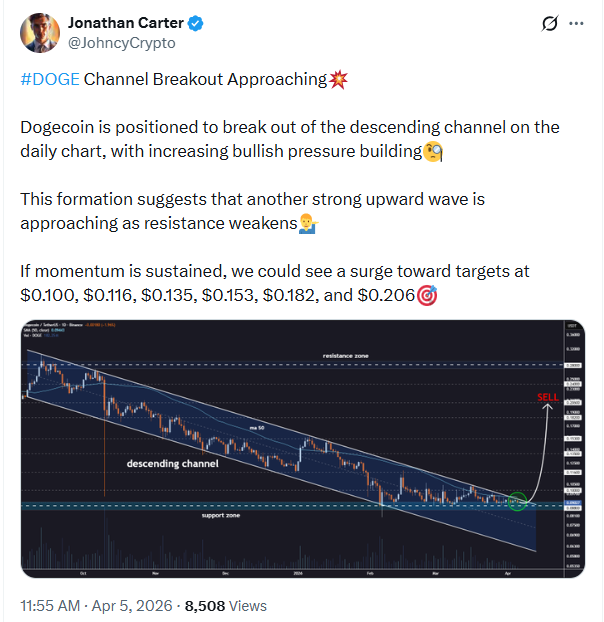
Increased trading volume and a Bollinger Bands squeeze suggest Dogecoin is poised for a significant price move, indicating heightened volatility ahead. Dogecoin's breakout from a descending channel, supported by a 63% volume surge, signals a potential bullish reversal and increased buying pressure. Historical logarithmic analysis indicates Dogecoin may be retesting a critical support level within a long-term uptrend channel, potentially leading to substantial gains if defended. Technical indicators point to potential upside targets for DOGE, with analysts projecting price movements to $0.15 or higher if bullish momentum continues post-channel breakout.
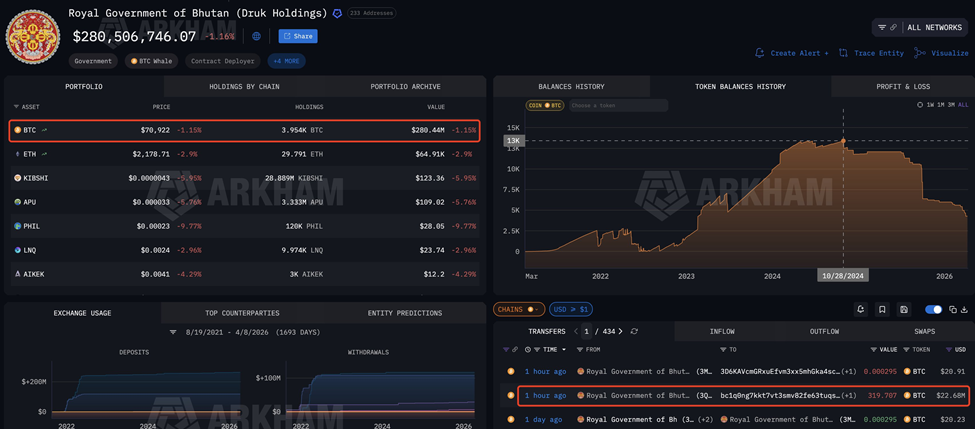
Bhutan's consistent offloading of Bitcoin, totaling $610 million, suggests a potential strategic exit from its sovereign reserve, impacting market sentiment among institutional holders. The timing of Bhutan's sales, often coinciding with price rallies, indicates a profit-taking strategy, which could encourage other holders to re-evaluate their positions. While Bhutan's sales are notable, the broader market context shows contrasting behavior from entities like MicroStrategy and BlackRock, highlighting diverse institutional approaches to Bitcoin holdings.

XRP liquidations surged to $732,000, with short traders bearing the brunt of losses as prices unexpectedly climbed, indicating a potential shift in market sentiment against bearish bets. Despite high leverage figures on Ripple Prime, the platform's risk management through a matched-book repo model and Ripple's backing suggests a controlled risk environment, mitigating immediate concerns. Ripple's RLUSD initiative, in partnership with Accion, has successfully facilitated over $53 million in loans to small businesses, demonstrating tangible real-world utility and impact beyond speculative trading. The combination of short-term trading volatility (liquidations) and long-term fundamental development (RLUSD lending) presents a dual narrative for XRP, impacting its market perception.
World Liberty Financial's proposal for a phased WLFI token unlock, following community discussion and a formal vote, signals a shift towards managing investor liquidity concerns and potential legal threats. The gradual vesting schedule aims to mitigate the impact of a large token release, addressing early adopter frustration over locked liquidity and potential price dilution. Growing holder backlash, including legal threats and concerns over treasury borrowing activity ($75M in stablecoins collateralized by WLFI), highlights significant governance and operational risks for the project. The proposed phased unlock, while addressing immediate liquidity demands, still requires governance approval and faces scrutiny over the project's financial management, suggesting a neutral short-term outlook pending vote outcomes.
Signal context only. Validate with price action, liquidity, and risk limits before taking a position.
Tether
USDT
No explicit catalyst tagged.
Bitcoin's recent push to $73K is met with mixed signals from derivatives markets, as a significant increase in open interest is not matched by proportional taker volume, suggesting potential bearish bets underlying the rally. Declining whale inflows to exchanges, hitting a 10-month low, indicate reduced selling pressure from large holders, while long-term holders continue to accumulate, providing a structural floor for price. The market faces two potential scenarios: a short squeeze driven by continued price strength above $72,000, or a pullback if the divergence in taker volume signals underlying weakness, with key support levels at $71,693 and $70,800. While on-chain data shows long-term holders accumulating and short-term holders distributing, this dynamic historically favors buyers but may not lead to a rapid resolution, suggesting a cautious approach.
