
Navigating Crypto News

CoinFeather
Navigating Crypto News

Source, catalyst, and sector overlap from the latest feed.
BlockDAG is nearing the end of its presale phase at $0.000016, signaling a transition to open market trading and potential price discovery based on supply and demand dynamics. Hyperliquid faces a near-term price adjustment risk due to an upcoming token unlock of approximately 9.92 million tokens, which will increase circulating supply. AVAX is trading around $9, showing modest recent gains and potential for upward movement if momentum builds, supported by ongoing network activity and institutional interest in RWA and ETF developments.
Live Feed
Loading the broader stream in the same flow as the homepage feed.
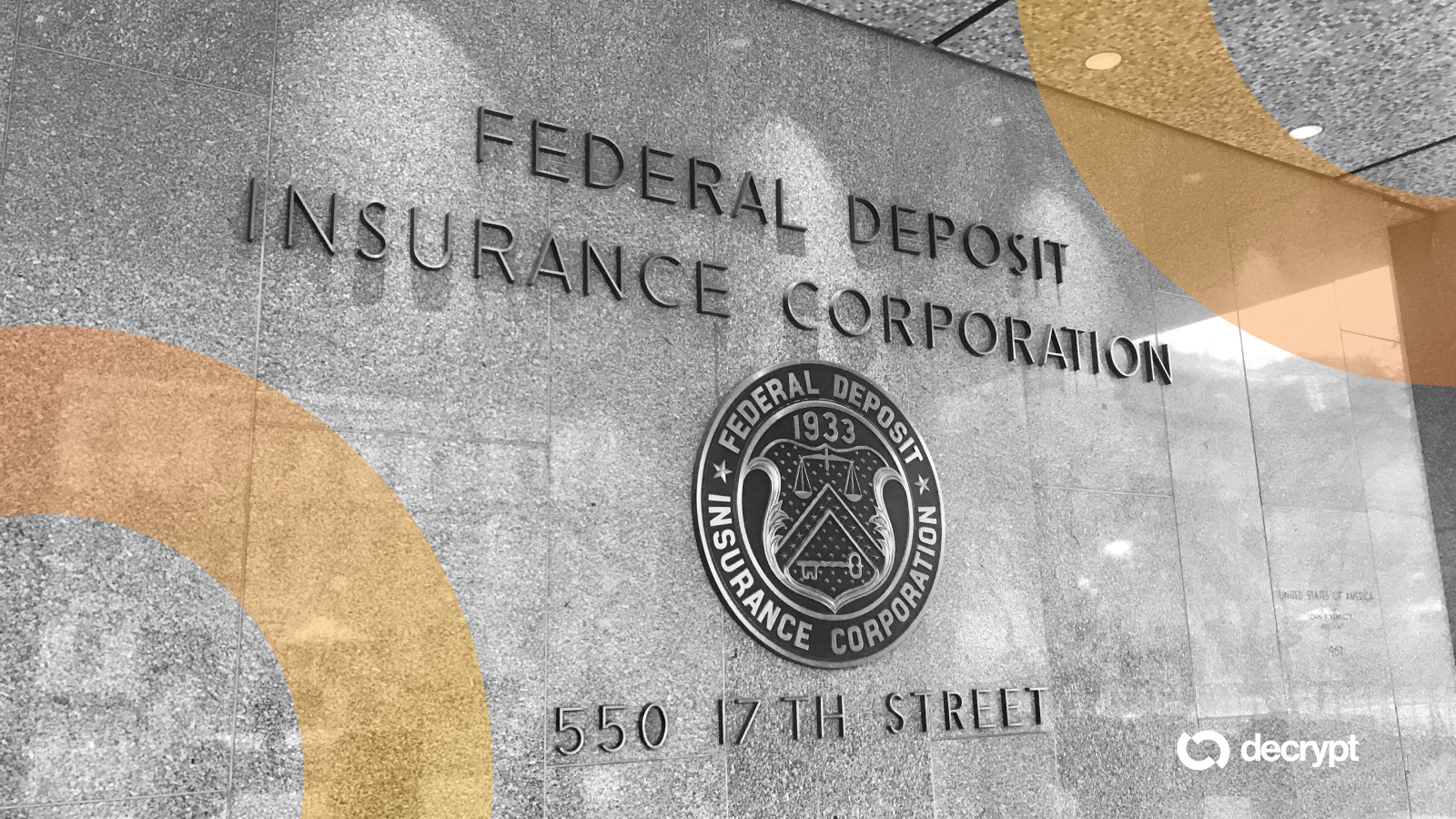
The FDIC’s proposal establishes federal oversight standards for stablecoin issuers while explicitly excluding tokens from deposit insurance protections.

Geopolitical de-escalation signals, specifically regarding Iran, are driving a positive risk-on sentiment, leading to a recovery in Bitcoin and other risk assets after early session losses. The market's rapid recovery from earlier lows, driven by news of a potential Iran ceasefire, indicates a high sensitivity to geopolitical developments and a willingness to re-enter risk assets on positive macro news. Bitcoin's ability to reclaim the $69,000 level following a dip below $68,000 highlights its resilience and the immediate impact of perceived improvements in global stability on its price action.

Geopolitical tensions and threats of conflict are increasing market volatility, leading Bitcoin to test key support levels as traders price in potential downside risks. Technical indicators suggest a bearish outlook for Bitcoin, with multiple failed recovery attempts and bearish chart patterns indicating a potential drop to $55,000 if current support breaks. Despite bearish technicals, the market is not yet showing strong trend confirmation, leaving room for potential reversals if bullish catalysts emerge, though current conditions favor caution. The article highlights Bitcoin's increasing correlation with traditional risk assets during geopolitical crises, questioning its role as a safe-haven asset.

Despite strong $471 million ETF inflows, Bitcoin failed to break $70,000 due to significant selling pressure from public miners and broader geopolitical concerns. Public miners like MARA and RIOT are liquidating BTC reserves, potentially to manage debt or pivot to AI infrastructure, creating a persistent overhang on the market. The options market shows a cautious sentiment with a 17% put premium, indicating traders are actively seeking downside protection rather than anticipating a significant upward move. While ETF inflows are positive, the inability of BTC to sustain higher levels suggests that current institutional demand may not be sufficient to overcome selling pressure from miners and macro-economic uncertainties.

Americans lost over $11 billion to crypto scams in 2025, highlighting significant risks for retail investors and underscoring the need for enhanced security measures. The FBI's report indicates a concerning trend of minors being targeted in crypto scams, resulting in substantial financial losses and raising awareness about vulnerabilities in younger demographics. Investment scams accounted for the highest percentage of crypto-related losses, suggesting that sophisticated fraudulent schemes continue to exploit investor confidence in digital assets. Despite efforts like Operation Level Up, the persistent volume of crypto scams indicates ongoing challenges in combating illicit activities within the digital asset space.

Morgan Stanley's entry into the Bitcoin ETF market with a competitive 0.14% fee, undercutting BlackRock's 0.25%, positions it to capture significant market share despite being a late entrant. The bank's extensive network of 16,000 financial advisors provides a 'captive audience' and a strong distribution channel, potentially driving substantial adoption for its new Bitcoin Trust. While unlikely to surpass BlackRock's established ETF, Morgan Stanley's strategic pricing and internal distribution capabilities suggest a strong performance and increased competition in the spot Bitcoin ETF landscape.

Metaplanet's aggressive Bitcoin accumulation, now exceeding 40,000 BTC and reaching 40% of its 2026 target, positions it as a significant corporate holder and signals strong conviction in Bitcoin's long-term value despite short-term volatility. The company's stock trading at a discount to its Net Asset Value (NAV) suggests potential undervaluation, presenting a buying opportunity for investors who believe in its Bitcoin treasury strategy and future growth. Metaplanet's strategic investments beyond direct BTC holdings, including JPYC and Bitcoin Magazine licensing, indicate a broader ecosystem play aimed at capturing value across Asian markets and potentially influencing Bitcoin adoption. The comparison to MicroStrategy highlights Metaplanet's rapid accumulation velocity, suggesting it could become a dominant player in the corporate Bitcoin treasury space, especially in Asia, which may lead to increased market attention and potential price appreciation.
Digital asset investment products saw $224 million in net inflows last week, indicating a cautious recovery in investor sentiment driven by European demand. XRP led inflows with $119.6 million, signaling renewed institutional interest and representing 7% of AUM in these products. Solana received steady inflows of $34.9 million, maintaining its position as a significant asset, while Ethereum experienced outflows of $52.8 million. Solana is testing a critical $80 support level, with a hold potentially leading to a rebound, while a breakdown could signal a deeper correction towards $50-60.

Actress Milla Jovovich has co-developed MemPalace, an open-source AI knowledge tool inspired by the memory palace technique, potentially offering a novel approach to information organization and retrieval in AI systems. While the concept is innovative, its real-world performance and adoption remain unproven, necessitating observation of community deployment and validation beyond initial benchmark tests. The involvement of Ben Sigman from Libre Labs, a Bitcoin lending platform, suggests potential intersections between AI development and existing blockchain infrastructure, though direct crypto asset integration is not specified.

Bitcoin is holding near $68,000, demonstrating resilience despite escalating geopolitical tensions and a surge in oil prices, indicating underlying spot buying pressure rather than leveraged speculation. The market is currently driven by external geopolitical events, specifically the US-Iran conflict and its impact on oil prices, rather than internal crypto catalysts, creating a fragile trading environment. Negative funding rates suggest that short sellers are still paying to maintain bearish positions, which could fuel a sharper upward move if Bitcoin breaks through resistance and triggers liquidations. Bitcoin's price action is highly sensitive to geopolitical developments, with a narrow trading range between $65,000 and $70,000 amplifying potential short-term volatility based on US-Iran relations.

The FBI's report highlights a significant increase in crypto fraud, with over $11.2 billion lost in 2025, indicating a persistent threat to investor capital and market integrity. Investment fraud, particularly "pig butchering" schemes and fake exchanges, is the primary driver of these losses, underscoring the need for enhanced user education and platform security measures. The FBI's successful freezing of over 3,000 illicit wallets and recovery of $500 million demonstrates the effectiveness of public-private collaboration and on-chain analytics in combating crypto crime. The increasing use of AI in cybercrime, contributing nearly $893 million in losses, signals a new frontier of threats that will require adaptive security strategies and regulatory oversight.

The FDIC's proposed rule for stablecoin issuers, aligned with the GENIUS Act, introduces capital, liquidity, and custody standards, signaling a move towards formal regulatory frameworks for the sector. The proposal clarifies that stablecoins will not receive deposit insurance, a key distinction from traditional bank accounts, impacting how market participants perceive their safety and yield potential. While the FDIC's proposal addresses potential concerns around yield programs, it aims to prevent misrepresentation of interest or yield solely from holding payment stablecoins, requiring careful structuring of rewards. The FDIC's move to solicit public comment on 144 questions indicates a thorough regulatory process, suggesting that final rules may take time to implement, creating a period of regulatory uncertainty for issuers.

The Solana Foundation's STRIDE program represents a proactive institutionalization of security for DeFi protocols, directly addressing the systemic risks highlighted by the recent $285 million Drift exploit. This initiative signals a maturation of the Solana ecosystem, moving beyond individual audits to offer ongoing, tiered security services, which could enhance investor confidence and reduce future exploit potential. The program's tiered approach based on TVL suggests a strategic allocation of resources, prioritizing larger protocols that pose greater systemic risk, a model that may be adopted by other Layer 1s.

Polymarket's introduction of its own stablecoin, Polymarket USD, backed 1:1 by native USDC, does not directly reduce USDC's market cap as it represents a rebranding of collateral rather than a withdrawal of funds. The shift from USDC.e to Polymarket USD on the platform streamlines user experience and gives Polymarket greater control over its collateral and yield economics, reducing reliance on bridged assets. This development highlights a growing trend of layered stablecoin ecosystems where platform-specific tokens interface with users, while underlying assets like USDC serve as foundational collateral, making market analysis more complex. While not a direct threat to USDC's market cap, the structural change introduces new dependencies on Polymarket's redemption design and operational controls, adding a layer of risk for users.
Zcash (ZEC) is showing structural resilience near $260, with its price movement increasingly tied to the growing demand for digital privacy infrastructure amidst intensifying global surveillance debates. The current consolidation phase for ZEC, defending macro support around $260, suggests a potential breakout is imminent if resistance at $300-$320 is decisively cleared, potentially leading to near-term gains towards $380-$450. Long-term price predictions for ZEC range up to $7000 by 2030, driven by its positioning as a privacy-centric asset and potential adoption in enterprise blockchain use cases, contingent on sustained demand and technological relevance. Recent catalysts include a resurgence in the privacy narrative, which has driven price spikes, alongside developer activity and ecosystem support, indicating continued confidence in Zcash's long-term prospects.

Metaspins is positioning itself as a leading Web3 crypto casino by emphasizing high RTP games, provably fair technology, and fast-paced gameplay, aiming to attract crypto enthusiasts seeking transparent and engaging online gaming experiences. The platform's focus on proprietary 'Originals' like Plinko, Mines, and Keno, which offer high RTP (up to 99%) and strategic elements, suggests a strategy to differentiate from traditional online casinos and capture market share within the growing Web3 gaming sector. By integrating crypto payments and a user-friendly interface across devices, Metaspins is leveraging blockchain technology to enhance convenience and trust, signaling a broader trend of crypto adoption in the online entertainment industry.

The scrutiny over World Liberty's (WLFI) partnership with AB DAO, due to alleged ties to sanctioned entities, raises significant governance and due diligence concerns for the Trump-linked crypto venture. Despite WLFI's claims of no association with sanctioned individuals, the investigation highlights potential reputational risks and the need for enhanced vetting in crypto partnerships, especially those involving politically connected entities. The development could lead to increased regulatory attention and investor caution regarding projects with complex or opaque affiliations, potentially impacting WLFI's market perception and future collaborations.

MicroStrategy's resumption of Bitcoin purchases with a $330 million acquisition signals continued institutional conviction, potentially bolstering market sentiment for BTC. The MSTR stock's 4% gain following the announcement indicates a direct positive correlation between MicroStrategy's BTC accumulation and its equity performance, offering a proxy trade for Bitcoin exposure. With MicroStrategy holding over 766,000 BTC, its ongoing accumulation strategy remains a significant factor influencing Bitcoin's supply dynamics and market perception. The company's substantial $42 billion ATM facility highlights its aggressive future acquisition plans, suggesting sustained demand pressure on Bitcoin from a major corporate buyer.
Signal context only. Validate with price action, liquidity, and risk limits before taking a position.
AAVE's sharp price drop to $86.56, coupled with a deeply oversold RSI of 26.18, suggests potential for a short-term technical bounce. The significant increase in AAVE exchange reserves to 2.23 million tokens, the highest since April 2025, indicates rising sell-side pressure that could cap any recovery rallies. The reversal of the year-long trend of AAVE leaving exchanges to reserves accumulating on exchanges signals a structural shift, with both capitulating holders and profit-takers contributing to increased sell-side liquidity.
