
Navigating Crypto News

CoinFeather
Navigating Crypto News

Quick market read from this story
Americans lost over $11 billion to crypto scams in 2025, highlighting significant risks for retail investors and underscoring the need for enhanced security measures.
The FBI's report indicates a concerning trend of minors being targeted in crypto scams, resulting in substantial financial losses and raising awareness about vulnerabilities in younger demographics.
Investment scams accounted for the highest percentage of crypto-related losses, suggesting that sophisticated fraudulent schemes continue to exploit investor confidence in digital assets.
Despite efforts like Operation Level Up, the persistent volume of crypto scams indicates ongoing challenges in combating illicit activities within the digital asset space.
Source, catalyst, and sector overlap from the latest feed.
Bitcoin long-term wallets have absorbed over 4.37 million BTC, indicating sustained supply reduction and a potential precursor to a bull market phase. The Bitcoin network activity index has entered a 'bull phase,' signaling increased network usage and potentially stronger market sentiment. Reduced inflows from centralized exchanges and a decrease in active addresses suggest a shift towards long-term holding, tightening liquid supply and reducing short-term trading pressure. Despite low active address momentum, historical patterns suggest this can align with profitable accumulation phases for long-term holders.
Live Feed
Loading the broader stream in the same flow as the homepage feed.

Solana DEX Stabble urged users to withdraw liquidity due to a former CTO's alleged ties to North Korean hackers, causing a 62% drop in TVL. The incident highlights ongoing security concerns within the DeFi space, particularly concerning state-sponsored hacking groups. While no exploit occurred on Stabble, the rapid TVL decline underscores user sensitivity to perceived security risks, especially following recent large-scale exploits on Solana. The Solana Foundation's recent security initiatives may be tested by such events, indicating a continued need for robust security measures across the ecosystem.

The escalating "wrench attacks" in France, targeting crypto holders through physical violence, highlight significant security risks for individuals and could deter broader adoption if not addressed. Artist Pascal Boyart's accusation of government complicity in these attacks, linking it to regulatory actions and KYC, suggests a growing narrative of government overreach impacting the crypto community. The trend of organized crypto kidnappings, often orchestrated by overseas actors and utilizing social media for targeting, indicates a sophisticated criminal element exploiting digital footprints for physical gain.

Prosecutors are pushing back against Tornado Cash developer Roman Storm's attempt to use a recent Supreme Court ruling for dismissal, arguing it is not applicable to his case. The DOJ's stance highlights a continued aggressive prosecution of crypto developers despite some signals of a more favorable stance from the Trump administration. The legal battle underscores the ongoing tension between crypto privacy advocacy and regulatory enforcement, with potential implications for other developers in similar situations. The rejection of Storm's argument suggests the retrial will proceed, focusing on charges of conspiracy to commit money laundering and sanctions evasion.
MicroStrategy's continued Bitcoin accumulation despite a significant unrealized loss highlights a conviction in its long-term treasury strategy, signaling to the market that short-term price volatility is secondary to its core objective of expanding BTC reserves. The company's focus on 'BTC Yield' and 'BTC Gain' metrics, alongside the utilization of preferred stock (STRC) for funding, indicates a sophisticated, albeit unconventional, approach to managing its Bitcoin-centric balance sheet and financing future acquisitions. Despite reporting a $14.46 billion unrealized loss, the narrative around MicroStrategy's Bitcoin holdings remains centered on long-term value preservation, with the company leveraging accounting benefits like tax credits to mitigate immediate financial pressure. The ongoing debate between Michael Saylor's bullish Bitcoin outlook and critical perspectives like Peter Schiff's underscores the speculative nature and divided sentiment surrounding MicroStrategy's aggressive Bitcoin treasury strategy.

AAVE's price decline to a near two-year low is directly linked to the departure of Chaos Labs, a key risk management operator, signaling potential instability in Aave's DAO governance and operational continuity. The exit of multiple core contributors, including Chaos Labs and BGD Labs, raises concerns about Aave's internal alignment and the sustainability of its decentralized operational model, potentially impacting investor confidence. Despite the recent V4 protocol launch, AAVE's significant price drop highlights that ongoing governance disputes and contributor departures are overshadowing technological advancements in the short term. With LlamaRisk becoming the sole risk manager and Aave Labs providing additional support, the market will closely monitor the effectiveness of this transition in maintaining protocol security and stability.
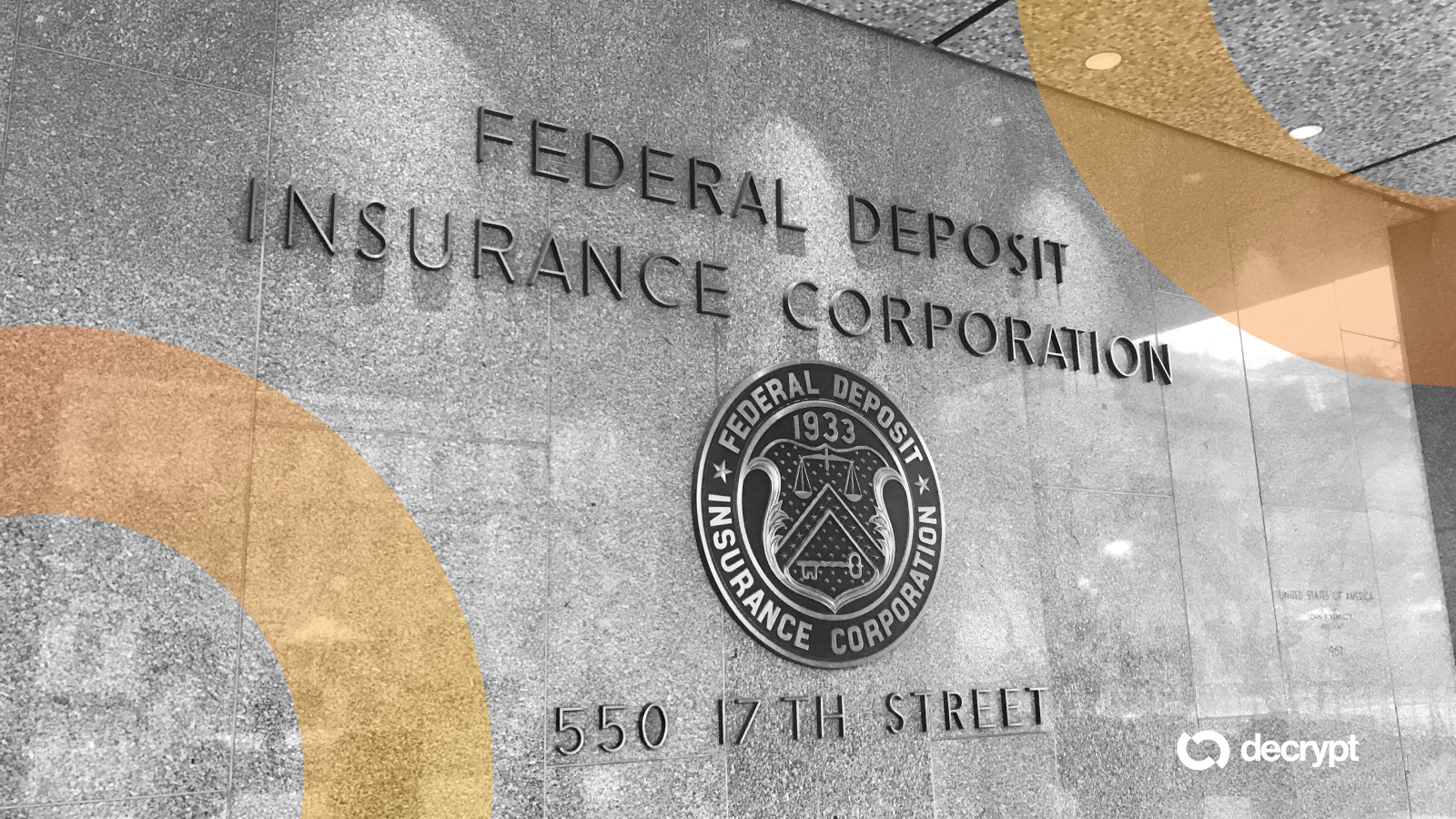
The FDIC’s proposal establishes federal oversight standards for stablecoin issuers while explicitly excluding tokens from deposit insurance protections.

Geopolitical de-escalation signals, specifically regarding Iran, are driving a positive risk-on sentiment, leading to a recovery in Bitcoin and other risk assets after early session losses. The market's rapid recovery from earlier lows, driven by news of a potential Iran ceasefire, indicates a high sensitivity to geopolitical developments and a willingness to re-enter risk assets on positive macro news. Bitcoin's ability to reclaim the $69,000 level following a dip below $68,000 highlights its resilience and the immediate impact of perceived improvements in global stability on its price action.

Geopolitical tensions and threats of conflict are increasing market volatility, leading Bitcoin to test key support levels as traders price in potential downside risks. Technical indicators suggest a bearish outlook for Bitcoin, with multiple failed recovery attempts and bearish chart patterns indicating a potential drop to $55,000 if current support breaks. Despite bearish technicals, the market is not yet showing strong trend confirmation, leaving room for potential reversals if bullish catalysts emerge, though current conditions favor caution. The article highlights Bitcoin's increasing correlation with traditional risk assets during geopolitical crises, questioning its role as a safe-haven asset.

BlockDAG is nearing the end of its presale phase at $0.000016, signaling a transition to open market trading and potential price discovery based on supply and demand dynamics. Hyperliquid faces a near-term price adjustment risk due to an upcoming token unlock of approximately 9.92 million tokens, which will increase circulating supply. AVAX is trading around $9, showing modest recent gains and potential for upward movement if momentum builds, supported by ongoing network activity and institutional interest in RWA and ETF developments.

Morgan Stanley's entry into the Bitcoin ETF market with a competitive 0.14% fee, undercutting BlackRock's 0.25%, positions it to capture significant market share despite being a late entrant. The bank's extensive network of 16,000 financial advisors provides a 'captive audience' and a strong distribution channel, potentially driving substantial adoption for its new Bitcoin Trust. While unlikely to surpass BlackRock's established ETF, Morgan Stanley's strategic pricing and internal distribution capabilities suggest a strong performance and increased competition in the spot Bitcoin ETF landscape.

Metaplanet's aggressive Bitcoin accumulation, now exceeding 40,000 BTC and reaching 40% of its 2026 target, positions it as a significant corporate holder and signals strong conviction in Bitcoin's long-term value despite short-term volatility. The company's stock trading at a discount to its Net Asset Value (NAV) suggests potential undervaluation, presenting a buying opportunity for investors who believe in its Bitcoin treasury strategy and future growth. Metaplanet's strategic investments beyond direct BTC holdings, including JPYC and Bitcoin Magazine licensing, indicate a broader ecosystem play aimed at capturing value across Asian markets and potentially influencing Bitcoin adoption. The comparison to MicroStrategy highlights Metaplanet's rapid accumulation velocity, suggesting it could become a dominant player in the corporate Bitcoin treasury space, especially in Asia, which may lead to increased market attention and potential price appreciation.
Digital asset investment products saw $224 million in net inflows last week, indicating a cautious recovery in investor sentiment driven by European demand. XRP led inflows with $119.6 million, signaling renewed institutional interest and representing 7% of AUM in these products. Solana received steady inflows of $34.9 million, maintaining its position as a significant asset, while Ethereum experienced outflows of $52.8 million. Solana is testing a critical $80 support level, with a hold potentially leading to a rebound, while a breakdown could signal a deeper correction towards $50-60.

Actress Milla Jovovich has co-developed MemPalace, an open-source AI knowledge tool inspired by the memory palace technique, potentially offering a novel approach to information organization and retrieval in AI systems. While the concept is innovative, its real-world performance and adoption remain unproven, necessitating observation of community deployment and validation beyond initial benchmark tests. The involvement of Ben Sigman from Libre Labs, a Bitcoin lending platform, suggests potential intersections between AI development and existing blockchain infrastructure, though direct crypto asset integration is not specified.
Signal context only. Validate with price action, liquidity, and risk limits before taking a position.
US House members are questioning the CFTC's oversight of insider trading on prediction markets, signaling potential regulatory scrutiny that could impact platforms like Kalshi and Polymarket. While the CFTC affirmed its authority over prediction markets, concerns about "morally obscene" event contracts and suspicious trades suggest a heightened risk of regulatory action or new legislation. The ongoing legal battles and congressional inquiries into prediction markets indicate a developing regulatory landscape that traders should monitor closely for potential impacts on market access and operation.
