
Navigating Crypto News

CoinFeather
Navigating Crypto News

Quick market read from this story
MicroStrategy's resumption of Bitcoin purchases with a $330 million acquisition signals continued institutional conviction, potentially bolstering market sentiment for BTC.
The MSTR stock's 4% gain following the announcement indicates a direct positive correlation between MicroStrategy's BTC accumulation and its equity performance, offering a proxy trade for Bitcoin exposure.
With MicroStrategy holding over 766,000 BTC, its ongoing accumulation strategy remains a significant factor influencing Bitcoin's supply dynamics and market perception.
The company's substantial $42 billion ATM facility highlights its aggressive future acquisition plans, suggesting sustained demand pressure on Bitcoin from a major corporate buyer.
Source, catalyst, and sector overlap from the latest feed.
Metaspins is positioning itself as a leading Web3 crypto casino by emphasizing high RTP games, provably fair technology, and fast-paced gameplay, aiming to attract crypto enthusiasts seeking transparent and engaging online gaming experiences. The platform's focus on proprietary 'Originals' like Plinko, Mines, and Keno, which offer high RTP (up to 99%) and strategic elements, suggests a strategy to differentiate from traditional online casinos and capture market share within the growing Web3 gaming sector. By integrating crypto payments and a user-friendly interface across devices, Metaspins is leveraging blockchain technology to enhance convenience and trust, signaling a broader trend of crypto adoption in the online entertainment industry.
Live Feed
Loading the broader stream in the same flow as the homepage feed.
The FBI's report highlights a significant increase in crypto fraud, with over $11.2 billion lost in 2025, indicating a persistent threat to investor capital and market integrity. Investment fraud, particularly "pig butchering" schemes and fake exchanges, is the primary driver of these losses, underscoring the need for enhanced user education and platform security measures. The FBI's successful freezing of over 3,000 illicit wallets and recovery of $500 million demonstrates the effectiveness of public-private collaboration and on-chain analytics in combating crypto crime. The increasing use of AI in cybercrime, contributing nearly $893 million in losses, signals a new frontier of threats that will require adaptive security strategies and regulatory oversight.

Key Takeaways Americans lost $11.4 billion to cryptocurrency fraud in 2025, a 22% jump from the previous year Investment scams […] The post $11.4 Billion Lost to Crypto Scams in 2025 – and That’s Only What Got Reported appeared first on Coindoo.

The FDIC's proposed rule for stablecoin issuers, aligned with the GENIUS Act, introduces capital, liquidity, and custody standards, signaling a move towards formal regulatory frameworks for the sector. The proposal clarifies that stablecoins will not receive deposit insurance, a key distinction from traditional bank accounts, impacting how market participants perceive their safety and yield potential. While the FDIC's proposal addresses potential concerns around yield programs, it aims to prevent misrepresentation of interest or yield solely from holding payment stablecoins, requiring careful structuring of rewards. The FDIC's move to solicit public comment on 144 questions indicates a thorough regulatory process, suggesting that final rules may take time to implement, creating a period of regulatory uncertainty for issuers.
Polymarket's introduction of its own stablecoin, Polymarket USD, backed 1:1 by native USDC, does not directly reduce USDC's market cap as it represents a rebranding of collateral rather than a withdrawal of funds. The shift from USDC.e to Polymarket USD on the platform streamlines user experience and gives Polymarket greater control over its collateral and yield economics, reducing reliance on bridged assets. This development highlights a growing trend of layered stablecoin ecosystems where platform-specific tokens interface with users, while underlying assets like USDC serve as foundational collateral, making market analysis more complex. While not a direct threat to USDC's market cap, the structural change introduces new dependencies on Polymarket's redemption design and operational controls, adding a layer of risk for users.

The scrutiny over World Liberty's (WLFI) partnership with AB DAO, due to alleged ties to sanctioned entities, raises significant governance and due diligence concerns for the Trump-linked crypto venture. Despite WLFI's claims of no association with sanctioned individuals, the investigation highlights potential reputational risks and the need for enhanced vetting in crypto partnerships, especially those involving politically connected entities. The development could lead to increased regulatory attention and investor caution regarding projects with complex or opaque affiliations, potentially impacting WLFI's market perception and future collaborations.
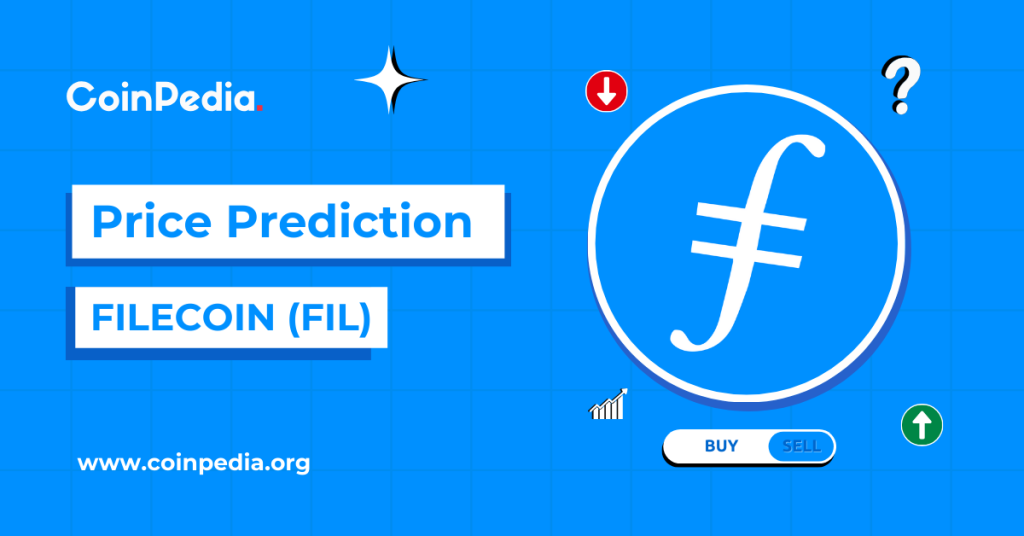
Filecoin's price action shows early stabilization near $0.80-$0.90, suggesting potential for a trend reversal if resistance at $1.20 is decisively broken. Analysts project FIL could reach $3-$10 in 2026 and potentially $50 by 2030, driven by increasing decentralized storage demand and network utility upgrades like Filecoin OnChain Cloud. While current price action is consolidating, improving on-chain metrics and whale accumulation in late 2025 provide a foundation for potential upside, contingent on sustained market recovery. The article presents long-term price predictions for FIL, indicating a bullish outlook based on fundamental growth in decentralized storage and network relevance.
Macro analyst Jim Willie predicts XRP could surge to $25, linking its potential rise to systemic stress in traditional finance and the need for bailouts, suggesting XRP could act as a "device" for Wall Street. The analyst posits that major financial institutions are coordinating behind the scenes to influence regulatory frameworks like the 'Clarity Act,' which could impact digital identity, staking, and dividends, potentially benefiting XRP as a neutral bridge asset. XRP's potential price appreciation is framed by the analyst as a consequence of a global credit crisis and distrust in payment systems, where XRP could eliminate correspondent bank escrow and streamline trillions in capital.

Solana Foundation's 'Don't waste time with crypto' campaign signals a strategic pivot towards positioning the network as invisible infrastructure for AI-driven economic activity, aiming for seamless, automated agentic payments. The campaign highlights Solana's focus on high throughput and low transaction costs as critical for powering 'agentic payments,' suggesting a potential competitive advantage in the emerging AI-powered internet economy. This marketing shift implies that the future of crypto adoption may lie in its utility as background infrastructure for AI agents, rather than direct consumer interaction, potentially influencing investor perception of network value.
AAVE's sharp price drop to $86.56, coupled with a deeply oversold RSI of 26.18, suggests potential for a short-term technical bounce. The significant increase in AAVE exchange reserves to 2.23 million tokens, the highest since April 2025, indicates rising sell-side pressure that could cap any recovery rallies. The reversal of the year-long trend of AAVE leaving exchanges to reserves accumulating on exchanges signals a structural shift, with both capitulating holders and profit-takers contributing to increased sell-side liquidity.
XRP’s liquidation heatmap highlights huge liquidity clusters at $1.27–$1.28 and $1.35, as a whale scoops 20 million coins from Upbit, signaling intensified market activity.

BlockDAG's presale at $0.000016 positions it for a transition to open market trading, with planned developments including a decentralized exchange and lending tools. Solana's price outlook remains tied to its high volume of DeFi and NFT transactions, reflecting ongoing network growth and adoption. BNB's price is influenced by its role within the Binance ecosystem and periodic token burns, which affect circulating supply. The article, being sponsored content, provides a comparative market overview rather than a deep dive into specific catalysts for BlockDAG, Solana, or BNB.
Shiba Inu debuts on Rakuten Wallet in Japan. Users can buy, sell, and trade SHIB securely alongside XRP and Dogecoin.

US prosecutors are pushing back against Tornado Cash co-founder Roman Storm's defense arguments, indicating a continued legal battle that could set precedents for developer liability. The rejection of Storm's motion for dismissal suggests prosecutors are determined to pursue charges related to money laundering and sanctions violations, potentially leading to a retrial. The ongoing legal proceedings for Tornado Cash highlight the evolving regulatory landscape and the risks developers face when creating open-source code used in decentralized applications.
Signal context only. Validate with price action, liquidity, and risk limits before taking a position.
Dogecoin's 63% volume surge and Bollinger Band squeeze indicate a high probability of significant price volatility, potentially leading to a breakout from its descending channel. Technical analysis suggests Dogecoin could retest higher support levels or experience a substantial rally, with some projections indicating potential gains exceeding 440% if historical logarithmic uptrend channel patterns repeat. The combination of a descending channel breakout and a test of a long-term logarithmic uptrend channel's lower band presents a bullish technical setup, supported by increased trading volume and analyst commentary.
