
Navigating Crypto News

CoinFeather
Navigating Crypto News
Quick market read from this story
The recent ceasefire between the US, Israel, and Iran is viewed as a temporary de-escalation, with underlying geopolitical risks remaining, suggesting potential for short-term volatility in crypto markets.
Crypto's market behavior is evolving beyond a simple crisis hedge, now showing increased correlation with traditional macro indicators like interest rates and energy prices, making oil price movements a more significant driver than geopolitical headlines alone.
While the ceasefire may provide temporary relief, a sustained rise in oil prices due to potential Strait of Hormuz disruptions could pressure crypto by exacerbating inflation fears and maintaining tight monetary policy, leading to liquidity drains.
The market sentiment is cautiously bearish in the short term due to liquidity and rate pressures, but a bullish outlook is contingent on the ceasefire holding and oil prices stabilizing, indicating a complex interplay of factors influencing crypto's direction.
Source, catalyst, and sector overlap from the latest feed.
Wild price predictions for XRP reaching $1,700 in 90 days are being dismissed by analysts as unrealistic "engagement farming," highlighting a disconnect between speculative narratives and market reality. Despite a narrative of a major breakout, on-chain data from Santiment indicates XRP traders are under pressure with low MVRV levels, suggesting potential accumulation but not immediate exponential growth. Technical analysis suggests XRP's short-term structure remains weak, with potential downside targets around $1.13, $1.08, and $0.87 if selling pressure persists, contradicting extreme bullish short-term forecasts. The divergence between extreme short-term price targets and current market data suggests that while long-term bullishness for XRP may exist, immediate speculative rallies are unlikely to materialize as predicted.
Live Feed
Loading the broader stream in the same flow as the homepage feed.
Intel's stock has rallied 15% driven by AI-related partnerships, notably the Terafab project, positioning it as a potential player in the AI supply chain against competitors like Nvidia. Despite a strong year-long recovery and a $14.2 billion buyback, Intel faces ongoing challenges in its foundry business and profitability stabilization, making upcoming earnings a critical inflection point. Technical analysis shows mixed signals with resistance at $54-$55 and support at $44-$45, suggesting potential for short-term choppiness despite a bullish long-term outlook tied to AI adoption. The market is viewing Intel's transition towards an AI infrastructure role constructively, with a price target of $60-$70 in the bull case, contingent on continued AI momentum and successful execution of its turnaround strategy.

Significant accumulation of approximately 850,000 BTC between $60,000 and $70,000 indicates strong demand at lower price levels, potentially establishing a support floor. The concentration of 1.85 million BTC in the $60K-$70K range suggests that a substantial portion of holders are unlikely to sell below this threshold, reinforcing its role as a key support zone. A notable supply 'air gap' between $70,000 and $80,000, with only 400,000 BTC, implies potential for accelerated price discovery or consolidation if Bitcoin breaks through the $70,000 level. Despite recent price choppiness, Bitcoin's resilience relative to traditional risk assets during geopolitical tensions highlights its potential as a safe-haven asset.

Ripple's CTO Emeritus David Schwartz performed routine software upgrades on his XRP Ledger node, including XRPL software to version 3.2.0-b3, indicating ongoing development and maintenance of the network's infrastructure. The XRP Ledger Foundation released an updated Unique Node List (UNL) with Gen3Labs added and the University of Sao Paulo removed, signifying adjustments in network consensus participants and trust assumptions. Recent security fixes in rippled version 3.1.2 address potential server crashes and outages, reinforcing the stability and reliability of the XRP Ledger protocol. The short downtime for software upgrades on Schwartz's node, under 10 minutes, demonstrates the resilience and efficiency of the XRP Ledger's operational capabilities.
A quantum vulnerability review of the XRP Ledger found that 300,000 accounts holding 2.4 billion XRP are safe due to unexposed public keys, mitigating near-term quantum risk for the majority of holdings. Only two dormant accounts with exposed keys hold 21 million XRP, indicating a low direct risk from inactive large holders to the XRP Ledger's overall security against future quantum threats. The XRP Ledger's architecture, including key rotation capabilities and ongoing development of post-quantum tools, positions it to adapt to future cryptographic challenges more effectively than some legacy blockchains like Bitcoin.

South Korea's proposed bill classifies stablecoins as foreign exchange payment instruments, potentially increasing regulatory oversight on cross-border transactions and related businesses. The draft legislation mandates that issuers of tokenized RWAs must hold underlying assets in managed trusts, integrating RWA issuance into existing custody frameworks and potentially impacting RWA project structures. A ban on interest payments for stablecoin holders, if enacted, could alter the yield-generating strategies for stablecoin issuers and affect investor incentives. The regulatory move signals a broader trend of traditional financial frameworks being applied to digital assets, suggesting increased compliance burdens for stablecoin and RWA projects operating in or targeting South Korea.
Solana is approaching critical long-term support near $61.78, with a failure to hold this level potentially signaling further downside. Short-term price action shows rejection at micro resistance, suggesting continued pressure and a potential test of the $75 support zone. The market is in an undecided state, with a confirmed breakout above the $183.36 resistance line needed for a stronger recovery narrative. Traders should monitor the $75 support zone closely as a potential inflection point for Solana's near-term price direction.
Despite a 93% decline from its all-time high, Shiba Inu shows persistent community growth with rising wallet numbers, suggesting potential for renewed network activity and a possible recovery. The significant increase in SHIB holders, from 1.5 million to 2.93 million over a year despite price depreciation, indicates strong community engagement that could underpin future price appreciation. While current price action remains weak, the historical context of supply burns and the sustained holder growth present a narrative for potential long-term recovery, though immediate catalysts for significant repricing are not evident.

Thailand's SEC is proposing stricter funding scrutiny for crypto firms, aiming to prevent illicit financing and enhance transparency. The proposed regulations could increase compliance burdens for crypto businesses and their major shareholders in Thailand. This move aligns with a broader trend of increased regulatory oversight in Asian crypto markets, potentially impacting regional exchange operations.

Geopolitical de-escalation, evidenced by a U.S.-Iran ceasefire, has reduced market fear and driven Bitcoin above its 50-day moving average, signaling strengthening bullish momentum and potential for further upside towards $76,100. The potential debut of Morgan Stanley's Bitcoin ETF, alongside the easing of geopolitical tensions, could reinforce institutional adoption narratives, supporting higher price levels for Bitcoin and altcoins. While short-term sentiment is positive due to short liquidations and reduced geopolitical risk, the temporary nature of the ceasefire and persistent elevated oil prices suggest caution, with potential for gains to reverse if fresh demand does not materialize.
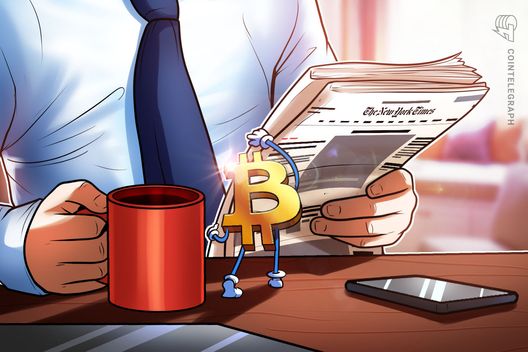
A New York Times investigation suggests Adam Back is Satoshi Nakamoto, reviving a long-standing mystery but lacking definitive cryptographic proof. Despite the circumstantial evidence presented, Adam Back has repeatedly denied the claims, and the crypto community remains skeptical due to the absence of conclusive proof. The report's focus on stylometric analysis and historical discussions of electronic cash by Back, while intriguing, does not constitute a direct market catalyst for BTC.
Coinbase's acquisition of an Australian Financial Services License (AFSL) signifies a strategic expansion into regulated derivatives and equity products, positioning it as a direct competitor to traditional financial institutions in Australia. The regulatory approval in Australia, placing Coinbase under the same framework as traditional financial services providers, enhances its credibility and opens avenues for integrating crypto into retirement savings, a market estimated at AUD 4.5 trillion. While COIN stock shows modest gains, the underlying expansion into new product lines and markets suggests a long-term growth strategy that could influence future revenue streams beyond spot crypto trading.

The new rules apply uniform criteria for withdrawal exceptions based on account history and transaction patterns.
Signal context only. Validate with price action, liquidity, and risk limits before taking a position.
No explicit catalyst tagged.
Cardano's IOG is discontinuing the Acropolis project and scrapping Tiered Pricing to refocus development on chain abstraction and Leios upgrades, signaling a strategic shift towards core ecosystem enhancements. The redirection of 4.1 million ADA back to the treasury, while intended to prioritize community value, has raised questions about fund allocation and transparency, potentially creating minor FUD. By consolidating development efforts, Cardano aims to simplify user and developer interaction and improve network throughput, which could positively impact ADA's long-term utility and adoption if Leios delivers as expected.
