
Navigating Crypto News

CoinFeather
Navigating Crypto News

Quick market read from this story
The reported ceasefire between the U.S. and Iran has triggered a broad risk-on sentiment, leading to a surge in Bitcoin and crypto-linked equities.
Improved geopolitical stability is reducing volatility across markets, with both the VIX and Bitcoin Volmex Implied Volatility Index showing significant declines.
The market reaction suggests that Bitcoin is increasingly being treated as a risk-on asset, correlating with traditional equities and gold during periods of de-escalation.
Source, catalyst, and sector overlap from the latest feed.
Significant accumulation of approximately 850,000 BTC between $60,000 and $70,000 indicates strong demand at lower price levels, potentially establishing a support floor. The concentration of 1.85 million BTC in the $60K-$70K range suggests that a substantial portion of holders are unlikely to sell below this threshold, reinforcing its role as a key support zone. A notable supply 'air gap' between $70,000 and $80,000, with only 400,000 BTC, implies potential for accelerated price discovery or consolidation if Bitcoin breaks through the $70,000 level. Despite recent price choppiness, Bitcoin's resilience relative to traditional risk assets during geopolitical tensions highlights its potential as a safe-haven asset.
Live Feed
Loading the broader stream in the same flow as the homepage feed.

South Korea's proposed bill classifies stablecoins as foreign exchange payment instruments, potentially increasing regulatory oversight on cross-border transactions and related businesses. The draft legislation mandates that issuers of tokenized RWAs must hold underlying assets in managed trusts, integrating RWA issuance into existing custody frameworks and potentially impacting RWA project structures. A ban on interest payments for stablecoin holders, if enacted, could alter the yield-generating strategies for stablecoin issuers and affect investor incentives. The regulatory move signals a broader trend of traditional financial frameworks being applied to digital assets, suggesting increased compliance burdens for stablecoin and RWA projects operating in or targeting South Korea.
Wild price predictions for XRP reaching $1,700 in 90 days are being dismissed by analysts as unrealistic "engagement farming," highlighting a disconnect between speculative narratives and market reality. Despite a narrative of a major breakout, on-chain data from Santiment indicates XRP traders are under pressure with low MVRV levels, suggesting potential accumulation but not immediate exponential growth. Technical analysis suggests XRP's short-term structure remains weak, with potential downside targets around $1.13, $1.08, and $0.87 if selling pressure persists, contradicting extreme bullish short-term forecasts. The divergence between extreme short-term price targets and current market data suggests that while long-term bullishness for XRP may exist, immediate speculative rallies are unlikely to materialize as predicted.

Cardano's IOG is discontinuing the Acropolis project and scrapping Tiered Pricing to refocus development on chain abstraction and Leios upgrades, signaling a strategic shift towards core ecosystem enhancements. The redirection of 4.1 million ADA back to the treasury, while intended to prioritize community value, has raised questions about fund allocation and transparency, potentially creating minor FUD. By consolidating development efforts, Cardano aims to simplify user and developer interaction and improve network throughput, which could positively impact ADA's long-term utility and adoption if Leios delivers as expected.
Solana is approaching critical long-term support near $61.78, with a failure to hold this level potentially signaling further downside. Short-term price action shows rejection at micro resistance, suggesting continued pressure and a potential test of the $75 support zone. The market is in an undecided state, with a confirmed breakout above the $183.36 resistance line needed for a stronger recovery narrative. Traders should monitor the $75 support zone closely as a potential inflection point for Solana's near-term price direction.
Despite a 93% decline from its all-time high, Shiba Inu shows persistent community growth with rising wallet numbers, suggesting potential for renewed network activity and a possible recovery. The significant increase in SHIB holders, from 1.5 million to 2.93 million over a year despite price depreciation, indicates strong community engagement that could underpin future price appreciation. While current price action remains weak, the historical context of supply burns and the sustained holder growth present a narrative for potential long-term recovery, though immediate catalysts for significant repricing are not evident.

Thailand's SEC is proposing stricter funding scrutiny for crypto firms, aiming to prevent illicit financing and enhance transparency. The proposed regulations could increase compliance burdens for crypto businesses and their major shareholders in Thailand. This move aligns with a broader trend of increased regulatory oversight in Asian crypto markets, potentially impacting regional exchange operations.
Spot ETH ETFs experienced significant net inflows of $71.2 million, signaling renewed institutional interest and potentially supporting Ethereum's price trajectory towards ambitious year-end targets like $7,500. The article highlights a technical breakout pattern for ETH, suggesting a potential trend shift that could attract traders looking to capitalize on a bullish market sentiment, especially as bearish calls appear to be peaking. While ETH price targets are optimistic, the narrative emphasizes that meme coins often generate the most substantial gains in a cycle, positioning Pepeto as a potential successor to DOGE due to its integrated exchange and AI tools. The promotion of Pepeto's presale, coupled with mentions of a potential Binance listing, suggests an imminent catalyst for the meme coin, aiming to capture capital overflow from the ETH market.
Significant token unlocks totaling 239 million PI are scheduled over the next 30 days, creating potential selling pressure against current demand levels. The current daily trading volume for PI is insufficient to absorb the incoming supply, suggesting short-term price stabilization rather than a strong upward trend. Despite recent price corrections, PI is trading sideways around $0.17-$0.18, indicating market absorption efforts but lacking a clear recovery signal. The upcoming supply surge, peaking mid-month with daily unlocks of up to 22.78 million PI, presents a bearish short-term outlook for the token's price.
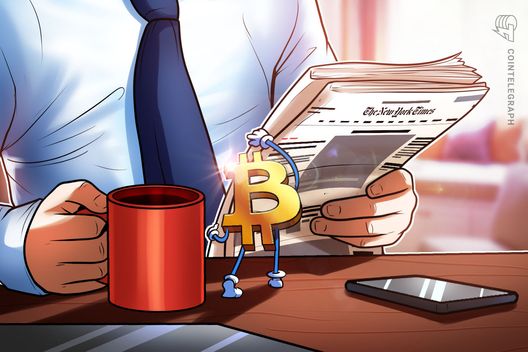
A New York Times investigation suggests Adam Back is Satoshi Nakamoto, reviving a long-standing mystery but lacking definitive cryptographic proof. Despite the circumstantial evidence presented, Adam Back has repeatedly denied the claims, and the crypto community remains skeptical due to the absence of conclusive proof. The report's focus on stylometric analysis and historical discussions of electronic cash by Back, while intriguing, does not constitute a direct market catalyst for BTC.
Coinbase's acquisition of an Australian Financial Services License (AFSL) signifies a strategic expansion into regulated derivatives and equity products, positioning it as a direct competitor to traditional financial institutions in Australia. The regulatory approval in Australia, placing Coinbase under the same framework as traditional financial services providers, enhances its credibility and opens avenues for integrating crypto into retirement savings, a market estimated at AUD 4.5 trillion. While COIN stock shows modest gains, the underlying expansion into new product lines and markets suggests a long-term growth strategy that could influence future revenue streams beyond spot crypto trading.

Geopolitical de-escalation following Trump's ceasefire announcement triggered a significant cross-asset repricing, with Bitcoin breaking above $71k as oil fell below $100, indicating a shift from war premium to relief. The market's rapid response to the geopolitical variable, prioritizing it over traditional macro factors like growth and inflation, highlights Bitcoin's increasing correlation with global risk sentiment and its role in absorbing macro shocks. While the immediate U.S.-Iran escalation risk and associated Strait of Hormuz disruption premium have been significantly reduced, the market remains sensitive to the sustainability of the ceasefire and potential regional conflict expansion, particularly concerning Lebanon. The swift and synchronized move across Bitcoin, SPY, and crude oil demonstrates a market structure highly attuned to geopolitical catalysts, suggesting that similar events could drive significant short-term volatility and repricing opportunities.
The resurfacing of a 2014 forgery claim by OKX founder Star Xu against Binance's CZ, triggered by Zhao's memoir, introduces reputational risk and potential legal overhang for Binance, though the direct market impact is likely limited given the age of the allegations. While the dispute centers on historical events and alleged contract manipulation, it highlights ongoing tensions between major exchange figures, potentially influencing investor sentiment towards associated entities if further evidence or legal action emerges. The claim, supported by chat records, suggests a pattern of alleged misconduct by CZ during his time at OKCoin, which could be scrutinized by regulators or impact future business dealings, although Zhao's defense of a hacked account complicates definitive conclusions.
Signal context only. Validate with price action, liquidity, and risk limits before taking a position.
No explicit catalyst tagged.
Geopolitical de-escalation, evidenced by a U.S.-Iran ceasefire, has reduced market fear and driven Bitcoin above its 50-day moving average, signaling strengthening bullish momentum and potential for further upside towards $76,100. The potential debut of Morgan Stanley's Bitcoin ETF, alongside the easing of geopolitical tensions, could reinforce institutional adoption narratives, supporting higher price levels for Bitcoin and altcoins. While short-term sentiment is positive due to short liquidations and reduced geopolitical risk, the temporary nature of the ceasefire and persistent elevated oil prices suggest caution, with potential for gains to reverse if fresh demand does not materialize.
