
Navigating Crypto News

CoinFeather
Navigating Crypto News

Quick market read from this story
The FDIC's proposed rules, implementing the GENIUS Act, will regulate stablecoin issuers but explicitly exclude stablecoin holders from direct deposit insurance, signaling a nuanced regulatory approach.
While direct insurance for stablecoin holders is denied due to the GENIUS Act, the FDIC aims to provide indirect assurance through elevated regulatory and supervisory standards for issuers.
The FDIC is actively seeking public feedback on 144 questions regarding stablecoin regulation, indicating a period of potential rule refinement before final implementation.
Source, catalyst, and sector overlap from the latest feed.
The SEC's admission that certain past enforcement actions lacked investor benefit signals a strategic shift away from 'regulation by enforcement' towards prioritizing genuine investor protection. This change in SEC enforcement philosophy, under Chair Paul Atkins, suggests a potentially more favorable regulatory environment for crypto projects, moving away from aggressive novel legal theories. While the SEC is de-emphasizing volume, it continues to pursue cases involving clear fraud and manipulation, indicating that significant misconduct will still face regulatory action. The reduction in enforcement actions by approximately 30% under the new leadership could lead to reduced legal uncertainty for some crypto firms, potentially encouraging innovation and investment.
Live Feed
Loading the broader stream in the same flow as the homepage feed.

Established DeFi protocols like Uniswap and Layer-1 networks such as Polkadot are experiencing price declines, indicating broader market weakness that may lead traders to seek opportunities in early-stage projects. BlockDAG's presale phase at a fixed $0.000016 price point offers a distinct entry strategy compared to the declining market performance of established assets, potentially attracting speculative interest. The contrast between declining established cryptocurrencies and a project in its presale phase highlights a market dynamic where investors may be re-evaluating risk and seeking early-stage growth potential.

Polygon's POL token is experiencing short-term price weakness despite an upcoming Giugliano hardfork upgrade, indicating market caution ahead of the event. While technical indicators suggest a bearish near-term trend for POL, strong network activity and increasing adoption by major companies could provide underlying support. The Giugliano upgrade aims to optimize network performance and enhance fee mechanisms, potentially boosting Polygon's efficiency and solidifying its position as a low-cost blockchain. Market participants will closely monitor the post-upgrade price action to determine if the development translates into positive sentiment or further selling pressure.
Midnight (NIGHT) is approaching an all-time low with decreasing volume and bearish structure, suggesting a potential prolonged period of stagnation or a gradual bleed rather than a sharp recovery. Shiba Inu (SHIB) has broken below the critical $0.000006 support level, reinforcing a bearish trend and indicating that previous support zones may now act as resistance, increasing vulnerability to further downside. Dogecoin (DOGE) is exhibiting a low-volatility, sideways movement after a prolonged downtrend, which, combined with decreased trading volume and weak momentum, suggests a continuation pattern rather than an imminent reversal.
Significant short liquidations exceeding $154M occurred as Bitcoin briefly retested $70,000, indicating strong bearish sentiment among some traders and whales. Despite short liquidations, Bitcoin ETFs saw substantial inflows of $416M, the highest in four weeks, suggesting institutional demand is underpinning the current price action. While whales exhibited mixed behavior with significant short positions and some spot selling, overall institutional conviction remains high, as evidenced by sustained ETF inflows and near-all-time-high fund holdings. The interplay between short liquidations and strong ETF inflows suggests a volatile market environment where short-term bearish bets are being challenged by persistent institutional buying pressure.

Binance CEO CZ's memoir reveals the FTX acquisition was never a serious consideration, highlighting a lack of genuine intent beyond a potential rescue for users. Caroline Ellison's public offer to buy FTT at $22 was a critical misstep, signaling a floor price that professional traders exploited, accelerating FTX's collapse. The narrative from CZ suggests that while Binance was prepared to step in for user protection, the underlying financial situation of FTX was deemed unsalvageable once due diligence began. CZ's account of the FTX collapse and subsequent bank run on Binance, where user funds were fully backed, aims to reinforce confidence in Binance's operational stability.

Geopolitical de-escalation via a U.S.-Iran ceasefire has triggered a significant risk-on sentiment, driving Bitcoin above $72,000 and boosting other risk assets. The ceasefire announcement led to a collapse in oil prices, alleviating inflation fears that had previously capped Bitcoin's upside and pressured traders into bearish positions. Liquidation of nearly $600 million in leveraged crypto futures, predominantly short bets, indicates strong bullish momentum and a potential short squeeze, reinforcing upward price pressure.
Geopolitical de-escalation between the USA and Iran triggered a significant risk-on rally in crypto markets, with Bitcoin and Ethereum experiencing notable price increases. The surge was amplified by substantial short liquidations, indicating that a portion of the price action was driven by forced covering rather than purely organic buying pressure. While the broader market benefited from the ceasefire news, Zcash exhibited unusual outperformance, suggesting independent project-specific catalysts are at play. The market's rapid repricing highlights crypto's sensitivity to macro inflection points and embedded leverage, with potential for swift reversals if geopolitical tensions re-emerge.
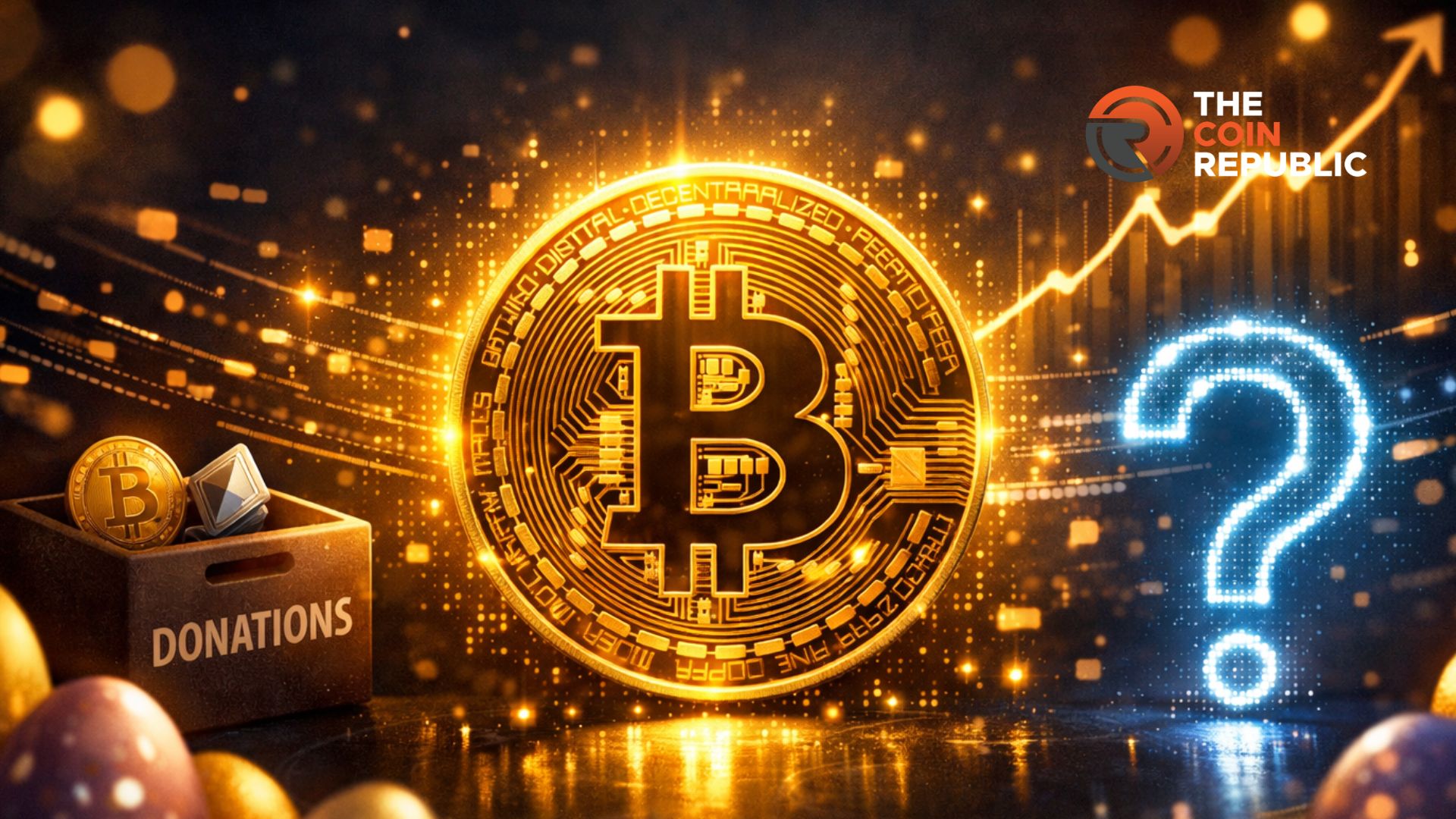
Crypto donations are showing steady growth, crossing $100 million in 2025 and a 66% rise from the previous year, indicating increasing adoption beyond experimental use. While crypto giving is expanding, it has not yet become a significant part of seasonal donation trends like Easter, suggesting it remains a niche area despite overall growth. The IRS guidance on crypto donations, particularly regarding tax deductions based on holding periods, provides clarity that may encourage more donors to utilize digital assets for charitable contributions.

Solana DEX Stabble urged users to withdraw liquidity due to a former CTO's alleged ties to North Korean hackers, causing a 62% drop in TVL. The incident highlights ongoing security concerns within the DeFi space, particularly concerning state-sponsored hacking groups. While no exploit occurred on Stabble, the rapid TVL decline underscores user sensitivity to perceived security risks, especially following recent large-scale exploits on Solana. The Solana Foundation's recent security initiatives may be tested by such events, indicating a continued need for robust security measures across the ecosystem.

The escalating "wrench attacks" in France, targeting crypto holders through physical violence, highlight significant security risks for individuals and could deter broader adoption if not addressed. Artist Pascal Boyart's accusation of government complicity in these attacks, linking it to regulatory actions and KYC, suggests a growing narrative of government overreach impacting the crypto community. The trend of organized crypto kidnappings, often orchestrated by overseas actors and utilizing social media for targeting, indicates a sophisticated criminal element exploiting digital footprints for physical gain.
Solana DEX Stabble's urgent liquidity withdrawal request, prompted by concerns over a developer linked to North Korea, highlights significant security and vetting vulnerabilities within the DeFi ecosystem. The incident, while not a confirmed exploit, has eroded LP confidence and underscores the ongoing risk posed by state-sponsored actors infiltrating crypto projects through false identities. Stabble's new team is attempting to rebuild trust through audits and enhanced controls, but the communication strategy has drawn criticism, indicating potential challenges in restoring platform credibility. This event serves as a cautionary tale for DeFi protocols regarding due diligence and the critical need for robust identity verification processes to mitigate geopolitical and security risks.
Signal context only. Validate with price action, liquidity, and risk limits before taking a position.
Geopolitical de-escalation between the US and Iran has directly correlated with a Bitcoin price surge above $72,000, indicating a historical sensitivity of crypto markets to global stability. The market's rapid relief rally suggests that traders perceive reduced geopolitical risk as a positive catalyst, potentially unlocking capital that was previously on the sidelines due to uncertainty. While this ceasefire is temporary, any sustained period of reduced global conflict could provide a tailwind for risk assets like Bitcoin, especially if it coincides with other positive market developments.
