
200+ crypto news providers in one place.

CoinFeather
200+ crypto news providers in one place.

Fast Read
Deep Dive
Bitcoin (BTC) experienced an initial dip before recovering its losses, prompting market participants to analyze the potential impact of rising oil prices on its future trajectory. Escalating geopolitical tensions in the Middle East have driven oil prices to a 15-month high of $79.84 per barrel, following reports of Iranian drones targeting Saudi Aramco's Ras Tanura refinery. This surge in oil prices has led to concerns about potential inflation shocks and a delay in anticipated Federal Reserve interest rate cuts, with some analysts predicting a short-term risk for Bitcoin, potentially pushing its price below $60,000.
Market sentiment is divided on the long-term implications. While some commentators, like crypto entrepreneur Anthony Pompliano, foresee Bitcoin and other cryptocurrencies declining if oil prices continue to climb, particularly if the Strait of Hormuz is threatened, others point to historical patterns suggesting a different outcome. Arthur Hayes, former CEO of BitMEX, argues that historical precedents of U.S. intervention in the Middle East often lead to monetary easing by the Federal Reserve to finance such endeavors. This potential increase in money supply, he posits, could ultimately drive Bitcoin prices higher.
Historically, Bitcoin and oil prices have often shown an inverse relationship in the short term, with oil prices spiking during periods of conflict due to increased energy costs and market uncertainty. However, these oil price spikes have typically been temporary, with Bitcoin demonstrating stronger performance over the medium to long term. For example, during the 2022 Ukraine crisis, oil prices rose significantly while Bitcoin saw a temporary dip before recovering and experiencing substantial gains. Similar patterns were observed following the Hamas attack on Israel in October 2023 and subsequent events. Analysts also note that oil is attempting to break a multi-year downtrend, a technical development that has historically preceded significant rallies in Bitcoin's price.
Source, catalyst, and sector overlap from the latest feed.
Nexo has reentered the US market with a new partner-led model, shifting from direct yield issuance to operating through licensed US intermediaries and Bakkt. This structural change aims to comply with post-2023 regulatory scrutiny on unregistered securities and yield products.
MicroStrategy acquired an additional 3,015 BTC for $204.1 million, bringing its total holdings to 720,737 BTC. This purchase was made below the company's average cost basis of $75,985, with an average price of $67,700 per BTC.
Viral AI spoof "Energym" highlights job displacement fears amid real tech layoffs, with Block cutting 40% of its workforce. Crypto projects like Olas Network propose user-owned AI agents as a counter-narrative to centralized AI control and potential human disenfranchisement.
Foom Cash lost about $2.26 million in an exploit tied to a Groth16 verifier misconfiguration, but security companies flagged a $1.84 million white hat rescue.
Hong Kong and Shanghai authorities are testing a blockchain platform for cargo trade data and finance under Project Ensemble. This initiative aims to streamline trade finance and documentation by digitizing electronic bills of lading and interlinking trade data. The collaboration highlights a growing trend of leveraging blockchain for cross-border trade efficiencies.
A consortium of 12 EU banks, including BBVA and UniCredit, is preparing to launch a MiCA-compliant euro-pegged stablecoin in H2 2026. They are in talks with crypto exchanges to ensure liquidity and aim to provide a regulated European alternative to USD stablecoins. The stablecoin will be backed 1:1 by bank deposits and short-term sovereign bonds.
Crypto outflows from Iran's largest exchange surged 700% within minutes of U.S.-Israeli airstrikes, indicating potential capital flight. This event highlights crypto's role as a tool to bypass traditional banking and sanctions. Major cryptocurrencies like BTC and ETH experienced sharp, albeit temporary, price drops following the geopolitical escalation.
Twelve major European banks are collaborating to launch a MiCA-compliant euro stablecoin in the latter half of 2026. The stablecoin, backed 1:1 by deposits and sovereign bonds, aims to facilitate institutional payments, tokenization, and cross-border settlements. It will launch on Ethereum, Polygon, and Base, incorporating AML/KYC checks via smart contracts.
ONGC shares saw a significant surge following US-Israel strikes on Iran, which heightened fears of oil supply disruptions. The conflict has pushed crude prices higher, impacting India's import bill and creating volatility across oil-sensitive sectors. Analysts note potential support for upstream energy and defense stocks.
Live Feed
Loading the broader stream in the same flow as the homepage feed.
XRPL is proposing a new derivatives sidechain offering 200x leverage and on-chain options trading, aiming to compete in the $1T derivatives market. The development leverages XRPL's existing infrastructure and security, inspired by successful specialized derivatives chains.

A pre-owned Dassault Falcon 6X jet was sold for 4.1 BTC (approx. $20.27M) using cryptocurrency. The transaction highlights Bitcoin's potential for high-value asset settlement and signals growing integration into global wealth structures.
Bitcoin price nears $60,000, placing holders from the last two years in significant unrealized losses. Analysts suggest this could precede a major price reset, similar to historical market cycles. Long-term holders remain in profit, while recent buyers face potential further downside.
Indian Railways is operating over 1,244 special trains for Holi 2026 due to a significant surge in travel demand, with flight bookings up 70-75% YoY and bus bookings also rising sharply. This indicates a strong rebound and increased mobility across India's travel sector.

BitMine holds $7.34 billion in unrealized losses on its Ethereum (ETH) holdings due to recent price declines. The firm had previously increased its ETH position, anticipating long-term price appreciation. Ethereum has dropped 26.59% in the last 30 days.
Strategy acquired 3,015 BTC for $204.1M, increasing total holdings to 720,737 BTC. The company continues its weekly accumulation despite an unrealized loss of over $7 billion on its holdings. MSTR stock dipped nearly 3% amid the announcement.
Analyst WhaleFactor suggests Bitcoin is acting as a "life raft" amidst global tariffs and fiat instability, indicating current volatility is a "shakeout" before a significant upward move. Robert Kiyosaki also anticipates Bitcoin and silver to "blast off" following gold's recent surge.

NEAR Protocol (NEAR) surged 12.4% over the weekend, outperforming other assets in the CoinDesk 20 Index. Solana (SOL) also showed positive movement, up 2.1%. Polkadot (DOT) and Bitcoin Cash (BCH) were among the notable decliners.
Google searches for 'buy Bitcoin' have hit a 5-year high, historically signaling market bottoms. While retail shows fear, whales are accumulating 100,000 BTC, suggesting a potential bullish setup despite recent price drops.
Bitmine acquired 50,928 ETH in late February 2026, increasing total holdings to 4.47 million ETH, valued at $8.8 billion. Over 68% of their ETH is staked, generating $172 million annually, with plans to reach $253 million via MAVAN. This aggressive accumulation positions Bitmine as the largest corporate ETH treasury.
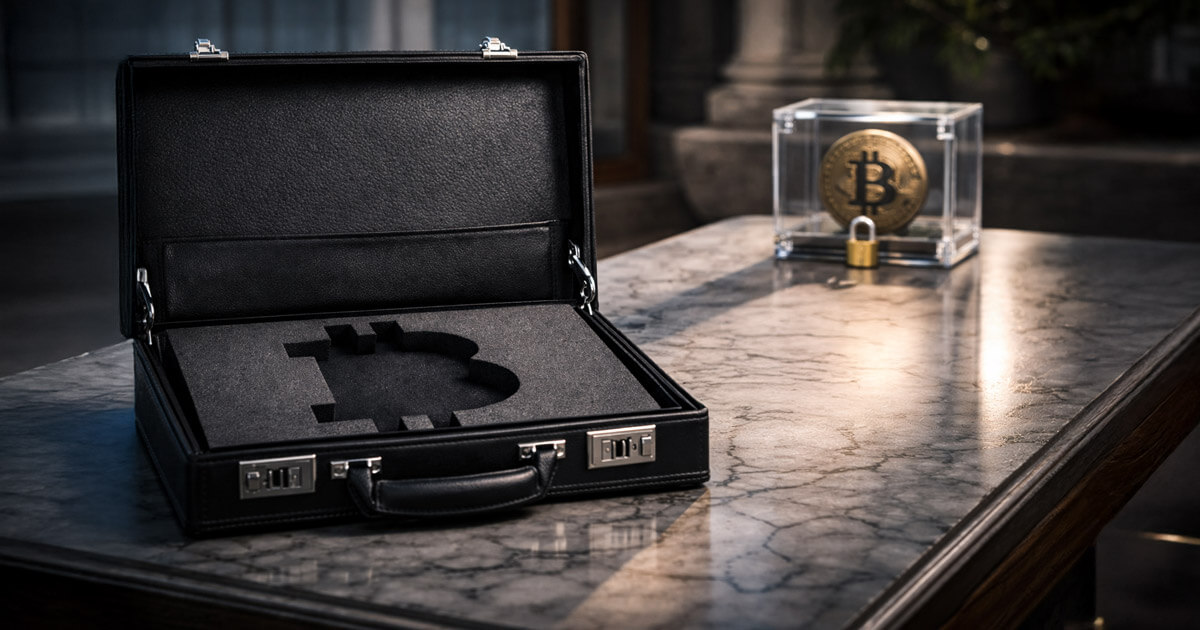
Spot Bitcoin ETFs concentrate custody and operational control with a few custodians, creating single points of failure. This structure shifts authority from direct key control to institutional contracts, potentially creating a 'class system' of exposure holders versus owners. The significant scale of ETF assets ($54B+) makes these structural risks system-relevant.

Ethereum's price has fallen 60% from its 2025 high, with DEX volumes down 55% in six months. However, the network still dominates DeFi TVL (65% with L2s) and sees continued institutional building, positioning it for potential future demand.
Strategy Inc. acquired 3,015 BTC for approximately $204 million, bringing its total holdings to 720,737 BTC. The company funded the purchase by issuing new equity, raising $237.1 million.
Ilya Sutskever's net worth is estimated at $19.5 billion, driven by his co-founding roles at OpenAI and Safe Superintelligence (SSI). SSI recently secured $2 billion in funding, valuing the company at $32 billion, highlighting strong investor confidence in Sutskever's leadership in AI development.
Signal context only. Validate with price action, liquidity, and risk limits before taking a position.
