
200+ crypto news providers in one place.

CoinFeather
200+ crypto news providers in one place.
Fast Read
Deep Dive
Ilya Sutskever, a prominent figure in artificial intelligence and co-founder of OpenAI and Safe Superintelligence, has an estimated net worth approaching $19.5 billion. His financial success is largely attributed to his pivotal roles in launching and leading AI ventures that have achieved multi-billion dollar valuations.
Recent funding rounds for his new startup, Safe Superintelligence (SSI), have significantly contributed to his wealth. SSI reportedly raised $2 billion in early 2025, valuing the company at approximately $32 billion, underscoring investor confidence in Sutskever's leadership and vision.
Ilya Sutskever is a renowned computer scientist recognized for his foundational contributions to artificial intelligence, particularly in machine learning and deep learning. Born in Russia and later immigrating to Canada, he holds both Israeli and Canadian nationalities. He earned his PhD from the University of Toronto under the guidance of Professor Geoffrey Hinton, a pioneer in deep learning research.
Sutskever's early career included significant work at Google Brain, where he contributed to advancements in neural networks and co-authored the influential AlexNet paper, a breakthrough in computer vision. In 2015, he co-founded OpenAI, a research laboratory focused on developing safe and advanced artificial intelligence, where he played a key role in the development of models like GPT. After departing OpenAI in 2024, he co-founded Safe Superintelligence Inc. (SSI), aiming to develop safe and responsible AI.
Ilya Sutskever's net worth is estimated to be around $19.5 billion, with potential for further growth. His financial standing is a direct result of his involvement in high-valuation AI companies. Safe Superintelligence Inc., co-founded by Sutskever, has achieved a valuation of approximately $32 billion after securing $2 billion in funding in early 2025. His personal wealth is primarily derived from equity holdings in these companies, past earnings from OpenAI, and other investments.
Sutskever's income streams are predominantly linked to his work in artificial intelligence. His roles at leading AI startups and his ownership stakes in these companies form the core of his wealth. He was instrumental in the development of AI at OpenAI as its Chief Scientist, contributing to significant advancements in language models and deep learning systems. Following his departure from OpenAI, he co-founded Safe Superintelligence Inc., which has attracted substantial investment, reaching a $32 billion valuation after raising $2 billion in early 2025. This transition placed him as CEO, guiding the company's strategy and research. His reputation in the AI field has been a key factor in attracting significant funding for his ventures, thereby building his net worth. A substantial portion of his wealth is tied to his equity holdings in companies like OpenAI and SSI, with the value of these stakes increasing as the companies grow in valuation.
Ilya Sutskever has profoundly influenced the AI industry through his pioneering research and leadership. His contributions to deep learning, including the AlexNet paper and work on sequence-to-sequence learning, have been foundational. At OpenAI, he co-created influential models such as GPT-2 and GPT-3, significantly advancing natural language processing. His leadership has also directly impacted company valuations; OpenAI's value surged during his tenure, and his new venture, Safe Superintelligence, quickly garnered a valuation of around $30 billion based on investor confidence in his expertise.
As a co-founder and Chief Scientist at OpenAI, Ilya Sutskever played a critical role in the company's development of deep learning and AI projects, including key language models. His leadership and technical vision were instrumental in shaping OpenAI's direction, attracting top talent, and securing significant funding, notably from Microsoft. During his time at OpenAI, the company's valuation grew substantially, from approximately $27 billion in early 2023 to an estimated $150 billion to $300 billion by 2025, following over $6.6 billion in funding. This growth in valuation directly contributed to the potential wealth of early team members, including Sutskever, whose equity stake could be worth hundreds of millions of dollars.
Following his departure from OpenAI, Sutskever co-founded Safe Superintelligence Inc. (SSI), which quickly secured over $1 billion in funding and achieved a valuation exceeding $30 billion. This significant investment, including contributions from major tech firms like Alphabet and Nvidia, reflects strong market interest in SSI's focus on safe and beneficial AI. Sutskever has a history of collaboration with prominent figures in the AI field, including Sam Altman and Elon Musk during his time at OpenAI. He continues to foster alliances with leading AI experts for SSI, aiming to advance research and ensure AI safety. While SSI's focus is on AI development, its emergence has influenced the broader tech investment landscape, including a rally in AI-related tokens, indicating optimism about the convergence of AI and blockchain technologies.
Ilya Sutskever is widely recognized within the AI community for his technical achievements. His early work on AlexNet earned him significant acclaim, shaping the direction of deep learning research. He has been a featured speaker at major AI conferences like NeurIPS and CVPR and was recognized in MIT Technology Review's Innovators Under 35. His contributions have been widely cited, influencing numerous researchers and professionals. As a co-founder of OpenAI and Chief Scientist at Safe Superintelligence Inc., he has been acknowledged for his leadership in AI safety and machine learning development, solidifying his status as a leading innovator in the field.
Sutskever's research has significantly advanced artificial intelligence, particularly in deep learning. He co-authored seminal papers on AlexNet, which revolutionized computer vision, and has published influential works on sequence-to-sequence learning and generative models, many of which have garnered thousands of citations. He also holds several patents related to deep neural networks, model optimization, and generative AI, covering algorithms and practical applications used in image recognition and natural language processing. These patents contribute to his professional influence and financial success in the AI industry.
Ilya Sutskever maintains a relatively private personal life, with most public information focusing on his professional achievements in artificial intelligence. He is described as someone who prioritizes research and innovation over public attention. While specific details about his philanthropic activities are not widely reported, his work is often aligned with advancing the safe development of AI and supporting open research in science and technology. His commitment to ethical technology development is seen as a contribution to public welfare.
Ilya Sutskever's net worth is estimated to be around $19.5 billion, with some reports suggesting it could be higher due to his recent startup activities.
His wealth primarily stems from his career in artificial intelligence, including roles at OpenAI and co-founding AI startups like Safe Superintelligence Inc. Equity stakes in these companies and past earnings are significant contributors.
Yes, his net worth has seen substantial growth, particularly with the high valuations and significant funding rounds achieved by his companies, such as Safe Superintelligence Inc.
While his net worth is substantial, it is often considered moderate compared to some tech founders. However, his influence and early contributions to major AI breakthroughs and highly valued companies distinguish him.
SSI's valuation reached approximately $32 billion within months of its founding and capital raise, despite not having released products or revenue. This valuation reflects strong investor confidence in SSI's mission and Sutskever's leadership in AI breakthroughs.
His groundbreaking work in AI, including co-inventing key technologies and founding successful companies, has directly led to his significant wealth accumulation. Major investments in his startups underscore the confidence in his leadership and expertise.
As of 2026, Ilya Sutskever is the CEO of Safe Superintelligence Inc., overseeing its strategy, fundraising, and research execution following a co-founder's departure.
Source, catalyst, and sector overlap from the latest feed.
XRPL is proposing a new derivatives sidechain offering 200x leverage and on-chain options trading, aiming to compete in the $1T derivatives market. The development leverages XRPL's existing infrastructure and security, inspired by successful specialized derivatives chains.
Indian Railways is operating over 1,244 special trains for Holi 2026 due to a significant surge in travel demand, with flight bookings up 70-75% YoY and bus bookings also rising sharply. This indicates a strong rebound and increased mobility across India's travel sector.
Strategy acquired 3,015 BTC for $204.1M, increasing total holdings to 720,737 BTC. The company continues its weekly accumulation despite an unrealized loss of over $7 billion on its holdings. MSTR stock dipped nearly 3% amid the announcement.
Google searches for 'buy Bitcoin' have hit a 5-year high, historically signaling market bottoms. While retail shows fear, whales are accumulating 100,000 BTC, suggesting a potential bullish setup despite recent price drops.
Ethereum is trading near a critical five-year support level, a zone that has historically acted as a floor for the asset. On-chain data indicates that significant whale holders are now experiencing unrealized losses, suggesting a potential shift in their positioning. The market is closely watching if this key support level holds, which could determine the short-to-medium term price trajectory for ETH.
MicroStrategy acquired an additional 3,015 BTC for $204.1 million, bringing its total holdings to 720,737 BTC. This purchase was made below the company's average cost basis of $75,985, with an average price of $67,700 per BTC.
Strategy Inc. acquired 3,015 BTC for approximately $204 million, bringing its total holdings to 720,737 BTC. The company funded the purchase by issuing new equity, raising $237.1 million.
Cronos (CRO) price is predicted to reach $0.30-$0.35 by 2026 and potentially exceed $1 by 2029, driven by network upgrades, institutional adoption, and technical indicators suggesting a bullish trend. Long-term forecasts project significant growth through 2035.
Strategy (MSTR) acquired 3,015 BTC for $204.1 million, increasing its total holdings to 720,737 BTC. The company funded this purchase through stock sales. ProCap Financial also bought 450 BTC.
Viral AI spoof "Energym" highlights job displacement fears amid real tech layoffs, with Block cutting 40% of its workforce. Crypto projects like Olas Network propose user-owned AI agents as a counter-narrative to centralized AI control and potential human disenfranchisement.
Bitcoin showed resilience, dropping only 3% during initial Iran conflict escalation and recovering sharply, indicating potential strength despite geopolitical shock. Hyperliquid saw record open interest and its HYPE token rallied significantly as it facilitated 24/7 trading of war-related events. Bitcoin ETFs recorded substantial net inflows last week ($787M), suggesting continued institutional demand.
This week's crypto market focus includes earnings reports from Bitcoin miners Riot Platforms and Core Scientific, both expanding into AI. Key macroeconomic events include the U.S. jobs report and ongoing geopolitical tensions in the Middle East, which could impact risk appetite. Several token events, including governance votes, unlocks, and potential token launches, are also scheduled.
NYDIG's research lead suggests Bitcoin could benefit from easier monetary policy if AI drives labor disruption or economic volatility. Conversely, AI-driven growth without increased real rates could also be supportive. The narrative hinges on central bank reactions to AI's macroeconomic impact.
Anthropic's AI, Claude, was reportedly used by U.S. Central Command for critical operations during Iran strikes, despite a directive to phase out its use. This highlights the deep integration of AI in defense and the challenges of rapid disengagement. OpenAI has since secured a similar deal with the Pentagon, potentially filling the void left by Anthropic.
Live Feed
Loading the broader stream in the same flow as the homepage feed.
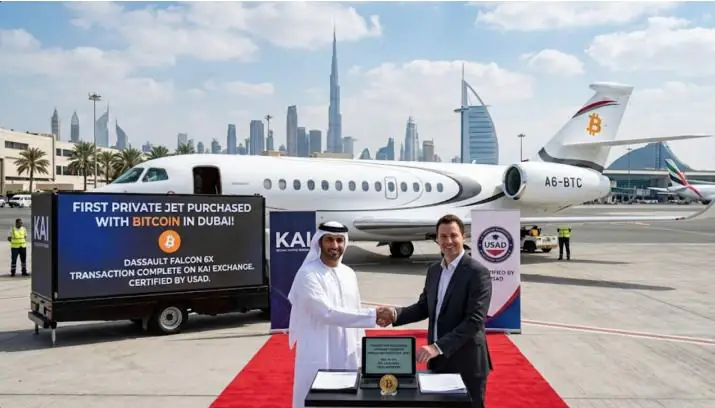
A pre-owned Dassault Falcon 6X jet was sold for 4.1 BTC (approx. $20.27M) using cryptocurrency. The transaction highlights Bitcoin's potential for high-value asset settlement and signals growing integration into global wealth structures.

A consortium of 12 EU banks, including BBVA and UniCredit, is preparing to launch a MiCA-compliant euro-pegged stablecoin in H2 2026. They are in talks with crypto exchanges to ensure liquidity and aim to provide a regulated European alternative to USD stablecoins. The stablecoin will be backed 1:1 by bank deposits and short-term sovereign bonds.

Bitcoin price nears $60,000, placing holders from the last two years in significant unrealized losses. Analysts suggest this could precede a major price reset, similar to historical market cycles. Long-term holders remain in profit, while recent buyers face potential further downside.

BitMine holds $7.34 billion in unrealized losses on its Ethereum (ETH) holdings due to recent price declines. The firm had previously increased its ETH position, anticipating long-term price appreciation. Ethereum has dropped 26.59% in the last 30 days.
Analyst WhaleFactor suggests Bitcoin is acting as a "life raft" amidst global tariffs and fiat instability, indicating current volatility is a "shakeout" before a significant upward move. Robert Kiyosaki also anticipates Bitcoin and silver to "blast off" following gold's recent surge.

Nexo has reentered the US market with a new partner-led model, shifting from direct yield issuance to operating through licensed US intermediaries and Bakkt. This structural change aims to comply with post-2023 regulatory scrutiny on unregistered securities and yield products.

NEAR Protocol (NEAR) surged 12.4% over the weekend, outperforming other assets in the CoinDesk 20 Index. Solana (SOL) also showed positive movement, up 2.1%. Polkadot (DOT) and Bitcoin Cash (BCH) were among the notable decliners.

Crypto outflows from Iran's largest exchange surged 700% within minutes of U.S.-Israeli airstrikes, indicating potential capital flight. This event highlights crypto's role as a tool to bypass traditional banking and sanctions. Major cryptocurrencies like BTC and ETH experienced sharp, albeit temporary, price drops following the geopolitical escalation.
Bitmine acquired 50,928 ETH in late February 2026, increasing total holdings to 4.47 million ETH, valued at $8.8 billion. Over 68% of their ETH is staked, generating $172 million annually, with plans to reach $253 million via MAVAN. This aggressive accumulation positions Bitmine as the largest corporate ETH treasury.
Spot Bitcoin ETFs concentrate custody and operational control with a few custodians, creating single points of failure. This structure shifts authority from direct key control to institutional contracts, potentially creating a 'class system' of exposure holders versus owners. The significant scale of ETF assets ($54B+) makes these structural risks system-relevant.
Ethereum's price has fallen 60% from its 2025 high, with DEX volumes down 55% in six months. However, the network still dominates DeFi TVL (65% with L2s) and sees continued institutional building, positioning it for potential future demand.

Foom Cash lost about $2.26 million in an exploit tied to a Groth16 verifier misconfiguration, but security companies flagged a $1.84 million white hat rescue.
Signal context only. Validate with price action, liquidity, and risk limits before taking a position.
