
200+ crypto news providers in one place.

CoinFeather
200+ crypto news providers in one place.
Fast Read
Deep Dive
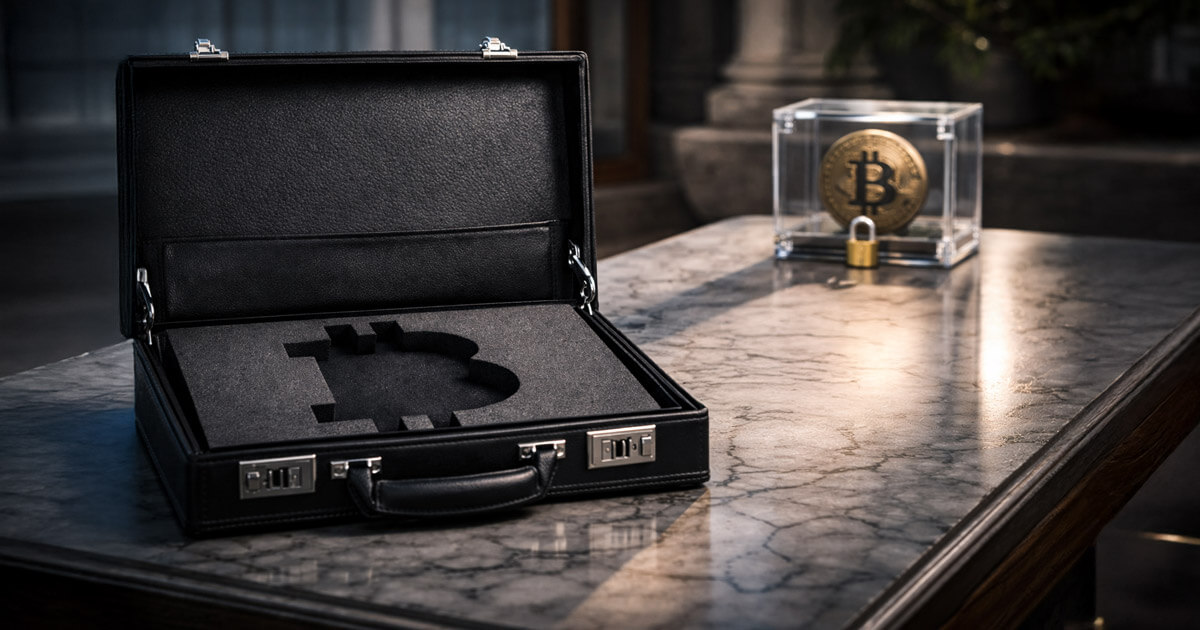
The advent of spot Bitcoin Exchange Traded Funds (ETFs) has streamlined Bitcoin exposure for traditional finance, but it has also introduced a structural shift in control and operational responsibility. While Bitcoin's native ownership is tied to private keys and direct authorization, ETFs repackage this exposure into a tradable ticker. This convenience, however, means that most ETF buyers delegate the actual custody and control of the underlying Bitcoin to a third-party custodian.
SEC filings for spot Bitcoin trusts consistently describe shares as representing a beneficial interest in the trust's net assets, with the trust itself holding Bitcoin through a designated custodian. This structure creates a separation where shareholders own shares, the trust owns the Bitcoin, and the custodian holds it. This concentration of custody also concentrates operational authority, including access control, signing policies, operational resilience, and business continuity planning, within the custodian's domain.
As Bitcoin transitions from a speculative asset to a strategic, long-horizon portfolio component, considerations like governance, key-person dependency, operational breakdowns, and continuity planning become paramount. The ETF structure outsources these complexities to a regulated wrapper, where the custody contract effectively becomes the governance contract. The sponsor, trustee, and custodian form the control surface, a layer removed from the retail shareholder.
Gannett Trust's analysis highlights this as a deliberate choice between convenience and control. Derivative exposure offers simplicity and familiarity, while native ownership provides sovereignty but requires purpose-built governance. The report categorizes risks that grow in importance as assets move onto balance sheets: governance failures, unclear decision rights, operational breakdowns, and continuity planning. Bitcoin's technical nature means that losing the ability to authorize movement translates directly to a loss of control.
The scale of spot Bitcoin ETFs, with over $54 billion in assets as of February 25, 2024, signifies that this structure is becoming core market plumbing. This concentration of Bitcoin within institutional wrappers, alongside significant holdings on exchanges (approximately 1.47 million BTC in ETFs and 3.27 million BTC on exchanges), shapes how new entrants perceive Bitcoin. Buyers learning through ETFs may view it as a market-hours, brokerage, compliance, and statement asset, contrasting with the bearer asset and continuous settlement model of native custody.
Custody concentration is a significant risk, with a few major products and custodial arrangements emerging. Coinbase, for instance, serves as the custodian for eight of the eleven spot Bitcoin ETFs launched. While this concentration can yield efficiencies, it also creates a single point where operational resilience and governance become system-level concerns. Furthermore, the discrepancy between ETF trading hours (bound by market open/close) and Bitcoin's continuous global trading presents a risk. If significant price movements occur outside market hours, ETF positions cannot adjust until trading resumes, with control resting with those authorized within the custody stack.
The distinction between native ownership and ETF exposure lies in their respective authority paths. Native ownership relies on direct control of keys and established governance procedures. ETF ownership delegates this authority to a stack of institutional roles and contracts. The convenience of ETFs represents a reallocation of operational agency, which can become a fragility layer as ETF holdings grow. The core risk for buyers is misunderstanding whether they have chosen delegated authority or direct ownership, especially when the underlying asset is designed for bearer control.
Source, catalyst, and sector overlap from the latest feed.
US crypto investment products experienced five consecutive weeks of outflows totaling $4 billion, driven by regulatory uncertainty and a desire for liquidity. Meanwhile, Europe and Canada collectively saw inflows, indicating a regional divergence in risk appetite. This shift in marginal buying, particularly during lower volume periods, could influence price action and rally formation.
Bitcoin is facing pressure from geopolitical tensions surrounding Iran and potential oil supply disruptions, which could impact its price action as U.S. markets reopen. The key focus will be on U.S. spot Bitcoin ETF flows, which are expected to provide a significant test for the recent rebound. Traders are watching key price levels, with a sustained energy shock potentially pushing BTC lower, while strong ETF inflows could support a continued rally.
The DOJ has seized over $580 million in crypto from global scam networks in three months, highlighting an industrialization of fraud. These operations use call-center tactics, scripted grooming, and fake platforms, leading to significant losses for victims, especially the elderly. Enforcement is shifting to target infrastructure chokepoints rather than individual operators.
Bitcoin's mining difficulty has seen a significant 15% increase, tightening miner economics. This adjustment, occurring while BTC trades in the mid-$60,000s, puts pressure on less efficient miners to sell coins to cover operational costs. While this introduces short-term selling pressure, it also acts as a clearing event, potentially leading to a more efficient mining base and strengthening network security over time.
A Bitcoin developer demonstrated embedding a 66KB image within a single transaction, bypassing common data storage methods like OP_RETURN and Taproot. This highlights that consensus rules permit such data storage, and attempts to filter "spam" via policy may merely redirect usage to less efficient or more centralized methods. The development directly informs the ongoing debate around BIP-110, a proposal for temporary consensus-level restrictions on data-carrying transactions.
Pi Network is launching its DEX on March 12, 2026, alongside a mandatory protocol upgrade to v19.9, moving towards Protocol v23. Despite significant network growth and KYC completions, PI trades near $0.17, far below its 2025 peak, with divided analyst outlooks on future price performance.
Approximately 470 million XRP ($472 million) have been deposited onto Binance, raising concerns of a potential sell-off and contributing to a recent 1.08% price drop. Daily trading volume has decreased by 25%, indicating reduced retail investor engagement. Despite short-term bearish signals, ongoing developer activity and planned use case expansions for XRP on the XRPL offer potential for future recovery.
Turkey's ruling party proposed a 10% crypto income tax and a 0.03% transaction levy on service providers. The bill aims to formalize crypto taxation and align digital assets with existing financial regulations. This development occurs amidst a global trend of increased crypto tax oversight.
X (formerly Twitter) now allows sponsored crypto promotions with a mandatory 'Paid Partnership' label, though restrictions apply in the EU, UK, and Australia. The platform is also developing X Money and Smart Cashtags for integrated trading.
Strategy purchased $200 million in Bitcoin, increasing its total holdings to approximately 720,750 BTC. The company also raised its STRC monthly dividend to 11.5% to fund operations and Bitcoin acquisitions without diluting common shareholders.
Live Feed
Loading the broader stream in the same flow as the homepage feed.
SPY is trading as a proxy for geopolitical risk amid US-Iran tensions, causing a broad market selloff with energy and defense stocks outperforming. Historical data suggests the S&P 500 often recovers from geopolitical shocks within weeks, presenting potential dip-buying opportunities if oil prices stabilize.
XRP spot ETFs saw $58M in net inflows in February, marking four consecutive months of positive accumulation and a cumulative total of $1.24B. This sustained institutional demand highlights confidence in XRP as a strategic asset, even amidst market volatility.

Cardano's ADA has formed an hourly death cross, signaling potential bearish momentum amidst a broader market liquidation event. Development continues with preparations for the Protocol Version 11 hard fork, including node upgrades and Plutus cost model updates.

Veteran trader Bob Loukas views Bitcoin's weekly chart as "horrendous" despite oversold conditions, setting a price target of $49,000. He dismisses the influence of business cycles and the halving on current price action, attributing recent movements to ETF inflows and government factors within a broader bear cycle.

BitMine Immersion Technologies acquired $103 million in ETH last week, increasing its total holdings to 3.71% of circulating supply despite significant unrealized losses. The company is also staking over 3 million ETH, anticipating substantial staking revenue growth with its upcoming MAVAN network.

Bitcoin has surged above $68,000, outperforming muted stock market reactions to geopolitical events. Strategy continues its accumulation, purchasing over $200 million in BTC last week, increasing its total holdings to 720,737 BTC.
Dogecoin (DOGE) faces a critical support level at $0.087, with technical indicators like hidden bearish divergence suggesting downside risk. Rising supply in profit indicates potential selling pressure from short-term traders on any upward movement.

Dogecoin ETFs have seen zero net inflows since February 3rd, with low trading volumes reflecting a lack of investor interest. This follows a period of price decline for DOGE, which has struggled to maintain momentum after an early year rally.

Bitmine Immersion Technologies acquired 51,000 ETH, bringing total holdings to 4.474 million ETH, valued at nearly $10 billion in total assets. The company has 3.04 million ETH staked, generating $172 million in annualized staking revenue.
BEL shares rose 2.7% amid a rally in Indian defense stocks driven by geopolitical tensions in West Asia. Defense stocks historically benefit from increased demand during conflicts, while aviation faces pressure. India's defense exports are also growing significantly.
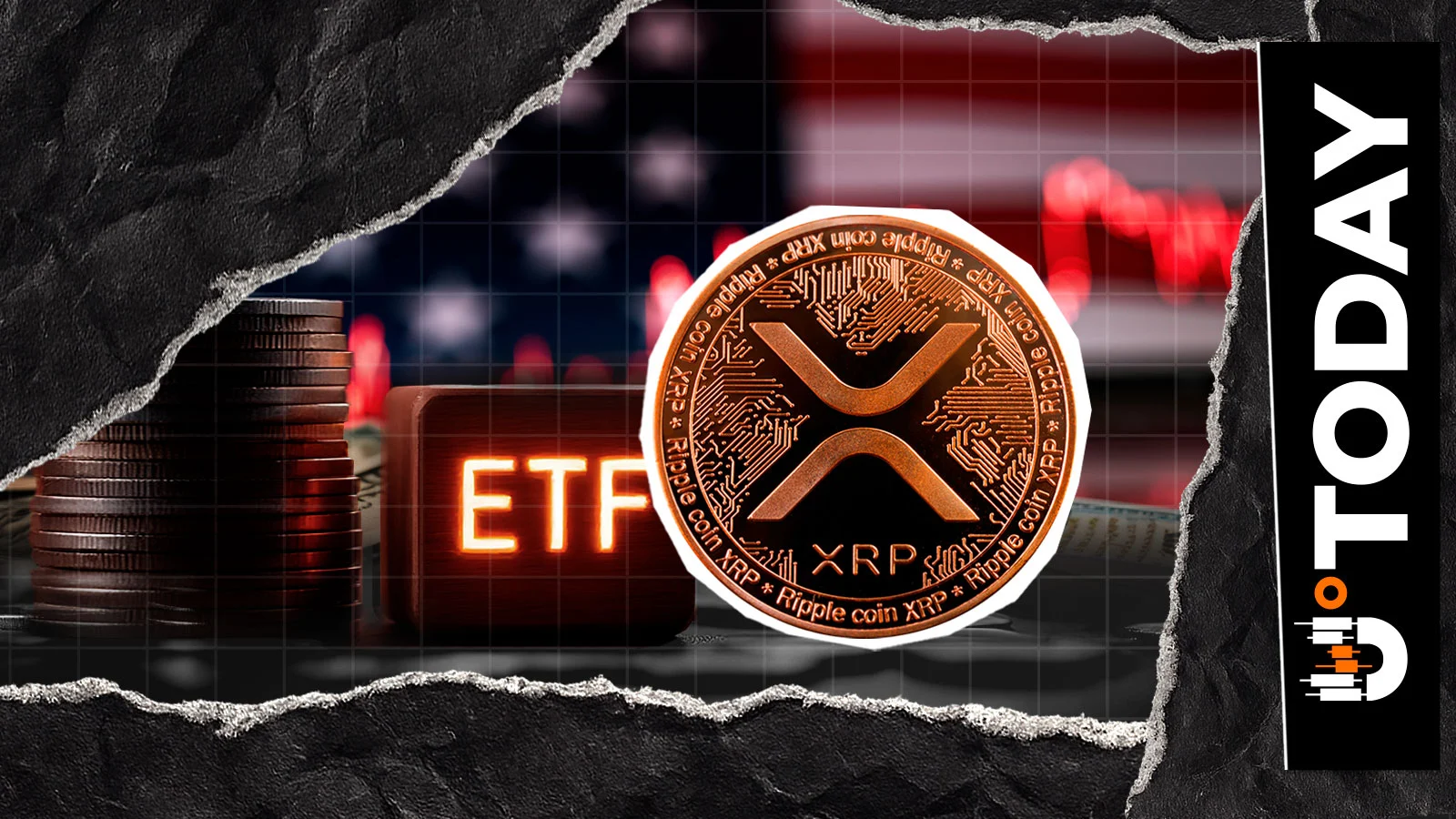
XRP ETF inflows dropped 45% to $1.9M last week, but year-to-date inflows remain strong at $153M, second only to Solana. The US continues to dominate crypto ETF demand, accounting for the vast majority of recent inflows.

Anthropic's Claude AI experienced a significant outage, impacting service availability. This outage occurs shortly after political controversy involving U.S. government use of the AI, potentially affecting user trust and adoption.

Cardano's stablecoin market cap has surpassed $47 million, with USDC now dominating at 37.20% share. This growth follows USDC's mainnet launch and aims to boost Cardano's DeFi ecosystem liquidity.

Shibarium connection issues are primarily attributed to wallet configuration (RPC) rather than network problems. A separate explorer indexing delay affected token/NFT display but did not result in asset loss. A privacy upgrade for Shibarium is scheduled for Q2 2026.
XRPL is proposing a new derivatives sidechain offering 200x leverage and on-chain options trading, aiming to compete in the $1T derivatives market. The development leverages XRPL's existing infrastructure and security, inspired by successful specialized derivatives chains.
Signal context only. Validate with price action, liquidity, and risk limits before taking a position.
