
200+ crypto news providers in one place.

CoinFeather
200+ crypto news providers in one place.
Fast Read
Deep Dive
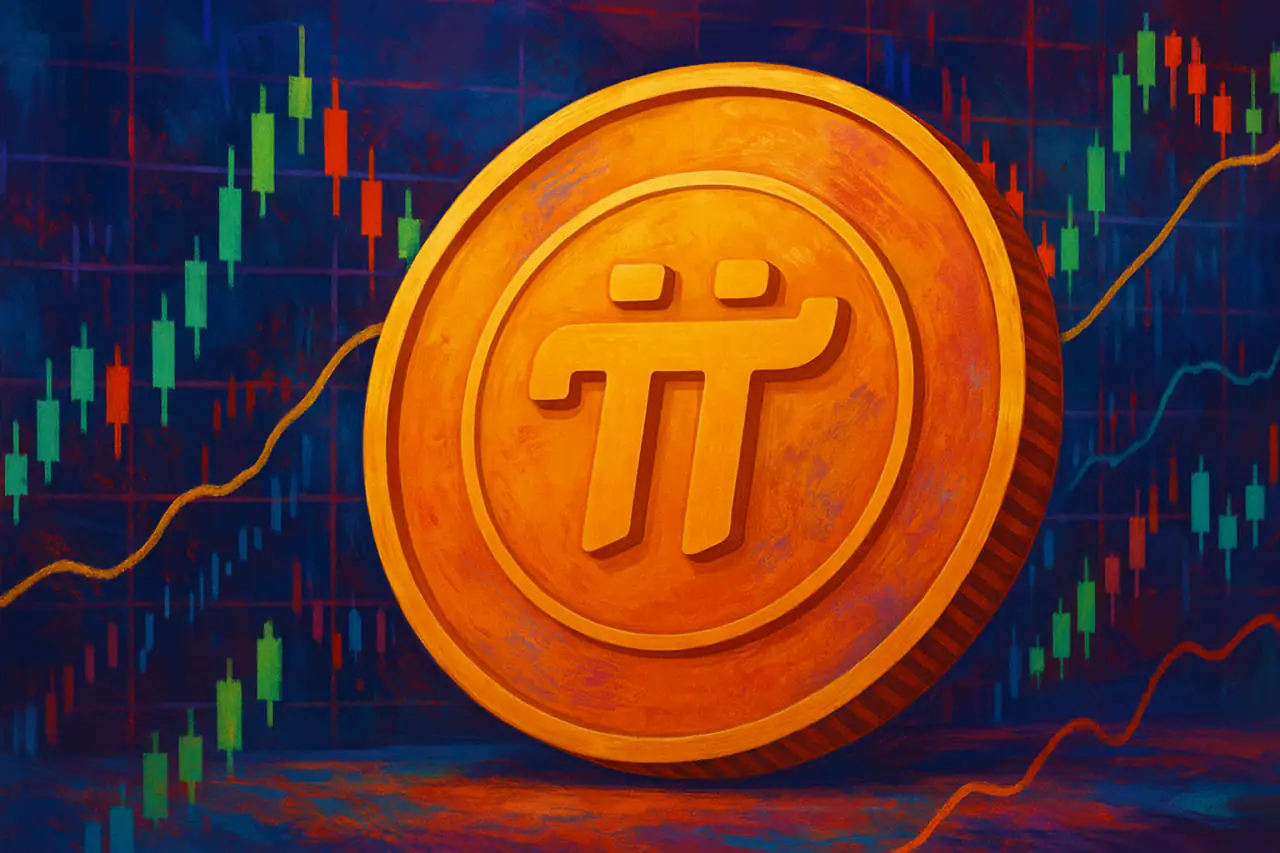
Pi Network is entering a decisive phase in its post-mainnet journey, marked by a mandatory protocol upgrade and the impending launch of its decentralized exchange (DEX). Following the Open Mainnet launch on February 20, 2025, which enabled external transferability and trading of PI, the ecosystem is now prioritizing infrastructure development, compliance, and the establishment of real utility.
As of March 2026, all Mainnet node operators are required to upgrade to software version 19.9 to maintain network connectivity. This update is part of a larger transition towards Protocol v23, slated for completion in the second quarter of 2026. The upgrade aims to align Pi Network with the latest Stellar Consensus standards, enhancing scalability and smart contract capabilities.
The activation of the Pi Decentralized Exchange on March 12, 2026, is anticipated as a significant milestone. The DEX will introduce peer-to-peer trading and decentralized liquidity pools, fostering a more self-sustaining digital economy within the Pi ecosystem. This development is expected to reduce reliance on centralized exchanges and stimulate on-chain activity.
In addition to the DEX launch, the network is set to roll out on-chain compensation for KYC validators by March 31. This initiative aims to provide direct economic incentives for network security, akin to staking rewards. Concurrently, a new framework proposal, PiRC1 – “Proof Before Profit,” is being introduced to govern ecosystem development. This proposal mandates that projects must launch functional applications before issuing tokens and suggests that token proceeds be allocated to permanent liquidity pools rather than directly to project teams, emphasizing a utility-first approach.
The Pi Core Team submitted a MiCA whitepaper to EU regulators in late 2025, indicating a commitment to comply with the bloc’s Markets in Crypto-Assets framework. This move could facilitate listings on regulated European exchanges, potentially bolstering the project’s institutional credibility.
Despite price volatility, Pi Network continues to experience growth in user participation. Mainnet migrations have exceeded 16.2 million users, with over 17.7 million users completing KYC verification. The network supports more than 421,000 active nodes and over 300 Mainnet applications. Currently, more than 111 million PI tokens are staked for ranking purposes, and merchant adoption is reported to be over 148,000 stores globally. The circulating supply is between 9.3 and 9.4 billion PI, out of a total maximum supply of 100 billion tokens.
PI is currently trading between $0.16 and $0.19, significantly below its February 2025 launch-day high of $2.10. Market capitalization is estimated between $1.6 billion and $1.78 billion, with daily trading volumes ranging from $19 million to $26 million. This price action is attributed to ongoing concerns regarding supply dynamics and the pace of real-world adoption. Analyst outlooks are divided, with some highlighting the substantial unreleased token supply as a potential cap on near-term upside, while others foresee potential price increases towards $0.24 to $0.56 by mid-2026 if the DEX and protocol upgrades drive adoption. Long-term projections suggest prices could exceed $2.50 by 2030 under favorable scaling and token distribution conditions. While PI is listed on several platforms, it remains absent from major exchanges like Binance and Coinbase, though Kraken has included it on its 2026 listing roadmap.
PI is trading near $0.169, positioned between the 50-period SMA ($0.166) and the 100-period SMA ($0.171), indicating a tightening price range. The RSI (14) is around 52, suggesting mild bullish momentum without overbought conditions. The MACD is flattening just above the zero line with marginally positive histogram bars, indicating a cooling of bearish pressure. A sustained move above $0.171–$0.175 could target $0.19, while a break below $0.166 might lead to a retest of the $0.155–$0.16 range.
Source, catalyst, and sector overlap from the latest feed.
Bitcoin surged towards $69,700, a 3% intraday gain, pushing total crypto market cap above $2.3T. Despite the price action, market sentiment remains in 'Extreme Fear' (index at 15). Technical indicators show strengthening momentum but potential for short-term consolidation.
A pre-owned Dassault Falcon 6X jet was sold for 4.1 BTC (approx. $20.27M) using cryptocurrency. The transaction highlights Bitcoin's potential for high-value asset settlement and signals growing integration into global wealth structures.
Bitmine acquired 50,928 ETH in late February 2026, increasing total holdings to 4.47 million ETH, valued at $8.8 billion. Over 68% of their ETH is staked, generating $172 million annually, with plans to reach $253 million via MAVAN. This aggressive accumulation positions Bitmine as the largest corporate ETH treasury.
Twelve major European banks are collaborating to launch a MiCA-compliant euro stablecoin in the latter half of 2026. The stablecoin, backed 1:1 by deposits and sovereign bonds, aims to facilitate institutional payments, tokenization, and cross-border settlements. It will launch on Ethereum, Polygon, and Base, incorporating AML/KYC checks via smart contracts.
Macroeconomist Henrik Zeberg forecasts Bitcoin to reach $110,000-$120,000 by March 2026, driven by a risk-on macro environment, sustained ETF inflows, and institutional adoption. He assigns a 25% probability to an overshoot towards $140,000-$150,000. The outlook also includes bullish targets for ETH ($10k-$12k) and SOL ($350-$500).
Bitcoin governance is facing a critical juncture with the mining of a block supporting BIP-110, a proposal to restrict non-monetary data. Critics warn of potential blockchain splits and a violation of neutrality principles, while proponents aim to preserve Bitcoin's monetary infrastructure.
HyperLiquid's HYPE token has gained 23.9% YTD, outperforming BTC and ETH, as its derivatives exchange volume exceeds $200B/month. The platform's non-custodial model and 24/7 trading, including synthetic equities, attract retail traders in bear markets. Despite a past governance controversy, the vault TVL has recovered to $380M.
Cardano's ADA has formed an hourly death cross, signaling potential bearish momentum amidst a broader market liquidation event. Development continues with preparations for the Protocol Version 11 hard fork, including node upgrades and Plutus cost model updates.
X (formerly Twitter) now allows sponsored crypto promotions with a mandatory 'Paid Partnership' label, though restrictions apply in the EU, UK, and Australia. The platform is also developing X Money and Smart Cashtags for integrated trading.
Anthropic's Claude AI experienced a significant outage, impacting service availability. This outage occurs shortly after political controversy involving U.S. government use of the AI, potentially affecting user trust and adoption.
Bitcoin initially acted as a risk asset during US-Iran tensions, but historical data and new ETF structures suggest potential for a rebound if oil prices stabilize. BlackRock analysis shows Bitcoin historically outperforms gold and equities 60 days post-shock, with outcomes dependent on oil price trajectory and inflation fears.
JPMorgan forecasts a U.S. crypto market recovery in H2 2026 if the Clarity Act is approved by mid-year. The bill aims to end 'regulation by enforcement' and clarify SEC-CFTC jurisdiction, potentially easing compliance and boosting institutional access.
Banking lobbyists have stalled the U.S. Senate's Digital Asset Market Clarity Act by arguing stablecoin rewards threaten traditional lending. The OCC's interpretation of the GENIUS Act adds complexity, leaving the crypto industry at a crossroads regarding concessions on rewards versus the potential loss of the Clarity Act.
Bitcoin surged over 6% to near $70k during U.S. market open, driven by U.S. hours liquidity and institutional flows via ETFs and CME futures, not liquidations. A sustained CME premium above 1% suggests ongoing institutional demand, while oil price volatility and ETF inflows remain key factors to watch.
Live Feed
Loading the broader stream in the same flow as the homepage feed.
Palantir (PLTR) stock surged over 6% driven by increased demand for its AI and defense analytics amid heightened geopolitical tensions. The company's dual role as a defense contractor and AI innovator positions it to benefit from potential increases in government spending and defense contracts.
Bitcoin price has recovered above $70,000, supported by increased derivatives volume and open interest. Short-term holders show reduced selling pressure, and key weekly support at $65,000 is holding, suggesting potential for further upside towards $75,000-$80,000.
Shiba Inu (SHIB) is testing a critical support level around $0.00000565 amidst a bearish weekly chart structure. A breakdown below this zone could lead to a significant drop towards $0.00000138, indicating potential downside risk.
Transaction speed in crypto is a combination of platform processing and network confirmation, not just block time. Litecoin offers steadier transfers, Bitcoin is widely supported, and Ethereum confirms quickly but faces fee volatility. Users should consider predictability and platform support when choosing a network for payments.

UK politicians are increasingly calling for a ban on cryptocurrency political donations due to concerns over foreign interference and illicit finance. Advocacy groups and parliamentary committees support stricter regulations or outright bans, citing the opaque nature of crypto assets. Reform UK remains the primary party accepting crypto donations.

Bitcoin surged towards $70,000, driven by positive US manufacturing PMI data, outperforming US stocks despite geopolitical concerns. Technical indicators show mixed signals, with some analysts warning of potential downside while others eye resistance at $70k and $71.3k.

ProCap Financial acquired 450 BTC, increasing total holdings to 5,457 BTC. Concurrently, the company repurchased 782,000 shares below NAV to reduce its share price discount. ProCap's mNAV is currently 0.24.
Bitcoin heatmap shows a $62,000 liquidity pocket forming, potentially drawing price lower. Monthly chart analysis reveals a potential 'W' pattern within a long-term ascending channel, suggesting a possible upside continuation if support holds.
Dogecoin is consolidating in a tight range around $0.095, with resistance at $0.094-$0.095 and support near $0.090. Open interest has significantly declined from its peak, indicating reduced leverage and risk appetite in the derivatives market.
Crypto funds attracted $1 billion last week, reversing a five-week outflow trend totaling $4 billion, led by Bitcoin products. Investors are now awaiting key US jobs data, with Deutsche Bank forecasting 4.3% unemployment.
Bitcoin surged past $69,000, triggering over $80 million in short liquidations. MicroStrategy shares rallied alongside BTC after a significant new purchase. Analyst Tom Lee predicts a crypto market bottom and April rally.

Nasdaq has filed a proposal with the SEC to list binary options on the Nasdaq-100 index, allowing for yes-or-no bets on market direction. This move mirrors the growing trend of prediction markets entering regulated financial spaces, with Cboe and crypto exchanges like Coinbase and Gemini also expanding in this area.
Lockheed Martin (LMT) stock surged 6-7% amid escalating US-Iran conflict, reaching a new 12-month high. The stock is seen as a direct "war trade" benefiting from increased defense spending, with year-to-date gains over 30%. Technical indicators suggest potential for pullbacks on de-escalation.
Crypto markets rallied sharply, with BTC and ETH leading gains, driven by positive U.S. economic data (ISM PMI beat expectations) and a significant short squeeze. Traditional safe-haven assets like gold and silver saw notable declines, indicating a capital rotation into risk assets. Institutional buying also contributed to the upward momentum.
Signal context only. Validate with price action, liquidity, and risk limits before taking a position.
