
200+ crypto news providers in one place.

CoinFeather
200+ crypto news providers in one place.

Fast Read
Deep Dive
ProCap Financial, a company focused on holding Bitcoin as its treasury asset, has announced an increase in its Bitcoin reserves and a concurrent effort to reduce the discount between its share price and its net asset value (NAV). This dual strategy aims to enhance shareholder value amidst fluctuating crypto and equity market conditions.
The company disclosed on Monday that it acquired an additional 450 Bitcoin (BTC) during a recent market downturn. This strategic purchase has raised ProCap's total Bitcoin holdings to 5,457 BTC and has also contributed to lowering the company's average cost basis per Bitcoin.

In parallel with its Bitcoin acquisition, ProCap has been actively repurchasing its own shares. Over the last ten days, the company bought back 782,408 shares at prices significantly below its calculated NAV per share. This aggressive share buyback program is designed to narrow the gap between the company's market trading price and its intrinsic asset value.
ProCap's shares, traded on the Nasdaq under the ticker BRR, saw a positive movement, increasing by 7.17% to $2.84 per share in early Monday trading, according to Yahoo Finance data.
ProCap established itself as a Bitcoin-native financial services firm last year, successfully raising over $750 million in its initial funding round before completing a SPAC merger to go public. The company's current strategy reflects a commitment to increasing its Bitcoin exposure while simultaneously working to rectify the valuation discrepancy between its stock price and its substantial Bitcoin reserves.
Buying back shares below NAV is a recognized strategy to reduce the total number of outstanding shares. This action can potentially increase the NAV per share and, consequently, narrow the discount if market sentiment improves or stabilizes.
The prolonged downturn in digital asset markets has placed considerable pressure on Bitcoin treasury companies, leading to a widespread compression of net asset value (NAV) premiums across the sector. NAV is calculated as a company's total assets minus liabilities, divided by the number of outstanding shares. For companies holding Bitcoin, investors often monitor the market-to-NAV (mNAV) ratio, which compares the company's market capitalization to the value of its Bitcoin holdings per share.
An mNAV ratio above 1.0 indicates that a company's shares are trading at a premium to its NAV, while a ratio below 1.0 signifies a discount. ProCap's current mNAV is approximately 0.24, based on data from BitcoinTreasuries.NET.
However, the traditional mNAV metric is being debated within the industry. Some experts, like Greg Cipolaro, head of research at NYDIG, have suggested that the mNAV framework may not fully encompass the value of Bitcoin treasury companies, as it may not adequately account for operating businesses or strategic initiatives beyond direct digital asset holdings.
Source, catalyst, and sector overlap from the latest feed.
Northern Trust Asset Management has launched a tokenized share class for its Treasury Instruments Portfolio, marking its entry into the digital assets market. This move expands the tokenized U.S. Treasurys market, which now holds nearly $11 billion in assets on public blockchains.
Bitcoin rallied to $70K as short-term holder selling pressure decreased to a two-week low amid geopolitical tensions. BTC futures open interest has declined 25%, indicating deleveraging, while spot markets show aggressive bidding. Attention is now on the $71,500 liquidity band.
Turkey's ruling party proposed a 10% income tax on crypto gains and income, with the president able to adjust the rate between 0-20%. This follows significant crypto adoption in Turkey driven by economic conditions, with transaction volumes reaching $200 billion in a recent 12-month period.
Bitcoin surged towards $70,000, driven by positive US manufacturing PMI data, outperforming US stocks despite geopolitical concerns. Technical indicators show mixed signals, with some analysts warning of potential downside while others eye resistance at $70k and $71.3k.
XRP faces technical breakdown risk with a symmetrical triangle pattern suggesting a potential drop to $0.95. Significant inflows of over 472 million XRP ($652 million) to exchanges like Binance indicate increased selling pressure, reinforcing bearish sentiment.
Crypto markets rallied sharply, with BTC and ETH leading gains, driven by positive U.S. economic data (ISM PMI beat expectations) and a significant short squeeze. Traditional safe-haven assets like gold and silver saw notable declines, indicating a capital rotation into risk assets. Institutional buying also contributed to the upward momentum.
BitMine Immersion Technologies acquired $103 million in ETH last week, increasing its total holdings to 3.71% of circulating supply despite significant unrealized losses. The company is also staking over 3 million ETH, anticipating substantial staking revenue growth with its upcoming MAVAN network.
Strategy purchased $200 million in Bitcoin, increasing its total holdings to approximately 720,750 BTC. The company also raised its STRC monthly dividend to 11.5% to fund operations and Bitcoin acquisitions without diluting common shareholders.
Bitmine Immersion Technologies acquired 51,000 ETH, bringing total holdings to 4.474 million ETH, valued at nearly $10 billion in total assets. The company has 3.04 million ETH staked, generating $172 million in annualized staking revenue.
Ripple Prime, formerly Hidden Road, is now live on the DTCC's NSCC directory, paving the way to move institutional post-trade volume to the XRP Ledger. This integration follows Ripple's $1.25 billion acquisition of Hidden Road and aims to leverage XRPL's efficiency for traditional finance.
JPMorgan forecasts a U.S. crypto market recovery in H2 2026 if the Clarity Act is approved by mid-year. The bill aims to end 'regulation by enforcement' and clarify SEC-CFTC jurisdiction, potentially easing compliance and boosting institutional access.
XRP spot ETFs saw $58M in net inflows in February, marking four consecutive months of positive accumulation and a cumulative total of $1.24B. This sustained institutional demand highlights confidence in XRP as a strategic asset, even amidst market volatility.
A pre-owned Dassault Falcon 6X jet was sold for 4.1 BTC (approx. $20.27M) using cryptocurrency. The transaction highlights Bitcoin's potential for high-value asset settlement and signals growing integration into global wealth structures.
Live Feed
Loading the broader stream in the same flow as the homepage feed.

Binance open interest has dropped 25% as traders deleverage due to macro and geopolitical risks, with leverage ratios falling below 0.15. Bitcoin shows resilience near $69,000 despite a cautious derivatives market, while spot ETFs see significant inflows.
Shibarium, the Shiba Inu layer-2 network, is experiencing wallet and explorer connectivity issues. The team attributes these problems to user-side RPC settings and explorer indexing delays, assuring users that assets remain secure and network operations are stable. Users are advised to clear wallet cache and re-add the network.

Vitalik Buterin has proposed new mechanisms like FOCIL and transaction encryption to combat centralization in Ethereum's block building and mitigate "toxic MEV." These efforts aim to prevent censorship and unfair profit extraction by dominant builders as Ethereum scales.
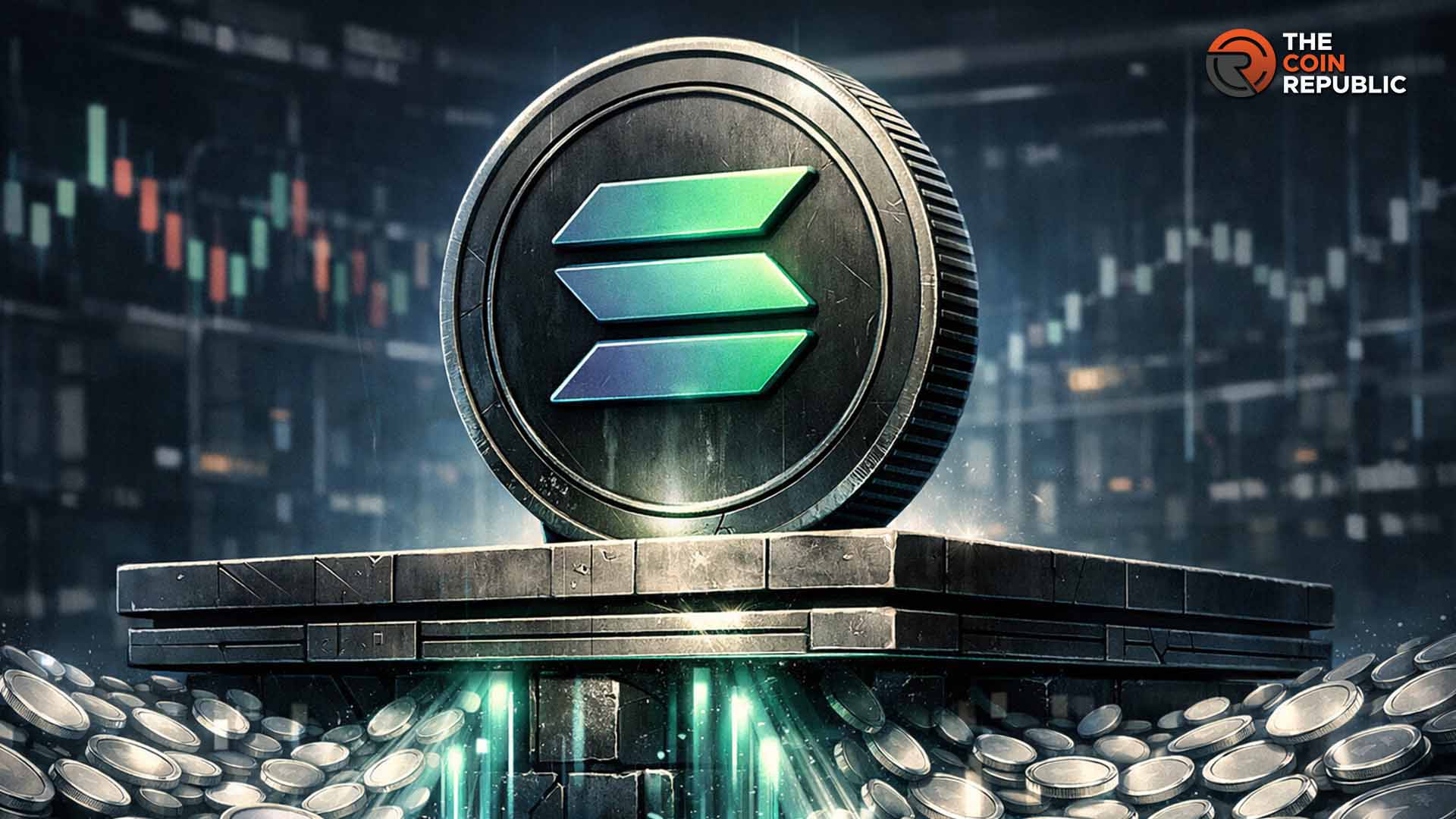
Solana's daily transactions hit 108.8 million, significantly outpacing rivals and reaching a 7-month high, indicating strong network adoption. Despite this, net inflows have halved since September, and SOL faces technical resistance around the 50-day SMA, suggesting a volatile outlook.
Bitcoin reclaimed $69K driven by significant institutional buying, with MicroStrategy and ProCap Financial increasing their BTC holdings. Analysts suggest potential upside to $79K if resistance breaks, while a dip to $65K is possible if support fails.

Experts assess Iran's Bitcoin mining share as minimal (below 1%), suggesting geopolitical conflict will not materially impact global hashrate or network security. While Iranian crypto outflows surged 700% post-airstrikes, the market impact is deemed limited due to Iran's small mining footprint.

South Korea is overhauling its management of seized cryptocurrencies following security failures, including a 22 BTC loss and a $4.8 million theft due to a data leak. This reform includes a nationwide audit and stricter controls, alongside broader regulatory advancements integrating crypto into the formal financial system.
Bitcoin surged to a two-week high near $70,000, recovering from weekend lows. The price action correlated with a broader market recovery in risk assets, driven by geopolitical developments and a shift in market sentiment regarding regional stability.
Palantir (PLTR) stock surged over 6% driven by increased demand for its AI and defense analytics amid heightened geopolitical tensions. The company's dual role as a defense contractor and AI innovator positions it to benefit from potential increases in government spending and defense contracts.

Bitcoin governance is facing a critical juncture with the mining of a block supporting BIP-110, a proposal to restrict non-monetary data. Critics warn of potential blockchain splits and a violation of neutrality principles, while proponents aim to preserve Bitcoin's monetary infrastructure.
Bitcoin price has recovered above $70,000, supported by increased derivatives volume and open interest. Short-term holders show reduced selling pressure, and key weekly support at $65,000 is holding, suggesting potential for further upside towards $75,000-$80,000.
Bitcoin initially acted as a risk asset during US-Iran tensions, but historical data and new ETF structures suggest potential for a rebound if oil prices stabilize. BlackRock analysis shows Bitcoin historically outperforms gold and equities 60 days post-shock, with outcomes dependent on oil price trajectory and inflation fears.

HyperLiquid's HYPE token has gained 23.9% YTD, outperforming BTC and ETH, as its derivatives exchange volume exceeds $200B/month. The platform's non-custodial model and 24/7 trading, including synthetic equities, attract retail traders in bear markets. Despite a past governance controversy, the vault TVL has recovered to $380M.
Shiba Inu (SHIB) is testing a critical support level around $0.00000565 amidst a bearish weekly chart structure. A breakdown below this zone could lead to a significant drop towards $0.00000138, indicating potential downside risk.
Transaction speed in crypto is a combination of platform processing and network confirmation, not just block time. Litecoin offers steadier transfers, Bitcoin is widely supported, and Ethereum confirms quickly but faces fee volatility. Users should consider predictability and platform support when choosing a network for payments.
Signal context only. Validate with price action, liquidity, and risk limits before taking a position.
