
200+ crypto news providers in one place.

CoinFeather
200+ crypto news providers in one place.

Fast Read
Deep Dive
The live price of Cronos (CRO) is approximately $0.07444672, with a market capitalization of $3,057,610,307.49 and a 24-hour trading volume of $9,476,819.21. The circulating supply stands at over 41 billion CRO, with a total supply nearing 98.5 billion. Cronos has experienced a 1.00% decrease in price over the last 24 hours. Its all-time high was $0.9698 on November 24, 2021, and its all-time low was $0.0115 on December 17, 2018.
Cronos (CRO) functions as the foundational token for the Cronos Chain, an open-source, high-performance blockchain ecosystem developed by Crypto.com. It aims to connect traditional finance with Web3, enabling fast, low-cost global transactions and supporting a wide array of DeFi applications, perpetuals, and fiat-integrated markets. The network's infrastructure and growing user base suggest increasing investor confidence and utility.
Current technical indicators suggest CRO is in a consolidation phase. If the demand zone between $0.0500 and $0.1000 holds, a bullish MACD cross and recovering CMF could drive the price towards $0.3000. A decisive close above this supply zone would signal a long-term bullish reversal. The price is currently consolidating around $0.0777, a multi-year demand range. A breach above $0.1000 could lead to the 200-day EMA band around $0.1200 by March. Conversely, bearish pressure might push the price down to $0.0600.
On the weekly chart, CRO has consistently found support within the $0.0500 to $0.1000 accumulation zone since late 2023. This area has historically preceded significant rallies, with previous peaks reaching $0.3900. As of early 2026, CRO is again at this base, potentially setting up for another expansion. Indicators like the MACD are approaching a weekly bullish cross, and the CMF shows fading selling pressure with capital stabilization. The RSI and AO suggest a neutral accumulation phase.
The primary target for a breakout in 2026 is the supply zone between $0.3000 and $0.3500. For a sustained trend reversal, CRO must convert this resistance into support.
On February 5, 2026, Cronos announced the development of a unified trading platform for tokenized stocks, commodities, and prediction markets, supported by a strategic integration with Fireblocks for institutional-grade custody. Furthermore, the Cronos v1.7 Network Upgrade is scheduled for March 10, 2026, at 07:00 GMT, involving a brief downtime for SDK alignment and RPC performance enhancements.
A significant development mentioned is the Trump Media Group's announcement in late August 2025 of a $6.42 billion CRO Digital Asset Treasury strategy, indicating institutional endorsement. The Cronos network has maintained over four years of zero downtime and supports over 150 million users through the Crypto.com ecosystem, powering payments for over 10 million merchants. It consistently records around 100,000 daily transactions, demonstrating resilience.
Long-term price predictions suggest substantial growth for CRO:
These projections are based on technical analysis and assume continued adoption and market momentum.
What is the Cronos (CRO) price prediction for 2026? CRO is expected to trade between $0.05 and $0.35 in 2026, with a breakout above $0.30 indicating a bullish reversal.
Can Cronos (CRO) reach $1 by 2030? Projections suggest CRO could trade between $1.34 and $2.40 by 2030, contingent on sustained adoption and momentum.
Is Cronos a good long-term investment through 2035? Long-term forecasts indicate gradual growth towards higher price ranges by 2035, dependent on adoption and market cycles.
What could drive CRO price growth in 2026? Potential drivers include institutional integration, network upgrades, increased utility, and a confirmed bullish MACD cross.
Source, catalyst, and sector overlap from the latest feed.
Michael Saylor's Strategy acquired 3,015 BTC for $204.1 million at an average of $67,700. The firm now holds 720,737 BTC with a total cost basis of $54.77 billion. This indicates continued institutional confidence in Bitcoin.
XRP price remains in a bearish descending channel, with the $1.00-$1.10 zone acting as critical support. A breakdown below $1 could lead to further downside, while a break above the channel resistance is needed for stabilization. Momentum indicators suggest caution heading into March 2026.
Solana (SOL) is facing downward pressure due to rising geopolitical tensions and a bearish "sell" signal on its monthly chart, indicating potential structural weakness. Despite this, institutional inflows into SOL ETFs remain steady, creating a divergence between short-term technicals and long-term investor sentiment. Key support lies at $80-$85, with resistance at $95-$110.
A prominent blockchain advisor questions the genuine adoption of Real-World Asset (RWA) tokenization, arguing it's largely traditional finance repackaged. He highlights issues with settlement, custody, and the oracle problem, suggesting it doesn't add unique crypto value. Despite this skepticism, institutional capital, including BlackRock and Franklin Templeton, is flowing into RWA protocols, with significant growth reported on Ethereum and XRP Ledger, leaving the true adoption status as a key market question.
South Africa has officially implemented the Crypto-Asset Reporting Framework (CARF), enhancing global tax transparency for digital assets. This framework mandates crypto exchanges and financial firms to report user holdings and cross-border transactions to tax authorities, aiming to curb tax evasion. The move aligns with international efforts and impacts South African investors by increasing visibility of their crypto activities and potential capital gains tax liabilities.
XRPL is proposing a new derivatives sidechain offering 200x leverage and on-chain options trading, aiming to compete in the $1T derivatives market. The development leverages XRPL's existing infrastructure and security, inspired by successful specialized derivatives chains.
Strategy acquired 3,015 BTC for $204.1M, increasing total holdings to 720,737 BTC. The company continues its weekly accumulation despite an unrealized loss of over $7 billion on its holdings. MSTR stock dipped nearly 3% amid the announcement.
MicroStrategy acquired an additional 3,015 BTC for $204.1 million, bringing its total holdings to 720,737 BTC. This purchase was made below the company's average cost basis of $75,985, with an average price of $67,700 per BTC.
Strategy Inc. acquired 3,015 BTC for approximately $204 million, bringing its total holdings to 720,737 BTC. The company funded the purchase by issuing new equity, raising $237.1 million.
Ilya Sutskever's net worth is estimated at $19.5 billion, driven by his co-founding roles at OpenAI and Safe Superintelligence (SSI). SSI recently secured $2 billion in funding, valuing the company at $32 billion, highlighting strong investor confidence in Sutskever's leadership in AI development.
Bitcoin price nears $60,000, placing holders from the last two years in significant unrealized losses. Analysts suggest this could precede a major price reset, similar to historical market cycles. Long-term holders remain in profit, while recent buyers face potential further downside.
BitMine holds $7.34 billion in unrealized losses on its Ethereum (ETH) holdings due to recent price declines. The firm had previously increased its ETH position, anticipating long-term price appreciation. Ethereum has dropped 26.59% in the last 30 days.
Analyst WhaleFactor suggests Bitcoin is acting as a "life raft" amidst global tariffs and fiat instability, indicating current volatility is a "shakeout" before a significant upward move. Robert Kiyosaki also anticipates Bitcoin and silver to "blast off" following gold's recent surge.
Live Feed
Loading the broader stream in the same flow as the homepage feed.

A pre-owned Dassault Falcon 6X jet was sold for 4.1 BTC (approx. $20.27M) using cryptocurrency. The transaction highlights Bitcoin's potential for high-value asset settlement and signals growing integration into global wealth structures.

A consortium of 12 EU banks, including BBVA and UniCredit, is preparing to launch a MiCA-compliant euro-pegged stablecoin in H2 2026. They are in talks with crypto exchanges to ensure liquidity and aim to provide a regulated European alternative to USD stablecoins. The stablecoin will be backed 1:1 by bank deposits and short-term sovereign bonds.
Indian Railways is operating over 1,244 special trains for Holi 2026 due to a significant surge in travel demand, with flight bookings up 70-75% YoY and bus bookings also rising sharply. This indicates a strong rebound and increased mobility across India's travel sector.

Nexo has reentered the US market with a new partner-led model, shifting from direct yield issuance to operating through licensed US intermediaries and Bakkt. This structural change aims to comply with post-2023 regulatory scrutiny on unregistered securities and yield products.

NEAR Protocol (NEAR) surged 12.4% over the weekend, outperforming other assets in the CoinDesk 20 Index. Solana (SOL) also showed positive movement, up 2.1%. Polkadot (DOT) and Bitcoin Cash (BCH) were among the notable decliners.
Google searches for 'buy Bitcoin' have hit a 5-year high, historically signaling market bottoms. While retail shows fear, whales are accumulating 100,000 BTC, suggesting a potential bullish setup despite recent price drops.

Crypto outflows from Iran's largest exchange surged 700% within minutes of U.S.-Israeli airstrikes, indicating potential capital flight. This event highlights crypto's role as a tool to bypass traditional banking and sanctions. Major cryptocurrencies like BTC and ETH experienced sharp, albeit temporary, price drops following the geopolitical escalation.

Bitmine acquired 50,928 ETH in late February 2026, increasing total holdings to 4.47 million ETH, valued at $8.8 billion. Over 68% of their ETH is staked, generating $172 million annually, with plans to reach $253 million via MAVAN. This aggressive accumulation positions Bitmine as the largest corporate ETH treasury.
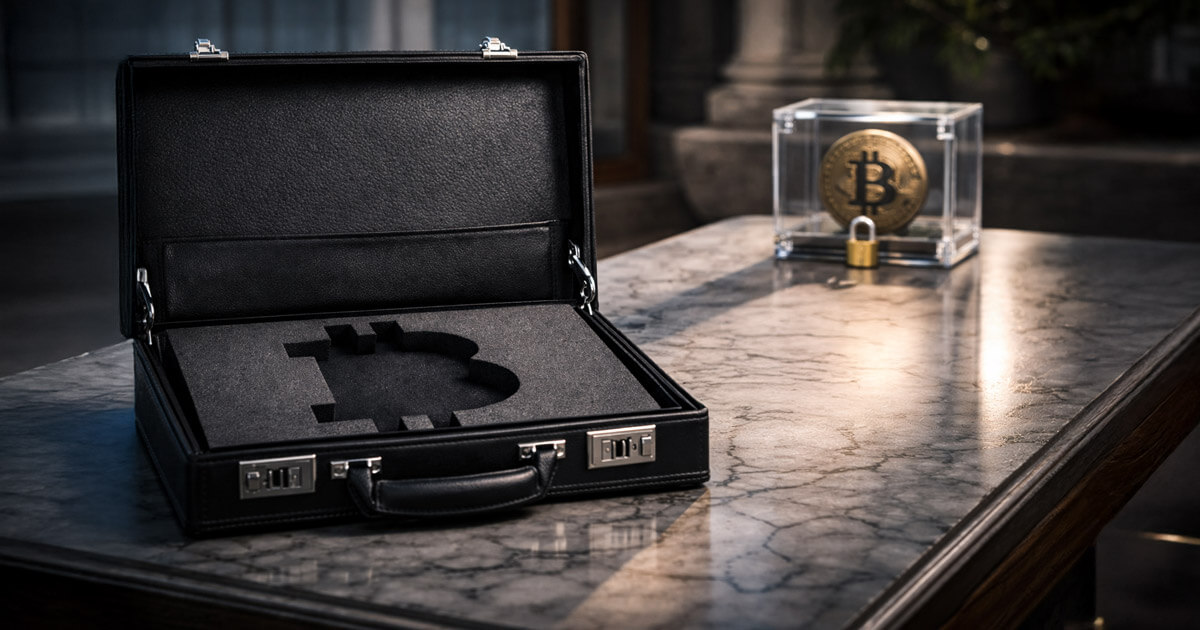
Spot Bitcoin ETFs concentrate custody and operational control with a few custodians, creating single points of failure. This structure shifts authority from direct key control to institutional contracts, potentially creating a 'class system' of exposure holders versus owners. The significant scale of ETF assets ($54B+) makes these structural risks system-relevant.
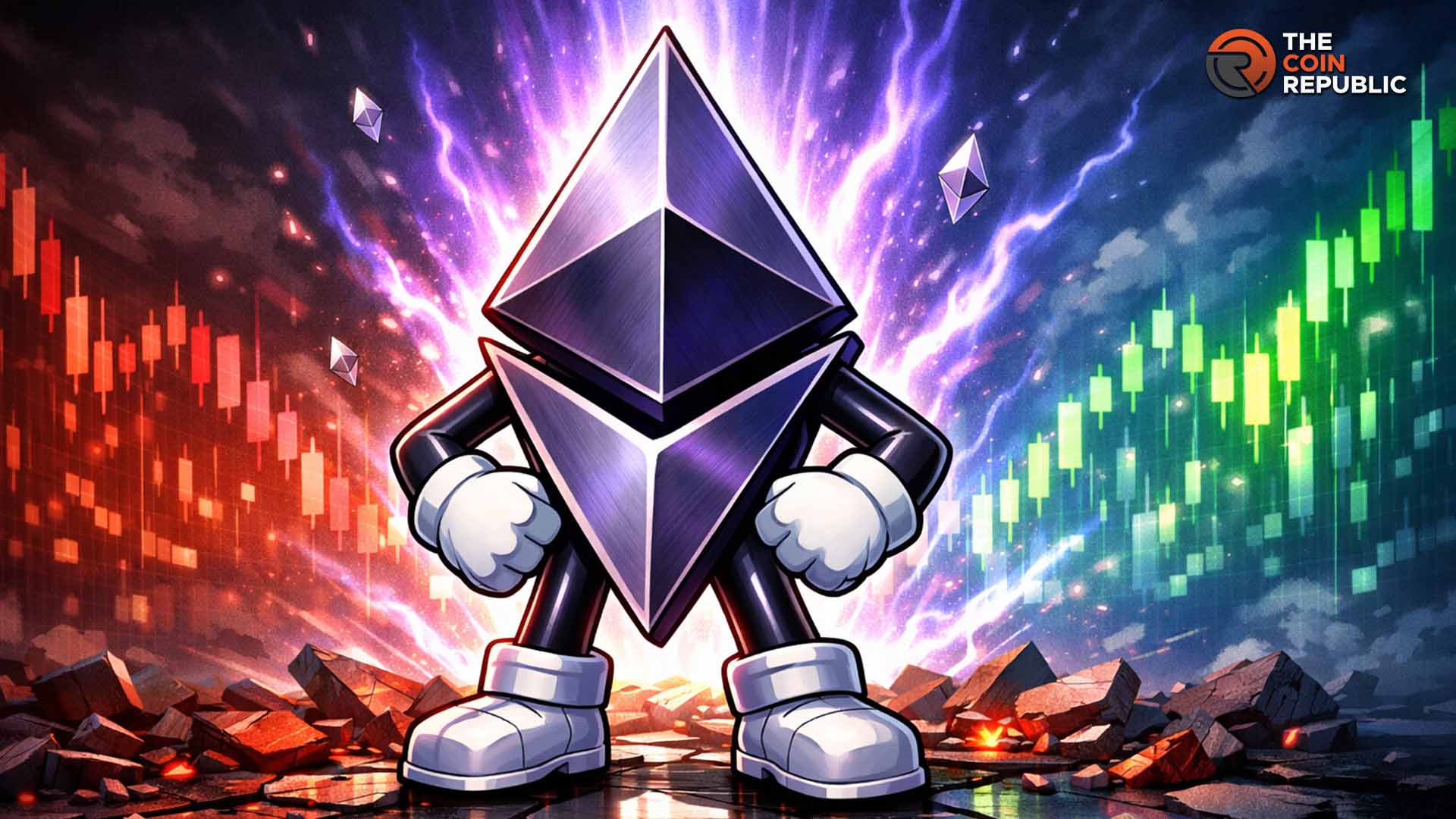
Ethereum's price has fallen 60% from its 2025 high, with DEX volumes down 55% in six months. However, the network still dominates DeFi TVL (65% with L2s) and sees continued institutional building, positioning it for potential future demand.

Viral AI spoof "Energym" highlights job displacement fears amid real tech layoffs, with Block cutting 40% of its workforce. Crypto projects like Olas Network propose user-owned AI agents as a counter-narrative to centralized AI control and potential human disenfranchisement.

Foom Cash lost about $2.26 million in an exploit tied to a Groth16 verifier misconfiguration, but security companies flagged a $1.84 million white hat rescue.
Signal context only. Validate with price action, liquidity, and risk limits before taking a position.
