
200+ crypto news providers in one place.

CoinFeather
200+ crypto news providers in one place.
Fast Read
Deep Dive
The crypto market experienced significant volatility over the weekend as geopolitical tensions escalated with the commencement of the Iran War. Early Saturday, following coordinated missile strikes by US and Israeli forces on Iran, Bitcoin (BTC) saw a sharp decline from approximately $65,500 to $63,000, with the total crypto market cap dropping by $128 billion and liquidating $449 million in long positions. However, the market demonstrated resilience. As Iranian state media reported the death of Supreme Leader Ayatollah Ali Khamenei, BTC staged a substantial recovery, surging to $68,196. By Monday morning, BTC was trading around $66,300.
Amidst this turmoil, Hyperliquid emerged as a notable performer. Its HIP-3 markets recorded a new all-time high in open interest, exceeding $1.1 billion, and the platform was highlighted by Bloomberg as a key venue for trading war-related events. The HYPE token rallied over 20%, from $26 to $32, throughout the weekend.
Analysts noted that Bitcoin's limited 3% drop during the initial conflict escalation was a signal of its strength, especially given its 24/7 trading nature compared to traditional markets. Hayden Hughes of Tokenize Capital suggested that true price discovery would occur on Monday with the reopening of US equity markets and Bitcoin ETFs. Justin d’Anethan of Arctic Digital commented that with existing leverage cleared, the impact of macro events might be limited.
The article draws parallels to previous geopolitical events, such as Iran's missile launches in April 2024 and strikes on nuclear sites in June 2025, which also triggered sell-offs followed by market recoveries and new all-time highs for BTC. The current situation's impact hinges on potential Iranian retaliation, specifically threats to the Strait of Hormuz, which could trigger an oil price shock and negatively affect risk assets. Goldman Sachs forecasts oil could reach $100/barrel if the conflict extends to four weeks.
Conversely, if Khamenei's death leads to regime destabilization and a shortened conflict, a relief rally could continue. Monday's ETF flows are anticipated as a key indicator. The article also highlights the growing role of Hyperliquid as a 24/7 trading venue for various asset classes.
In broader market news, Bitcoin ETFs saw $787 million in net inflows last week, while ETH ETFs recorded $80.5 million. Oil prices surged 8% pre-market, and gold and silver also rallied. The US Department of War designated Anthropic as a supply chain risk, halting its AI tool usage. Iran's significant Bitcoin mining network (2-5% of global hashrate) is under scrutiny. Trump Media is considering spinning off Truth Social into a separate entity. South Korea's National Tax Service mistakenly published unredacted Ledger seed phrases. Minnesota lawmakers are considering a statewide ban on crypto ATMs. Ripple introduced new funding routes for XRP Ledger development.
Meme coins were largely down, though WAR and Jellybean saw significant gains. Paradigm announced a new $1.5 billion fund focused on AI and robotics. Backpack exchange detailed its token-to-equity program's legal structure. NFT markets remained relatively flat, with CyberKongz showing notable gains.
Source, catalyst, and sector overlap from the latest feed.
Anthropic's AI, Claude, was reportedly used by U.S. Central Command for critical operations during Iran strikes, despite a directive to phase out its use. This highlights the deep integration of AI in defense and the challenges of rapid disengagement. OpenAI has since secured a similar deal with the Pentagon, potentially filling the void left by Anthropic.
South Korea's Finance Minister Koo Yun-cheol has pledged significant reforms to government agencies' handling of seized cryptocurrency following high-profile custody failures. This review aims to strengthen digital asset security and prevent future mishandling, as exemplified by police losing access to 22 BTC due to poor third-party custodian practices. The government will inspect current management practices across public institutions to implement new safeguards.
Hyperliquid's HYPE token saw a ~6% rise as traders utilized the always-on decentralized perpetuals platform during a weekend geopolitical shock. The venue served as a primary market for risk pricing when traditional markets were closed, potentially creating a structural tailwind for fee revenue and token demand. Analysts suggest decentralized perps could become a go-to for early risk assessment.
Bitcoin has shown resilience following Middle East tensions, outperforming U.S. equity futures. Negative funding rates in BTC futures suggest crowded short positions, potentially signaling a bullish reversal. Elevated oil and gold prices due to geopolitical risk are a concern for inflation, but analysts suggest Bitcoin's price action indicates the market has absorbed initial shock.
Bitcoin Empire, a mobile game, allows players to earn small amounts of real Bitcoin by simulating a mining operation. Despite its premise, the game is criticized for its repetitive gameplay, excessive ads, and extremely low reward rate, yielding less than a penny per hour. The developer, Fumb Games, has released similar titles with better returns.
Strategy acquired 3,015 BTC for $204.1M, increasing total holdings to 720,737 BTC. The company continues its weekly accumulation despite an unrealized loss of over $7 billion on its holdings. MSTR stock dipped nearly 3% amid the announcement.
Nexo has reentered the US market with a new partner-led model, shifting from direct yield issuance to operating through licensed US intermediaries and Bakkt. This structural change aims to comply with post-2023 regulatory scrutiny on unregistered securities and yield products.
Crypto outflows from Iran's largest exchange surged 700% within minutes of U.S.-Israeli airstrikes, indicating potential capital flight. This event highlights crypto's role as a tool to bypass traditional banking and sanctions. Major cryptocurrencies like BTC and ETH experienced sharp, albeit temporary, price drops following the geopolitical escalation.
MicroStrategy acquired an additional 3,015 BTC for $204.1 million, bringing its total holdings to 720,737 BTC. This purchase was made below the company's average cost basis of $75,985, with an average price of $67,700 per BTC.
Strategy Inc. acquired 3,015 BTC for approximately $204 million, bringing its total holdings to 720,737 BTC. The company funded the purchase by issuing new equity, raising $237.1 million.
XRPL is proposing a new derivatives sidechain offering 200x leverage and on-chain options trading, aiming to compete in the $1T derivatives market. The development leverages XRPL's existing infrastructure and security, inspired by successful specialized derivatives chains.
A consortium of 12 EU banks, including BBVA and UniCredit, is preparing to launch a MiCA-compliant euro-pegged stablecoin in H2 2026. They are in talks with crypto exchanges to ensure liquidity and aim to provide a regulated European alternative to USD stablecoins. The stablecoin will be backed 1:1 by bank deposits and short-term sovereign bonds.
Bitcoin price nears $60,000, placing holders from the last two years in significant unrealized losses. Analysts suggest this could precede a major price reset, similar to historical market cycles. Long-term holders remain in profit, while recent buyers face potential further downside.
BitMine holds $7.34 billion in unrealized losses on its Ethereum (ETH) holdings due to recent price declines. The firm had previously increased its ETH position, anticipating long-term price appreciation. Ethereum has dropped 26.59% in the last 30 days.
Live Feed
Loading the broader stream in the same flow as the homepage feed.

A pre-owned Dassault Falcon 6X jet was sold for 4.1 BTC (approx. $20.27M) using cryptocurrency. The transaction highlights Bitcoin's potential for high-value asset settlement and signals growing integration into global wealth structures.
Indian Railways is operating over 1,244 special trains for Holi 2026 due to a significant surge in travel demand, with flight bookings up 70-75% YoY and bus bookings also rising sharply. This indicates a strong rebound and increased mobility across India's travel sector.
Analyst WhaleFactor suggests Bitcoin is acting as a "life raft" amidst global tariffs and fiat instability, indicating current volatility is a "shakeout" before a significant upward move. Robert Kiyosaki also anticipates Bitcoin and silver to "blast off" following gold's recent surge.

NEAR Protocol (NEAR) surged 12.4% over the weekend, outperforming other assets in the CoinDesk 20 Index. Solana (SOL) also showed positive movement, up 2.1%. Polkadot (DOT) and Bitcoin Cash (BCH) were among the notable decliners.
Google searches for 'buy Bitcoin' have hit a 5-year high, historically signaling market bottoms. While retail shows fear, whales are accumulating 100,000 BTC, suggesting a potential bullish setup despite recent price drops.
Bitmine acquired 50,928 ETH in late February 2026, increasing total holdings to 4.47 million ETH, valued at $8.8 billion. Over 68% of their ETH is staked, generating $172 million annually, with plans to reach $253 million via MAVAN. This aggressive accumulation positions Bitmine as the largest corporate ETH treasury.
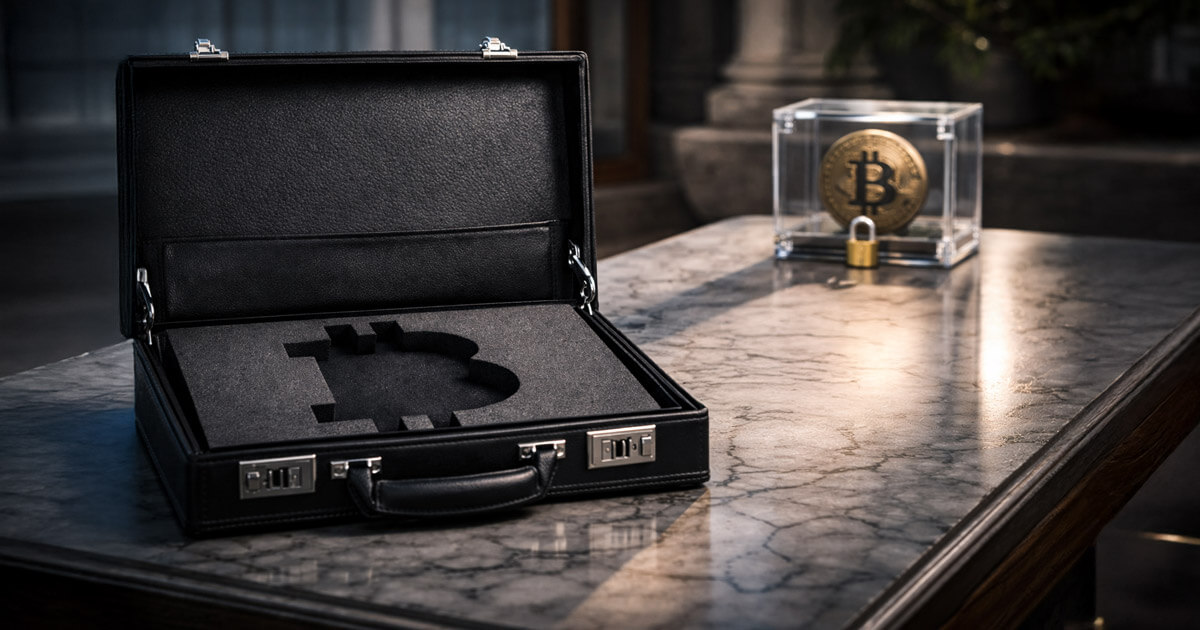
Spot Bitcoin ETFs concentrate custody and operational control with a few custodians, creating single points of failure. This structure shifts authority from direct key control to institutional contracts, potentially creating a 'class system' of exposure holders versus owners. The significant scale of ETF assets ($54B+) makes these structural risks system-relevant.
Ethereum's price has fallen 60% from its 2025 high, with DEX volumes down 55% in six months. However, the network still dominates DeFi TVL (65% with L2s) and sees continued institutional building, positioning it for potential future demand.

Viral AI spoof "Energym" highlights job displacement fears amid real tech layoffs, with Block cutting 40% of its workforce. Crypto projects like Olas Network propose user-owned AI agents as a counter-narrative to centralized AI control and potential human disenfranchisement.

Foom Cash lost about $2.26 million in an exploit tied to a Groth16 verifier misconfiguration, but security companies flagged a $1.84 million white hat rescue.
Ilya Sutskever's net worth is estimated at $19.5 billion, driven by his co-founding roles at OpenAI and Safe Superintelligence (SSI). SSI recently secured $2 billion in funding, valuing the company at $32 billion, highlighting strong investor confidence in Sutskever's leadership in AI development.
Signal context only. Validate with price action, liquidity, and risk limits before taking a position.
