
Navigating Crypto News

CoinFeather
Navigating Crypto News
Quick market read from this story
Bitcoin's correlation with gold at 79% indicates it is currently trading as a macro-sensitive asset, driven by external geopolitical events rather than internal crypto market dynamics.
Geopolitical tensions in the Middle East and a refinery fire in Texas have triggered a broad market sell-off, impacting Bitcoin and other major cryptocurrencies as risk assets.
With Bitcoin trading below key support levels, traders should monitor the $69,141 and $68,423 price points for potential further downside if the current macro-driven sentiment persists.
The current market environment, characterized by fear and weakening momentum, suggests a cautious approach is warranted for short-term trading strategies.
Deep Dive
Bitcoin experienced a significant downturn, trading around $69,900 and marking a roughly 2.3% decrease in the last 24 hours. The broader cryptocurrency market mirrored this decline, with its total value shedding 1.71%. This market movement is largely attributed to external geopolitical events rather than internal crypto market dynamics.
The primary catalyst for the market drop appears to be escalating geopolitical tensions. US and Israeli airstrikes targeted energy facilities in Iran, including a gas pipeline near Khorramshahr’s power plant, shortly after President Trump announced a temporary pause in hostilities. This news arrived as markets were beginning to price in relief, causing immediate shockwaves across all asset classes.
Compounding the situation, a large explosion and fire occurred at an oil refinery in Port Arthur, Texas, during the same trading session. The combined impact of these events sent oil prices soaring over 2% to $91.90, while gold fell 3% to below $4,320 and silver dropped 5%. US futures turned negative, with Bitcoin following suit.
Current data indicates that Bitcoin is exhibiting a 79% correlation with Gold, suggesting it is acting as a macro-sensitive asset. The Fear and Greed Index is positioned at 32, signaling a state of fear in the market. The broader market Relative Strength Index (RSI) stands at 47.79, indicating weakening momentum across the board.
Major altcoins also saw declines: XRP was down 3.54%, Ethereum dropped 2.29%, and BNB shed 2.65%. No cryptocurrencies within the top ten by market capitalization were trading in positive territory.
Analysts are closely watching three critical price levels for Bitcoin:
Source, catalyst, and sector overlap from the latest feed.
A prominent figure from the precious metals sector allocating 10% of his portfolio to XRP signals a potential shift in traditional finance's perception of digital assets, despite his cautious approach. The CEO of Miles Franklin Precious Metals views XRP as a high-risk, high-reward opportunity, emphasizing that its success is contingent on widespread bank adoption for cross-border payments. While acknowledging the speculative nature and usability challenges of crypto, the allocation highlights a strategy of diversifying into digital assets for potential upside without jeopardizing core wealth preservation. The mention of Goldman Sachs' significant XRP exposure, alongside this individual's investment, suggests growing institutional interest that could influence XRP's market dynamics.
Pi Network's second migration wave is now live, enabling users to move additional Pi tokens to Mainnet and increasing the potential for ecosystem participation. The migration includes referral bonuses for KYC-verified team members, creating an incentive for users to complete verification before the window closes. An analyst highlighted the potential value of accumulated Pi tokens, suggesting early and consistent miners could hold assets worth up to $63,000 if Pi reaches $3. With tokens now migrating to Mainnet, the Pi Network experiment is transitioning from theoretical development to tangible asset movement, potentially attracting renewed interest.
Invesco's acquisition of management for a $900 million tokenized Treasury fund signifies a major institutional embrace of RWA, potentially accelerating the integration of traditional finance products onto blockchain infrastructure. The move by a $2.2 trillion AUM asset manager into the $12 billion tokenized Treasury market indicates growing demand for yield-generating, stable on-chain assets, positioning tokenized Treasuries as a key entry point for institutional capital. By stepping into an existing fund rather than launching a new one, Invesco demonstrates a pragmatic approach to market entry, suggesting other large asset managers may follow suit by acquiring or partnering with existing on-chain platforms.
NoOnes's integration of AI into its P2P escrow system represents a significant advancement in fraud prevention for crypto transactions, potentially setting a new standard for platform security. The reported 28% reduction in disputed transactions and 85% identification of risky scenarios suggest that AI-driven behavioral analysis can effectively mitigate risks in P2P crypto trading. This development highlights the growing sophistication of fraud prevention tools in the crypto space, moving beyond traditional methods to proactive, AI-powered risk assessment. While not directly impacting asset prices, this enhancement in platform security could foster greater user trust and adoption in P2P crypto marketplaces.
Bittensor's TAO price surge past $300 is supported by a strong narrative around its positive-sum tokenomics and growing ecosystem, indicating potential for further upside if current momentum sustains. The partnership between Bittensor subnet SN4 Targon and Intel on decentralized compute using trusted execution environments represents a significant technical development that could drive real-world adoption and demand for TAO. While the narrative and ecosystem growth are bullish, the article cautions that TAO's price action is walking a tightrope, suggesting traders should monitor for signs of exhaustion or a potential pullback to the 200-day EMA.
The introduction of insurance-backed staking products, benchmarked by CESR, is transforming staked ETH from a speculative asset into a legitimate institutional yield product. This development allows cautious TradFi firms to integrate ETH staking into existing risk frameworks, potentially unlocking significant new institutional capital flows. By mitigating risks like slashing and downtime through insurance and standardized benchmarks, staked ETH becomes more palatable for regulated entities seeking predictable yield.
Despite consistent outflows from Ethereum spot ETFs and negative Coinbase premium indicating weak institutional and US retail demand, the MVRV ratio has fallen below 0.8, a historically significant level that has preceded major bull rallies, creating a divergence between sentiment and on-chain valuation signals. The shift in demand towards yield-bearing Ethereum products over traditional spot ETFs suggests a change in institutional strategy, prioritizing income generation over direct price exposure, which could signal lower conviction in immediate price appreciation. The flattening 50-day moving average and RSI below its average indicate that while selling pressure may be easing, the conviction behind the recent price bounce is not yet confirmed by momentum indicators, leaving the market in a state of tension between valuation and demand.
Bitcoin's slip below $70,000, mirroring equity market weakness, suggests a continued correlation with risk assets driven by shifting interest rate expectations. The significant drop in Circle's stock (CRCL) and Coinbase (COIN) highlights the market's sensitivity to regulatory news impacting stablecoin yields and exchange operations. The shift from anticipated rate cuts to potential rate hikes by the Federal Reserve is creating a risk-off environment, pressuring speculative assets like cryptocurrencies. Tether's announcement of a full audit by a 'Big Four' firm, alongside regulatory concerns for USDC, could lead to a significant shift in stablecoin market dynamics and trust.
Michael Saylor's MicroStrategy is initiating a significant $44.1 billion capital raise, signaling an aggressive accumulation phase for Bitcoin and potentially increasing demand for BTC. The planned capital raise, split between equity and debt, aims to boost MicroStrategy's Bitcoin holdings towards one million BTC, positioning it as the largest public holder and potentially influencing market sentiment and BTC price action. Despite recent equity issuances and a drawdown on its current portfolio, MicroStrategy's Bitcoin efficiency per share has increased, suggesting a continued strategic focus on BTC accumulation despite market volatility.
XRP's pullback to the $1.40 zone is interpreted as healthy consolidation after a strong breakout, suggesting the underlying uptrend remains intact. The $1.40 support level, combined with the 100-hour moving average, is critical for maintaining bullish momentum, with a reclaim of $1.425 potentially signaling a continuation toward higher resistance levels. Positive on-chain signals and potential utility boosts from stablecoin developments like RLUSD contribute to a neutral-to-bullish outlook, though near-term price action hinges on buyer defense of key support. While a move towards $27 is discussed as a long-term potential based on sustained growth and favorable macro conditions, the immediate trading focus remains on the $1.40-$1.60 range.
Live Feed
Loading the broader stream in the same flow as the homepage feed.
Circle's CRCL stock has experienced a significant pullback of approximately 18% from recent highs, despite strong on-chain performance and increased usage of its USDC stablecoin. The stock's correction suggests that market sentiment is shifting from pure stablecoin optimism to a more cautious outlook, factoring in potential future interest rate cuts and regulatory uncertainties that could impact Circle's revenue streams. Traders are closely monitoring USDC's net inflow trends and the sustainability of stablecoin activity growth, as these metrics will determine if the recent dip in CRCL stock presents a buying opportunity or signals further downside.
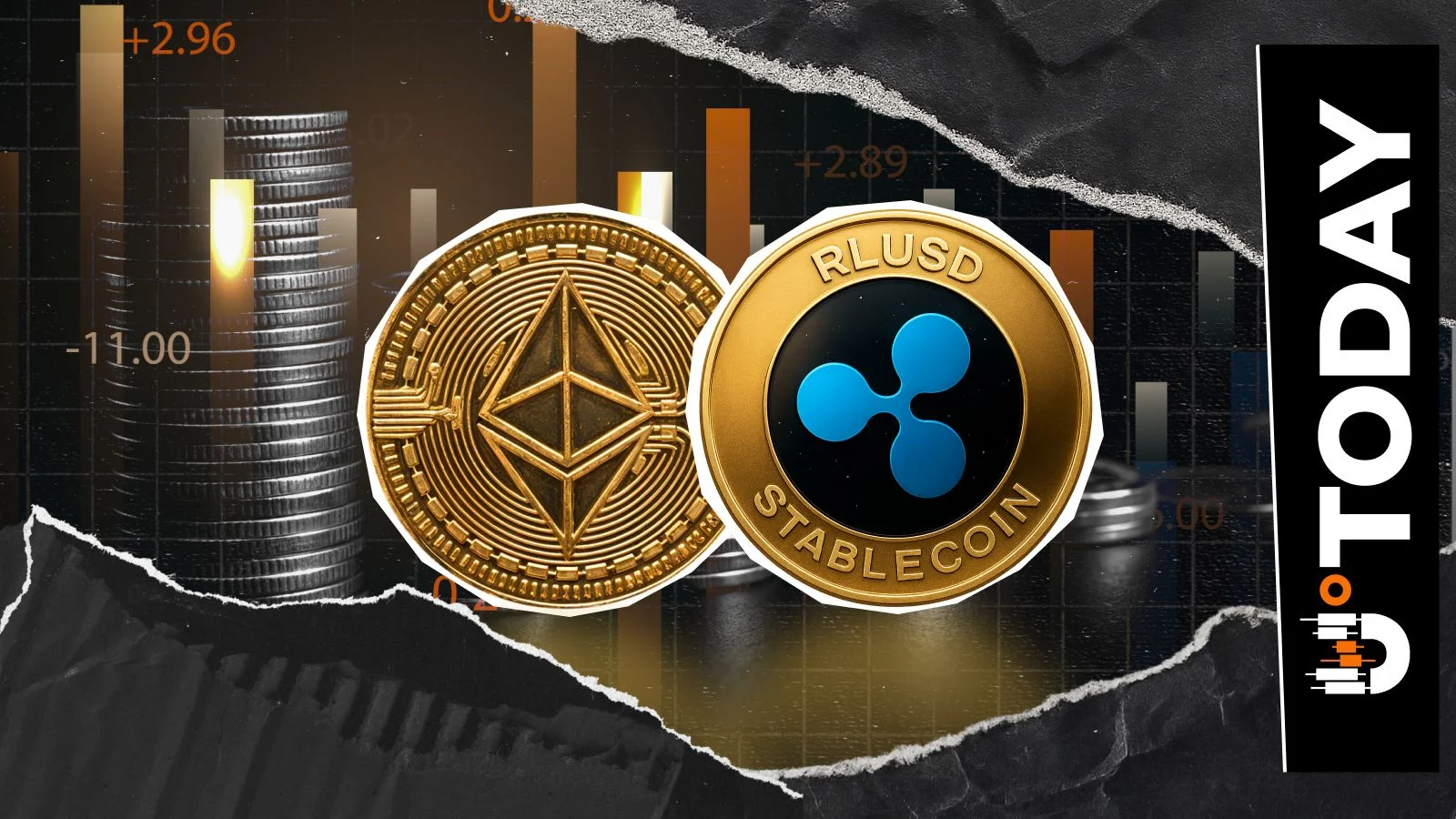
The recent burning of 40 million RLUSD on Ethereum, following previous burns, raises questions about potential declining demand despite the stablecoin's overall growth trajectory. While token burns are a normal mechanism for fully-backed stablecoins to maintain parity with reserves, the frequency and scale of recent RLUSD burns may signal a shift in institutional redemption patterns. Despite concerns over burn activity, RLUSD's circulating supply remains robust, approaching $1.5 billion, indicating continued underlying adoption and potential for further growth towards the $2 billion milestone. The net reduction in RLUSD supply over the past week (45 million burned vs. 10 million minted) suggests a temporary slowdown in net issuance, which could impact its growth rate in the short term.

Shiba Inu (SHIB) exhibits a bullish divergence on the RSI and has broken above a key resistance level, suggesting potential for a near-term upward move. The technical setup points to a potential 37% price increase for SHIB, targeting the 200-day moving average around $0.00000842, contingent on holding support at $0.00000504. While technical indicators are positive, SHIB's price action remains heavily influenced by broader market sentiment, making the $0.0000068 level a critical short-term breakout point.

Delaware's proposed banking law modernization, including specific bills for stablecoins and digital assets, signals a proactive state-level regulatory approach to integrate crypto into its financial framework. The legislation aims to enhance regulatory authority and consumer protection, potentially setting a precedent for other states seeking to attract future financial services and jobs. By aligning with federal frameworks like the GENIUS Act and focusing on licensing, reserves, and AML for stablecoin issuers, Delaware is positioning itself as a potentially favorable jurisdiction for digital asset businesses.

Cardano's Lace wallet has issued a scam alert regarding fake wallet updates and phishing emails, warning users to stay vigilant against malware and data theft attempts. The alert highlights a common phishing tactic where scammers impersonate legitimate sources to trick users into revealing sensitive information like recovery phrases. While the primary focus is on security, the article also mentions the upcoming mainnet launch of Cardano's privacy network, Midnight, which aims to integrate Zcash-like privacy features with smart contracts.
Multiple analysts project significant upside for Dogecoin, with targets ranging from $0.44 in the near-term to $2 by 2029, suggesting a potential 350% to 2,500% rally based on historical patterns and technical divergences. Despite bullish technical signals, bearish risks persist below the $0.10 level, with one analyst warning of a potential 35% drop to $0.06 if consolidation continues, highlighting the critical importance of this price threshold for sentiment. Geopolitical tensions, specifically the U.S.-Iran conflict, are identified as a persistent headwind for speculative assets like Dogecoin, potentially diverting capital to safe havens and overriding purely technical bullish outlooks.
Bitcoin experienced a short-term price jump following geopolitical de-escalation signals, but derivatives market data indicates underlying trader skepticism about sustained upside. The low annual premium on Bitcoin futures and conservative pricing of out-of-the-money call options suggest a lack of strong conviction for a significant price increase. Persistent macroeconomic pressures from elevated interest rates and ongoing geopolitical uncertainty, coupled with volatile oil prices, continue to create headwinds for risk assets like Bitcoin. Despite a brief test of the 200-week EMA holding as support, the market awaits stronger confirmation from institutional positioning before considering a trend reversal.

Bitcoin's resilience amid geopolitical tensions and macro asset weakness suggests a potential "regime shift," where BTC may decouple from traditional risk assets. Despite a dip below $70,000, analysts observe higher lows forming for BTC, indicating potential for a near-term rally towards $77-80K if current support levels hold. Uncertainty remains regarding Bitcoin's short-term direction, with some analysts warning of potential downside due to the unreliable nature of the 200-week EMA as support.
Solana's new developer platform, targeting enterprise adoption with unified APIs and partnerships like Mastercard, signals a strategic push into traditional finance integration. The platform's focus on tokenized deposits, stablecoins, and RWAs, coupled with AI coding tool integration, aims to reduce institutional barriers and accelerate blockchain adoption. Despite significant ecosystem development and institutional partnerships, SOL's price action remains weak, trading below key resistance levels and indicating a lack of immediate bullish momentum. Traders should monitor SOL's ability to reclaim resistance levels at $97.65, $106.82, and $116.99 to confirm any potential bullish reversal, with current market structure suggesting continued downward pressure.
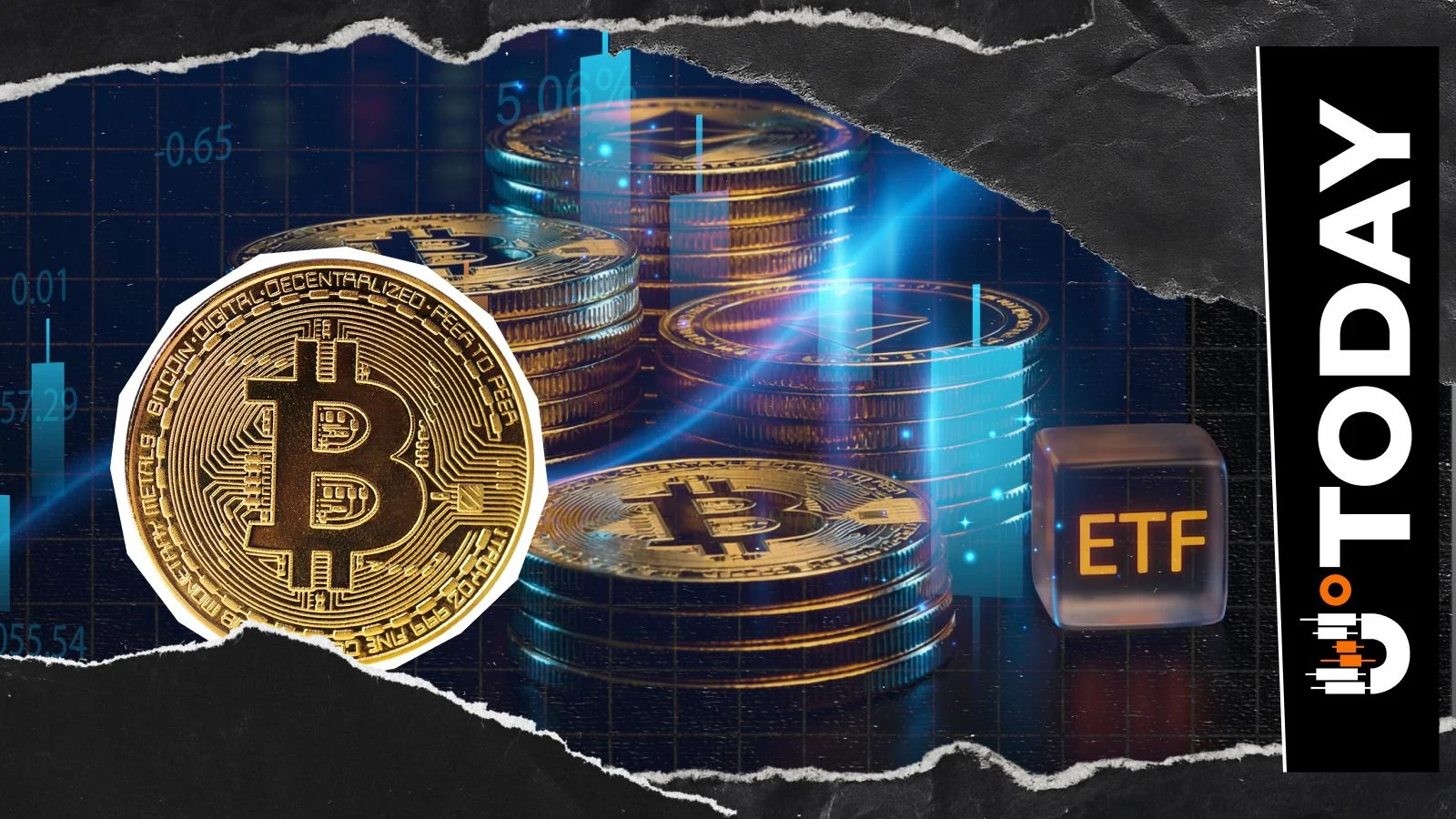
Spot Bitcoin ETF inflows have rebounded to $2.5 billion for the month, demonstrating significant investor resilience despite a 40% price drop over the past six months. The strong inflows, particularly for IBIT which ranks in the top 2% of ETFs for YTD flows, suggest sustained institutional conviction in Bitcoin's long-term value, contrasting with historical gold ETF behavior during price downturns. The continued interest from traditional finance players like Morgan Stanley filing for ETFs, alongside substantial institutional buying capacity, indicates potential for further price appreciation as supply tightens.

Tether's commitment to a Big Four audit, though details remain undisclosed, signals a move towards greater transparency and potential regulatory compliance, which could bolster confidence in USDT's reserves. The impending audit is a critical step for Tether to align with regulatory frameworks like the GENIUS Act, potentially reducing systemic risk associated with stablecoin reserves and influencing future stablecoin oversight. While the announcement is positive for stablecoin stability, the lack of a named auditing firm introduces a degree of uncertainty, suggesting a 'watchful' stance until the audit's completion and findings are public.

BitMine's aggressive $140 million ETH accumulation in one week, surpassing Michael Saylor's BTC purchases, signals strong conviction in Ethereum's long-term value by a major institutional player. With BitMine now holding 3.86% of the total Ethereum supply, this significant accumulation could influence market dynamics and potentially signal further institutional interest in ETH. The comparison to Strategy's Bitcoin holdings highlights a potential shift in institutional focus or diversification strategies within the digital asset market.

The NYSE's collaboration with Securitize to develop systems for tokenized securities signifies a major step towards integrating traditional finance with blockchain infrastructure. Securitize's role as the first digital transfer agent for the NYSE's platform highlights the growing importance of specialized blockchain firms in bridging TradFi and digital assets. This development, alongside Nasdaq's recent pilot program, indicates a broader trend of established financial institutions actively exploring and building out tokenized asset trading capabilities. The focus on "native" securities and round-the-clock trading infrastructure suggests a potential shift in market structure and operational efficiency for traditional assets.

Rising exchange reserves of 181 billion SHIB signal increased selling pressure, potentially leading to a price decline if demand does not absorb the supply. SHIB's inability to break above the 50 EMA indicates weak bullish momentum, suggesting that any short-term price increases may be corrective rather than indicative of a trend reversal. The confluence of high exchange balances and failure to reclaim key resistance levels increases the probability of a further downward price movement for SHIB.

Ethereum's price is consolidating around the $2,200 resistance level, with a decisive break above this point required to confirm a bullish symmetrical triangle pattern and target $3,080. Sustained institutional demand, indicated by positive spot ETH ETF flows, is crucial for ETH to overcome overhead resistance and continue its upward trend. A failure to hold the $2,000 support level could trigger a significant downside move, potentially retesting lower targets around $1,400.
Signal context only. Validate with price action, liquidity, and risk limits before taking a position.
