
Navigating Crypto News

CoinFeather
Navigating Crypto News

Quick market read from this story
Major payment networks Visa and Stripe-backed Tempo are launching tools and protocols for AI agents to facilitate programmatic payments, signaling a significant push towards machine-to-machine transactions.
The simultaneous launch of Visa's crypto tool and Tempo's blockchain highlights a growing trend in enabling AI agents to transact online, potentially increasing demand for stablecoins and payment infrastructure.
The development of open standards like the Machine Payments Protocol, supported by multiple entities including Visa, Stripe, and Lightspark, suggests a move towards interoperability in AI agent payments, which could benefit the broader crypto payments ecosystem.
Deep Dive
Visa Crypto Labs has introduced an experimental tool, Visa CLI, designed to enable artificial intelligence agents to securely make payments without the need for API keys. This launch coincides with the mainnet debut of the Tempo blockchain, a project backed by payments company Stripe, which also offers a protocol for AI agent transactions.
The Visa CLI, a command-line interface, allows AI agents to "securely pay for what you need as you code," according to its website. It aims to simplify programmatic card payments by eliminating the security risks associated with API keys, which could be leaked by AI agents. This development is part of a growing trend in enabling AI agents to conduct online transactions, fueled by increasing interest in AI and stablecoins.
This follows similar initiatives, such as Coinbase's x402 standard launched in May, which facilitates agentic stablecoin payments. Sam Altman's World recently integrated this standard into its developer toolkit for AI agents.
The Tempo blockchain, supported by Stripe, went live on mainnet, focusing on high-throughput stablecoin transactions, a common use case for AI agents. Tempo stated that as AI systems become more capable, they will increasingly require transactional abilities.
Tempo also launched the Machine Payments Protocol (MPP), an open standard co-developed with Stripe. This protocol provides a standardized method for agents and services to coordinate payments programmatically. It is designed to be extensible and payment-method agnostic, already supporting stablecoins and cards.
Visa has extended support for the MPP on its card payments network, while Stripe supports cards, wallets, and other payment methods. Additionally, the crypto fintech Lightspark has integrated support for the protocol over the Lightning Network for Bitcoin payments.
— Tempo (@tempo) March 18, 2026Agent payments will soon overtake human payments on the internet. The Machine Payments Protocol (@mpp) is a new open standard co-authored by @stripe and @tempo.
It’s designed to be extensible and payment-method agnostic, already supporting stablecoins, cards, and more. pic.twitter.com/dEjfGN2tp9
Source, catalyst, and sector overlap from the latest feed.
Phishing attacks targeting developers with fake token rewards highlight the ongoing security risks in the crypto space, particularly around emerging AI projects. The OpenClaw project's proactive stance against tokenization and its prior warning about scams demonstrate a commitment to user safety, though the incident underscores the need for vigilance. While no victims have been reported, the incident serves as a reminder for developers to verify all communications and only interact with official project channels to avoid wallet compromise.
The narrative of AI-driven abundance leading to 'free' goods and services overlooks the substantial, centralized infrastructure costs and control. Concentration of wealth is likely to increase as entities controlling AI models, platforms, and especially the underlying energy and compute infrastructure will dominate. The pursuit of AI abundance hinges on scalable, cheap energy, with fusion power presented as a long-term solution, but current infrastructure costs remain a significant barrier. Centralized control over AI infrastructure could lead to a 'soft prison' scenario where user autonomy and self-sovereignty are traded for access to 'free' services.
Canada's financial intelligence unit is intensifying its crackdown on crypto businesses, revoking 47 registrations this year, signaling increased regulatory scrutiny. The sustained enforcement actions by FINTRAC, including significant fines against Cryptomus and KuCoin, indicate a heightened risk environment for crypto exchanges operating in Canada. This aggressive regulatory stance suggests potential challenges for crypto firms seeking to operate compliantly in Canada, possibly impacting market access and operational costs.
Retail investors' significant increase in gold ETF purchases, tripling over six months, fueled a rally that has since corrected due to institutional selling and leveraged liquidations. The sharp reversal in precious metals prices, with gold down 9% and silver down 34% from recent highs, highlights the amplified volatility caused by leveraged positions and forced selling. The strengthening US dollar and shifts in monetary policy expectations appear to be correlated with the decline in gold and silver, suggesting a potential rotation out of safe-haven assets. While not explicitly stated as a direct cause, the narrative of gold's rise potentially at Bitcoin's expense, coupled with broader crypto market weakness, warrants monitoring for potential capital flows.
Block, Inc. is re-hiring some employees laid off due to AI restructuring, indicating potential miscalculation in initial workforce reduction or a need for specific skill sets not fully replaceable by AI. The re-hiring suggests that while AI is a focus, human expertise remains critical for certain operational functions, potentially impacting the pace and effectiveness of AI integration. This development could signal internal operational challenges or a reassessment of AI's immediate impact on workforce needs within Block, Inc. The situation at Block, Inc. mirrors broader industry trends where companies are navigating AI adoption alongside existing workforce dynamics, with implications for talent management and operational efficiency.
Moonbeam's GLMR token is positioned as a critical infrastructure play, with its future value heavily dependent on the increasing adoption of cross-chain interoperability and the strengthening of the Polkadot ecosystem. The projected price targets for GLMR, ranging from $0.48 by 2026 to $5.78 by 2030, are contingent on successful developer retention, increased user adoption in sectors like GameFi and DeFi, and the implementation of network upgrades such as Elastic Scaling. Despite a current trading price significantly below its all-time highs, GLMR's deflationary tokenomics, with a substantial portion of transaction fees being burned, could provide a foundational support for price appreciation if network activity increases. The article presents a price prediction scenario that is optimistic but acknowledges significant competition and the need for Moonbeam to maintain its relevance as a bridge between major ecosystems like Ethereum and Polkadot.
The SEC's approval for Nasdaq to pilot tokenized stock trading signifies a major step towards integrating traditional finance with blockchain technology. This development could pave the way for increased institutional adoption of tokenized assets, potentially impacting liquidity and trading efficiency for eligible securities. While the pilot is limited to Russell 1000 components and specific ETFs, it sets a precedent for future tokenization efforts across a broader market spectrum. The regulatory green light from the SEC, despite initial concerns, suggests a maturing approach to digital asset regulation within established financial frameworks.
Fold's Q4 revenue increased 8% to $9 million, driven by customer growth and new product launches like the Bitcoin Rewards Credit Card, signaling potential for Bitcoin rewards to displace traditional loyalty programs. Despite revenue growth, Fold reported a $6 million operating loss and a $69.6 million full-year net loss, alongside a significant reduction in its Bitcoin treasury holdings from 1,527 BTC to 827 BTC, indicating financial pressures and a potential need for capital. The company's CEO expressed optimism about scaling Bitcoin rewards programs to millions of cardholders in 2026, contingent on improved risk and fraud controls, while also highlighting the removal of convertible debt as a positive step for its capital structure. Fold's (FLD) stock price has experienced a substantial decline, falling 59% year-to-date and 83.8% over the past year, despite a temporary after-hours bump following the earnings report, suggesting ongoing market skepticism.
The Federal Reserve's decision to hold rates steady and signal only one potential cut in 2026, coupled with elevated inflation and geopolitical risks, creates a challenging near-term environment for risk assets like cryptocurrencies. Despite a broad market selloff, the licensing of S&P Dow Jones Indices to launch a perpetual futures contract on the Hyperliquid blockchain highlights growing institutional interest in leveraging blockchain for traditional finance products, signaling potential future demand. The substantial $5.8 trillion in sidelined corporate cash represents a significant long-term wildcard; if tokenized finance can demonstrate efficiency and yield benefits, a fraction of this capital could flow into crypto, fundamentally altering demand dynamics. The current macro backdrop of 'higher for longer' interest rates and persistent inflation, exacerbated by oil price volatility and geopolitical tensions, suggests that crypto markets will likely remain under pressure until clearer signals for monetary easing emerge.
The launch of an officially licensed on-chain S&P 500 perpetual futures contract on Hyperliquid signifies a major integration of traditional finance benchmarks into crypto infrastructure, enabling 24/7 trading and potentially increasing volatility during off-hours. This development suggests a growing institutional acceptance of blockchain-based settlement and trading systems, blurring the lines between traditional finance and digital assets and positioning crypto infrastructure as an extension of existing markets. The associated rise in Hyperliquid's ecosystem activity and HYPE token price indicates that markets are beginning to price in the potential for the platform to become a key venue for tokenized traditional financial products.
Grayscale's research head categorizes XRP as a 'currency' asset, highlighting its utility in cross-border payments and suggesting a shift in investor focus beyond Bitcoin. The potential for an XRP ETF is presented as a significant catalyst, expected to broaden investor access and attract new capital by leveraging familiar financial products. The article frames XRP's integration into diversified portfolios as part of a larger trend of increasing on-chain activity and crypto's move towards mainstream financial integration.
SEC Chair Paul Atkins' proposed 'safe harbor' framework aims to provide regulatory clarity and reduce pressure on crypto startups and certain tokens. The guidance suggests that most crypto assets, including those involved in protocol mining, staking, and airdrops, should not be classified as securities, potentially easing compliance burdens. This initiative, in coordination with the CFTC, signals a potential shift towards a more supportive regulatory environment in the US, which could encourage innovation and investment in the crypto space. The proposed exemptions for startups and fundraising aim to create tailored pathways for capital raising while maintaining investor protection, addressing a key pain point for the industry.
Live Feed
Loading the broader stream in the same flow as the homepage feed.

Bitcoin maximalist Samson Mow reiterates his view that Ethereum is not 'money' due to a perceived lack of intrinsic desire for ETH compensation among its developers, contrasting it with Bitcoin. Mow's commentary highlights a persistent narrative battle between Bitcoin and Ethereum, focusing on perceived utility and adoption as a medium of exchange. The article also includes a separate warning from JAN3 advising users against holding crypto on exchanges, emphasizing self-custody of private keys.

Strong inflows into US spot Bitcoin ETFs, totaling nearly $200 million on Monday, indicate renewed institutional demand and could support a near-term price rally. The sustained ETF performance, particularly BlackRock's IBIT leading with $169.3 million in inflows, suggests growing institutional conviction in Bitcoin's value proposition. Analysts are projecting Bitcoin to potentially break the $80,000 mark in March, driven by ETF momentum, though technical indicators suggest caution regarding a potential 'fakeout' followed by a 'dump'.
Evernorth's planned Nasdaq listing under XRPN, backed by significant XRP and cash investment, signals a major institutional push to provide regulated, stock-based exposure to XRP. The SEC's classification of XRP as a digital commodity, coinciding with Evernorth's S-4 filing, removes a key regulatory overhang, potentially unlocking broader institutional adoption. Evernorth's strategy to actively utilize its XRP holdings through lending, liquidity provision, and DeFi participation, alongside running validators, aims to generate returns beyond simple price appreciation, differentiating it from passive investment vehicles. The convergence of a major SPAC listing, regulatory clarity for XRP, and increasing on-chain activity on the XRP Ledger suggests a potentially bullish near-term outlook for XRP and related ecosystem plays.
QQQM offers a lower expense ratio (0.15% vs 0.20%) compared to QQQ, making it a more cost-effective choice for long-term investors seeking Nasdaq-100 exposure. QQQ's superior liquidity and extensive options market make it the preferred choice for active traders and institutions, while QQQM is tailored for buy-and-hold strategies. Both ETFs track the Nasdaq-100 index, providing similar exposure to major tech and growth companies, with performance differences primarily driven by fees over extended periods.
An analyst has identified a bullish fractal pattern on Dogecoin's monthly chart, historically preceding massive rallies, suggesting a potential for significant upside if the pattern repeats. Despite the bullish fractal, mixed technical indicators including bearish moving averages and a "Sell" signal from the Bull Bear Power indicator introduce considerable uncertainty, warranting caution. The projected $10 target for DOGE, representing over 10,000% gains from current levels, is highly speculative and lacks confirmation from volume data, a critical factor for validating such patterns. The conflicting technical signals and the speculative nature of the fractal prediction suggest a neutral short-term outlook, with potential for volatility but no clear immediate trading direction.

A significant Satoshi-era Bitcoin whale, Owen Gunden, has sold an additional 650 BTC ($46.3 million), adding to previous large-scale liquidations and potentially increasing short-term sell pressure on Bitcoin. The whale's consistent selling, including a prior $1.12 billion BTC sale, indicates a strategic distribution phase, which can psychologically impact market sentiment and signal waning long-term conviction from early holders. While Gunden's actions may cause short-term volatility, the article suggests the long-term structural outlook for Bitcoin remains valid, emphasizing that early adopter selling is a normal part of its lifecycle. Traders should monitor exchange inflows and whale movements closely, as continued large-scale selling from early holders could suppress near-term bullish momentum for Bitcoin.
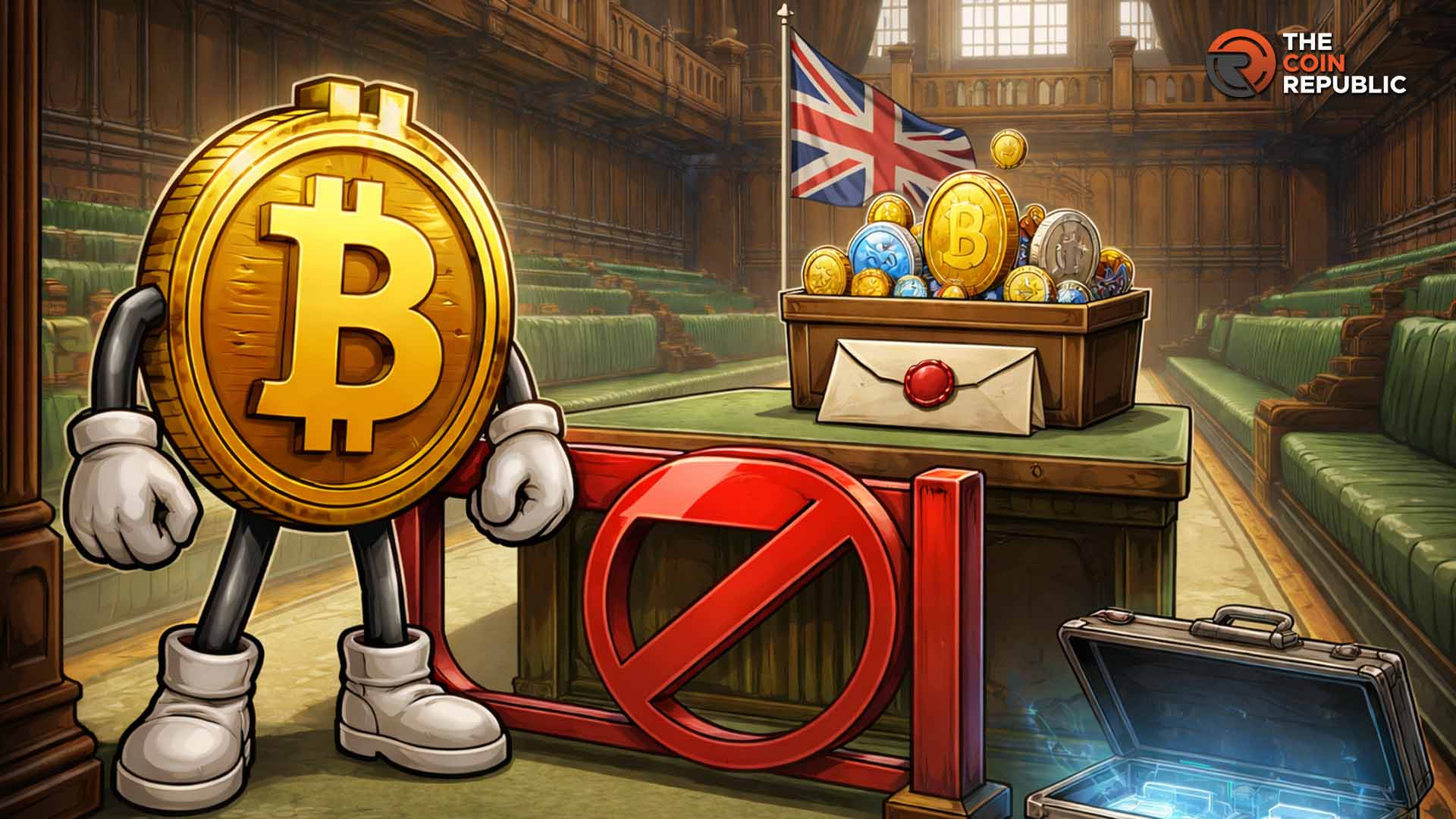
UK lawmakers are proposing an immediate ban on crypto donations to political parties, citing risks of foreign influence and lack of transparency. Crypto industry experts warn that a ban could inadvertently create cybersecurity risks by forcing sensitive data into centralized databases, potentially becoming targets for hackers. The proposed regulatory action highlights the UK's cautious approach to crypto, potentially impacting how digital assets are perceived and utilized within political financing. While the intent is to enhance political integrity, the debate underscores the ongoing challenge of balancing regulatory oversight with the practical implications for digital asset adoption.

X's monetization policy enforcement against a prominent Bitcoin influencer highlights platform risk for content creators and indirectly signals potential scrutiny on coordinated promotional activities within the crypto space. The public dispute between 'The ₿itcoin Therapist' and Nikita Bier, a product head at X, underscores the importance of platform terms of service compliance for crypto influencers seeking to monetize their content. While the event directly impacts the influencer's earnings, it serves as a cautionary tale for other crypto personalities regarding the use of multi-account networks for promotion, potentially affecting community trust and platform engagement.
Bitcoin's breach below $70,000, coupled with a declining Fear & Greed Index to 23, signals a significant shift towards risk-off sentiment, potentially pressuring further downside in the short term. The broad market decline, with Ethereum down over 7% and altcoins following suit, indicates that the recent speculative rally is fading, driven by weakening momentum and crowded positioning. While the article doesn't cite a single catalyst, the pullback appears to be driven by liquidity dynamics and leveraged positions unwinding, a common pattern in crypto that can lead to rapid price swings. The moderation in ETF inflows, despite remaining positive, suggests a key demand driver is cooling, which could limit the market's ability to recover without renewed institutional interest or a shift in macro sentiment.

Long-term Bitcoin holders are liquidating significant positions, signaling a potential shift in sentiment driven by the Federal Reserve's hawkish stance on interest rates. The Fed's updated 'dot plot' indicating fewer rate cuts than previously anticipated is pressuring risk assets, including Bitcoin and other major cryptocurrencies, due to tighter liquidity expectations. Market participants are repricing expectations for Fed rate cuts, with probabilities now heavily favoring a single cut this year, which is a bearish signal for crypto markets reliant on accommodative monetary policy.

FTX's upcoming $2.2 billion creditor payout on March 31, 2026, signifies substantial progress in its bankruptcy proceedings, with several creditor classes nearing or achieving full recovery. The distribution plan, involving partners like BitGo and Kraken, indicates a structured approach to asset liquidation and repayment, potentially setting precedents for future large-scale bankruptcies. While many creditors are seeing 100% or even 120% recovery (including interest for convenience claims), the ongoing process for others like Dotcom customers highlights the complexities and varying timelines in large-scale asset recovery.
Historical data indicates that crypto markets, including Bitcoin and Ethereum, have consistently recovered from significant downturns, often reaching new all-time highs, suggesting a pattern of resilience. Market recoveries are influenced by a confluence of factors including macroeconomic conditions, regulatory clarity, technological innovation, and institutional adoption, which collectively shape investor sentiment and capital flows. While past performance is not indicative of future results, the recurring cycle of boom and bust, coupled with ongoing innovation and increasing institutional interest, provides a basis for optimism regarding future crypto market recoveries. Potential triggers for the next bull run include regulatory clarity, new institutional products like ETFs, Bitcoin halving events, and global financial instability, all of which could drive renewed investor interest and capital inflow.
Zcash (ZEC) is showing structural resilience near $260, indicating a potential shift from prolonged decline to base-building as privacy infrastructure gains narrative relevance. The current consolidation phase for ZEC suggests a focus on structural confirmation in March, with a sustained break above $300 potentially opening upside towards $380-$420. Long-term projections for ZEC reaching $850 by 2026 and $7000 by 2030 are contingent on broader market cycles favoring narrative-driven sectors like privacy coins and increased institutional attention. Factors such as regulatory clarity, advancements in zk-proof technology, and broader crypto market expansion are critical for Zcash to achieve its ambitious long-term price targets.

Flow Traders' launch of 24/7 OTC liquidity for tokenized assets bridges traditional finance and crypto markets, addressing institutional needs for continuous risk management outside of traditional trading hours. The expansion of 24/7 liquidity for tokenized equities, gold, and money market funds signals growing institutional adoption and demand for seamless trading of digital representations of traditional assets. This development enhances the efficiency and accessibility of tokenized markets, potentially driving further growth and integration between TradFi and digital asset ecosystems.
Signal context only. Validate with price action, liquidity, and risk limits before taking a position.
