
Navigating Crypto News

CoinFeather
Navigating Crypto News

Quick market read from this story
Phishing attacks targeting developers with fake token rewards highlight the ongoing security risks in the crypto space, particularly around emerging AI projects.
The OpenClaw project's proactive stance against tokenization and its prior warning about scams demonstrate a commitment to user safety, though the incident underscores the need for vigilance.
While no victims have been reported, the incident serves as a reminder for developers to verify all communications and only interact with official project channels to avoid wallet compromise.
Deep Dive
Developers of the popular open-source AI project OpenClaw are currently facing phishing attacks on GitHub. Attackers are using fake token rewards, specifically a non-existent cryptocurrency named “CLAW”, to lure users into connecting their crypto wallets.
Cybersecurity firm OX Security reported the scam, noting that attackers create fake GitHub accounts to post messages in repositories, tagging developers to increase visibility. These messages falsely claim recipients have won $5,000 worth of “CLAW”. The campaign then directs users to a cloned website that mimics OpenClaw’s official page, prompting them to connect their crypto wallets. This is a common tactic to steal credentials or gain malicious approvals.
The creator of OpenClaw, Peter Steinberger, has publicly warned users on X (formerly Twitter) that any emails claiming association with the project are scams. He emphasized that the project is open-source and non-commercial, and they would never conduct such token rewards. Steinberger had previously stated in January that he would “never do a coin” and that any project listing him as a coin owner is a scam.
OpenClaw, launched in November 2025, is a free, open-source autonomous AI agent that runs locally on computers. It can manage files, software, and browser tasks through chat platforms like WhatsApp or Telegram. The project has gained significant traction, amassing over 465,000 subscribers on X following its launch.
In an effort to combat scams, the OpenClaw project also implemented a ban on Bitcoin (BTC) and crypto discussions within its official Discord channel in February.
Source, catalyst, and sector overlap from the latest feed.
The development of 'one-click staking' for Ethereum aims to significantly lower the technical barrier for institutional participation, potentially unlocking substantial new capital inflows into ETH staking. By simplifying validator operations through DVT-lite, developers are addressing concentration risks associated with current staking providers and enhancing network decentralization. Successful implementation of one-click staking could lead to increased validator diversity and network resilience, supporting Ethereum's long-term growth and security model. The initiative represents a strategic effort to attract institutional treasuries by offering a more accessible and less operationally burdensome yield-generating opportunity on ETH.
The ECB is moving from policy design to implementation planning for a digital euro, focusing on practical integration with existing payment infrastructure like ATMs and terminals. The initiation of workstreams for ATM and terminal integration, alongside certification frameworks, signals concrete progress towards a potential 2027 pilot, indicating a medium-term development timeline. While the ECB is actively developing the digital euro, a final decision on its issuance remains contingent on legislative approval, suggesting ongoing regulatory uncertainty.
The narrative of AI-driven abundance leading to 'free' goods and services overlooks the substantial, centralized infrastructure costs and control. Concentration of wealth is likely to increase as entities controlling AI models, platforms, and especially the underlying energy and compute infrastructure will dominate. The pursuit of AI abundance hinges on scalable, cheap energy, with fusion power presented as a long-term solution, but current infrastructure costs remain a significant barrier. Centralized control over AI infrastructure could lead to a 'soft prison' scenario where user autonomy and self-sovereignty are traded for access to 'free' services.
Canada's financial intelligence unit is intensifying its crackdown on crypto businesses, revoking 47 registrations this year, signaling increased regulatory scrutiny. The sustained enforcement actions by FINTRAC, including significant fines against Cryptomus and KuCoin, indicate a heightened risk environment for crypto exchanges operating in Canada. This aggressive regulatory stance suggests potential challenges for crypto firms seeking to operate compliantly in Canada, possibly impacting market access and operational costs.
Major payment networks Visa and Stripe-backed Tempo are launching tools and protocols for AI agents to facilitate programmatic payments, signaling a significant push towards machine-to-machine transactions. The simultaneous launch of Visa's crypto tool and Tempo's blockchain highlights a growing trend in enabling AI agents to transact online, potentially increasing demand for stablecoins and payment infrastructure. The development of open standards like the Machine Payments Protocol, supported by multiple entities including Visa, Stripe, and Lightspark, suggests a move towards interoperability in AI agent payments, which could benefit the broader crypto payments ecosystem.
Venus protocol experienced a $2.15 million bad debt incident due to an exploit on its Thena market, leading to a 9% drop in its XVS governance token. The exploit involved manipulating the THE token price through a large accumulation funded by Tornado Cash, highlighting risks in DeFi protocols with thin markets and potential code gaps. While the direct damage was contained to specific pools, the incident underscores the inherent risks in permissionless DeFi protocols and the challenges of addressing suspicious activity without breaking decentralization principles. The market's delayed reaction, with XVS price dropping after major holders moved tokens to exchanges, suggests potential for further downside if confidence erodes or if the bad debt resolution is unfavorable.
A sophisticated phishing campaign targeting OpenClaw developers highlights the increasing risk of scams exploiting popular AI projects for crypto theft. The use of cloned websites, obfuscated JavaScript, and C2 servers demonstrates advanced tactics by attackers, posing a significant threat to developer wallets. While no victims have been confirmed, the incident underscores the need for heightened security awareness and due diligence within the developer community, especially when interacting with airdrop or giveaway lures.
A sophisticated phishing campaign is impersonating the new Pudgy World game, targeting users with fake wallet interfaces to steal credentials, highlighting ongoing security risks in the gaming and NFT space. The attack's detailed wallet UI forgeries suggest a well-resourced threat actor, indicating a persistent and evolving threat landscape for crypto-related scams targeting digital asset holders. While the direct financial impact on Pudgy Penguins or its users is currently unknown, such phishing attempts underscore the critical need for enhanced user education and security protocols within the broader crypto ecosystem.
The confirmed cyberattack on Bitrefill, involving drained crypto wallets and exposed user records, directly impacts user trust and security within the payments sector. The suspected involvement of the Lazarus Group, a North Korea-linked entity, highlights ongoing geopolitical risks and sophisticated threat actors targeting crypto infrastructure. While Bitrefill stores minimal sensitive data, the breach of 18,500 user records, including wallet addresses and emails, necessitates increased vigilance from users against potential phishing attempts.
Bitrefill experienced a cyberattack exposing 18,500 customer records, including email and crypto addresses, raising concerns about platform security and customer data protection. The attack, potentially linked to the Lazarus Group, highlights ongoing threats to crypto payment platforms and the need for robust security measures to prevent data breaches. While the breach involved access to hot wallets, the extent of fund transfer and the specific cryptocurrencies affected are not detailed, requiring further investigation into financial impact.
The SEC's new crypto taxonomy clarifies that digital commodities, collectibles, and tools are not securities, providing regulatory relief and a clearer path for assets like BTC, ETH, SOL, and XRP. This reclassification potentially shields developers and software providers from burdensome KYC/AML broker-dealer registration, fostering innovation in areas like privacy tech and utility tokens. The explicit categorization of Bitcoin and Ethereum as digital commodities, alongside support for proof-of-work and proof-of-stake network activities, strengthens their market position and reduces regulatory overhang. While privacy-focused projects gain an opening due to a narrower SEC perimeter, ongoing AML and money-transmission obligations remain under separate federal frameworks.
SEC Chair Paul Atkins' proposed 'safe harbor' framework aims to provide regulatory clarity and reduce pressure on crypto startups and certain tokens. The guidance suggests that most crypto assets, including those involved in protocol mining, staking, and airdrops, should not be classified as securities, potentially easing compliance burdens. This initiative, in coordination with the CFTC, signals a potential shift towards a more supportive regulatory environment in the US, which could encourage innovation and investment in the crypto space. The proposed exemptions for startups and fundraising aim to create tailored pathways for capital raising while maintaining investor protection, addressing a key pain point for the industry.
Moonbeam's GLMR token is positioned as a critical infrastructure play, with its future value heavily dependent on the increasing adoption of cross-chain interoperability and the strengthening of the Polkadot ecosystem. The projected price targets for GLMR, ranging from $0.48 by 2026 to $5.78 by 2030, are contingent on successful developer retention, increased user adoption in sectors like GameFi and DeFi, and the implementation of network upgrades such as Elastic Scaling. Despite a current trading price significantly below its all-time highs, GLMR's deflationary tokenomics, with a substantial portion of transaction fees being burned, could provide a foundational support for price appreciation if network activity increases. The article presents a price prediction scenario that is optimistic but acknowledges significant competition and the need for Moonbeam to maintain its relevance as a bridge between major ecosystems like Ethereum and Polkadot.
Flow Traders' launch of 24/7 OTC liquidity for tokenized assets bridges traditional finance and crypto markets, addressing institutional needs for continuous risk management outside of traditional trading hours. The expansion of 24/7 liquidity for tokenized equities, gold, and money market funds signals growing institutional adoption and demand for seamless trading of digital representations of traditional assets. This development enhances the efficiency and accessibility of tokenized markets, potentially driving further growth and integration between TradFi and digital asset ecosystems.
Live Feed
Loading the broader stream in the same flow as the homepage feed.
Arizona has filed criminal gambling charges against Kalshi, alleging unlicensed betting on sports and elections, which could significantly impact its operations and regulatory standing. Kalshi's substantial revenue, generating $110M monthly fees primarily from sports contracts, places it at the center of a growing regulatory debate over prediction markets' classification as financial instruments versus gambling. Conflicting court rulings and proposed legislation targeting prediction markets highlight ongoing regulatory uncertainty, suggesting potential for further legal challenges and market restructuring. Despite regulatory headwinds, Kalshi has experienced rapid user growth and significant private market valuation increases, indicating strong investor interest in its business model.
The comparison between VTI and VOO highlights that while VTI offers broader diversification across the entire US stock market including small and mid-caps, VOO focuses on large-cap companies, leading to similar historical performance due to significant overlap. Investors choosing between VTI and VOO should align their decision with their investment philosophy, with VTI suiting those seeking maximum market exposure and VOO appealing to those preferring established large-cap corporations. Despite differences in market coverage, the substantial overlap in top holdings between VTI and VOO, dominated by major tech firms, suggests their performance will likely remain closely correlated, making either a solid foundation for long-term passive portfolios.
Evernorth's planned Nasdaq debut with a billion-dollar XRP treasury signals a significant institutional move, positioning XRP as a balance sheet asset for a publicly traded company. The active treasury model, aiming to generate yield through lending and DeFi, represents a shift from passive asset tracking to strategic value creation within a regulated corporate structure. With regulatory clarity on XRP as a commodity and backing from major players like SBI Holdings and Ripple, this listing could pave the way for a new category of yield-generating digital asset vehicles. The development suggests a broader trend of crypto-native firms seeking integration with traditional capital markets, potentially influencing future investor interaction with digital assets.

Bitcoin and Ether experienced price declines, driven by a broader risk-off sentiment stemming from the Federal Reserve's decision to maintain interest rates and a surge in oil prices. The increase in energy prices, particularly oil and natural gas, coupled with geopolitical tensions, is creating macro headwinds that are pressuring risk assets like cryptocurrencies. Significant liquidations of leveraged crypto futures positions, predominantly longs, indicate that market participants were caught off guard by the recent price drop, suggesting a shift towards bearish sentiment. While most altcoins underperformed due to thin liquidity, the emergence of specific tokens like NEO and ETHFI showing gains suggests pockets of opportunity may exist amidst the broader market downturn.
Hyperliquid (HYPE) has demonstrated significant outperformance against major assets like XRP and ETH over the past week, driven by a technical breakout and a substantial surge in trading volume. The integration of Ripple Prime with Hyperliquid signifies a convergence of traditional finance and DeFi, potentially opening on-chain liquidity access for institutional investors. Despite recent weekly gains, HYPE, XRP, and ETH have experienced a 24-hour pullback, indicating broader market volatility and potential profit-taking among traders.

Developers are already working to address quantum risks, and investors shouldn’t mistake a long-term challenge for an immediate threat, according to Galaxy Digital’s head of research Alex Thorn.

Bitcoin's relative outperformance against gold, despite a 2% drop, suggests a shift in safe-haven asset preference amidst rising oil prices and hawkish Fed signals. The hawkish stance from the Federal Reserve, signaling fewer rate cuts, is pressuring risk assets including Bitcoin and equities, while rising oil prices add inflationary concerns. Gold's recent surge and overbought conditions may be contributing to Bitcoin's unusual outperformance, as gold edges toward bear-market territory while Bitcoin is oversold. The divergence in performance between Bitcoin and gold highlights a complex macroeconomic environment where traditional safe havens are struggling against geopolitical and monetary policy pressures.
Negative Bitcoin and Ethereum ETF flows totaling over $185 million signal a shift in institutional sentiment, potentially pressuring prices lower as recent bullish momentum falters. The reversal in ETF demand, coupled with $588 million in long liquidations, indicates that the market was heavily positioned for upside, making it vulnerable to sharp downturns when inflows cease. The current market downturn, amplified by liquidations and a reliance on ETF inflows, suggests a test of organic demand and potentially a deeper retracement if outflows continue. The market's sensitivity to ETF flows and leverage unwind highlights its current risk-off posture, with a temporary shift in power from buyers to sellers.
Kraken's decision to delay its IPO signals a broader market sentiment shift, indicating that current conditions are unfavorable for large-scale public listings of crypto exchanges. The shift in IPO focus towards financial infrastructure and compliance, rather than speculative trading models, suggests a maturing crypto industry seeking greater institutional acceptance. While Kraken pauses its IPO, other firms like Securitize are proceeding, highlighting a divergence in market confidence and strategic approaches within the crypto ecosystem. The delay underscores the sensitivity of crypto market valuations to macroeconomic factors and asset price performance, impacting strategic corporate decisions like IPOs.

Bitcoin maximalist Samson Mow reiterates his view that Ethereum is not 'money' due to a perceived lack of intrinsic desire for ETH compensation among its developers, contrasting it with Bitcoin. Mow's commentary highlights a persistent narrative battle between Bitcoin and Ethereum, focusing on perceived utility and adoption as a medium of exchange. The article also includes a separate warning from JAN3 advising users against holding crypto on exchanges, emphasizing self-custody of private keys.
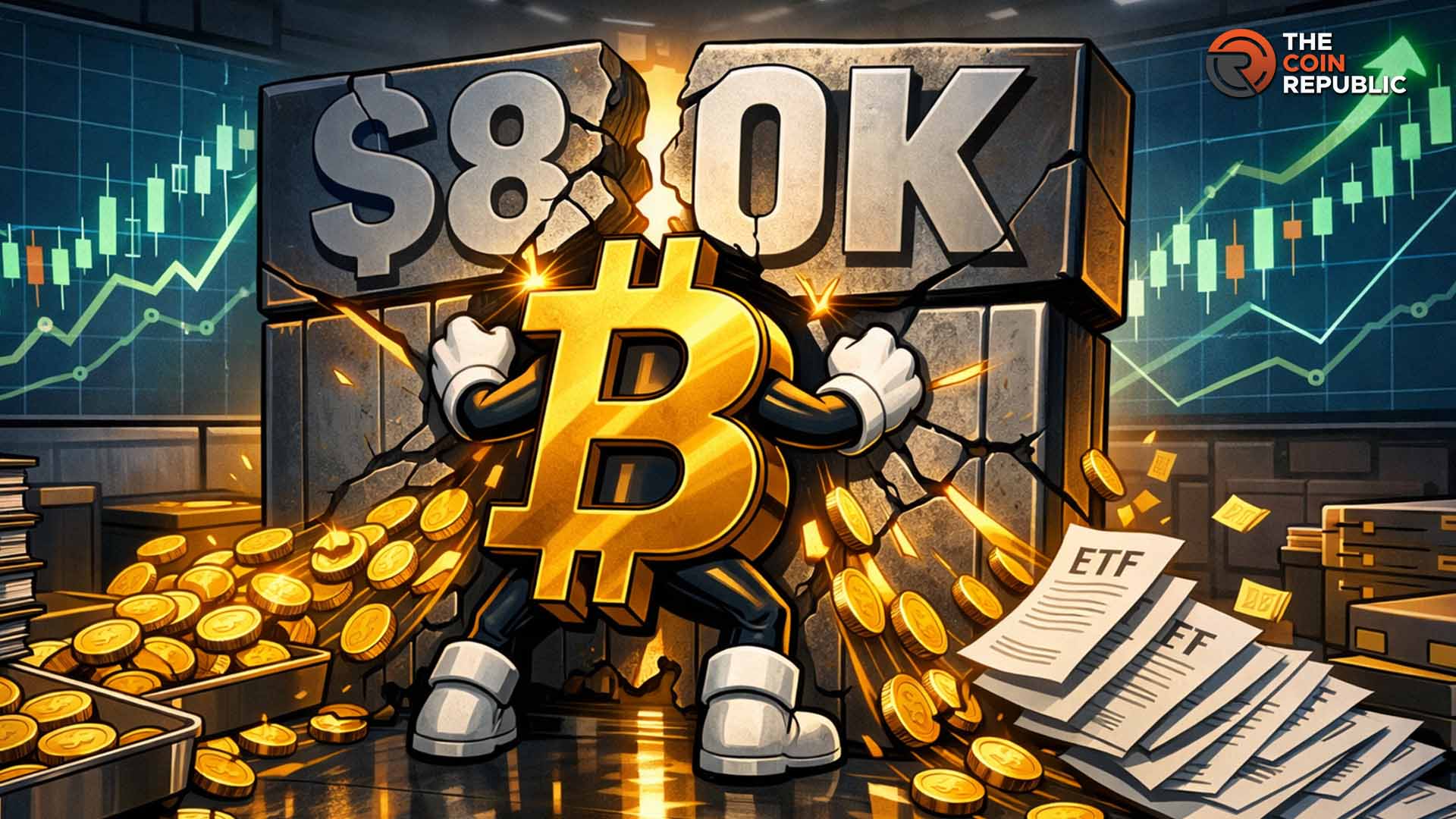
Strong inflows into US spot Bitcoin ETFs, totaling nearly $200 million on Monday, indicate renewed institutional demand and could support a near-term price rally. The sustained ETF performance, particularly BlackRock's IBIT leading with $169.3 million in inflows, suggests growing institutional conviction in Bitcoin's value proposition. Analysts are projecting Bitcoin to potentially break the $80,000 mark in March, driven by ETF momentum, though technical indicators suggest caution regarding a potential 'fakeout' followed by a 'dump'.

Evernorth's planned Nasdaq listing under XRPN, backed by significant XRP and cash investment, signals a major institutional push to provide regulated, stock-based exposure to XRP. The SEC's classification of XRP as a digital commodity, coinciding with Evernorth's S-4 filing, removes a key regulatory overhang, potentially unlocking broader institutional adoption. Evernorth's strategy to actively utilize its XRP holdings through lending, liquidity provision, and DeFi participation, alongside running validators, aims to generate returns beyond simple price appreciation, differentiating it from passive investment vehicles. The convergence of a major SPAC listing, regulatory clarity for XRP, and increasing on-chain activity on the XRP Ledger suggests a potentially bullish near-term outlook for XRP and related ecosystem plays.
QQQM offers a lower expense ratio (0.15% vs 0.20%) compared to QQQ, making it a more cost-effective choice for long-term investors seeking Nasdaq-100 exposure. QQQ's superior liquidity and extensive options market make it the preferred choice for active traders and institutions, while QQQM is tailored for buy-and-hold strategies. Both ETFs track the Nasdaq-100 index, providing similar exposure to major tech and growth companies, with performance differences primarily driven by fees over extended periods.
An analyst has identified a bullish fractal pattern on Dogecoin's monthly chart, historically preceding massive rallies, suggesting a potential for significant upside if the pattern repeats. Despite the bullish fractal, mixed technical indicators including bearish moving averages and a "Sell" signal from the Bull Bear Power indicator introduce considerable uncertainty, warranting caution. The projected $10 target for DOGE, representing over 10,000% gains from current levels, is highly speculative and lacks confirmation from volume data, a critical factor for validating such patterns. The conflicting technical signals and the speculative nature of the fractal prediction suggest a neutral short-term outlook, with potential for volatility but no clear immediate trading direction.

A significant Satoshi-era Bitcoin whale, Owen Gunden, has sold an additional 650 BTC ($46.3 million), adding to previous large-scale liquidations and potentially increasing short-term sell pressure on Bitcoin. The whale's consistent selling, including a prior $1.12 billion BTC sale, indicates a strategic distribution phase, which can psychologically impact market sentiment and signal waning long-term conviction from early holders. While Gunden's actions may cause short-term volatility, the article suggests the long-term structural outlook for Bitcoin remains valid, emphasizing that early adopter selling is a normal part of its lifecycle. Traders should monitor exchange inflows and whale movements closely, as continued large-scale selling from early holders could suppress near-term bullish momentum for Bitcoin.
Signal context only. Validate with price action, liquidity, and risk limits before taking a position.
