
Navigating Crypto News

CoinFeather
Navigating Crypto News

Source, catalyst, and sector overlap from the latest feed.
The post Coinbase Brings Regulated Futures to 26 European Countries: Here’s What You Get appeared first on Coinpedia Fintech News European crypto traders have spent years navigating unregulated platforms just to access derivatives. Coinbase just changed that. Coinbase has rolled out regulated futures trading across 26 European countries through Coinbase Advanced, now offering crypto derivatives under a MiFID-regulated entity across the region for the first time. Germany, France, and the Netherlands are among the countries …
Dogecoin is consolidating below the critical $0.10 resistance, with technical indicators showing neutral momentum and a lack of strong trend. The $0.088 support zone is crucial for DOGE; a break below could lead to further downside, while a sustained move above $0.102 might signal a recovery towards $0.115. Reduced trading volume suggests market participants are awaiting a clearer direction, a common precursor to a significant price move.
Live Feed
Loading the broader stream in the same flow as the homepage feed.
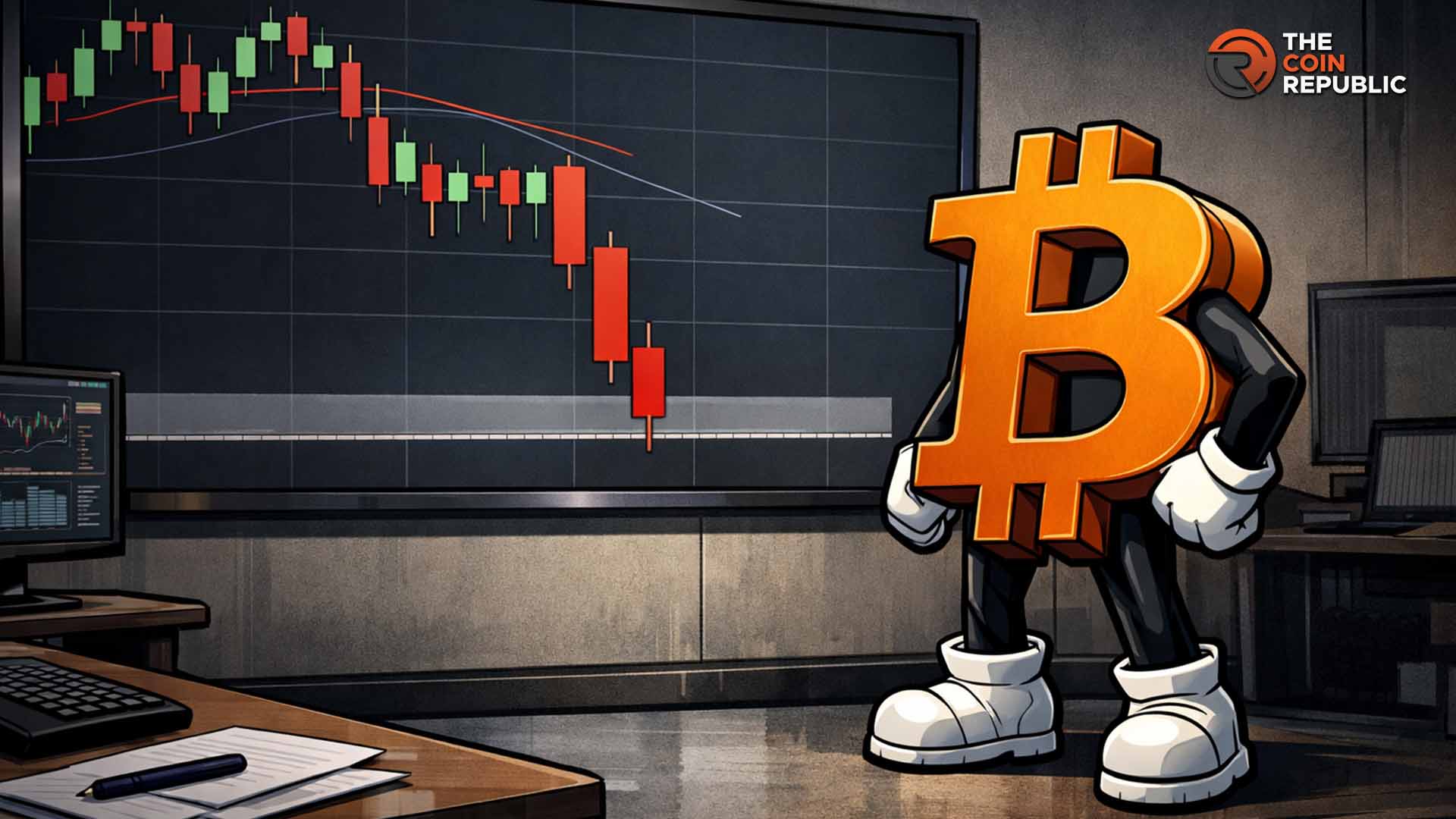
Bitcoin's weekly close below the 200-week EMA signals a potential shift in long-term trend, with $60,000 identified as the next key support level to watch. Failure to reclaim the 200-week EMA as support suggests increased bearish sentiment, potentially leading to further downside pressure if broader market conditions do not improve. External market factors like oil and gold prices are increasingly influencing Bitcoin's price action, indicating a heightened sensitivity to macroeconomic and geopolitical events. Despite bearish technical signals, some analysts observe a potential for a bullish pattern repeat from 2023, suggesting that current price action could be a temporary consolidation rather than a full trend reversal.

William Shatner's clarification that X Money will operate with fiat currency, not cryptocurrency, directly counters community expectations and may temper speculative interest in DOGE's integration with the platform. The confirmation of X Money using fiat and FDIC insurance, alongside Elon Musk's separate reaffirmation of the Doge-1 lunar mission, creates a divergence between X's payment infrastructure and potential future crypto integrations, impacting sentiment for DOGE. Despite X securing payment licenses including crypto-related ones, the explicit statement from Shatner that X Money is fiat-only suggests a strategic decision to prioritize traditional finance for the initial rollout, potentially delaying or altering any planned crypto features.
XRP's price action is showing signs of stabilization after a persistent downtrend, with converging moving averages and a strengthening ascending support line suggesting a potential recovery foundation is forming. The current technical setup, characterized by decreasing volatility and stabilizing trading volume post-February sell-off, indicates a shift from panic-driven decline to a consolidation phase, potentially preceding a directional move. Key resistance levels to watch for a sustained XRP recovery are identified between $1.40-$1.42 and a more significant cluster between $1.53-$1.75, with a clear break above these levels signaling a potential end to the consistent decline.

SUI price is consolidating near a critical $0.85 support level, with a successful defense potentially paving the way for a retest of the $1.00-$1.05 resistance zone. A breakdown below the $0.85 support could signal a deeper correction towards the $0.60 level, indicating a shift in market sentiment and potential downside risk. Momentum indicators suggest weakening bearish control as SUI price compresses, but a confirmed breakout above resistance is needed to validate a bullish reversal.

Hyperliquid's HIP-3 protocol achieved a record $720 million in single-day trading volume, indicating increased trader activity during periods of heightened market volatility. The surge in trading volume on HIP-3, driven by geopolitical tensions and rising crude oil prices, suggests that decentralized derivatives platforms can benefit from increased market uncertainty. This record volume highlights growing user engagement with platforms that offer opportunities to capitalize on short-term price swings, potentially signaling a trend in derivatives trading.

The CLARITY Act's potential failure poses a significant disadvantage to U.S. banks by creating regulatory uncertainty, potentially causing them to fall behind international competitors in digital payments. The core conflict over stablecoin yield payments between crypto firms and banks is stalling the CLARITY Act, with former CFTC Chair Giancarlo highlighting this as the primary legislative hurdle. Analysts suggest that the passage of the CLARITY Act by mid-2026 could act as a substantial catalyst for a crypto market rally, signaling a maturing institutional era for digital assets. President Trump's reported support for the crypto industry's stance on stablecoin yields indicates a political dimension to the regulatory debate, potentially influencing legislative outcomes.

Japanese crypto exchange Bitflyer experienced a significant 200% surge in trading volume, outperforming global giants like Binance and Coinbase during a period of sharp Asian equity market declines. The surge in Bitflyer's volume correlates with a broader regional selloff in equities driven by a sharp increase in oil prices and geopolitical tensions, suggesting a potential flight to digital assets as a safe haven or alternative investment during market stress. Bitcoin's performance against the Japanese Yen showed relative strength compared to USD and KRW, indicating that Japanese traders may have been more actively reallocating capital into BTC amidst regional economic uncertainty. The heightened trading activity on Bitflyer highlights the exchange's role as a key venue for Japanese traders seeking alternative assets during periods of traditional market volatility, warranting close observation for sustained trends.

Market research projects a significant expansion of the global cryptocurrency market from $2.3 billion in 2023 to $5.5 billion by 2033, indicating sustained long-term growth potential. The projected 7.5% annual growth rate is underpinned by increasing demand for transparent payment systems and a rise in cross-border remittances, suggesting fundamental drivers for adoption beyond speculation. The Asia-Pacific region is identified as a key growth engine, driven by increasing crypto adoption and expanding blockchain payment solutions, highlighting regional market dynamics.

Geopolitical tensions in the Middle East are driving oil prices to $110, increasing the probability of a US stock market crash to 35% according to veteran strategist Ed Yardeni. Despite broader market turmoil and a 35% chance of a US stock market crash, Bitcoin is demonstrating resilience, holding near $67K, suggesting a potential decoupling from traditional risk assets in this specific scenario. The article highlights a divergence where traditional markets face increased downside risk due to oil price spikes and geopolitical instability, while Bitcoin shows surprising stability, implying a potential flight to perceived digital safe havens or a market that is less sensitive to this particular commodity shock.
Institutional investors are accumulating Solana (SOL) via ETFs despite a 57% price drop, signaling a belief in long-term recovery and a potential accumulation phase. The article promotes Pepeto as a potential 'next crypto to explode,' highlighting its $7.5M presale, cross-chain bridge, and upcoming exchange listing as key drivers for significant returns. While Solana ETFs demonstrate institutional confidence in a recovering asset, the narrative shifts to presale opportunities like Pepeto, suggesting that early entry in new projects can yield higher returns than established assets during downturns. The comparison between Solana's ETF inflows and Pepeto's presale success frames a market dynamic where institutional capital supports established assets during dips, while retail and speculative capital seeks out high-risk, high-reward early-stage projects.

Aster DEX is delisting the OWLUSDT perpetual contract, signaling reduced liquidity and potential market pressure for Owlto Finance's token. The delisting, preceded by a 'reduce-only' mode, indicates a formal exit from the derivatives market for OWLUSDT, impacting traders with open positions. Owlto Finance's OWL token has shown significant underperformance, with substantial weekly and yearly declines, making the delisting a further negative catalyst.

Tokenized crude oil futures on Hyperliquid experienced a sharp pullback from recent highs following news of potential G7 strategic reserve releases, indicating market sensitivity to coordinated supply-side interventions. The rapid price reversal in tokenized oil futures highlights the efficiency of crypto-native venues in pricing geopolitical risk and potential market interventions, even outside traditional trading hours. Bitcoin saw a brief reversal but largely stabilized, suggesting that while oil price volatility is a market factor, its direct impact on BTC remains muted due to U.S. energy independence and growing institutional adoption. The potential G7 reserve release represents a significant intervention in energy markets, with its effectiveness in offsetting supply disruptions contingent on the scale and duration of the action.
Signal context only. Validate with price action, liquidity, and risk limits before taking a position.
Quick market read from this story
Suspected North Korean hackers exploited the React2Shell flaw to breach crypto cloud systems, stealing sensitive data including private keys and source code.
The coordinated attacks targeted staking platforms and exchange providers, indicating a sophisticated effort to compromise core infrastructure and potentially impact user funds.
While attribution is moderate, the exploitation of cloud credentials and specific vulnerabilities highlights ongoing systemic risks to crypto service providers.
Deep Dive
A threat group suspected of being linked to North Korea has reportedly executed coordinated attacks against cryptocurrency companies, exploiting the React2Shell vulnerability to steal AWS credentials and gain access to cloud systems. Security researchers at Ctrl Alt Intel identified the attacks, which targeted staking platforms and exchange providers like ChainUp. The hackers allegedly obtained private keys, configuration data, source code, and Docker images.
The attackers utilized infrastructure traced to a server based in South Korea. However, the attribution remains moderate, and the exact source of the compromised credentials is still undetermined. The exploited React2Shell flaw allowed them to infiltrate cloud environments, leading to the theft of sensitive data crucial for cryptocurrency operations.
This incident aligns with previous reports detailing North Korea's extensive involvement in cryptocurrency-related illicit activities. The nation has been accused of funding its weapons programs through sophisticated cyber heists, with estimates suggesting billions of dollars have been acquired through such means. The exploitation of cloud infrastructure represents an evolving tactic in these persistent cyber threats.
