
200+ crypto news providers in one place.

CoinFeather
200+ crypto news providers in one place.
Quick market read from this story
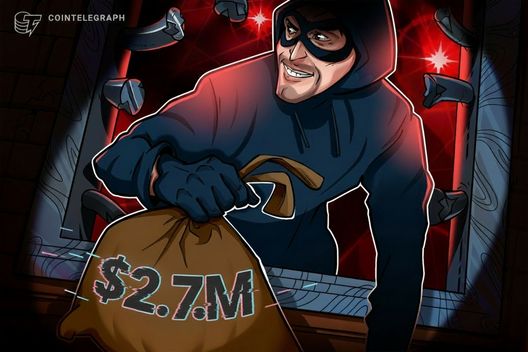
Solv Protocol suffered a $2.7 million exploit due to a smart contract bug
The hacker minted tokens, swapped them for SolvBTC, and stole approximately 38.05 SolvBTC
Solv Protocol is offering a 10% bounty to the hacker for the return of funds
Security firms are investigating the re-entrancy attack, and Solv has implemented preventative measures.
Deep Dive
The Bitcoin-based decentralized finance platform Solv Protocol has reported an exploit targeting one of its token vaults, resulting in a loss of $2.7 million. The platform has offered the attacker a 10% bounty in exchange for the return of the stolen funds.
In an announcement on X, Solv Protocol stated that fewer than 10 users were affected by the exploit. The stolen assets include 38.05 Solv Protocol BTC (SolvBTC), a token pegged to Bitcoin (BTC). The project is working with crypto security firms Hypernative Labs, SlowMist, and CertiK to investigate the incident and has implemented measures to prevent future occurrences.
Solv Protocol enables users to deposit Bitcoin and receive SolvBTC, which can then be used for lending, borrowing, or staking on other blockchains. The protocol currently holds over $1.7 billion worth of Bitcoin across 24,226 BTC, positioning itself as a significant on-chain Bitcoin reserve.
While Solv Protocol has not officially confirmed the exact cause, crypto security researchers suggest the exploit stemmed from a vulnerability in one of its smart contracts. This bug allegedly allowed the hacker to mint an excessive amount of a protocol token. Security researcher Chris Dior noted that the hacker exploited this vulnerability 22 times before swapping the minted tokens for approximately 38 SolvBTC.
Pseudonymous researcher “Pyro” identified the attack as a re-entrancy attack, a known vulnerability in smart contracts that has affected numerous DeFi protocols over the years. This type of attack exploits unexpected inputs to bypass security measures within smart contracts.
Solv Protocol shared an Ethereum wallet address on X, inviting the hacker to accept a 10% bounty. However, as of the latest reports, the hacker has not communicated via the on-chain address, according to Etherscan.
Source, catalyst, and sector overlap from the latest feed.
Pudgy Penguins faces trademark infringement lawsuit from Original Penguin brand owner PEI Licensing. Lawsuit alleges confusingly similar penguin trademarks used on Pudgy Penguins apparel. PEI Licensing seeks to block Pudgy Penguins' USPTO applications and destroy infringing products.
Traditional altcoin seasons where all cryptos rise are likely over. Future altcoin seasons will reward assets with real-world traction and application. Market will become more differentiated, rerating specific tokens tied to large businesses. Bitcoin is showing signs of bottoming and trending higher.
Bitcoin experienced a brief rally above $74,000 but has since pulled back below $71,000. On-chain analytics firm CryptoQuant indicates Bitcoin remains in a bear market with its Bull Score Index at 10/100. Analysts attribute the recent rally to renewed risk appetite and ETF inflows, but headwinds persist due to macro uncertainties. Despite the pullback, some indicators like Coinbase Premium and easing selling pressure suggest potential for renewed buying interest.
Macroeconomist Lyn Alden predicts Bitcoin will outperform gold over the next two to three years. Alden notes gold sentiment is 'somewhat euphoric' while Bitcoin sentiment is 'somewhat unfairly negative'. Bitcoin sentiment index shows 'Extreme Fear' (18/100) while gold sentiment shows 'Greed' (72/100).
Solana ETFs have attracted $1.5 billion in inflows despite SOL price dropping 57% since launch. 50% of Solana ETF inflows are from institutional investors, indicating strong underlying demand. Solana ETFs have seen inflows equivalent to double Bitcoin's at the same stage post-launch, adjusted for market cap. Despite a recent $6 million outflow, inflows have largely been retained, showing resilience.
John Daghita arrested for allegedly stealing $46 million in seized crypto assets from USMS. The theft occurred in 2024, involving a technology company contracted by the US Department of Justice and Defense. The suspect allegedly used his position to withdraw confiscated cryptocurrencies to personal wallets. The arrest follows an investigation by ZachXBT, who linked the suspect's wallets to scams and a US Government address.
Suspect arrested in Caribbean for $46 million crypto heist from US Marshals Service. Arrested individual is son of government contractor managing seized crypto. Funds traced back to Bitfinex hack recovery wallet. Incident highlights significant operational security concerns for USMS.
BC.GAME offers $500,000 bounty for information on hacker. Exploit targeted a third-party game, resulting in a $4.37 million loss. Attacker used stolen USDC to open a $31 million short on ETH, which was liquidated. The hacker incurred a $1.53 million loss from the liquidation.
Vitalik Buterin almost launched smart contracts on XRP before founding Ethereum due to Ripple's strategic pivot. Google warns of new 'Coruna' exploit targeting iPhone seed phrases via fake crypto websites. Binance expands its 'Position Snowball' trading bot to include 24 new contracts, including SHIB, ADA, and SUI. Bitcoin shows strong weekly gains, closing over 10.5% up, its best week since September 2025.
Google warns of Coruna exploit targeting older iPhones to steal crypto wallet data. Coruna uses multiple exploit chains to bypass iOS security and extract recovery phrases. Attackers can use stolen recovery phrases to drain Bitcoin and Ethereum holdings. Users can protect themselves by updating iOS, avoiding suspicious sites, and enabling Lockdown Mode.
Ethereum derivatives markets show defensive positioning from professional traders. Weak decentralized application activity and macro stress limit upside expectations for ETH. Ethereum maintains a dominant share of DeFi liquidity despite a slowdown in network activity. Geopolitical stress and U.S. tariff refund ruling contribute to broader market uncertainty and risk-off sentiment.
US banking regulators issue clarification on blockchain-based securities capital requirements. Tokenized securities will receive the same capital treatment as traditional assets. Guidance removes regulatory uncertainty, potentially encouraging traditional finance adoption of blockchain. Banks must still adhere to strict risk management for tokenized assets.
US banking regulators confirm tokenized securities receive same capital treatment as traditional assets. Guidance from Federal Reserve, FDIC, and OCC states technology used for issuance does not impact capital treatment. Financial institutions will not need to over-collateralize tokenized securities on balance sheets. Tokenized securities can qualify as financial collateral if they meet relevant capital rule requirements.
BlockDAG (BDAG) is in its final private sale phase at $0.0005, closing March 5, 2026. Analysts project BDAG could reach a top 50 market cap with potential for 100x gains. Ethena price shows volatility with whale accumulation, trading between $0.10 and $0.14. Dogecoin price prediction for 2026 ranges from $0.09 to $0.22, driven by sentiment.
Live Feed
Loading the broader stream in the same flow as the homepage feed.

Neo's treasury stands at $460.8 million as of end-2025, growing over 8,800% since 2014. Treasury holdings include BTC, NEO, GAS, and stablecoins, managed by Neo Foundation (49%) and NGD (51%). Neo plans annual financial reports and has engaged audit firms to enhance transparency. The ecosystem is developing Neo X, an agent-first chain focused on AI integration.
Pi Network price increased over 10% in 24 hours, reclaiming the $0.19-$0.20 zone. The rally is attributed to technical breakout from a descending trendline and upcoming protocol upgrades. Key resistance is identified at $0.25-$0.27, with a potential target of $0.35 if breached. Pi Network is undergoing protocol upgrade v20.2 with a deadline of March 12th for node operators.
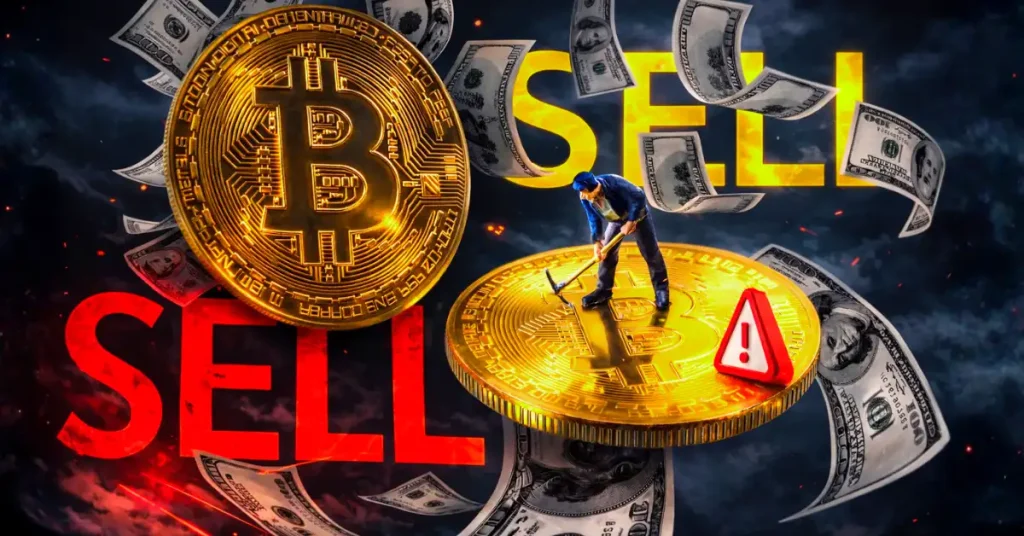
Publicly listed Bitcoin miners sold over 15,000 BTC since October. Companies like Cango and Riot Platforms have sold significant BTC holdings to reduce debt and improve liquidity. Miners are diversifying into AI projects and data centers, selling BTC to fund these ventures. Increased mining costs and recent price drops are reducing miner profit margins.

Vitalik Buterin suggests AI integration in crypto wallets for transaction planning and simulation. AI should not directly control large transactions; manual user confirmation is advised. Proposed AI wallet approach aims to reduce phishing attacks and user errors through simulations and verification.
OKB price increased 23% in 24 hours following investment news. Intercontinental Exchange (ICE), NYSE parent, invested in OKX at $25B valuation. Partnership aims to bring tokenized NYSE stocks and futures to OKX by late 2026. Investment added approximately $640 million to OKB's market value.

Pudgy Penguins NFT project faces trademark lawsuit from Original Penguin clothing brand. Lawsuit filed in Florida federal court over alleged unauthorized use of penguin trademarks. PEI Licensing claims consumer confusion and violation of trademark and fair competition laws. Pudgy Penguins has expanded beyond NFTs to include retail toys and a Solana-based culture coin $PENGU.

Bitcoin Cash price is consolidating near the $440-$470 demand zone. BCH could reach $1200 by the end of 2026 if market strength returns and resistance is broken. Long-term projections suggest BCH could reach $3000 by 2030. The article provides price predictions for Bitcoin Cash up to 2050.
ETFs trade on exchanges throughout the day at market prices, offering flexibility similar to stocks. Mutual funds are priced once per day after market close based on NAV, often used in retirement accounts. ETFs generally have lower fees and are more tax-efficient due to their structure. The choice between ETFs and mutual funds depends on investor goals, cost sensitivity, and trading preferences.

Bitcoin and global equities stabilized after an early-week sell-off driven by geopolitical tensions. Rising U.S. Treasury yields from 3.93% to 4.15% signal renewed inflation concerns and reduced Fed rate-cut expectations. Traders now see less than a 50% chance of two Fed rate cuts this year, down from 80% prior to the conflict. Oil prices surged due to supply concerns in the Strait of Hormuz, impacting inflation outlook.

Axie Infinity (AXS) price is predicted to reach $2.20 in 2026 and potentially $12.00 by 2032. The project has evolved from 'play-to-earn' to 'risk-to-earn' with economic reforms like bAXS and cessation of SLP emissions. Ronin Network is transitioning to an Ethereum Layer 2, and the new MMO 'Atia's Legacy' is anticipated. AXS is navigating a falling wedge pattern, with potential breakout targets around $4.00 in 2026.

Social media mentions of "altseason" have dropped to their lowest level in two years. Periods of low altseason chatter have historically preceded rallies in speculative crypto assets. Altcoins have experienced significant drawdowns, with DOGE down 75%, SOL down 60%, and ADA down 70% from cycle peaks. Large holders (100+ BTC wallets) are accumulating, indicating potential bottoming activity.

President Trump publicly supports crypto against major banks regarding stablecoin yields. Coinbase stock surged 15% following Trump's statement. Pepeto presale has raised over $7.5M with a current price of $0.000000186. Pepeto offers a cross-chain bridge, zero-tax trading, and risk scoring system.

XRP dropped 3.3% to $1.4108 after failing to break $1.43-$1.45 resistance. High volume selling confirmed bearish structure with $1.40 support now pivotal. A breakdown below $1.40 could lead to $1.33 or $1.00 support levels. Despite price weakness, spot XRP ETFs and large wallets continue accumulating XRP.
Signal context only. Validate with price action, liquidity, and risk limits before taking a position.
